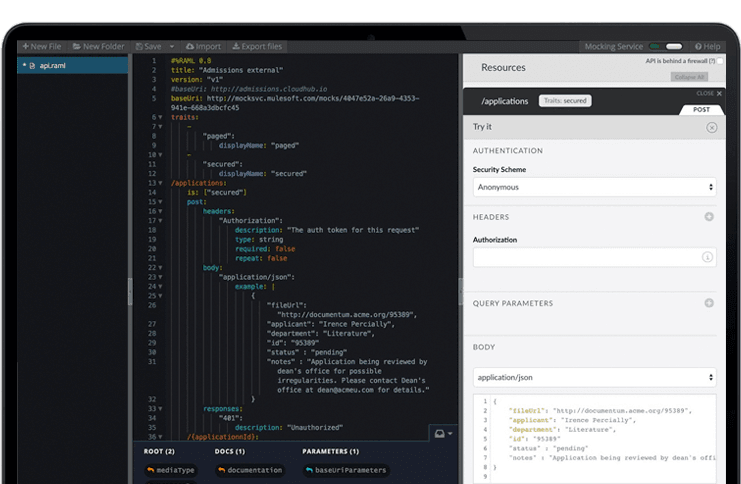
The Anypoint Platform developed by MuleSoft and acquired by Salesforce in early 2018 is designed to
connect apps, data, and devices anywhere, on-premises or in the cloud. This platform was built to
offer out-of-the-box connectors as well as tools that architects and developers can adopt quickly to
design, build and manage the entire lifecycle of their APIs, applications, and products.
N/A
SAP Integration Suite
Score 8.5 out of 10
N/A
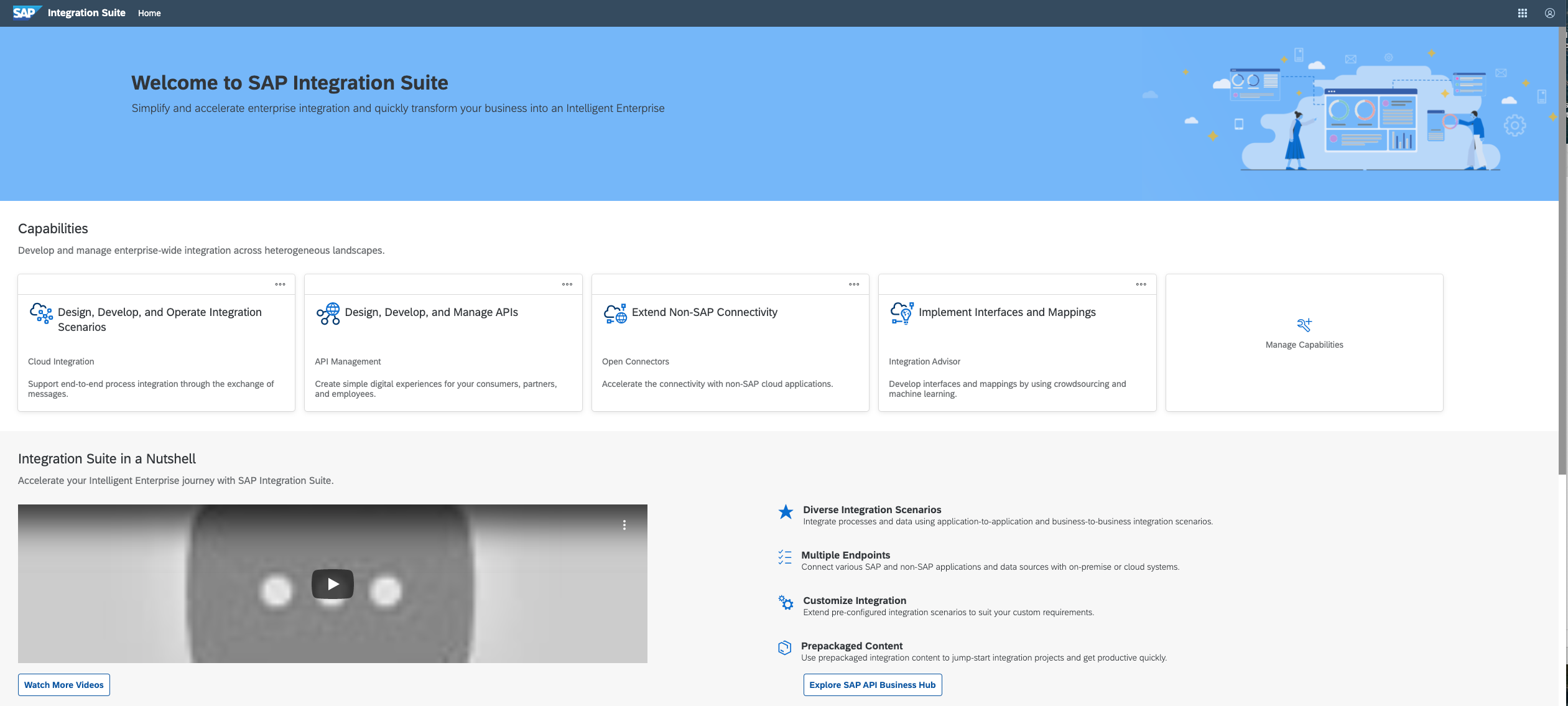
SAP Integration Suite is an integration platform-as-a-service (iPaaS) that helps quickly integrate on-premises and cloud-based processes, services, applications, events, and data. It is used to accelerate innovation, automate more processes, and realize a faster time to value.
$11,199
per year
ReadyAPI
Score 6.2 out of 10
N/A
ReadyAPI (formerly SoapUI Pro, LoadUI Pro, and ServiceV Pro) is a REST and SOAP API functional testing tool that enables software developers, QA engineers, and manual testers to work together to create, maintain, and execute complex end-to-end API tests in their CI/CD pipelines without needing to code.
N/A
Pricing
MuleSoft Anypoint Platform
SAP Integration Suite
ReadyAPI
Editions & Modules
No answers on this topic
No answers on this topic
No answers on this topic
Offerings
Pricing Offerings
Anypoint Platform
SAP Integration Suite
ReadyAPI
Free Trial
Yes
Yes
Yes
Free/Freemium Version
Yes
No
Yes
Premium Consulting/Integration Services
No
No
No
Entry-level Setup Fee
No setup fee
No setup fee
No setup fee
Additional Details
—
Access to free tier services does not expire while there is an active Pay-As-You-Go or CPEA account with SAP. Once a free tier service limit has been reached users have the option to update from a free to a paid service plan in the same account.
Once we have moved all of our system integration APIs to the MuleSoft Anypoint Platform, we will need to communicate with a wide variety of external systems. All of our business and service logic is stored in the aforementioned core systems. Anypoint Platform (and all of our …
Overall a better experience in pricing negotiation with the Sales team. The breadth of services offered by Mulesoft was really important and the expertise offered by our consulting partner influenced the decision. The overall deployment was completed well within the timelines. …
SAP Integration Suite:Strengths: Deep integration with SAP systems, strong support for SAP applications, robust security features.Considerations: May have a steeper learning curve for non-SAP users.MuleSoft Anypoint Platform:Strengths: Wide range of connectors, API-led …
We evaluated several integration platforms, including MuleSoft and Dell Boomi, but ultimately chose SAP Integration Suite for its deep alignment with the SAP ecosystem and robust cloud integration capabilities. Its native connectivity with SAP S/4HANA Cloud, SuccessFactors, and …
As compared to MuleSoft Anytime platform, Sap Integration Suite is a better option for us keeping in mind the ease of use, ease of access, ease of setup, quality of the support. SAP provides support for real time connectors which are reusable as well and has API construction …
We are still earning and evaluating against these tools due to our infancy on all of them. Learning and adoption are slow to uptake as we have projects with deadlines and new technologies are not implemented quickly and even slow the project pace. An improvement would be to …
MuleSoft Anypoint Platform is best tool in the market for developing APIs with complex structures communicating with various different types of applications including web applications as well as legacy applications. Also applications including database connectivity for fetching and updating data in the DB tables. I cant think of any scenario which MuleSoft Anypoint Platform could not be used for developing the integrations.
In our case to have a such a poweful middleware in the cloud, give us a lot of benefits such as maintenance and support. In the integration part to be able to connect SAP and Non SAP applications makes SAP Integration Suite a good investment when our master data in this case is in S4HANA. Less appropriate is that sometimes the updates in production tenant failed and they have to downgrade or repair the issues. Affecting the usage of the tool. I guess SAP team have to be more aware of performing the changes and tested well on development environments and then when they know for sure that is the correct way to go with the update put it in production.
As stated, we do a LOT of API testing, the swaggerhub import makes it easy to add APIs. This is very well-suited, as well as easy management of the steps/cases/suites inside of ReadyAPI. The one thing I do wish ReadyAPI was better suited for is changes to data, we have a lot of test cases in ReadyAPI and if we make a change to how the backend data is structured, one-by-one adjustments need to be made to the steps. Less appropriate, UI testing.
Has more features than what we really need so we're paying for more than we use. Sort of like paying for an Abrams tank when all we really need is a Toyota Corolla.
Not a value product, tends to be expensive.
Takes a while for developers to learn to use Mulesoft Anypoint.
Provide more pre-built integrations to use within SuccessFactors or other modules instead of everything having to be custom built
Support is unable to provide advice on custom builds so you often have to engage a 3rd party partner
Works best when you have the functional and technical teams working together. Otherwise, the system is too technical for a functional user to create integration and a technical user not always understand the functional perspective
It is in place, our system integrators are familiar with it, and it fits into the ecosystem. A better user interface, flow build and debugging experience would see it grow, many technical staff do not enjoy using it for this reason, however it is quite capable and powerful behind this one shortcoming.
The only reason this isn't a '10' is because of the cost. This product is definitely meant for organizations who are serious about making sure they invest in the full ecosystem of API design, development, maintenance. But there is a significant cost associated with this investment. and because of this cost (and the non-tangible output for executives), it is a difficult line-item to justify in this post-pandemic environment.
There’s a lot of learning curve at the beginning when it comes to building the code and everything. In terms of usability, I’d say once you get used to it, it’s fine — but it’s not very easy during the initial stages.
The user interface is messy and not intuitive. It has a steep learning curve, and flows developed around are easy to make a mess with layout and can be difficult to follow. The debugging is also quite difficult, it takes some time to figure out how to follow the flow and examine data. Error handling is also difficult and not intuitive, it is better to let some errors leak and monitor through ALM.
SoapUI allows us to combine multiple tests and adhere to the sequence that they need to run in order to complete successfully. It has an excellent GUI design and the reporting mechanism is also very good. It does consume a lot of memory though during concurrent testing
Soap UI has managed to continuously build on it's solid foundation and keep improving by each release. It is by far the most dependable and accurate testing tool out there of its kind. Available via connecting to VM's created as SoapUI test machines give access to it anytime, anywhere practically.
Anypoint Platform support is very responsive. There is also a huge knowledge base and an active online forum where answers to most questions can be found. When needed support engages the engineering group so adequate solutions or workarounds are always provided.
The support for SAP Integration Suite is satisfactory. We leverage SAP support through our manage services partner. So far, we have not had many major issues. One concern, to make our rating a ten, would be turnaround time on high priority incidents. SAP Integration Suite drives our key business functions forward. Without a reasonable service level agreement on turnaround, we sometimes find us running into issues running pay, etc.
To be honest, we didnt had much issues with the support, as there is already plenty of online communities available for help. But if ever there were some minor issues with the membership or the certificates, the tech support was always quick and efficient enough to resolve the issue ASAP
Once we have moved all of our system integration APIs to the MuleSoft Anypoint Platform, we will need to communicate with a wide variety of external systems. All of our business and service logic is stored in the aforementioned core systems. Anypoint Platform (and all of our APIs) makes it easy to connect to various other platforms. In order to link to these many other systems, connectors and/or components are utilized, and they are simple to configure and integrate.
SAP Integration Suite was already part of our SAP stack, part of Business Technology Platform, with out-of-the-box integration with S/4 HANA transactional and ERP system that we are using as our main back-end. Thus, we are achieving significant Total Cost Optimization benefits or running both solutions on the same platform, hosted on Azure cloud.
ReadyAPI provides intuitive GUI capabilities compared to their own open source product. When compared to Postman, ReadyAPI also supports SOAP based services, which is a saver especially when integrating with legacy or other third party systems.
It has an excellent GUI design and the reporting mechanism is also very good. It does consume a lot of memory though during concurrent testing. However, I have read that added monitoring tools have been added, which if so the 7 could possibly go to a 8 or 9.