Chose SingleStore
SingleStore provides performance for real-time data analytics application where as Snowflake is more for data engineers and not fast enough for real-time data analytics apps.

| Product | Rating | Most Used By | Product Summary | Starting Price |
|---|---|---|---|---|
 SingleStore | N/A | SingleStore aims to enable organizations to scale from one to one million customers, handling SQL, JSON, full text and vector workloads in one unified platform. | $0.69 per hour | |
 Snowflake | N/A | The Snowflake Cloud Data Platform is the eponymous data warehouse with, from the company in San Mateo, a cloud and SQL based DW that aims to allow users to unify, integrate, analyze, and share previously siloed data in secure, governed, and compliant ways. With it, users can securely access the Data Cloud to share live data with customers and business partners, and connect with other organizations doing business as data consumers, data providers, and data service providers. | N/A | |
 Microsoft SQL Server | N/A | Microsoft SQL Server is a relational database. | $1,418 Per License |
| SingleStore | Snowflake | Microsoft SQL Server | ||||||||||||||||||||||
|---|---|---|---|---|---|---|---|---|---|---|---|---|---|---|---|---|---|---|---|---|---|---|---|---|
| Editions & Modules |
| No answers on this topic |
| |||||||||||||||||||||
| Offerings |
| |||||||||||||||||||||||
| Entry-level Setup Fee | Optional | No setup fee | No setup fee | |||||||||||||||||||||
| Additional Details | — | — | — | |||||||||||||||||||||
| More Pricing Information | ||||||||||||||||||||||||
| SingleStore | Snowflake | Microsoft SQL Server | |
|---|---|---|---|
| Considered Multiple Products |  SingleStore  Farrokh Mansouri Head of Data Science Chose SingleStore Very similar offerings. SingleStore promise a faster query speed and better cost structure. Vector databases is anoter offering that is unique to SingleStore.  Shubham Agrawal Sr Data Engineer Chose SingleStore SingleStore is much faster than others in terms of data ingestion and query response time  Anant Sirohi Software Engineer(DE) Chose SingleStore much faster processing of queries than all above-listed databases and having the ability to scale up according to the workload.  Jacob Ortega Chief Technology Officer Chose SingleStore I guess the main difference is how the memory is used for stacking and storing data until it reaches the final destination, the performance is awesome compared with others and when you have a real time business with a certain complexity. The development team would be more … |  Snowflake  David Williams Head of Engineering Chose Snowflake We particularly liked Snowflake's security model as well as its unique storage (whereby everything is essentially a pointer to immutable micro-partitions, which is the key behind its zero-copy cloning, its secure sharing, its time travel, etc.). and also how it separates …  Jeremy Pierce, MBA Data Warehouse Engineer Chose Snowflake We had a MS SQL server with over 2 TB of ram & 51 processors that we were using, that could no longer handle our workload. Snowflake can handle 3 times that workload with ease and efficiency.  Sudarshan Kothari Lead Analyst Chose Snowflake Accommodates future data types such as JSON and XML. Scalability is another advantage. Pay per use is beneficial for organizations like yours. Direct connectors with AWS help us to go with it. No limit on user creation and clone data not eating up extra disk space are a few … |  Microsoft SQL Server  Pritesh Patel Product Manager, Partnerships & Data Services Chose Microsoft SQL Server Microsoft SQL Server is a comprehensive solution as transactional database, data warehouse, analytics, reporting, and ETL. It also integrates with the cloud well (Azure). The ease of use and setup makes this better than Oracle Database because the query syntax is also different …  Salvador Orochena Salesforce Developer Chose Microsoft SQL Server [Microsoft SQL Server] offers a full solution, Inhouse Applications and hosted application continue to use SQL as backend database. Allows easy creation of development environments and continuous feature release.  Duncan Hernandez Product Owner, Business Intelligence Chose Microsoft SQL Server Amazon Redshift is a cloud-based data warehouse. It does what it says it will do, but my experience is that for a cloud data warehouse, it is a little slow and I'd hope for performance to be insanely fast. Plus, it is also very costly. Same performance for much less cost in … |
| SingleStore | Snowflake | Microsoft SQL Server | |||||||||||||||||||||||||||||||
|---|---|---|---|---|---|---|---|---|---|---|---|---|---|---|---|---|---|---|---|---|---|---|---|---|---|---|---|---|---|---|---|---|---|
| Relational Databases |
|
| SingleStore | Snowflake | Microsoft SQL Server | |
|---|---|---|---|
| Small Businesses |  InterSystems IRIS Score 8.0 out of 10 |  Google BigQuery Score 8.7 out of 10 | InterSystems IRIS Score 8.0 out of 10 |
| Medium-sized Companies | InterSystems IRIS Score 8.0 out of 10 | Google BigQuery Score 8.7 out of 10 | InterSystems IRIS Score 8.0 out of 10 |
| Enterprises |  SAP IQ Score 10.0 out of 10 | Google BigQuery Score 8.7 out of 10 | SAP IQ Score 10.0 out of 10 |
| All Alternatives | View all alternatives | View all alternatives | View all alternatives |
| SingleStore | Snowflake | Microsoft SQL Server | |
|---|---|---|---|
| Likelihood to Recommend | 7.7 (73 ratings) | 9.0 (43 ratings) | 8.0 (107 ratings) |
| Likelihood to Renew | 8.2 (5 ratings) | 10.0 (2 ratings) | 9.0 (8 ratings) |
| Usability | 8.2 (8 ratings) | 9.3 (19 ratings) | 7.6 (17 ratings) |
| Availability | 9.1 (2 ratings) | - (0 ratings) | 10.0 (1 ratings) |
| Performance | 8.2 (47 ratings) | - (0 ratings) | 9.0 (1 ratings) |
| Support Rating | 8.3 (9 ratings) | 9.9 (8 ratings) | 7.9 (26 ratings) |
| In-Person Training | - (0 ratings) | - (0 ratings) | 9.0 (1 ratings) |
| Online Training | 7.3 (1 ratings) | - (0 ratings) | 9.0 (1 ratings) |
| Implementation Rating | 7.3 (2 ratings) | - (0 ratings) | 9.0 (6 ratings) |
| Configurability | - (0 ratings) | - (0 ratings) | 10.0 (1 ratings) |
| Contract Terms and Pricing Model | - (0 ratings) | 8.0 (1 ratings) | - (0 ratings) |
| Ease of integration | 9.1 (1 ratings) | - (0 ratings) | 9.0 (1 ratings) |
| Product Scalability | 8.2 (2 ratings) | - (0 ratings) | 9.0 (1 ratings) |
| Vendor post-sale | 8.2 (2 ratings) | - (0 ratings) | 9.0 (1 ratings) |
| Vendor pre-sale | 8.2 (2 ratings) | - (0 ratings) | 9.0 (1 ratings) |
| SingleStore | Snowflake | Microsoft SQL Server | |
|---|---|---|---|
| Likelihood to Recommend | SingleStore
| Snowflake Computing
| Microsoft
|
| Pros | SingleStore
| Snowflake Computing
 Harvey Wyche Director of Technical Product Management | Microsoft
|
| Cons | SingleStore
| Snowflake Computing
| Microsoft
|
| Likelihood to Renew | SingleStore
| Snowflake Computing
| Microsoft
 Lisandro Fernigrini Sr Database Administrator / Developer |
| Usability | SingleStore
| Snowflake Computing
| Microsoft
 Andy Erickson Senior Consultant |
| Reliability and Availability | SingleStore
| Snowflake Computing No answers on this topic | Microsoft
|
| Performance | SingleStore
| Snowflake Computing No answers on this topic | Microsoft
|
| Support Rating | SingleStore
 Ziv Fridfertig Dev Enablement Director | Snowflake Computing
David Williams Head of Engineering | Microsoft
|
| In-Person Training | SingleStore No answers on this topic | Snowflake Computing No answers on this topic | Microsoft
|
| Online Training | SingleStore
| Snowflake Computing No answers on this topic | Microsoft
|
| Implementation Rating | SingleStore
| Snowflake Computing No answers on this topic | Microsoft
 Bill Starling Database Administrator |
| Alternatives Considered | SingleStore
| Snowflake Computing
| Microsoft
|
| Scalability | SingleStore
| Snowflake Computing No answers on this topic | Microsoft
|
| Return on Investment | SingleStore
| Snowflake Computing
 Sahil Khan Data Analyst | Microsoft
|
| ScreenShots | Snowflake Screenshots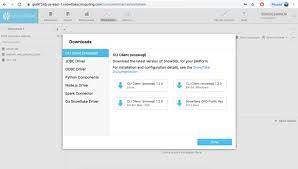 |