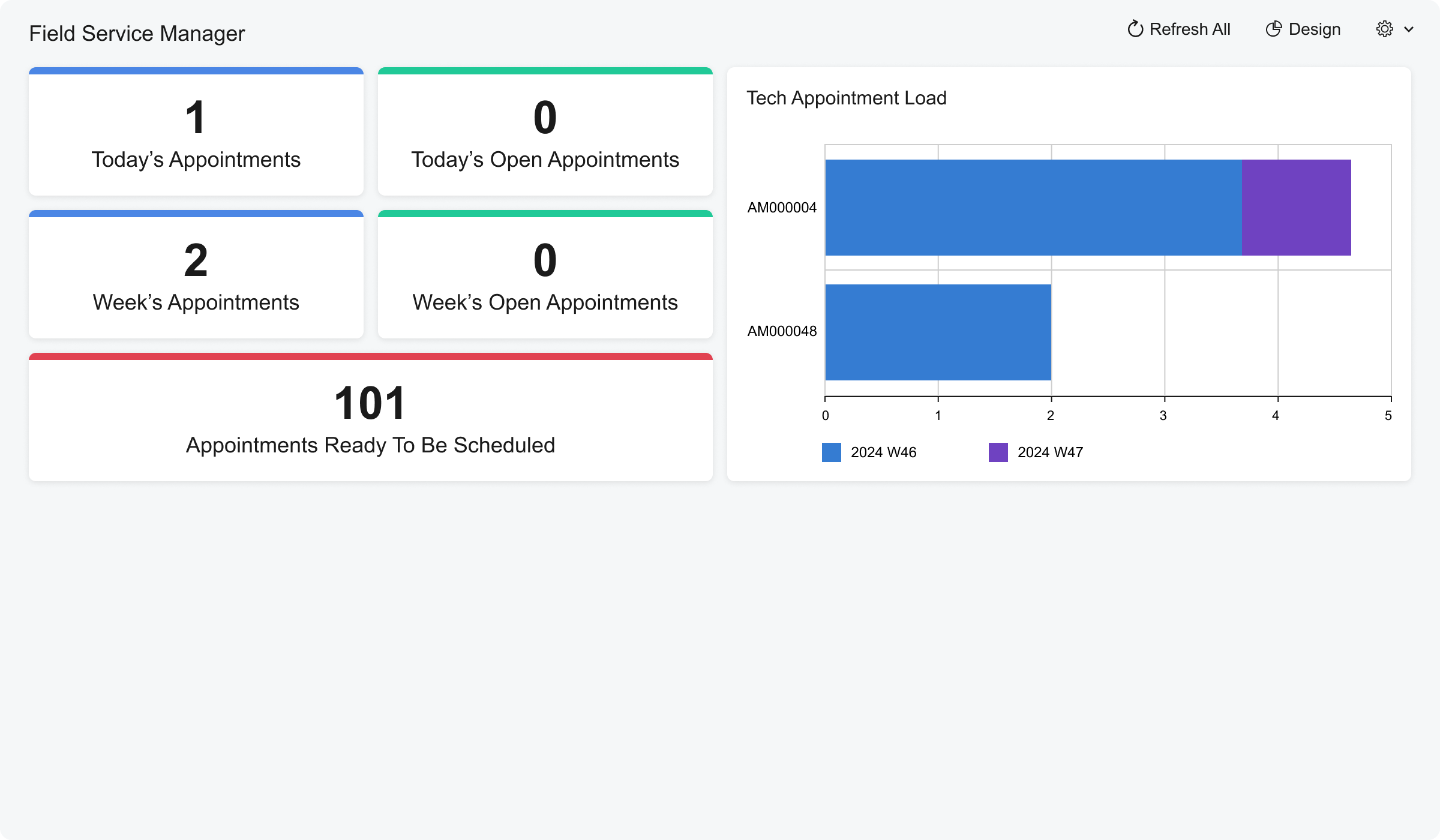
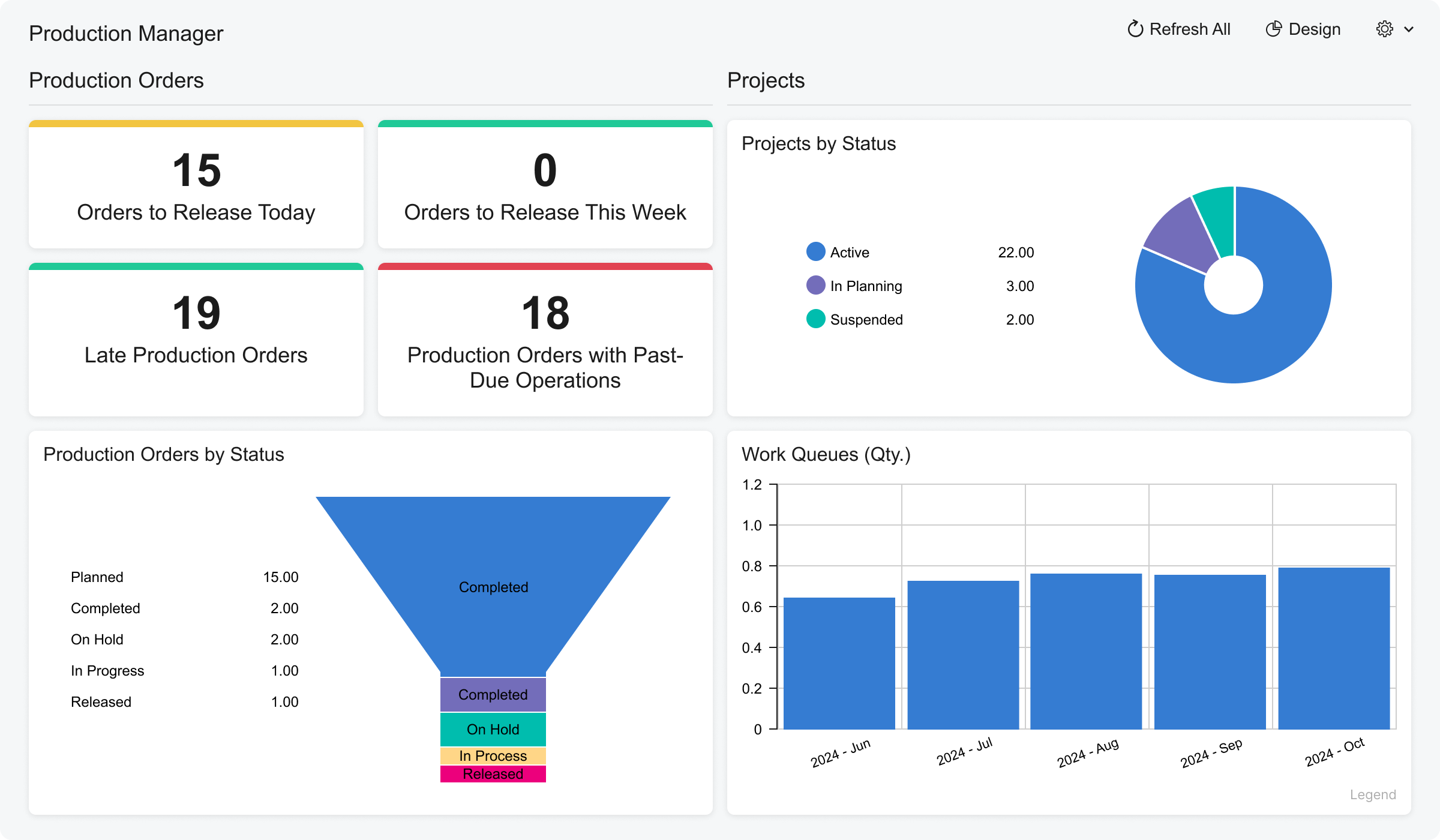
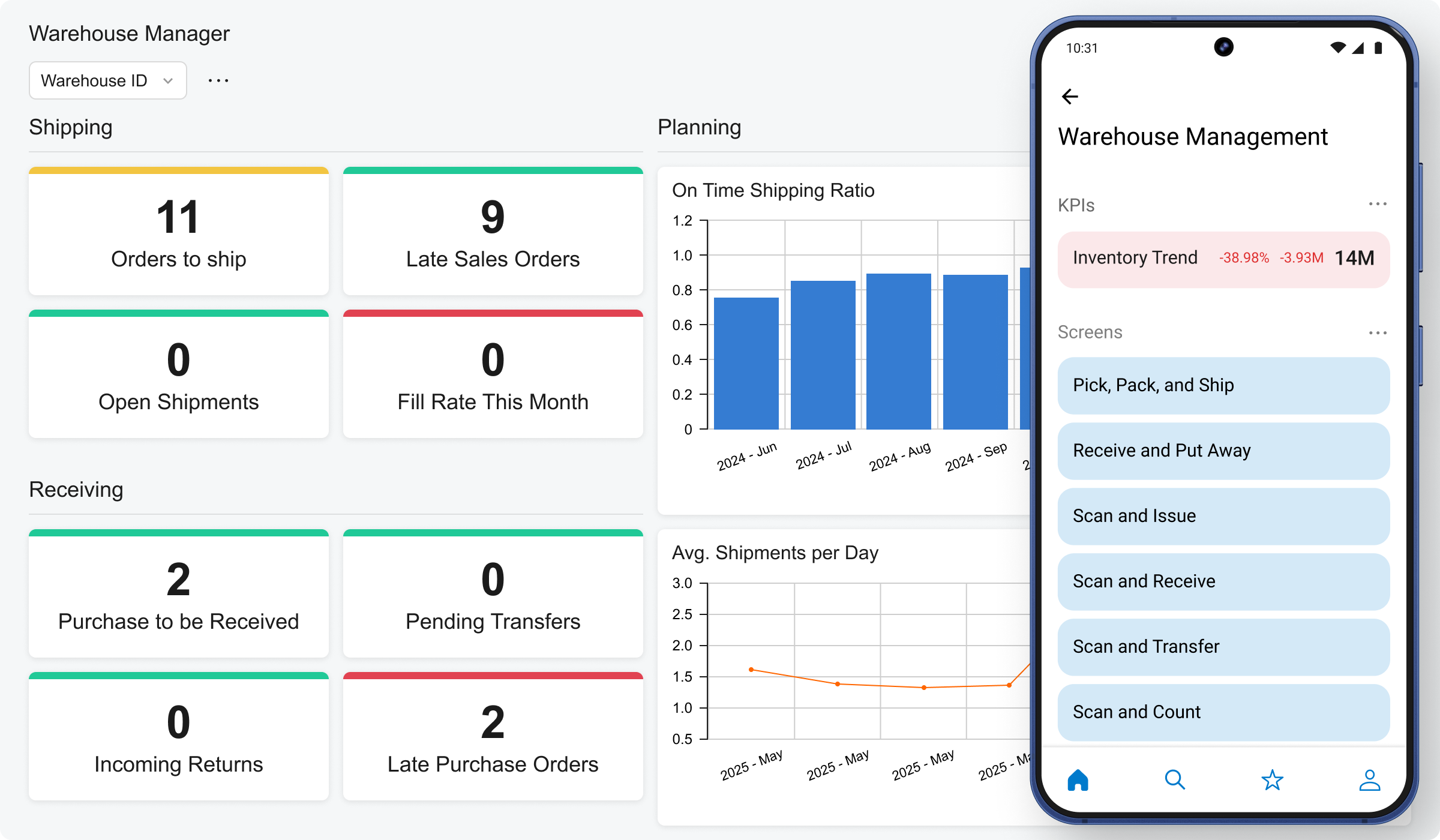
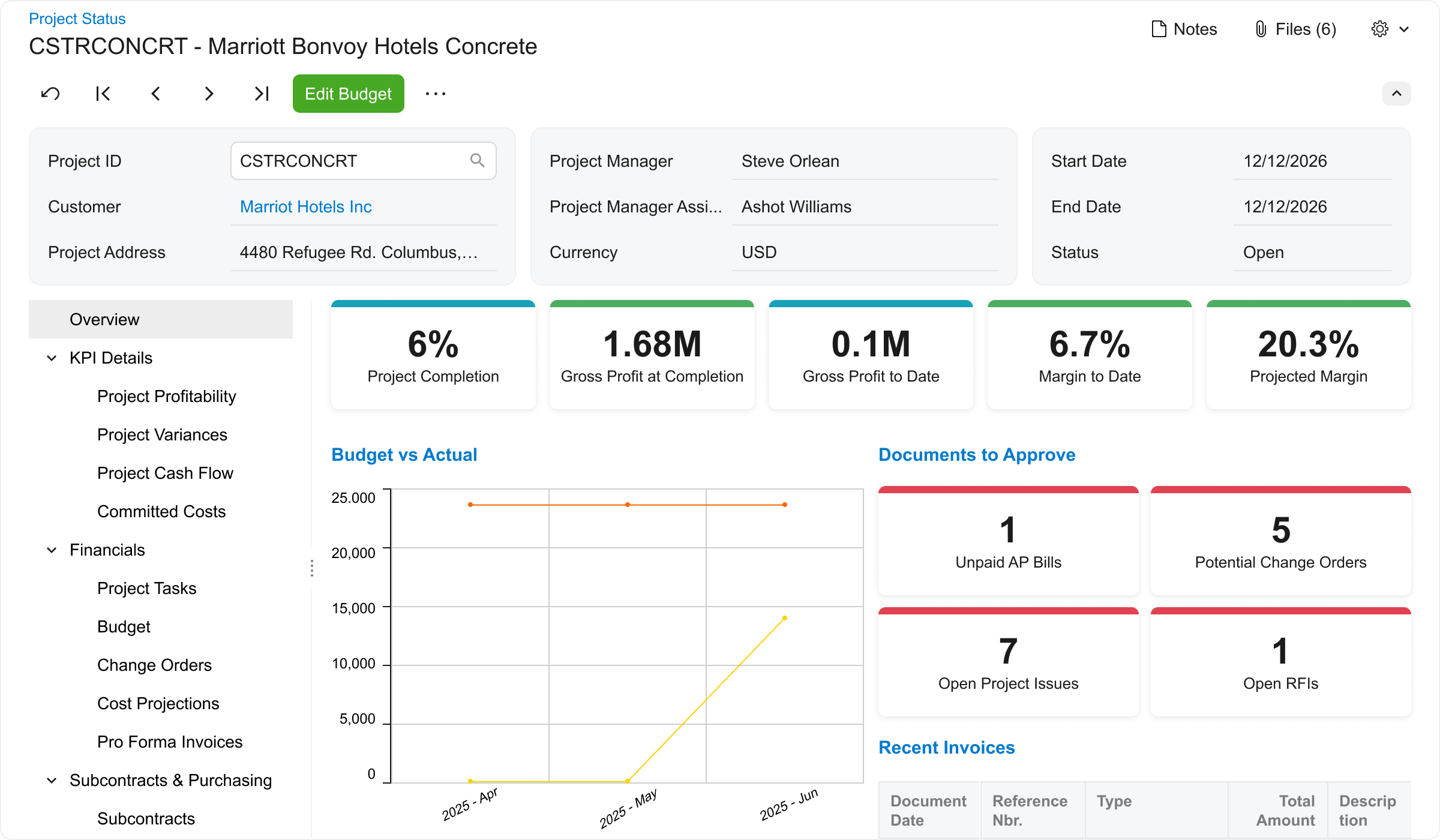
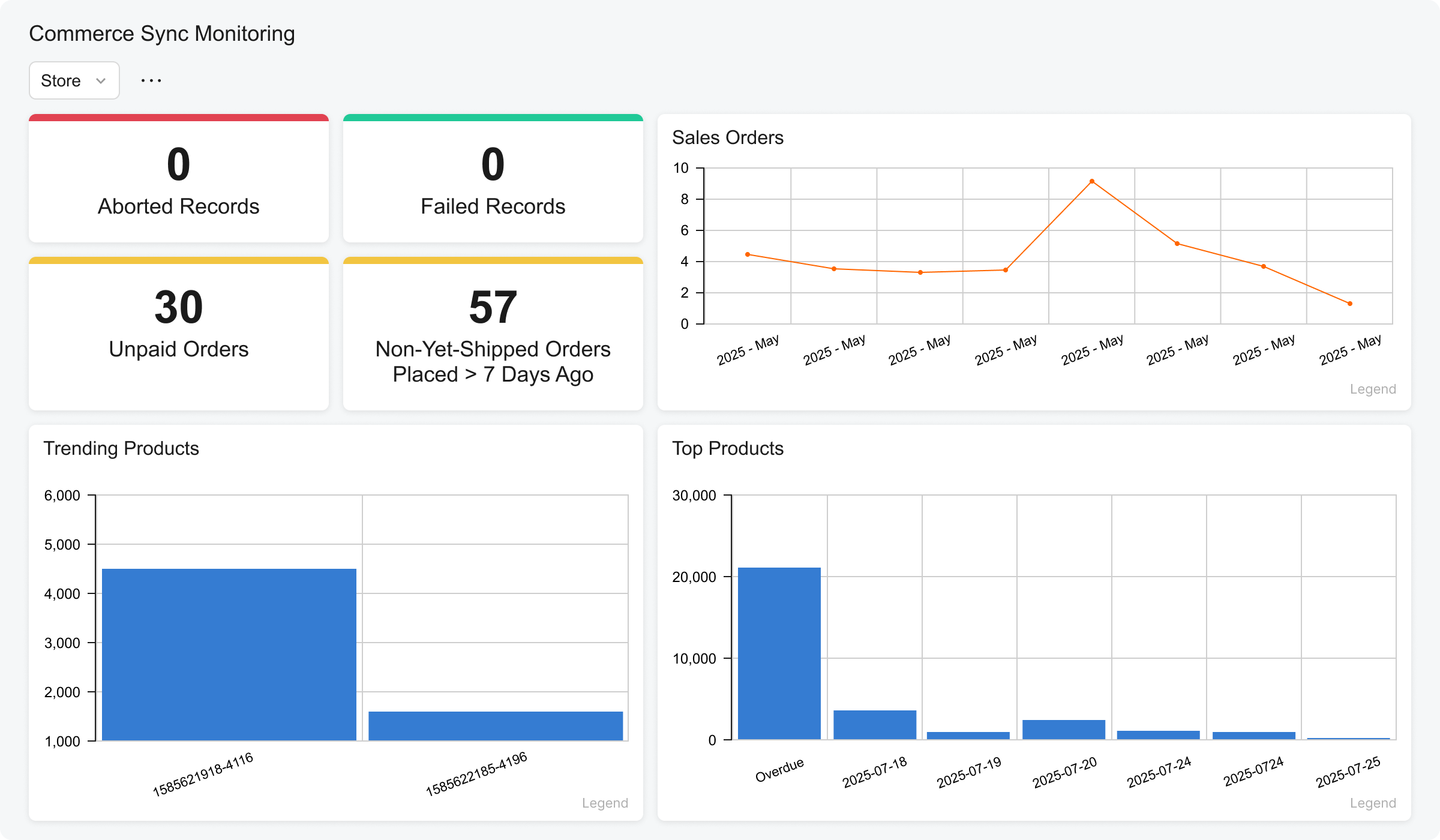
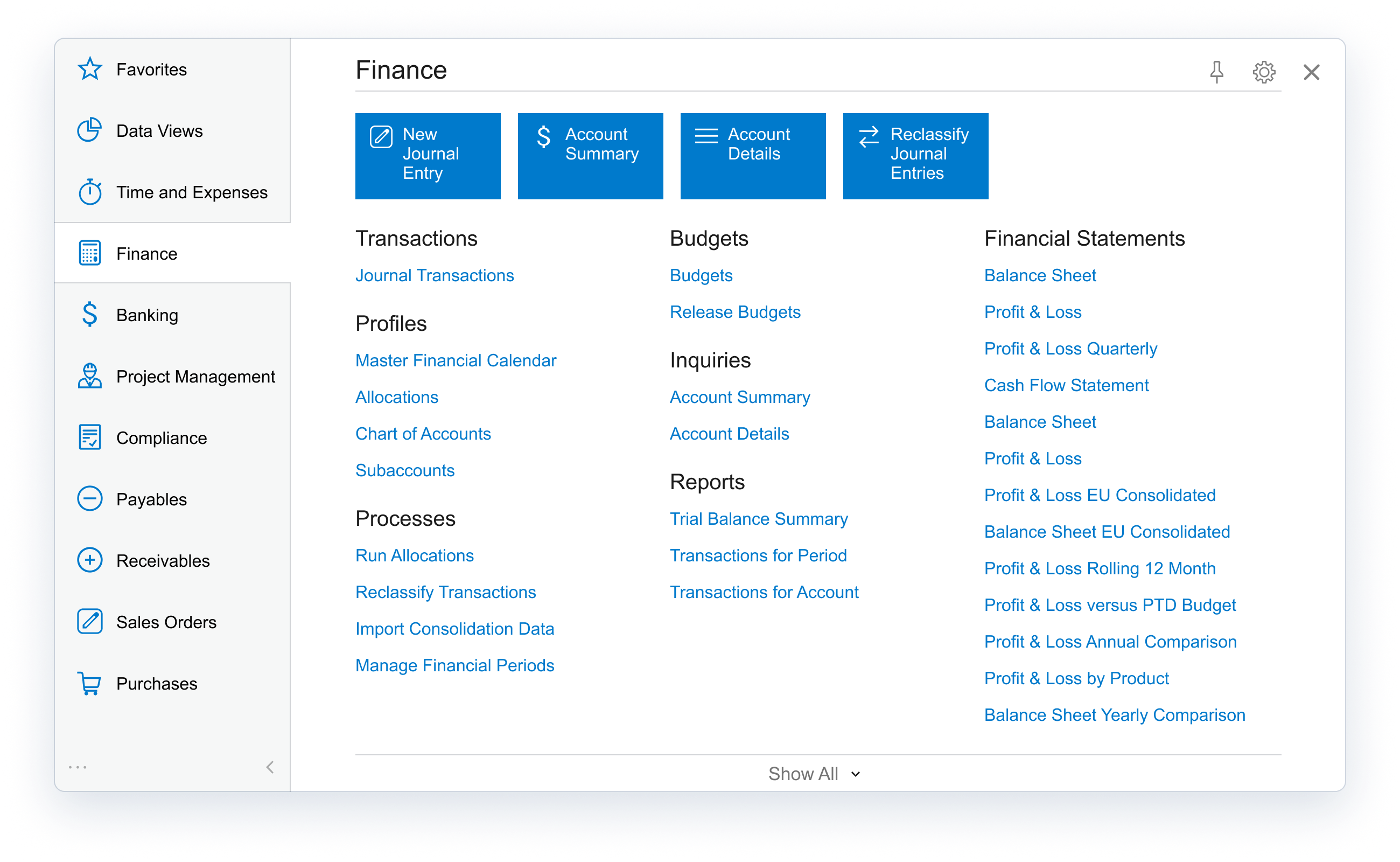
Acumatica delivers a set of cloud-based business software applications with dashboards, reporting tools, integrated document management, centralized security, and customization tools.
$1,000
per year
Certinia ERP Cloud
Score 6.3 out of 10
N/A
Certinia ERP Cloud automates financial management on the Salesforce platform. The customer-centric ERP software includes a general ledger, automated billing processes, and financial intelligence.
N/A
Pricing
Acumatica
Certinia ERP Cloud
Editions & Modules
No answers on this topic
No answers on this topic
Offerings
Pricing Offerings
Acumatica
Certinia ERP Cloud
Free Trial
No
Yes
Free/Freemium Version
No
No
Premium Consulting/Integration Services
Yes
No
Entry-level Setup Fee
No setup fee
No setup fee
Additional Details
Pricing is always consumption-based with no five-year lock-ins or termination penalties.
The Acumatica ERP pricing structure allows adding casual users, suppliers, and customers without paying for additional licenses.
The cost is based on the features and resources utilized, not on the number of users who access the system. An Acumatica partner works with users to understand specific requirements, determine the proper resources and modules for the company, and presents a price for the license.
Coming from Sage, when you have to post financial data, it locks the system. Acumatica, there is no delay, there is no downtime. Dashboards. My CEO recently asked me, "I really want to see what our top customers are and what markets that they're spending the most money in." Acumatica had that widget already prepared for me.
For accounting systems, users and/or evaluators often want to see some type of matrix or "heads up" comparisons of specific features and functionality of a system in key areas such as: 1) General Ledger 2) Order to Cash cycle 3) Purchase to Pay cycle 4) Cash management 5) Inventory and/or Cost Accounting (Projects/Jobs, etc) 6) Revenue Recognition 7) Fixed Assets management 8) Budgets 9) Tax 10) Reports and Analysis It would be great if this kind of matrix existed to be filled in by reviewers so that others could benefit from their perspectives about the applications and how they address or handle the specific features/functionality. With respect to FinancialForce, the company has found that nearly all the key features it needed were available from the application.
Real-time access to financials across firm's locations in India for better in-house sales, cost and financial health analysis
The tool is great with respect to the creation of dashboards and KPI reporting to get visual picture of profitability and cash flow metrics across projects
Mass updating existing BOMs or Production Order Details. For larger orders, especially if many things need to be changed it can take a painstakingly long time to update each production order one-by-one.
The product configurator is too flat, we definitely need nested configurations that can capture variable subassemblies.
Accounting has room for improvement, I don't really like the idea of SO Invoices living in a separate spot until they are Released. I have had complaints from our accounting personnel since they have to leave the "Accounting World".
Since SalesForce was not made with accounting in mind, building FinancialForce as a module on top of SalesForce gives problems because the overarching architect of SalesForce cannot facilitate all the accounting requirements.
The FinancialForce integration team was not very good, and did not help us set up our FinancialForce very well. Their customer support is also lacking and takes a long time to respond and troubleshoot our problems.
FinancialForce doesn't actually build financial statement reports. We were only able to run a trial balance, and we had to build the statements ourselves in Excel.
It is a flexible system that is very flexible and is easy to use. It will also be able to scale as the company grows. Frankly, we have invested too much time to walk away from it now and the initial phase is going well
The company has now converted its legacy, "home grown" operations system and built it on the force.com platform, and the integration between it and FinancialForce is deeply entrenched. No other application would be able to replicate this functionality, and the company will be able to scale and leverage the force.com platform as it grows.
Only reason is because when teaching our departments how to use, it takes them a long time and multiple requests about where things are located... as IT team, I can navigate easily, end users like accountants and shipping, it's a tiny bit cumbersome, but I believe ModernUI will resolve
Change management is always an issue, but the evidence of the application's usability is that both long-time employees (used to the legacy systems for many years) and newer employees have been able to learn the system and improve their business processes.
Unless the internet is completely unavailable - which has not happened yet - the application is always accessible. Since FinancialForce is built on the force.com platform, it's uptime is tied to Salesforce security and system performance standards
We recently switched VARs and it has made a world of difference! Our new VAR actually is proactive to various situations versus being reactive to events that have happened. They are accessing how we are using the modules and suggesting better more efficient ways!
The response time for FinancialForce is exemplary. Immediate acknowledgement of the support request by automatically logging a case/ticket on the provider side, then less than 24-hour follow up by a support team member with specific questions, information or resolution for the issue.
Through its Xtra login website available to its customers, FinancialForce offers a complete set of online, video tutorials, training and documentation. Each tutorial is "bite-sized", meaning it imparts instructional, step-by-step information in 2-3 minute narrated videos. For a particular cycle or process, like invoices to payments for example, each tutorial builds on the last so that the user can get a complete picture of the steps and process in less than 10 minutes.
I'd say the partner selection is critically important. I think the software is very easy to implement. It's very customizable to your business. Finding a partner that will work with you to understand your business and your needs is the critical piece to make sure that the system goes along with it.
The company decided to run parallel for three months in order to soften the impact of the change from the legacy "system" - which users had been interfacing with for over a decade - to FinancialForce. While not recommended, this did provide time for the in-house "super user" team of 2 people to become completely familiar with the application, and thus provide hands-on training and be a resource for the users who would be processing the daily accounting transactions.
Acumatica's flexibility, user interface, reporting, customizable system, data imports, Power BI integrations, exportable reports, and connections to other systems make it a stand-alone ERP solution. Finding another system capable of doing this would be a good find. Head above the others. In-system emailing. Import/export of data to and from anywhere.
FinancialForce Subscription & Usage Billing has more features, more useability, and manages higher numbers of customers. The systems I have used in the past are easier to navigate but couldn't handle this number of customers.
From my understanding, the P.O. module is not very robust, at least the last time I inquired about it. At the time, it had a one-to-one match, with one invoice for one P.O. and that isn't practical for many businesses. I don't believe it would be an easy system to use for sending out invoices, if we had thousands of retail utility customers. We do a small number of invoices because we sell wholesale power, not retail, so we only Invoice the municipality. Not each utility customer.
They are very responsive and knowledgeable about the product. If the rep doesn't have the ability to solve the issue, they quickly get someone else involved to assist us.
I feel like I am not using it to it's potential and it's frustrating to know that it can do more than I am able to use and more help with that would be great
The implementation was a lot of customize building and I felt like some of it could have been built by my partner rather than having them sit and watch me enter a bunch of stuff, especially when a lot of it was over my head in understanding