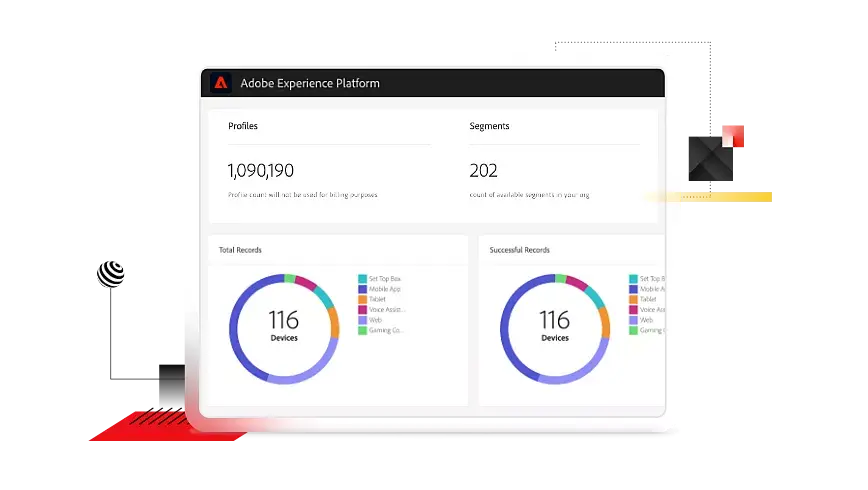
The Adobe Experience Platform is a platform-as-a-service (PaaS) serving as the foundation of the Adobe Experience Cloud, and is provided as a customer experience management platform with real-time customer profiles, continuous intelligence, and an open and extensible architecture that enables delivering personalized experiences at scale.
N/A
Adobe Real-Time CDP
Score 8.3 out of 10
N/A
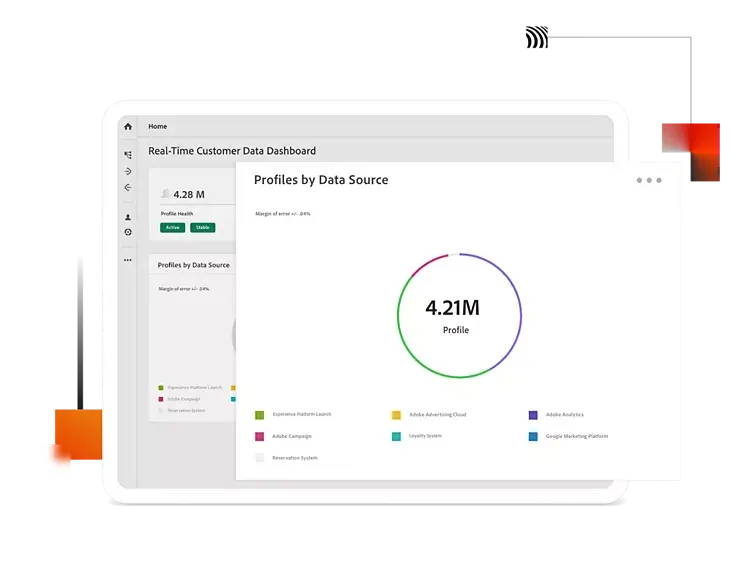
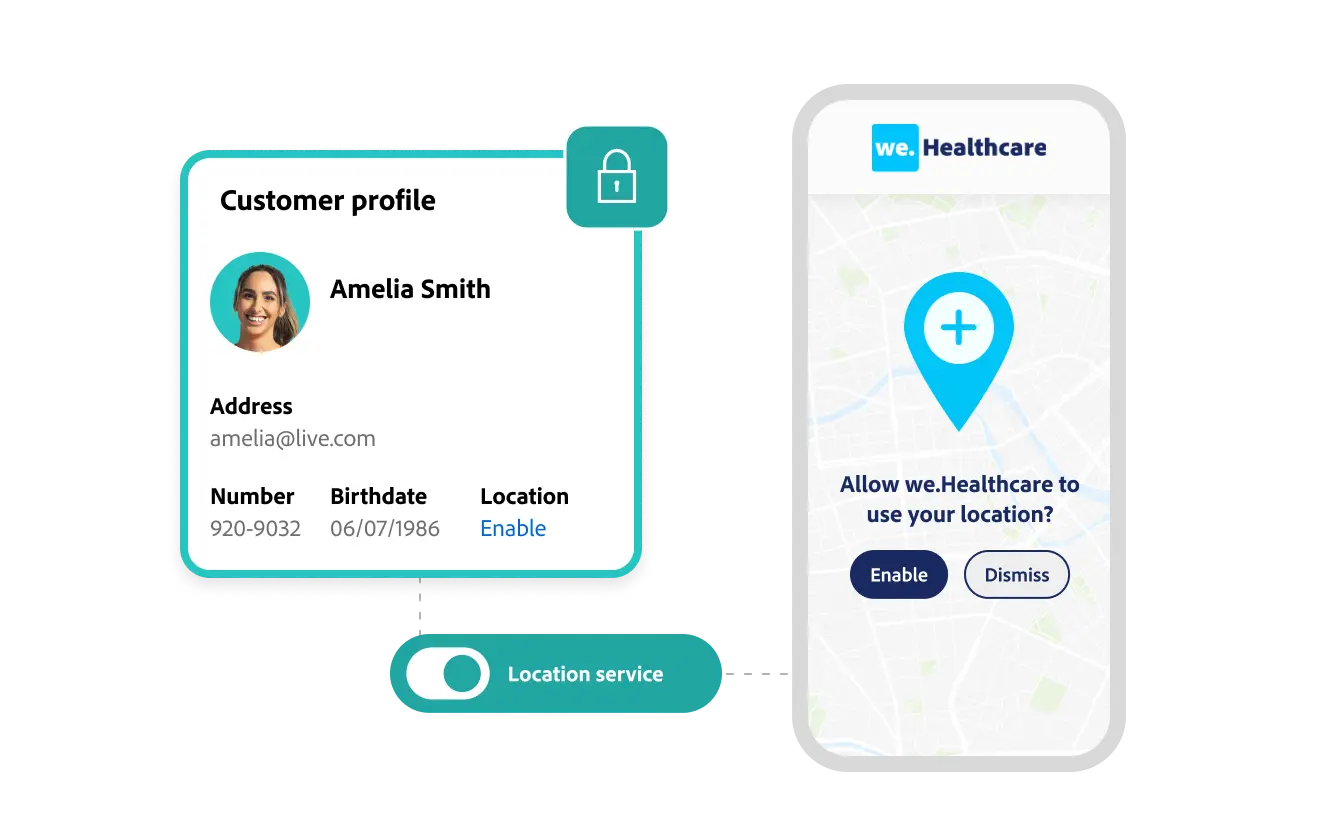
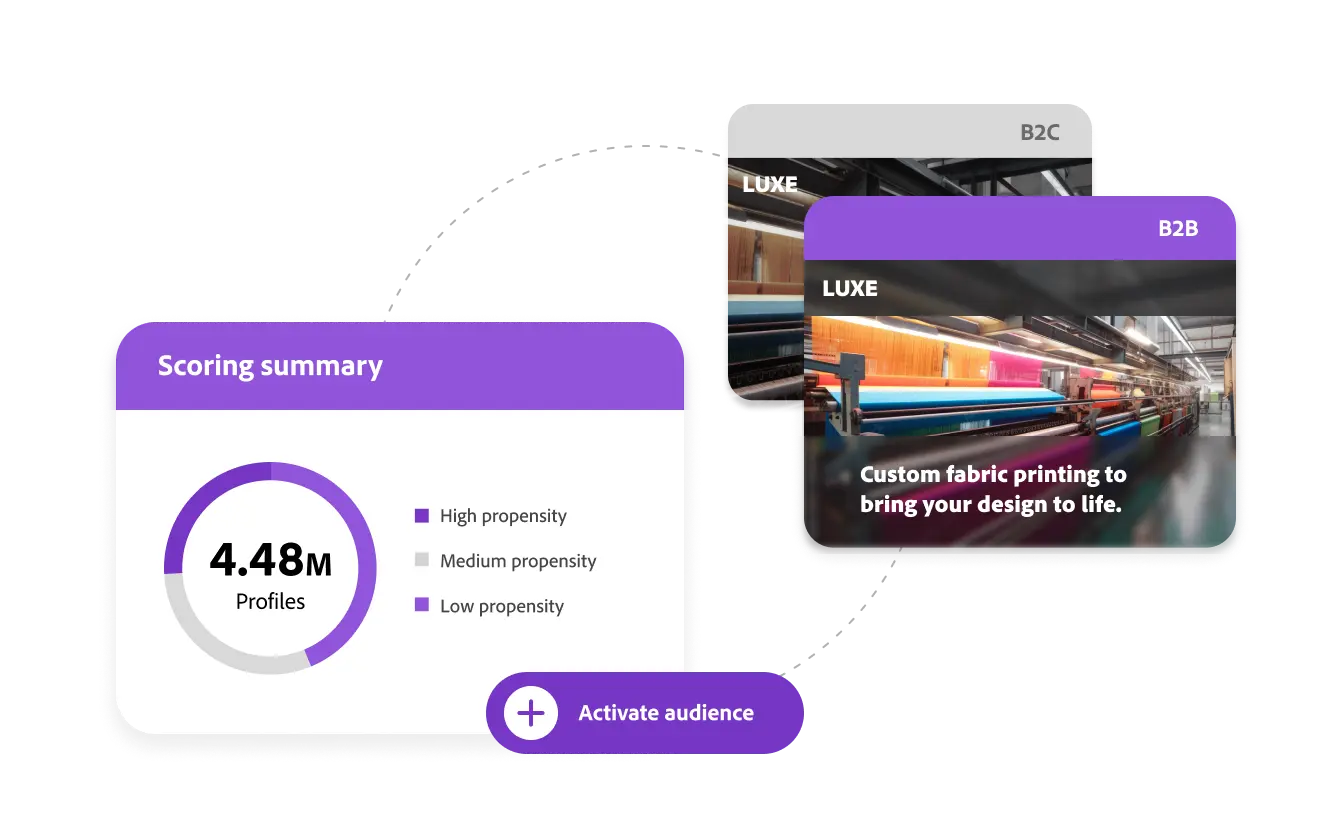
Adobe's Real-Time Customer Data Platform allows marketers to collect, normalize, and unify known and pseudonymous consumer and professional data into real-time profiles. These person or account-based profiles then power B2B, B2C, and hybrid customer experiences at scale.
N/A
AWS Elastic Beanstalk
Score 8.0 out of 10
N/A
AWS Elastic Beanstalk is the platform-as-a-service offering provided by Amazon and designed to leverage AWS services such as Amazon Elastic Cloud Compute (Amazon EC2), Amazon Simple Storage Service (Amazon S3).
$35
per month
Pricing
Adobe Experience Platform
Adobe Real-Time Customer Data Platform
AWS Elastic Beanstalk
Editions & Modules
No answers on this topic
No answers on this topic
No Charge
$0
Users pay for AWS resources (e.g. EC2, S3 buckets, etc.) used to store and run the application.
Offerings
Pricing Offerings
Adobe Experience Platform
Adobe Real-Time CDP
AWS Elastic Beanstalk
Free Trial
No
No
No
Free/Freemium Version
No
No
Yes
Premium Consulting/Integration Services
No
Yes
No
Entry-level Setup Fee
No setup fee
Optional
No setup fee
Additional Details
—
Adobe offers three tiers of Real-Time CDP tailored for any type of business wanting to power their customer experience management strategy with unified customer data. The Business-to-Consumer Edition is for B2C brands wanting to personalize experiences for consumers. The Business-to-Business Edition is for B2B brands wanting to personalize experiences for leads and accounts. The Business-to-Person Edition is for combined B2C and B2B brands wanting to personalize experiences for the same person across all lines of business.
The Adobe Experience Platform is well suited for companies that are maturing or have matured in their digital offerings and are looking for very sophisticated tools to elevate to the next level. It's also for well resourced teams, both financially and head count to take advantage of the deep functionality and integrations.
In any scenario where we have a unique offline and online 'Person ID,' we are able to see great results with profile stitching within CDP. In cases where we do not have a unique Person ID between datasets, we find ourselves at a point where we would need to change our architecture to have the same Person ID to see results.
I have been using AWS Elastic Beanstalk for more than 5 years, and it has made our life so easy and hassle-free. Here are some scenarios where it excels -
I have been using different AWS services like EC2, S3, Cloudfront, Serverless, etc. And Elastic Beanstalk makes our lives easier by tieing each service together and making the deployment a smooth process.
N number of integrations with different CI/CD pipelines make this most engineer's favourite service.
Scalability & Security comes with the service, which makes it the absolute perfect product for your business.
Personally, I haven't found any situations where it's not appropriate for the use cases it can be used. The pricing is also very cost-effective.
Getting a project set up using the console or CLI is easy compared to other [computing] platforms.
AWS Elastic Beanstalk supports a variety of programming languages so teams can experiment with different frameworks but still use the same compute platform for rapid prototyping.
Common application architectures can be referenced as patterns during project [setup].
Multiple environments can be deployed for an application giving more flexibility for experimentation.
Limited to the frameworks and configurations that AWS supports. There is no native way to use Elastic Beanstalk to deploy a Go application behind Nginx, for example.
It's not always clear what's changed on an underlying system when AWS updates an EB stack; the new version is announced, but AWS does not say what specifically changed in the underlying configuration. This can have unintended consequences and result in additional work in order to figure out what changes were made.
It helps faster deal cycles, higher win rated and a lot better prioritisation of leads. The churn rate is low this leads to a higher lifetime value. All decisions are now impacted with the real time data provided by Adobe Real-Time Customer Data Platform. It is very useful in increasing average revenue per customer hence this rating is well justified for the product
As our technology grows, it makes more sense to individually provision each server rather than have it done via beanstalk. There are several reasons to do so, which I cannot explain without further diving into the architecture itself, but I can tell you this. With automation, you also loose the flexibility to morph the system for your specific needs. So if you expect that in future you need more customization to your deployment process, then there is a good chance that you might try to do things individually rather than use an automation like beanstalk.
Overall I really like the Adobe Experience Cloud after a couple years of figuring out various tools. They are extremely powerful. The time commitment to learn them is high since it's not a tool you can easily begin using without much training.
Activation - great Segmentation - in UI, there should be the possibility of writing advanced code Tags. Both Mobile and Desktop Data Ingestion - might be pain in the ass. Changing one customer attribute is time-consuming. It should be some super admin or some feature. One user can change some customers' attributes easily. Data Transformation - Maybe there are some modules for that in AJO?
The overall usability is good enough, as far as the scaling, interactive UI and logging system is concerned, could do a lot better when it comes to the efficiency, in case of complicated node logics and complicated node architectures. It can have better software compatibility and can try to support collaboration with more softwares
Adobe has support at all levels and for each product but beyond tool questions you'll often be told they can help but it requires some paid consulting hours. So you either hire Adobe consultants or find 3rd part consultants who know their products well.
As I described earlier it has been really cost effective and really easy for fellow developers who don't want to waste weeks and weeks into learning and manually deploying stuff which basically takes month to create and go live with the Minimal viable product (MVP). With AWS Beanstalk within a week a developer can go live with the Minimal viable product easily.
- Do as many experiments as you can before you commit on using beanstalk or other AWS features. - Keep future state in mind. Think through what comes next, and if that is technically possible to do so. - Always factor in cost in terms of scaling. - We learned a valuable lesson when we wanted to go multi-region, because then we realized many things needs to change in code. So if you plan on using this a lot, factor multiple regions.
Real time access of data Very popular so no need of marketing Customer profiles are updated immediately and easy to access multiple customer data Apt for both business to customers and business to business accounts Maintains strong focus on customer growth and standard profiles Privacy and confidentiality is better when compared to other customer data profile softwares
We also use Heroku and it is a great platform for smaller projects and light Node.js services, but we have found that in terms of cost, the Elastic Beanstalk option is more affordable for the projects that we undertake. The fact that it sits inside of the greater AWS Cloud offering also compels us to use it, since integration is simpler. We have also evaluated Microsoft Azure and gave up trying to get an extremely basic implementation up and running after a few days of struggling with its mediocre user interface and constant issues with documentation being outdated. The authentication model is also badly broken and trying to manage resources is a pain. One cannot compare Azure with anything that Amazon has created in the cloud space since Azure really isn't a mature platform and we are always left wanting when we have to interface with it.