Adobe Illustrator CC is a vector-based graphic design software.
$20.99
per month
Adobe XD
Score 7.3 out of 10
N/A
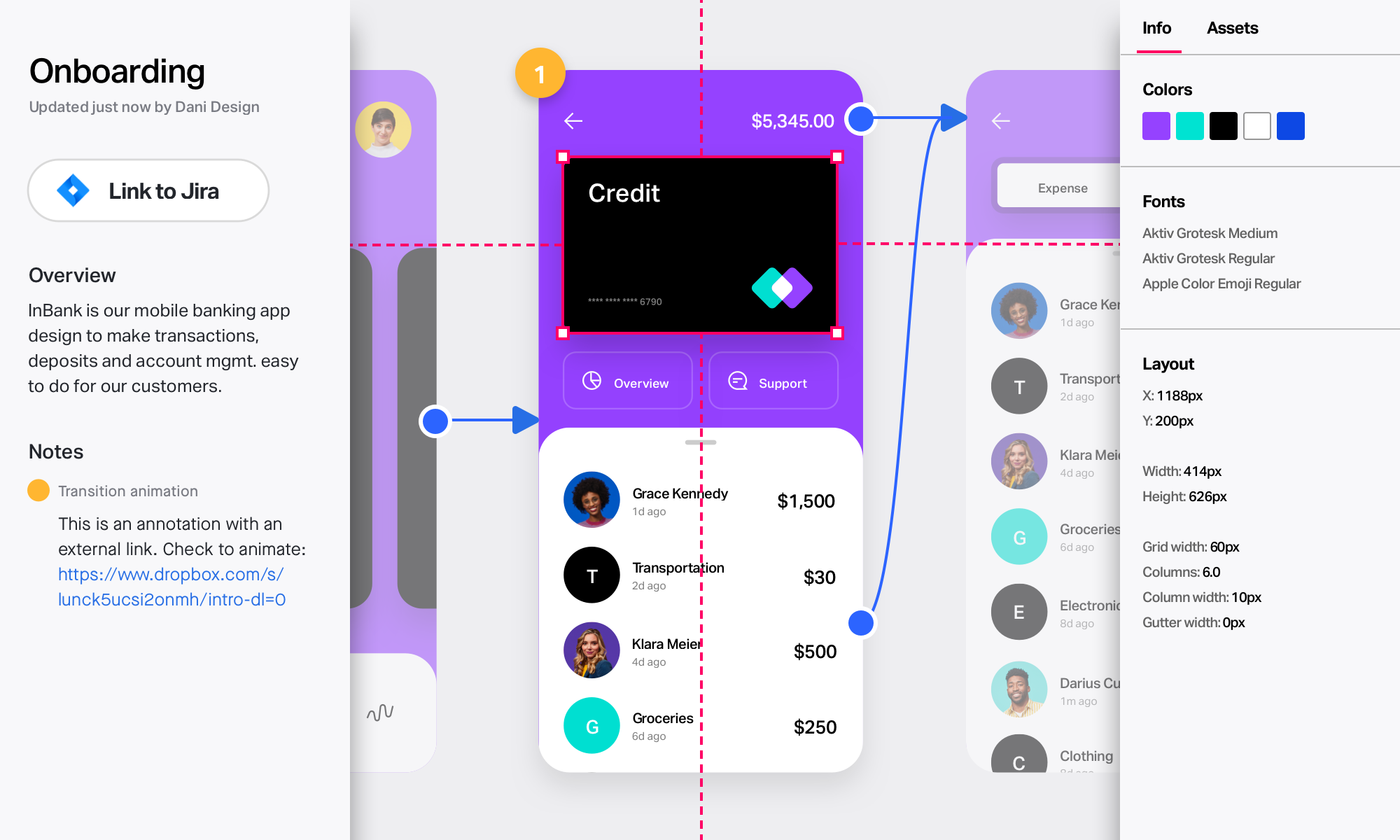
Adobe XD is a prototyping and UX/UI option for website and mobile application design, featuring a range of UI tools and and templates, a versatile artboard and contextual layer panels, and deep integration with Adobe's creative suite of products for fast import of objects from these applications.
$33.99
per month per license
InVision
Score 7.8 out of 10
N/A
InVision is a collaborative design and prototyping platform with features such as freehand drafting mode and interactive mockups, collaboration, idea management, user testing, and integration with Slack and other collaboration tools. According to the vendor, 1 million designers are using the free version.
$0
Pricing
Adobe Illustrator CC
Adobe XD
InVision
Editions & Modules
Yearly - Billed Monthly
$20.99
per month
Monthly
$31.49
per month
Yearly - Billed Upfront
$239.88
per year
Individual
$9.99 ($119.88)
per month (annual, prepaid)
Students & Teachers - All Apps
$19.99 ($239.88)
per month, annual plan (for the year)
Business - Single App
$33.99
per month per license
Business - All Apps
$79.99
per month per license
Schools & Universities - Institution Wide
Contact Sales
Free
$0
Pro
$7.75
per user/per month
Enterprise
Contact Sales
Offerings
Pricing Offerings
Adobe Illustrator
Adobe XD
InVision
Free Trial
No
No
No
Free/Freemium Version
No
No
No
Premium Consulting/Integration Services
No
No
No
Entry-level Setup Fee
No setup fee
No setup fee
No setup fee
Additional Details
—
—
—
More Pricing Information
Community Pulse
Adobe Illustrator CC
Adobe XD
InVision
Considered Multiple Products
Adobe Illustrator
Verified User
Professional
Chose Adobe Illustrator CC
I know a lot of designers that like to work in Photoshop, when text is involved I prefer Adobe Illustrator CC. You can outline your text and kern and correct there, it is crisp and easy. I would rather push vector points than pixels. I also really appreciate the multiple boards …
Verified User
Team Lead
Chose Adobe Illustrator CC
Illustrator has a wide capability for editing ability and can be used in combination with any of the other programs I've listed and used. This makes it incredibly versatile and one of my favorites. Each of the other products have specific purposes, making them less likely for …
There are not a lot of competitors that range an evaluation, likely because of the product's age and maturity. I’ve used only other Adobe products to do a few of the same things illustrator does, but really nothing really compares to it.
I feel Adobe Illustrator has a huge competitor in Sketch. With Sketch's plug-ins making it so simple to integrate with prototyping programs and CSS, it's really pushed it ahead for my department.
Since I've used Illustrator for so long, I've become good enough at it that I've never really been tempted to switch away. Newer designers may benefit from evaluating another software that is more specifically suited to the kind of design they are trying to do rather than …
XD can do everything we need and more. It's already part of our Creative Cloud subscription and integrates with our current tools. It was really easy to get to work and establish a workflow for almost all projects where we are designing, prototyping, and iterating. Feedback and …
We actually use Figma, Sketch, and InVision along with XD in our design practice. We mainly use XD on quick prototypes or experimentation for mobile projects. We always end up falling back to Sketch+InVision for our Design System Implementations and developer collaboration …
While I have used Zeplin, InVision, and Adobe XD on various projects, partly dependent on in-house client teams preferences, Adobe XD is the most familiar to me based on 20+ years [of] working within Adobe applications. They all can do most of what I am looking to do within …
Adobe XD used to be able to stack great, but I would select Figma over Adobe XD any day. Much better features, better quality of life features and includes darkmode. Another great part of Figma is the fact you can strickly use it in a browser without having to install any apps, …
Before XD came to the company, screens were designed in Illustrator or Photoshop and a PDF presentation was generated, which was extremely time-consuming. XD saved us a lot of time (and money) by generating interactive prototypes, which are much more tangible for the client …
Compared to Sketch, Adobe XD is perfectly capable for most prototyping needs that we have. And it's free! I am less familiar with Figma, but can only say that it was a cost-prohibitive choice at the time we were evaluating. I do believe that Figma has become more sophisticated …
Adobe XD is everything you would expect from an Adobe offering - seamless integration with creative cloud, easy workflow and great for collaboration. Adobe once again wins over again the competition by ensuring its software works straight out of the box with little to no …
The biggest benefit of Adobe XD for us is how easily we can use it based on our familiarity with Adobe products and because of the product’s integration with other Adobe products. There can be extra tasks when working, say, with Adobe Photoshop and Sketch. With XD, working …
I've tried all those softwares and the one that I found better was Proto.io. But, it has a high cost, and as we already had access to Adobe XD by our Adobe Creative Cloud membership, we chose to go with it. Some of those software have more features and functionalities than …
In our program, we utilize both Mac and Windows workstations. We had attempted to use Sketch (another similar application to Adobe XD), but it is only available on Mac platforms which prohibits our students from accessing software at home (which is predominantly Windows PCs). …
Adobe XD has been a joy to use. It has this "Wow, it just works!" feel to it. Illustrator is more powerful, but it's quirky, complex, and unfortunately a bit outdated and buggy. These days you expect colors to update in realtime while you're working in the color selector.
We only tested out using Adobe XD for similar uses and found it to be more challenging to fit within our processes. It didn't have as robust a set of capabilities as InVision and wasn't as easy to use enterprise wide. I recall also having issues with working with Sketch.
InVision can be a powerful tool when paired with Sketch and other platforms like Freehand. However, Figma is currently the industry leader in terms of functionality and usability for collaborative UI design and prototyping. Invision's sharing and prototyping features are its …
InVision is a bit limited overall compared to other programs like Figma, Photoshop, Illustrator and XD. At the time we selected InVision they were one of the leaders and introduced a lot of new features that were beneficial. However now we've moved back to many of the Adobe …
InVision's design is much more polished and seamless due to its apps on mobile and web. They are very easy to learn and gather feedback compared to Sketch or Principle. Although these features are quickly coming to the other apps, InVision has an upper hand at the moment with …
As the industry leader, XD and Figma have had some catching up to do. I think now InVision will have to innovate to hold these products off. Several are doing what made InVision famous, and in some instances do it even better. There is an insane amount of competition and …
We started using Marvel for rapid prototyping and the two are fairly analogous. In the end team and enterprise functionality drove the switch from one tool to the other. Another tool we had used is Axure, and for truly advanced, data driven prototyping, it's still the tool to …
It is the only tool that I use to create logos. It gives me the flexibility to create sharp text and marks and they can then be resized at will, color changes in a second and perfect way to export. I know that some people use Illustrator for document layout, it is not ideal. While I can easily create documents here, it really is InDesign that is the perfect tool.
If its already part of your organization, and they have a license for Creative Cloud, its worth learning. It doesnt take long to get started, but compared to other software in the same field, its lacking in many ways, from quality of life features to just simply not having the option for Darkmode. Even for website design, UX/UI, and mocking up proof-of-concepts, there are much better tools like Figma.
InVision is well suited for design reviews and immersing yourself in the experience of an app-to-be. As a Product Manager, it's difficult to take abstract concepts, user pain points, and business needs, and produce a vision for an app without a visual aid to communicate a vision. InVIsion offers PMs, designers, and developers the opportunity to sketch a vision, communicate about it with inline commenting, and shareable with other stakeholders.
While Adobe Illustrator CC is one of the only true design software out there, it really stands heads above the other products. It's clean UI and menu structure is easy to navigate.
We utilize many of the applications in the Adobe CC suite and our usage of this application came about simply because it was the one that was already paid for. Bearing that in mind we will definitely be renewing the software upon the expiration of the licensing. I am not sure if this is the solution we would go with were it not already included, we would have to evaluate all other options
There's a bit of a learning curve to this software vs other similar tools that can take some time to learn and get familiar with but the amount of functionality that Adobe Illustrator CC offers is quite large compared to simpler tools.
Adobe XD is basically on life-support now, there are much better software out there that do everything XD can do, and a few that you don't even have to pay a monthly subscription fee on. While Adobe XD is great as shortcuts that are used in other CC software works, and its integration with CC is great. But it still lacks compared to its closest competitor.
Easy for prototyping, sharing for comments and review changes with version. lags a bit when the design is heavy and large design models learning curve is shorter so saves time with new stakeholders responsiveness could be better and auto modeling can be introduced Not much advance features that can be used
I normally already know how to do whatever I'm trying out, but the documentation (as well as a simple Google search) makes any question quick to resolve. The Adobe boards themselves are a fantastic resource, especially for resolving questions between new programs and iterative releases.
I have not had a need to connect with the Adobe XD support team as of yet, but from past experience when dealing with the other products, the support has been very very good, and I would have no reason to think that this product would be any different. There are a good number of training videos on the Adobe site for this product as well as on other social media sites so a quick search should let you find the answers in several different ways.
I didn't need to contact InVision support, as I've never needed it. They have an intuitive UI, and most of the questions are answered in their help portal or in tutorials online. Since many people use it, there a great resources available on for example YouTube. No problems so far with InVision.
I chose Rhinoceros 3D because it is accurate to make drawings in it and it is better to make drawings in Rhinoceros 3D and then put them in Adobe Illustrator. But while printing or scaling it is much easier to put it in Adobe Illustrator. This makes the whole printing aspect of it much easier.
Before XD came to the company, screens were designed in Illustrator or Photoshop and a PDF presentation was generated, which was extremely time-consuming. XD saved us a lot of time (and money) by generating interactive prototypes, which are much more tangible for the client than a PDF. The "fight" with Figma is frequent. Both have features in which they are better than their competition. And, while I still choose Adobe XD, don't rule out moving to Figma with its multiple updates.
We only tested out using Adobe XD for similar uses and found it to be more challenging to fit within our processes. It didn't have as robust a set of capabilities as InVision and wasn't as easy to use enterprise wide. I recall also having issues with working with Sketch.
Ease of use means we are up and running in no time.
Integrates and is a part of the Adobe CC platform (which we already subscribe to) so there was no additional cost.
Online proofing and developer handoff links are the icing on the cake. Keeps everything in one place.
Handles all our assets (mostly created in Illustrator) like a dream. Even imports native Photoshop docs, too, so that saves us so much time round tripping.
InVision helps our team better and more professionally portray the value and the work we do as designers, leading to more company buy-in in supporting and funding our work. In the past, we would create PowerPoints with screenshots to portray a user workflow that we would share out to stakeholders. Once we began to use this app, where stakeholders could click through and comment as though they were “real” users, stakeholders began to better understand our work, designs, and workflows. This has led to more productive conversations that, in turn, lead to more effective end products that have more consistently served our business goals in tangible ways.
InVision helps us save production time, effort, and cost, as we are able to solve design issues early in the process by having clickable prototypes to show to internal stakeholders and external users. It’s, understandably, difficult for people to provide effective feedback on screenshots. Using the clickable prototypes we created in InVision, we are able to get more effective feedback to solve user workflow issues before we spend time and money developing problematic designs (and later having to redesign them).
It’s easier to market designs to potential buyers with clickable prototypes than with screenshots. With these prototypes, we’ve been able to sell more digital products before product release dates, which has helped to secure many contracts and new business relationships that continue to this day.