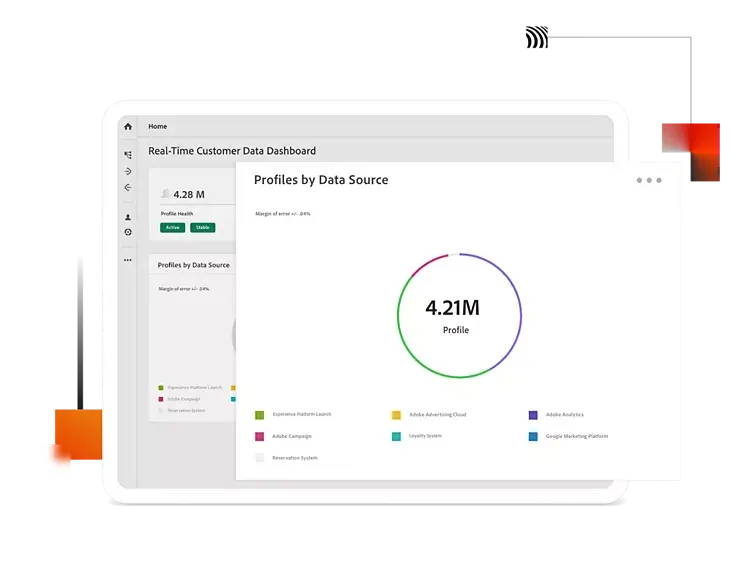
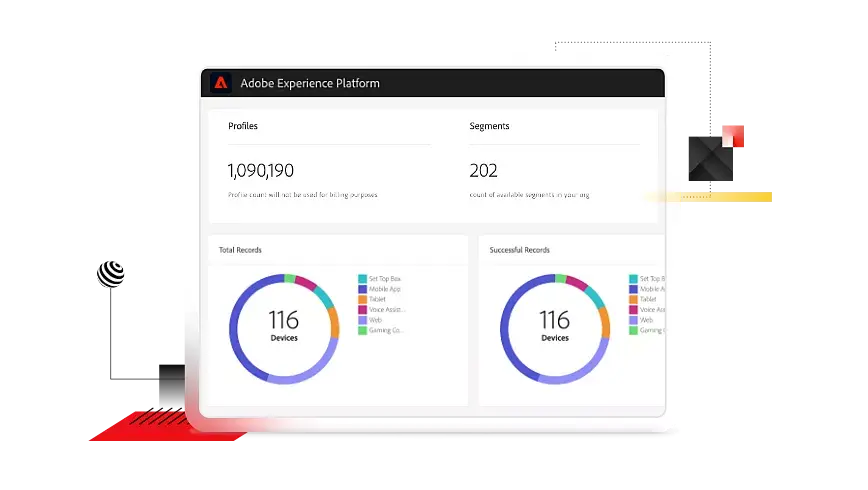
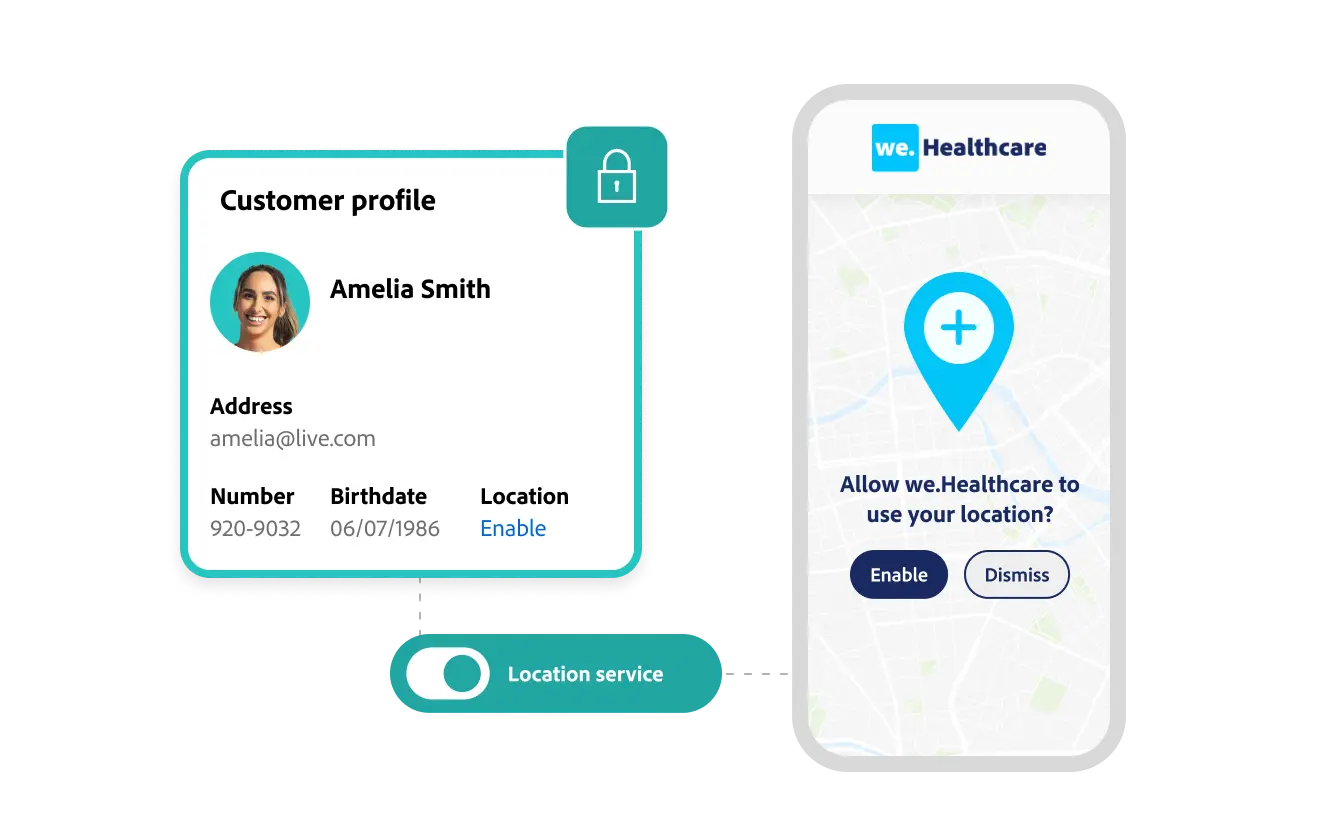
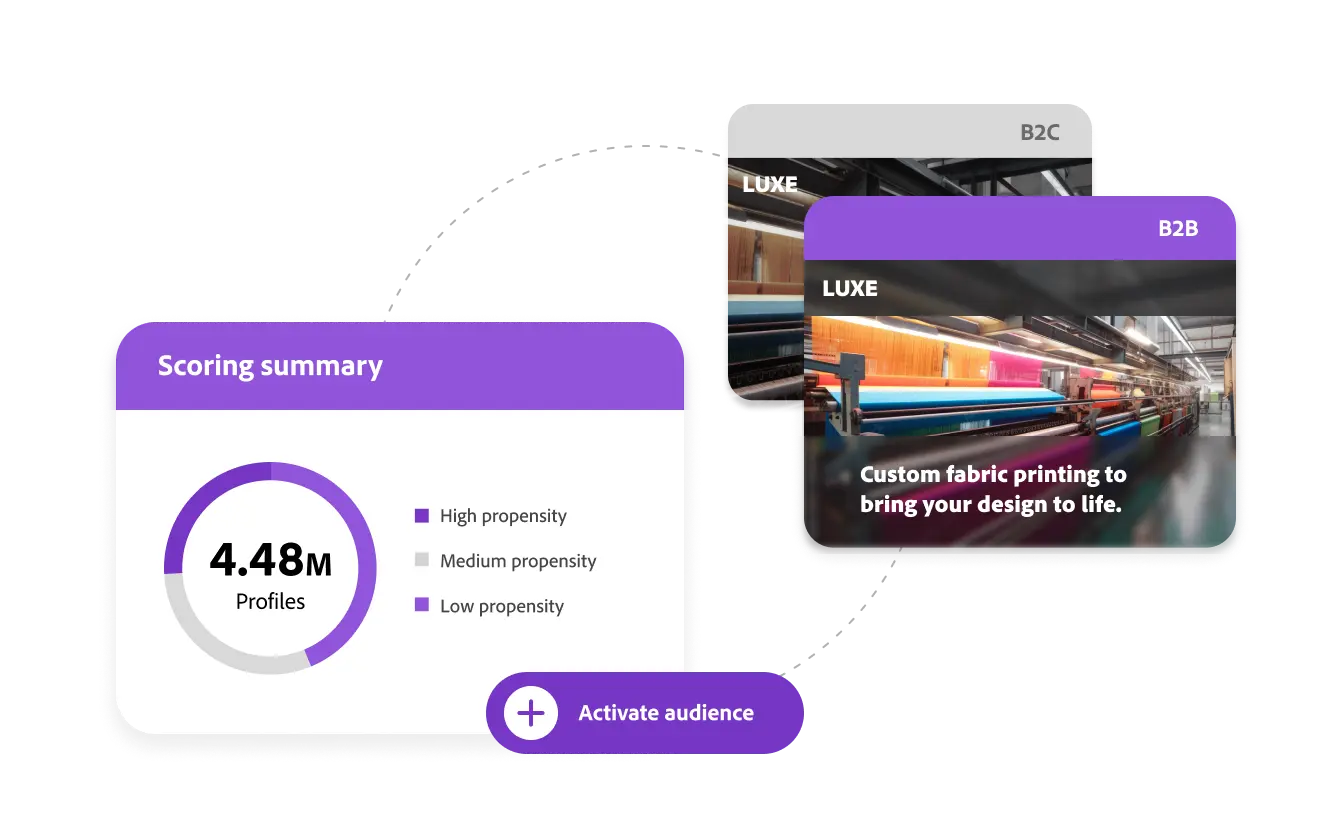
Adobe's Real-Time Customer Data Platform allows marketers to collect, normalize, and unify known and pseudonymous consumer and professional data into real-time profiles. These person or account-based profiles then power B2B, B2C, and hybrid customer experiences at scale.
N/A
Amplitude Analytics
Score 8.8 out of 10
N/A
Amplitude Analytics is an analytics platform for mobile and web. It is designed to help organizations segment users and analyze funnels, retention and revenue. Amplitude Analytics helps product marketers to achieve actionable insights from customer digital journeys and uses behavioral graphs to build customer-focused products. Amplitude also optimizes digital products for increased quality engagements, increased conversion rates, and long-term customer loyalty.
$61
per month
Pricing
Adobe Real-Time Customer Data Platform
Amplitude Analytics
Editions & Modules
No answers on this topic
Plus
$49
per month (paid annually)
Growth
Contact Sales
Enterprise
Contact Sales
Starter
Free
Offerings
Pricing Offerings
Adobe Real-Time CDP
Amplitude Analytics
Free Trial
No
No
Free/Freemium Version
No
Yes
Premium Consulting/Integration Services
Yes
Yes
Entry-level Setup Fee
Optional
No setup fee
Additional Details
Adobe offers three tiers of Real-Time CDP tailored for any type of business wanting to power their customer experience management strategy with unified customer data. The Business-to-Consumer Edition is for B2C brands wanting to personalize experiences for consumers. The Business-to-Business Edition is for B2B brands wanting to personalize experiences for leads and accounts. The Business-to-Person Edition is for combined B2C and B2B brands wanting to personalize experiences for the same person across all lines of business.
In any scenario where we have a unique offline and online 'Person ID,' we are able to see great results with profile stitching within CDP. In cases where we do not have a unique Person ID between datasets, we find ourselves at a point where we would need to change our architecture to have the same Person ID to see results.
Amplitude Analytics is an excellent solution for anyone with a mobile app and you want to track what users are doing, are they completing conversion steps, and are they coming back more often. This all helps you visual your customer bases engagement and help project future engagement and create goals. This also helps with prioritizing products to address drop-off points in the product to increase conversions.
Some offerings seem duplicative, like dashboards and notebooks, which only seem to differ in that one can subscribe to dashboards
The messaging on valid vs invalid property types could be better explained to clarify which types (string, Boolean, integer, etc) are expected in particular scenarios. Though the type is usually set during event creation, we've often seen examples where the data received in production is different, leading to 'invalid type' errors
It helps faster deal cycles, higher win rated and a lot better prioritisation of leads. The churn rate is low this leads to a higher lifetime value. All decisions are now impacted with the real time data provided by Adobe Real-Time Customer Data Platform. It is very useful in increasing average revenue per customer hence this rating is well justified for the product
Great product Good value for the cost/initiate Support docs and FAQs are great - they limit the necessity of reaching out to in-person support. So when you do call them ... it is for a legit question/issue, no just a "where is it" or a "how to I do xyz123?"
Activation - great Segmentation - in UI, there should be the possibility of writing advanced code Tags. Both Mobile and Desktop Data Ingestion - might be pain in the ass. Changing one customer attribute is time-consuming. It should be some super admin or some feature. One user can change some customers' attributes easily. Data Transformation - Maybe there are some modules for that in AJO?
It's a fairly straightforward platform that's beginner friendly. The biggest usability hurdle is most often created by your own team, as it's imperative to know what event sources are being sent to Amplitude and what those event names are. Within being properly onboarded by a team member it can be hard to get started using Amplitude. It takes time to understand what data your company may be sending to the product, the naming conventions of events (especially if there are old or deprecated events names
Alway up and running, or if there is a problem we can get back in the game right away. The reliability was a big selling point for me, and it was true when this company got it. Rollouts can be tough, but this was pretty seamless. Good support throughout the process, good documentation to handle questions/tips
No issues, problems, or negative remarks from us!! We had a plan, vendor support was rock solid, our data folks have experience, OCM supported as needed, and we got the rollout done on time, on budget, and with only minor hiccups. SInce the rollout, most of us have already forgotten the hiccups and generally speak highly of the product
I haven't used the Amplitude support other than their training docs so I can't speak too much to the in-person support but the docs are serviceable. Nothing too crazy but between the user tips, email notifications, and the decent number of docs I was able to get the support I needed to ramp up on the tool.
Virtual Not bad considering the timeframe and turnaround. The biggest benefit was for my end-users to hear a voice (other than mine/ours! LOL) telling them about the new features and capabilities. The in-person training was really good for having an expert that knows the answers and could refer to past experiences, problems, solutions. THey were a great resource to ease the transition ... basically a "you are gonna be okay with this change ... you got this etc.!" kinda vibe
Good enough to get strong baseline. I always make sure our our users go to and/or focus on the vebndor-provided support docs rather than any formal training. Our instructors come and go, but written policy and how-to docs live much longer in a corporate setting. That said, the online training is sufficient. I like that the training curric is stacked and progressive.
My team members all have background as data analysts, so Amp was pretty easy to for them. There was sufficient online training available. We also used the available support documents. The actual rollout went well. We did significant testing beforehand. We did a phased rollout, with partial silent rollout (part of OCM's plan) for the smallest line of business. THe silent one was "silent" b/c it was done without fanfare or public notices ... it was just a "we're doing some things, it wont impact your work or workday
Real time access of data Very popular so no need of marketing Customer profiles are updated immediately and easy to access multiple customer data Apt for both business to customers and business to business accounts Maintains strong focus on customer growth and standard profiles Privacy and confidentiality is better when compared to other customer data profile softwares
Amplitude Analytics provides much more granular data than Google Analytics and gives you much more flexibility in how you can segment and splice the data. It also provides the ability to create closed funnels, which I have yet to find out how to do in Google Analytics. Amplitude has a very similar interface to Mixpanel, with a few handy additions, like the ability to name and categorize your events.
Like all the other grades, it was mostly an easy implementation ... we have experience people, the rollout in general is well planned, and the vendor was very supportive