Overview
ProductRatingMost Used ByProduct SummaryStarting Price
Amazon RDS
Score 8.4 out of 10
N/A
Amazon Relational Database Service (Amazon RDS) is a database-as-a-service (DBaaS) from Amazon Web Services.N/A
Google BigQuery
Score 8.7 out of 10
N/A
Google's BigQuery is part of the Google Cloud Platform, a database-as-a-service (DBaaS) supporting the querying and rapid analysis of enterprise data.
$6.25
per TiB (after the 1st 1 TiB per month, which is free)
MySQL
Score 8.3 out of 10
N/A
MySQL is a popular open-source relational and embedded database, now owned by Oracle.N/A
Pricing
Amazon Relational Database Service (RDS)Google BigQueryMySQL
Editions & Modules
Amazon RDS for PostgreSQL
$0.24 ($0.48)
per hour, R5 Large (R5 Extra Large)
Amazon RDS for MariaDB
$0.25 ($0.50)
per hour, R5 Large (R5 Extra Large)
Amazon RDS for MySQL
$0.29 ($0.58)
per hour, R5 Large (R5 Extra Large)
Amazon RDS for Oracle
$0.482 ($0.964)
per hour, R5 Large (R5 Extra Large)
Amazon RDS for SQL Server
$1.02 ($1.52)
per hour, R5 Large (R5 Extra Large)
Standard edition
$0.04 / slot hour
Enterprise edition
$0.06 / slot hour
Enterprise Plus edition
$0.10 / slot hour
No answers on this topic
Offerings
Pricing Offerings
Amazon RDSGoogle BigQueryMySQL
Free Trial
NoYesNo
Free/Freemium Version
NoYesNo
Premium Consulting/Integration Services
NoNoNo
Entry-level Setup FeeOptionalNo setup feeNo setup fee
Additional Details
More Pricing Information
Community Pulse
Amazon Relational Database Service (RDS)Google BigQueryMySQL
Considered Multiple Products
Amazon RDS
Chose Amazon Relational Database Service (RDS)
Amazon Relational Database Service manages MariaDB and MySQL, so if you need to use those databases, then Amazon Relational Database Service will manage everything from the installation to the incremental updates needed for operation. Not having to worry about maintaining a …
Chose Amazon Relational Database Service (RDS)
We've evaluated using [Amazon Relational Database Service (RDS)] against same-capability configurations with MySQL/MariaDB, PostgreSQL, and even Amazon Redshift (though, we haven't evaluated redshift in quite some time). Assuming RDS checks all the boxes for the requirements of …
Chose Amazon Relational Database Service (RDS)
We used to have On-Premises servers with Microsoft SQL Server and MySQL databases. We used that for years, and we had a hard time and a lot of work involved in securing and updating the server. And not no mention that growth involves a lot of calculations and extra costs. …
Chose Amazon Relational Database Service (RDS)
At first GCP was considered, but it not very intuitive to use and maintain. We then wanted to run MySQL instances on EC2, which would have been a little cost effective but having limited man power and hassle of patching, scaling and backup led us to select more managed service.
Chose Amazon Relational Database Service (RDS)
These tools are not necessarily competing products. They integrate seamlessly once identity access is established and used to easily manage and support our MySQL RDS instances.
Chose Amazon Relational Database Service (RDS)
Running MySQL RDS was a simpler solution than running standalone MySQL servers as the semi-managed nature of RDS saved us the need to install, maintain, secure, and backup our database servers.
Using MySQL RDS was in addition to running MongoDB Atlas workloads and allowed us to …
Chose Amazon Relational Database Service (RDS)
AWS RDS supports many engines and is more efficient than just MySQL.
Chose Amazon Relational Database Service (RDS)
With the latest serverless technology Amazon Relational Database Service (RDS) has an edge over all its competitors, it works really fast with high log retention.
Chose Amazon Relational Database Service (RDS)
MongoDB is nosql database and some clients prefer it. In our presentation we try to persuade them to use RDS with its pros and cons. The type of selection depends upon the actual need.
Chose Amazon Relational Database Service (RDS)
RDS seems to be the best cross-section between cost, availability, deployment and throughput.
Chose Amazon Relational Database Service (RDS)
Every traditional rational Database requires server installation & accessing needs to be monitored periodically manually.
But Amazon provides easy-to-access and monitor health and scale-up and scale-down option just by clicks without adding any additional hardware.
Chose Amazon Relational Database Service (RDS)
The database are the same. just the managed part is easy as is performed by Amazons
Chose Amazon Relational Database Service (RDS)
Actually you can have most of these tools through AWS Relational Database Service as they are basically those technologies provided as a service. It is way better to have those products provided as a service through a huge and reliable infrastructure like AWS.
Chose Amazon Relational Database Service (RDS)
Amazon RDS provides more configuration ability, and also it's scalable and highly available for real-time response to the complex query.
Chose Amazon Relational Database Service (RDS)
It's hard to identify how Amazon RDS stacks up against the databases they support, because to install and use a relational database in a production environment you need a Database Administrator to help install, configure and manage. Amazon RDS keeps the details simple enough …
Chose Amazon Relational Database Service (RDS)
RDS implements the databases we were interested in and allows us to focus on the application and not the management. AWS handles setting up the server and the database as well as upgrading the software when necessary. Security is simple, using security groups to allow or deny …
Chose Amazon Relational Database Service (RDS)
Amazon Relational Database Service will probably give you everything you need from a traditional manual DB setup, except everything is managed for you. The only downside is having to pay the premium for the service; however, the trade-off of not having to deal with the …
Chose Amazon Relational Database Service (RDS)
RDS provides all the features of databases you could host yourself, without all of the maintenance and headaches required, while providing more flexibility and lower TCO.
Chose Amazon Relational Database Service (RDS)
Honestly, there aren't a lot of great alternatives to RDS, and most likely the real alternative is just running an instance on your local box. While lots of other services (like Rackspace) offer hosted database solutions, RDS in my opinion, is the clear winner on price, …
Chose Amazon Relational Database Service (RDS)
Automated snap-shotting every 24 hours is, again something that I could just set up in minutes with a few clicks, though we also backup on cron jobs to elsewhere, and, because of our industry we have a HUGE "forensic logs" that initially live in the database but get archived …
Chose Amazon Relational Database Service (RDS)
Our other application components are all hosted within Amazon's systems already, and the tight coupling of RDS with the security groups and virtual private cloud offerings made locking down privacy and security much easier than integrating with an outside provider. The deeper …
Google BigQuery
Chose Google BigQuery
It is much faster than MySQL so it is responsible for handling our log data which have millions of records.
Chose Google BigQuery
Compared to PostgreSQL and MySQL, Google BigQuery is faster and more scalable for large datasets. It’s serverless, so there’s no need to manage infrastructure. We chose Google BigQuery for its ease of use built-in analytics features
Chose Google BigQuery
Main reason is how it integrates directly with the google ecosystem which really facilitates the automatization proceses for the whole company. This ensures that sales and all the other departments have the correct information on a daily bases with a ease of use with day to day …
Chose Google BigQuery
I have used most of the data analytics platforms. Based on my work, I have found that the user interface of Google BigQuery is simple to navigate. I like the front view - ease of joining tables, and integration with other platforms.
MySQL
Chose MySQL
I have used Google BigQuery and it is very difficult to start with it. Although it is very fast and the speed performance is much better with BigQuery but it costs and is very difficult to start with. There's also no proper documentation on it, so MySQL wins in terms of …
Chose MySQL
MySQL provides the option to reduce support and maintenance cost when P0 Level 1 support is not really needed for databases used for noncritical use cases and workloads. Other versions that include Microsoft SQL, Amazon RDS, etc don't provide such options and are overkill. …
Chose MySQL
Before MySQL, our team was exploring and evaluating different options for a good RDMS (relational database management system) service. We explored Oracle, MSSQL, and Google BigQuery. Most of these are costly and not easy to maintain in the long run in terms of price especially …
Chose MySQL
We chose MySQL because of its open-source nature and its compatibility with various systems, languages, and databases. It is easy to use and fast. Additionally, it has been in the market for more than 30 years now which makes it a reliable option when compared to its …
Chose MySQL
MySQL has most of the functionality of other, very costly, alternatives without the big price tag. It is open-source with improvements coming at a relatively good rate. It is not as robust as those other offerings and can have some challenging points at scale for large …
Chose MySQL
After Oracle bought MySQL, I have pivoted some projects to use MariaDB instead, which is a fork of MySQL and maintained by the community and original developers of MySQL. This is free under the GNU GPL, and is not impacted by decisions Oracle makes for MySQL. RDS has the …
Chose MySQL
MySQL has it's pros / cons. The best things about MySQL are that it is open-source/free and has such a vast community of users. If you want a free database MySQL is the quickest to use, but if you're trying to build a strong foundation for your company, I prefer Postgres. If …
Chose MySQL
MySQL is a standard across many industries and is familiar to most developers as a result. When comparing to something like MongoDB, most developers are more familiar and comfortable with MySQL. When comparing to something like Oracle, MySQL clearly wins in the expense …
Chose MySQL
There are so many SQL solutions, it's difficult to compare them all. MySQL has a huge community and suite of tools to help it. However, it doesn't have quite the upside as the paid solutions. It's comparable to something like Postgres and all depends on the tools and support …
Features
Amazon Relational Database Service (RDS)Google BigQueryMySQL
Database-as-a-Service
Comparison of Database-as-a-Service features of Product A and Product B
Amazon Relational Database Service (RDS)
-
Ratings
Google BigQuery
8.5
80 Ratings
0% above category average
MySQL
-
Ratings
Automatic software patching00 Ratings8.017 Ratings00 Ratings
Database scalability00 Ratings9.179 Ratings00 Ratings
Automated backups00 Ratings8.524 Ratings00 Ratings
Database security provisions00 Ratings8.773 Ratings00 Ratings
Monitoring and metrics00 Ratings8.475 Ratings00 Ratings
Automatic host deployment00 Ratings8.013 Ratings00 Ratings
Best Alternatives
Amazon Relational Database Service (RDS)Google BigQueryMySQL
Small Businesses
InterSystems IRIS
InterSystems IRIS
Score 8.0 out of 10
IBM Cloudant
IBM Cloudant
Score 7.4 out of 10
InfluxDB
InfluxDB
Score 8.8 out of 10
Medium-sized Companies
InterSystems IRIS
InterSystems IRIS
Score 8.0 out of 10
IBM Cloudant
IBM Cloudant
Score 7.4 out of 10
SQLite
SQLite
Score 8.0 out of 10
Enterprises
SAP IQ
SAP IQ
Score 10.0 out of 10
IBM Cloudant
IBM Cloudant
Score 7.4 out of 10
SQLite
SQLite
Score 8.0 out of 10
All AlternativesView all alternativesView all alternativesView all alternatives
User Ratings
Amazon Relational Database Service (RDS)Google BigQueryMySQL
Likelihood to Recommend
8.9
(131 ratings)
8.8
(77 ratings)
8.4
(145 ratings)
Likelihood to Renew
8.4
(5 ratings)
8.1
(5 ratings)
9.0
(5 ratings)
Usability
8.7
(8 ratings)
6.9
(6 ratings)
7.9
(18 ratings)
Availability
9.0
(1 ratings)
7.3
(1 ratings)
-
(0 ratings)
Performance
7.0
(1 ratings)
6.4
(1 ratings)
-
(0 ratings)
Support Rating
9.6
(13 ratings)
5.3
(11 ratings)
9.0
(3 ratings)
Online Training
10.0
(1 ratings)
-
(0 ratings)
-
(0 ratings)
Implementation Rating
-
(0 ratings)
-
(0 ratings)
8.0
(1 ratings)
Configurability
-
(0 ratings)
6.4
(1 ratings)
-
(0 ratings)
Contract Terms and Pricing Model
-
(0 ratings)
10.0
(1 ratings)
-
(0 ratings)
Ease of integration
-
(0 ratings)
7.3
(1 ratings)
-
(0 ratings)
Product Scalability
9.0
(1 ratings)
7.3
(1 ratings)
-
(0 ratings)
Professional Services
-
(0 ratings)
8.2
(2 ratings)
-
(0 ratings)
User Testimonials
Amazon Relational Database Service (RDS)Google BigQueryMySQL
Likelihood to Recommend
Amazon AWS
If your application needs a relational data store and uses other AWS services, AWS RDS is a no-brainer. It offers all the traditional database features, makes it a snap to set up, creates cross-region replication, has advanced security, built-in monitoring, and much more at a very good price. You can also set up streaming to a data lake using various other AWS services on your RDS.
Read full review
Google
Event-based data can be captured seamlessly from our data layers (and exported to Google BigQuery). When events like page-views, clicks, add-to-cart are tracked, Google BigQuery can help efficiently with running queries to observe patterns in user behaviour. That intermediate step of trying to "untangle" event data is resolved by Google BigQuery. A scenario where it could possibly be less appropriate is when analysing "granular" details (like small changes to a database happening very frequently).
Read full review
Oracle
MySQL is best suited for applications on platform like high-traffic content-driven websites, small-scale web apps, data warehouses which regards light analytical workloads. However its less suited for areas like enterprise data warehouse, OLAP cubes, large-scale reporting, applications requiring flexible or semi-structured data like event logging systems, product configurations, dynamic forms.
Read full review
Pros
Amazon AWS
  • Automated Database Management: We use it for streamlining routine tasks like software patching and database backups.
  • Scalability on Demand: we use it to handle traffic spikes, scaling both vertically and horizontally.
  • Database Engine Compatibility: It works amazingly with multiple database engines used by different departments within our organization including MySQL, PostgreSQL, SQL Server, and Oracle.
  • Monitoring: It covers our extensive monitoring and logging, and also has great compatibility with Amazon CloudWatch
Read full review
Google
  • Realtime integration with Google Sheets.
  • GSheet data can be linked to a BigQuery table and the data in that sheet is ingested in realtime into BigQuery. It's a live 'sync' which means it supports insertions, deletions, and alterations. The only limitation here is the schema'; this remains static once the table is created.
  • Seamless integration with other GCP products.
  • A simple pipeline might look like this:-
  • GForms -> GSheets -> BigQuery -> Looker
  • It all links up really well and with ease.
  • One instance holds many projects.
  • Separating data into datamarts or datameshes is really easy in BigQuery, since one BigQuery instance can hold multiple projects; which are isolated collections of datasets.
Read full review
Oracle
  • Stable - it just runs, with minimal downtime or errors
  • Fast - well-structured data is quickly written and read
  • Secure - MySQL is easy to keep data secure from people and applications that shouldn't see it
  • Easy to use - SQL is industry standard so no problems with adding, editing and reading data stored in MySQL
Read full review
Cons
Amazon AWS
  • It is a little difficult to configure and connect to an RDS instance. The integration with ECS can be made more seamless.
  • Exploring features within RDS is not very easy and intuitive. Either a human friendly documentation should be added or the User Interface be made intuitive so that people can explore and find features on their own.
  • There should be tools to analyze cost and minimize it according to the usage.
Read full review
Google
  • Please expand the availability of documentation, tutorials, and community forums to provide developers with comprehensive support and guidance on using Google BigQuery effectively for their projects.
  • If possible, simplify the pricing model and provide clearer cost breakdowns to help users understand and plan for expenses when using Google BigQuery. Also, some cost reduction is welcome.
  • It still misses the process of importing data into Google BigQuery. Probably, by improving compatibility with different data formats and sources and reducing the complexity of data ingestion workflows, it can be made to work.
Read full review
Oracle
  • Learning curve: is big. Newbies will face problems in understanding the platform initially. However, with plenty of online resources, one can easily find solutions to problems and learn on the go.
  • Backup and restore: MySQL is not very seamless. Although the data is never ruptured or missed, the process involved is not very much user-friendly. Maybe, a new command-line interface for only the backup-restore functionality shall be set up again to make this very important step much easier to perform and maintain.
Read full review
Likelihood to Renew
Amazon AWS
We do renew our use of Amazon Relational Database Service. We don't have any problems faced with RDS in place. RDS has taken away lot of overhead of hosting database, managing the database and keeping a team just to manage database. Even the backup, security and recovery another overhead that has been taken away by RDS. So, we will keep on using RDS.
Read full review
Google
We have to use this product as its a 3rd party supplier choice to utilise this product for their data side backend so will not be likely we will move away from this product in the future unless the 3rd party supplier decides to change data vendors.
Read full review
Oracle
For teaching Databases and SQL, I would definitely continue to use MySQL. It provides a good, solid foundation to learn about databases. Also to learn about the SQL language and how it works with the creation, insertion, deletion, updating, and manipulation of data, tables, and databases. This SQL language is a foundation and can be used to learn many other database related concepts.
Read full review
Usability
Amazon AWS
I've been using AWS Relational Database Services in several projects in different environments and from the AWS products, maybe this one together to EC2 are my favourite. They deliver what they promise. Reliable, fast, easy and with a fair price (in comparison to commercial products which have obscure license agreements).
Read full review
Google
I think overall it is easy to use. I haven't done anything from the development side but an more of an end user of reporting tables built in Google BigQuery. I connect data visualization tools like Tableau or Power BI to the BigQuery reporting tables to analyze trends and create complex dashboards.
Read full review
Oracle
I give MySQL a 9/10 overall because I really like it but I feel like there are a lot of tech people who would hate it if I gave it a 10/10. I've never had any problems with it or reached any of its limitations but I know a few people who have so I can't give it a 10/10 based on those complaints.
Read full review
Reliability and Availability
Amazon AWS
No answers on this topic
Google
I have never had any significant issues with Google Big Query. It always seems to be up and running properly when I need it. I cannot recall any times where I received any kind of application errors or unplanned outages. If there were any they were resolved quickly by my IT team so I didn't notice them.
Read full review
Oracle
No answers on this topic
Performance
Amazon AWS
No answers on this topic
Google
I think Google Big Query's performance is in the acceptable range. Sometimes larger datasets are somewhat sluggish to load but for most of our applications it performs at a reasonable speed. We do have some reports that include a lot of complex calculations and others that run on granular store level data that so sometimes take a bit longer to load which can be frustrating.
Read full review
Oracle
No answers on this topic
Support Rating
Amazon AWS
I have only had good experiences in working with AWS support. I will admit that my experience comes from the benefit of having a premium tier of support but even working with free-tier accounts I have not had problems getting help with AWS products when needed. And most often, the docs do a pretty good job of explaining how to operate a service so a quick spin through the docs has been useful in solving problems.
Read full review
Google
BigQuery can be difficult to support because it is so solid as a product. Many of the issues you will see are related to your own data sets, however you may see issues importing data and managing jobs. If this occurs, it can be a challenge to get to speak to the correct person who can help you.
Read full review
Oracle
We have never contacted MySQL enterprise support team for any issues related to MySQL. This is because we have been using primarily the MySQL Server community edition and have been using the MySQL support forums for any questions and practical guidance that we needed before and during the technical implementations. Overall, the support community has been very helpful and allowed us to make the most out of the community edition.
Read full review
Online Training
Amazon AWS
the online training & digital content available on the web from AWS was having sufficient information to deploy and run the service
Read full review
Google
No answers on this topic
Oracle
No answers on this topic
Implementation Rating
Amazon AWS
No answers on this topic
Google
No answers on this topic
Oracle
1. Estimate your data size. 2. Test, test, and test.
Read full review
Alternatives Considered
Amazon AWS
Amazon Relational Database Service (RDS) stands out among similar products due to its seamless integration with other AWS services, automated backups, and multi-AZ deployments for high availability. Its support for various database engines, such as MySQL, PostgreSQL, and Oracle, provides flexibility. Additionally, RDS offers managed security features, including encryption and IAM integration, enhancing data protection. The pay-as-you-go pricing model makes it cost-effective. Overall, Amazon RDS excels in ease of use, scalability, and a comprehensive feature set, making it a top choice for organizations seeking a reliable and scalable managed relational database service in the cloud.
Read full review
Google
PowerBI can connect to GA4 for example but the data processing is more complicated and it takes longer to create dashboards. Azure is great once the data import has been configured but it's not an easy task for small businesses as it is with BigQuery.
Read full review
Oracle
MongoDB has a dynamic schema for how data is stored in 'documents' whereas MySQL is more structured with tables, columns, and rows. MongoDB was built for high availability whereas MySQL can be a challenge when it comes to replication of the data and making everything redundant in the event of a DR or outage.
Read full review
Contract Terms and Pricing Model
Amazon AWS
No answers on this topic
Google
None so far. Very satisfied with the transparency on contract terms and pricing model.
Read full review
Oracle
No answers on this topic
Scalability
Amazon AWS
No answers on this topic
Google
We have continued to expand out use of Google Big Query over the years. I'd say its flexibility and scalability is actually quite good. It also integrates well with other tools like Tableau and Power BI. It has served the needs of multiple data sources across multiple departments within my company.
Read full review
Oracle
No answers on this topic
Professional Services
Amazon AWS
No answers on this topic
Google
Google Support has kindly provide individual support and consultants to assist with the integration work. In the circumstance where the consultants are not present to support with the work, Google Support Helpline will always be available to answer to the queries without having to wait for more than 3 days.
Read full review
Oracle
No answers on this topic
Return on Investment
Amazon AWS
  • The overall cost increases, but we spect this and we can mitigate other risks.
  • Is easy to work from the cloud. Is reliable, but we keep our local solution as well where RDS works quite good.
  • RDS allow us to focurs on owr objetives instead of the other matters regarding databases.
Read full review
Google
  • Previously, running complex queries on our on-premise data warehouse could take hours. Google BigQuery processes the same queries in minutes. We estimate it saves our team at least 25% of their time.
  • We can target our marketing campaigns very easily and understand our customer behaviour. It lets us personalize marketing campaigns and product recommendations and experience at least a 20% improvement in overall campaign performance.
  • Now, we only pay for the resources we use. Saved $1 million annually on data infrastructure and data storage costs compared to our previous solution.
Read full review
Oracle
  • As it is an open source solution through community solution, we can use it in a multitude of projects without cost license
  • The acquisition by Oracle makes you need to contract support for the enterprise version
  • If you have knowledge about oracle databases, you can get more out of the enterprise version
Read full review
ScreenShots

Amazon RDS Screenshots

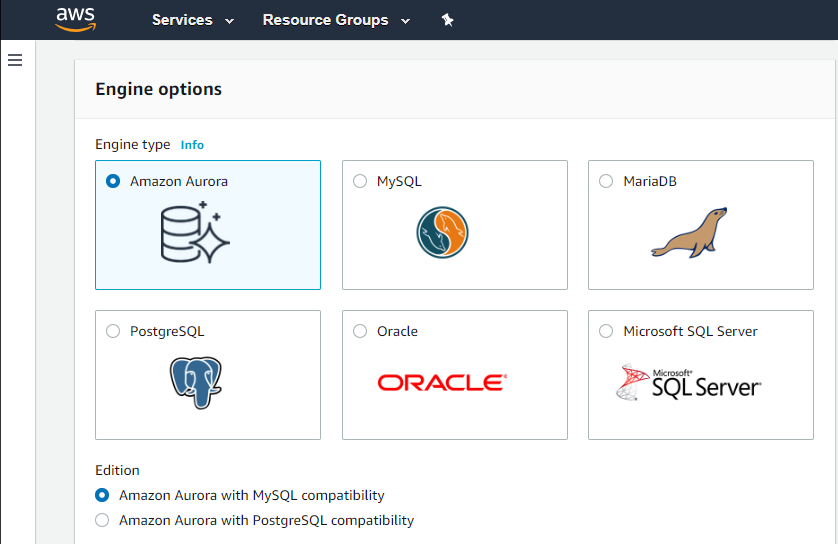
Screenshot of A look inside the RDS console.

Google BigQuery Screenshots

Screenshot of Migrating data warehouses to BigQuery - Features a streamlined migration path from Netezza, Oracle, Redshift, Teradata, or Snowflake to BigQuery using the fully managed BigQuery Migration Service.Screenshot of bringing any data into BigQuery - Data files can be uploaded from local sources, Google Drive, or Cloud Storage buckets, using BigQuery Data Transfer Service (DTS), Cloud Data Fusion plugins, by replicating data from relational databases with Datastream for BigQuery, or by leveraging Google's data integration partnerships.Screenshot of generative AI use cases with BigQuery and Gemini models - Data pipelines that blend structured data, unstructured data and generative AI models together can be built to create a new class of analytical applications. BigQuery integrates with Gemini 1.0 Pro using Vertex AI. The Gemini 1.0 Pro model is designed for higher input/output scale and better result quality across a wide range of tasks like text summarization and sentiment analysis. It can be accessed using simple SQL statements or BigQuery’s embedded DataFrame API from right inside the BigQuery console.Screenshot of insights derived from images, documents, and audio files, combined with structured data - Unstructured data represents a large portion of untapped enterprise data. However, it can be challenging to interpret, making it difficult to extract meaningful insights from it. Leveraging the power of BigLake, users can derive insights from images, documents, and audio files using a broad range of AI models including Vertex AI’s vision, document processing, and speech-to-text APIs, open-source TensorFlow Hub models, or custom models.Screenshot of event-driven analysis - Built-in streaming capabilities automatically ingest streaming data and make it immediately available to query. This allows users to make business decisions based on the freshest data. Or Dataflow can be used to enable simplified streaming data pipelines.Screenshot of predicting business outcomes AI/ML - Predictive analytics can be used to streamline operations, boost revenue, and mitigate risk. BigQuery ML democratizes the use of ML by empowering data analysts to build and run models using existing business intelligence tools and spreadsheets.