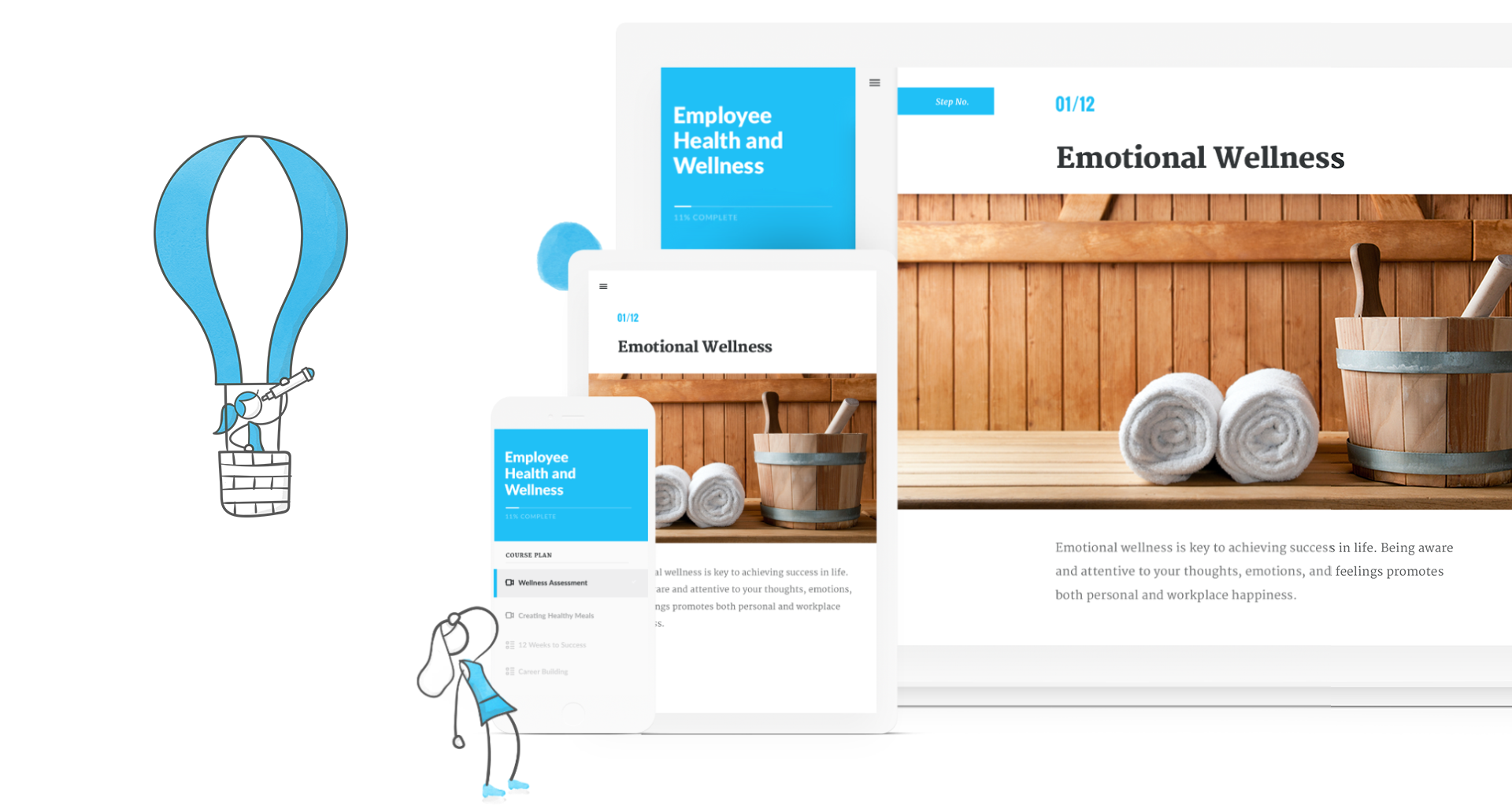
Articulate 360 is an e-learning platform for creating workplace training. Users can build engaging courses with AI-enhanced authoring, simplify collaboration, and quickly share content. A subscription includes robust onboarding resources and access to a community of 1.5M pros.
$1,124
per year
D2L Brightspace
Score 7.0 out of 10
N/A
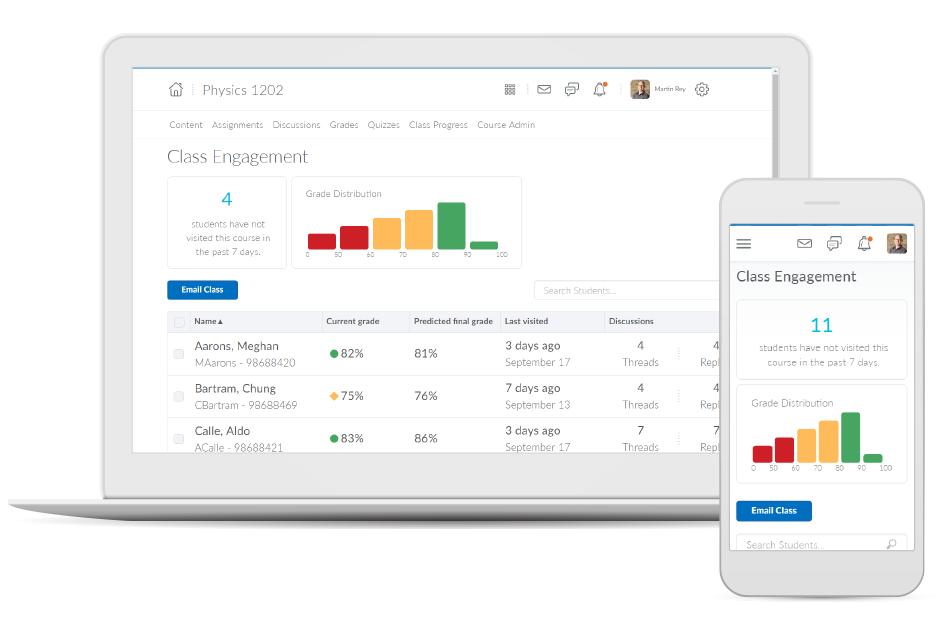
Brightspace is an academic and corporate learning management platform. It provides core e-learning features, as well as mobile accessibility and granular personalization and analytics insights.
N/A
Sakai
Score 8.7 out of 10
N/A
Sakai is an open source learning
management system provided by the Apero Foundation. The LMS provides what it
calls Core and Expanded Features. The Core Features encompass an integrated
tool set that is tested by the Sakai community members and is then included
with each new release. The tool set can be configured by: instructors,
students, research investigators and project leaders. The other set of tools, known as “Contrib
Tools” are specific to Sakai tools and innovations that are developed…
N/A
Pricing
Articulate 360
D2L Brightspace
Sakai
Editions & Modules
Articulate 360 Standard - Academic - Teams Plan
$1,124
per year
Articulate 360 Standard - Personal Plan
$1,199
per year
Articulate 360 AI - Personal Plan
$1,449
per year
Articulate 360 Standard - Teams Plan
$1,499
per year
Articulate 360 AI - Teams Plan
$1,749
per year
No answers on this topic
No answers on this topic
Offerings
Pricing Offerings
Articulate 360
D2L Brightspace
Sakai
Free Trial
Yes
Yes
No
Free/Freemium Version
No
No
Yes
Premium Consulting/Integration Services
No
Yes
No
Entry-level Setup Fee
Optional
No setup fee
No setup fee
Additional Details
Those new to Articulate 360 can try it free of charge for 30 days. Articulate 360 is available on the Articulate website and through Articulate Authorized Resellers.
Must contact vendor for pricing information. 30-day free trial is available.
Our review process found that the Desire2Learn product and newer Blackboard products were similar in most instances. Overall, our reviewer felt that after 10+ years of using a WebCT/Blackboard product they were ready for a change.
I did not personally select Sakai. However, it is fairly easy to use and customize. That being said, this product is being abandoned by developers/universities and should not be adopted by an organization.
Articulate 360 is great for online courses, courses for an LMS, courses that use media, text to speech audio, interactive items. Courses can be translated into other languages quickly. You can bring in outside media into the course pretty easily. The layouts are professional looking and blocks can be copied easily and repeated as needed.
If you're an educational institution (K-12, Higher Ed, etc.), this is an amazing tool, and it will provide you all the functionality to support anything you may want and need it to do. If you are looking at Brightspace as a tool for corporate training, I'm not sure exactly how good or bad it will be for you. My guess would be that it likely depends on your organization's size. Along that line, what I can speak to is how we use it for our customized training and in-house professional development/training, and it works fantastically for that. While we primarily use it for normal higher ed coursework, we regularly do training and professional development for all of our employees and I manage those along with our HR department. Because we use it for many other things as well, all of our employees are familiar with the product, which makes our trainings go that much smoother and makes my job that much easier.
I've used Sakai to supplement my Public Speaking class. Public Speaking is very much a F2F type course, so I didn't use Sakai much for course content delivery. However, I did use it to post my syllabus, post my lecture slides, communicate any class announcements, and to conduct a final exam for the class. Building the final exam was very simple and I was easily able to swap out questions to vary it from term to term. Before I was a staff member and lecturer, I used Sakai as a student. My instructor used Sakai to varying degrees. I really appreciated it being the one-stop-receptacle for all-things class related. If I somehow lost an assignment instruction sheet, I could rely on it being posted there. For multimedia work it was lacking, at that time, but I know Sakai has been updated over time and I hope that part of it has improved. If I was ever frustrated by Sakai, it was because faculty used it in a piecemeal way. It's fine not to want to use the gradebook, but don't enter some grades and not others. It's wonderful to upload class documents to it; but don't do some and not others. Whatever way you're going to use Sakai, commit to it and use it well. Your students will thank you.
Unrivaled Power and Customization. After 15 years in the training industry, Storyline 360 remains my favorite tool because it is, simply put, the most powerful authoring tool I have ever used, giving me complete creative control.
Advanced Interactivity. I love being able to 'overengineer' content using Triggers, Variables, States, and Layers, which allows me to build the most sophisticated and deep functionality.
Superior to Basic Tools. Storyline's capability to build detailed branching scenarios and realistic simulations sets it leaps and bounds apart from basic tools like PowerPoint, which is essential for high-impact training.
Allowing users to embed content links from YouTube or Google Drive enables learners to experience a richer lesson.
Providing a powerful editor that allows developers to also include content from Adobe Stock as well as textbook publishers and cloud storage companies gives more power and creative ability to instructors.
Providing scaling for mobile and traditional computer systems ensures students will not have issues on the go.
The customization of home pages and groups enable courses to be used for small training sessions with breakout groups, large courses with separate sections, and even just more engaging courses that present themed icons and logos.
Sakai is flexible, providing a way for our customers (instructors) to customize their courses while staying in line with consistency and continuity of course design. This has allowed our courses to be far less cookie-cutter and stale. This is mostly accomplished through Sakai's LTI functionality and it's Lessons tool. This is particularly notable because not every course is the same, nor should it be. Our faculty and course developers can draw from OER resources, course text publisher assessment quiz banks and pull in content from sources from our library databases and services like YouTube.
Sakai is customizable, allowing us to pair it with our student information system to automatically create and track with student registration data - including adding new students and removing students who have elected to drop a course. The customization features also include being able to create course templates for individual schools or courses using specific tools or sequences of tools as well as a way to personalize content for students when they engage with each lesson.
Sakai is stable in the market. We have been using Sakai for almost 10 years and continue to see it improve; responding to changing trends in browser technologies, mobile platforms and accessibility requirements. Multiple programs offered over the years have been recognized by outside organizations like BestColleges.com for our programs and given high marks by students taking the courses offered in Sakai.
Sakai allows our faculty to inform it's continued evolution. We work closely with the developers, having a front seat to how things can work and function for our faculty. There have been multiple occasions where faculty ask, "Can Sakai do this?" and the answer is never "No."
One can feel a bit rushed on the Brightspace platform during the log-out period. Security requirements may require this, but it makes end-users more conscious about getting through content than taking notes.
From my experience, there is not a direct connection between the platform and Outlook.
I haven't seen any other platform for developing learning materials that is as comprehensive or as reliable as Articulate has proven to be for our use. Because our group has a number of PowerPoint power users, the PowerPoint integration with Articulate is particularly beneficial.
I would never give any system a perfect score. In the technology environment today we need to be constantly looking at ways to improve the user experience and LMS companies like Desire2Learn need to know that we have options today with other systems and they need to stay current with features and listen to their customers.
Sakai is a good general learning management system - it is not leading edge but rather a stable system with standard learning management system features. It can be fairly easily customized and is fairly easy to learn from both student learning and faculty administrative vantage points. New paradigms for online learning though are emergent so the current field should also be investigated with competitors.
Usability is where Articulate shines. Anyone who has ever built a PowerPoint can open the tool and quickly understand how to use it. The more complex aspects of the tool are also very user-friendly, but you can build great content without ever going into advanced variables or JavaScript.
Overall, the learning environment works as expected. However, there are plenty of bugs. For example, for a few versions, trying to print out a PDF from the Content screen in several browsers would produce a blank page. We inform D2L support about these issues, most of which are known issues. However, they are very slow to respond. D2L seems to spend more time selling than actually coding and testing their product. Most of the issues are not major -- however, there have been a few that are unbelievable. In fact, this past week we had a sudden issue where the "Submit" button in quizzes would not appear if users had a certain browser/operating system combination. This is a major problem, if students cannot submit their exams! D2L is slow to respond to these kinds of situations, which do occur more often than I would like.
When faculty are preparing courses from term to term, a portion of the content is static within a specific discipline. The time it takes to import past lessons into new versions of Sakai can be an inefficient use of my time. When I want to add new content and edit from the old content, it's reliant upon me to cut and paste the content from term to term rather than simply import and edit from a backup.
Both students and instructor enjoy the 24-hoiur access. After, all isn't that the point of online learning. As an instructor located in an Eastern time zone state it is great to connect with students located in a Pacific time zone state. I have gotten comments about the early hours I am in the course room grading assignments . . . 4:00 a.m. PST; 7:00 a.m. EST So, it's sleep time for my students and "first cup of coffee" time for me.
I rate the overall support for Articulate 360 with a 9. On the one hand because of the smooth and accurate support from Articulate's support team (usually within 24 hours) and on the other because of the commitment / use of a community (e-learning Heroes) where I have all kinds of insights from other helpful users.
I have had excellent support from Desire2Learn. Any ticket that I submit is acknowledged immediately and the correction is usually almost as quick. We use this for thousands of classes and it is pretty well liked by both faculty and students. We have been using it for almost 4 years now and most of our instructors have become pretty proficient with it.
Since Sakai is open-source their documentation is often lacking and support is absolutely needed onsite. Internal documentation is more important with Sakai than other services. The Sakai community is fun, passionate, engaged, and absolutely doing their best, but it's an uphill battle against the current market and trends.
The online training options given by the online tutorials, forums, and "E-Learning Heroes" community are simply awesome. Examples galore, easy to understand descriptions including step-by-step guides, images, occasionally videos, and the "Articulate Insiders" sub-community give you more materials to learn about Storyline than you are likely to be able to read.
The training provided online did not, necessarily, fit the version of the system that I was using. Screens were somewhat different and not all options were readily available. This could have been due to customization on the part of my institution however, I rather believe it was due to version changes and training materials not yet being updated.
Outside of having to dedicate a powerful enough PC for the installation and having to update Flash in our browsers there really isn't much pain involved in using Articulate. For the most part this is an easy to implement and roll-out product. The installation occurs quickly and smoothly with no additional steps needed.
I have not used any other elearning development software other than Articulate 360. Though, I have seen demos of other products and while they are great, they still don’t seem to be as great as Articulate 360. This opinion also shows up in other places like product reviews and instructional design groups on Facebook.
I have used Blackboard Learn 8 and 9. I am currently learning about Canvas. Blackboard is overall much clunkier and lacks the intuitive feel in some parts of D2L. Its grade book is much harder to control and manipulate than D2L's. Its navigation menu can be more radically modified from the default than D2L's, but this doesn't seem that useful to me. Discussions in Blackboard can be more easily reorganized than in D2L, but no grading of discussions is possible. Blackboard Assignments is a good innovation which allows markup directly in the students' submissions, but it displays student work in a confusing manner that doesn't allow for any customization, and its markup options need further tweaking. Furthermore, no rubrics can be used in Blackboard in any way to grade any kind of work (that I am aware of). Overall, I would choose D2L over Blackboard.
As an adjunct professor, I didn't pick Sakai for the university. I have experience with Moodle, Blackboard, eCollege, iBoard and now Sakai. I would have to say that Sakai is one of my all time favorite LMSs to use as it is very easy to navigate.
During my first semester working with Desire2Learn the integrated learning management system was more down than up. This meant reconfiguring assignment due dates, frustration for both the instructor, students, and help desk staff. After an upgrade, Desire2Learn has been reliable.
I cannot speak to whether this system is less expensive than the more fully featured Blackboard, but employees are far less efficient, frustrated, and require frequent calls to the help center to set up fairly simple course templates.
I have been asked to consider teaching courses which will be completely online at my current institution. I have done such online courses several times at other universities, but I have decided Desire2Learn is too frustrating and cumbersome to do so. I am now exploring using Google Drive to teach a course online. Otherwise, I will not teach online until required or I find an alternate system.
Sakai makes it easy for students to monitor grades which puts their minds at ease.
Sakai makes it easy for teachers to assign and receive assignments from students.
Communication is one of the most important and one of the most taxing parts of an educational system. Sakai makes this process just a little bit easier.