Chose Avaza
Avaza takes the easy of Asana and adds the invoicing and bookkeeping capabilities you need all in one place.

| Product | Rating | Most Used By | Product Summary | Starting Price |
|---|---|---|---|---|
 Avaza | Mid-Size Companies (51-1,000 employees) | Avaza is a software suite targeted for all business sizes. It includes modules for project management and collaboration, resource scheduling, team chat, time tracking, expense management, quoting and invoicing. Depending on their business needs, companies can use as many, or as few, of the modules as they need. Avaza offers reporting functionality, and the project management module is designed with both list view and Kanban style task management, so users can choose… | $0 Unlimited Project Collaborators, 1 Admin, 1 Timesheet/ Expense User, 1 Resource Scheduling User | |
 Contractor Foreman | N/A | Contractor Foreman is an online construction management software for contractors and boasts users among contractors in more than 75 countries. | $588 per year |
| Avaza | Contractor Foreman | |||||||||||||||
|---|---|---|---|---|---|---|---|---|---|---|---|---|---|---|---|---|
| Editions & Modules |
|
| ||||||||||||||
| Offerings |
| |||||||||||||||
| Entry-level Setup Fee | Optional | No setup fee | ||||||||||||||
| Additional Details | — | Plans are based on features and licenses needed. Plus, Pro, and Unlimited plans include a 100-day money back guarantee. | ||||||||||||||
| More Pricing Information | ||||||||||||||||
| Avaza | Contractor Foreman | |
|---|---|---|
| Considered Both Products |  Avaza  Tristan Boyd Owner Chose Avaza Avaza is the only solution that ties all of our needs together in one platform at a reasonable price.  Veronica M Duckett Managing Partner Chose Avaza This is miles ahead of ActiveCollab. It has more features, the interface is easier to use and the invoicing is easier to use. Across the board better. We migrated from ActiveCollab, but that was just essentially a Fancier Wunderlist. If you just need one project and a few tasks … |  Contractor Foreman  Jeff Reese Business Operations Manager Chose Contractor Foreman A few of them were too specialized, and we're trying to limit the amount of software we have data entry into. BuilderTrend was probably the biggest competitor we reviewed, but the cost and migration effort didn't seem enticing to us as a business. I think Contractor Foreman has …  Selicio Alvarado Project Manager Chose Contractor Foreman It has the best features, is user-friendly, does everything I need it to and then some, and is affordable.  Bill Garrett President Chose Contractor Foreman Contractor Foreman felt like a better fit for our company.  Sommer Wood-Livesey Project Manager Chose Contractor Foreman They are very similar except CoConstruct allows for more selections of a customer. This is more for a company who doesn’t deal with interior designers as often who control the specs of the job. Most everything else was able to be done. I like the estimates sections and …  Chris Peters Owner Chose Contractor Foreman Contractor Foreman is by far less of a major corporation selling a software and more of a personalized experience with people who truly care. Houzz Pro does have some great features, but the lack of the same service definitely hinders it in my option. |
| Avaza | Contractor Foreman | |||||||||||||||||||||||||||||||||||||||||||||
|---|---|---|---|---|---|---|---|---|---|---|---|---|---|---|---|---|---|---|---|---|---|---|---|---|---|---|---|---|---|---|---|---|---|---|---|---|---|---|---|---|---|---|---|---|---|---|
| Project Management |
| |||||||||||||||||||||||||||||||||||||||||||||
| Professional Services Automation |
| |||||||||||||||||||||||||||||||||||||||||||||
| Human Resource Management |
| |||||||||||||||||||||||||||||||||||||||||||||
| Payroll Management |
| |||||||||||||||||||||||||||||||||||||||||||||
| Asset Management |
| |||||||||||||||||||||||||||||||||||||||||||||
| Reporting & Analytics |
| |||||||||||||||||||||||||||||||||||||||||||||
| Construction Project & Field Management |
| |||||||||||||||||||||||||||||||||||||||||||||
| Estimating |
|
| Avaza | Contractor Foreman | |
|---|---|---|
| Small Businesses |  Stackby Score 8.9 out of 10 |  FollowUp CRM Score 1.5 out of 10 |
| Medium-sized Companies |  InEight Score 8.2 out of 10 | InEight Score 8.2 out of 10 |
| Enterprises | InEight Score 8.2 out of 10 | InEight Score 8.2 out of 10 |
| All Alternatives | View all alternatives | View all alternatives |
| Avaza | Contractor Foreman | |
|---|---|---|
| Likelihood to Recommend | 10.0 (0 ratings) | 8.7 (0 ratings) |
| Likelihood to Renew | 10.0 (0 ratings) | 8.6 (0 ratings) |
| Usability | 9.0 (0 ratings) | 8.8 (0 ratings) |
| Availability | - (0 ratings) | 1.8 (0 ratings) |
| Support Rating | 10.0 (0 ratings) | 9.1 (0 ratings) |
| Implementation Rating | - (0 ratings) | 7.3 (0 ratings) |
| Avaza | Contractor Foreman | |
|---|---|---|
| Likelihood to Recommend |
|
|
| Pros |
|
Chris Peters Owner |
| Cons |
|
Selicio Alvarado Project Manager |
| Likelihood to Renew |
Veronica M Duckett Managing Partner |
|
| Usability |
|
|
| Reliability and Availability | No answers on this topic |
 Jeffrey Eckes CEO (Chief Executive Officer) |
| Performance | No answers on this topic |
Jeffrey Eckes CEO (Chief Executive Officer) |
| Support Rating |
Veronica M Duckett Managing Partner |
|
| Implementation Rating | No answers on this topic |
|
| Alternatives Considered |
|
Jeff Reese Business Operations Manager |
| Scalability | No answers on this topic |
Jeffrey Eckes CEO (Chief Executive Officer) |
| Return on Investment |
|
 Samantha Force Head of Operations |
| ScreenShots | Avaza Screenshots  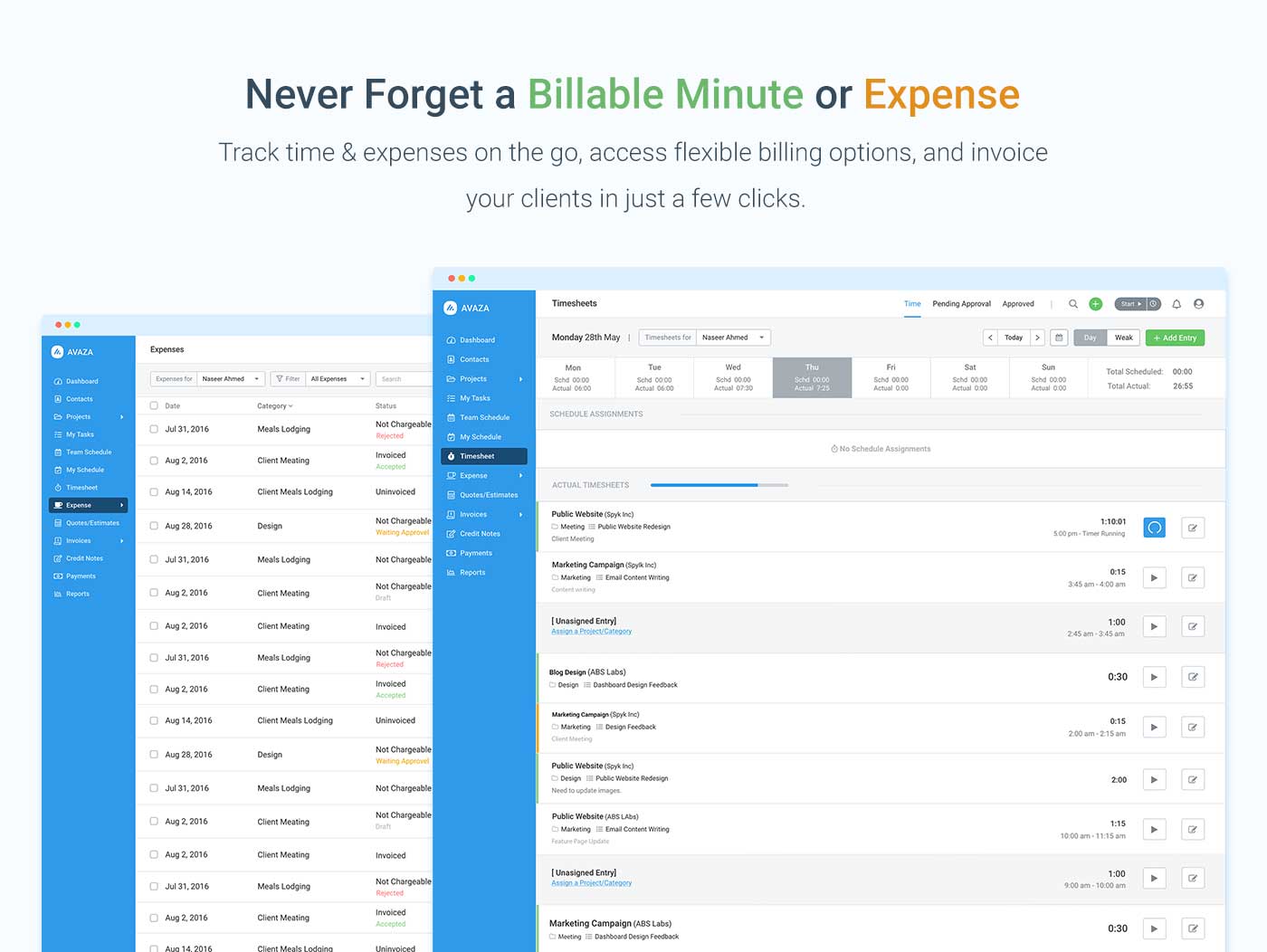    | Contractor Foreman Screenshots      |