Overview
ProductRatingMost Used ByProduct SummaryStarting Price
AWS Elastic Beanstalk
Score 8.0 out of 10
N/A
AWS Elastic Beanstalk is the platform-as-a-service offering provided by Amazon and designed to leverage AWS services such as Amazon Elastic Cloud Compute (Amazon EC2), Amazon Simple Storage Service (Amazon S3).
$35
per month
AWS Lambda
Score 8.3 out of 10
N/A
AWS Lambda is a serverless computing platform that lets users run code without provisioning or managing servers. With Lambda, users can run code for virtually any type of app or backend service—all with zero administration. It takes of requirements to run and scale code with high availability.
$NaN
Per 1 ms
SAP Integration Suite
Score 8.5 out of 10
N/A
SAP Integration Suite is an integration platform-as-a-service (iPaaS) that helps quickly integrate on-premises and cloud-based processes, services, applications, events, and data. It is used to accelerate innovation, automate more processes, and realize a faster time to value.
$11,199
per year
Pricing
AWS Elastic BeanstalkAWS LambdaSAP Integration Suite
Editions & Modules
No Charge
$0
Users pay for AWS resources (e.g. EC2, S3 buckets, etc.) used to store and run the application.
128 MB
$0.0000000021
Per 1 ms
1024 MB
$0.0000000167
Per 1 ms
10240 MB
$0.0000001667
Per 1 ms
No answers on this topic
Offerings
Pricing Offerings
AWS Elastic BeanstalkAWS LambdaSAP Integration Suite
Free Trial
NoNoYes
Free/Freemium Version
YesNoNo
Premium Consulting/Integration Services
NoNoNo
Entry-level Setup FeeNo setup feeNo setup feeNo setup fee
Additional DetailsAccess to free tier services does not expire while there is an active Pay-As-You-Go or CPEA account with SAP. Once a free tier service limit has been reached users have the option to update from a free to a paid service plan in the same account.
More Pricing Information
Community Pulse
AWS Elastic BeanstalkAWS LambdaSAP Integration Suite
Considered Multiple Products
AWS Elastic Beanstalk
Chose AWS Elastic Beanstalk
We ended up with AWS Lambda to take workload off the developers and develop in tandem, then later integrate. We use both though.
Chose AWS Elastic Beanstalk
I use both EB and Lambda for different use cases. I normally use AWS Lambda for my smaller software needs.
Chose AWS Elastic Beanstalk
There are many services like AWS Elastic beanstalk, but there are none with the maturity in the platform or the cost-effectiveness of AWS Elastic Beanstalk. Also, AWS Elastic Beanstalk is the oldest among them, so there are more people with AWS experience than the other …
Chose AWS Elastic Beanstalk
The AWS platform provides a great deal of configurability that is abstracted and provided very well through AWS Elastic Beanstalk. This is the main reason for choosing Elastic Beanstalk over competing services. Another reason for selecting AWS Beanstalk was vendor …
Chose AWS Elastic Beanstalk
Honestly, I haven't tried any other alternative products. As already mentioned, I am already heavily invested in AWS, so EBS was a natural choice for me. In other reviews, I have found, AWS is better than its competitors. There are more flavors, and options in AWS, better …
Chose AWS Elastic Beanstalk
We didn't use Lambda much till now. We, however, found better control of resources in EBS.
AWS Lambda
Chose AWS Lambda
AWS Lambda is much easier to use than the near alternatives. It is so straightforward and lightweight it is my primary service for handling small transactions or triggers. The other services require more setup time and are more complex to use. AWS Lambda takes your code snippet …
Chose AWS Lambda
AWS is great product and a close match our expectations. It is close to Azure in function but more feature rich with API and support documents. From my experience, it is cheaper compared with our competitors and provides better interface. Overall our dev engineers prefer AWS …
SAP Integration Suite
Chose SAP Integration Suite
SAP integration suits are more easier and flexible to use than AWS Lambda. it meets the customer requirements more than any other tool available in the market. the inbuilt analytics has proven more beneficial than any other tools like AWS Lambda also the CICD process and …
Chose SAP Integration Suite
We also have AWS adoption heavy due to its sleekness and support of many modern features tools such as git support or CI/CD. Multi-region support, near 99.9 availability.
Chose SAP Integration Suite
It's fast.its reliable.its easy to use
Chose SAP Integration Suite
The artificial intelligence used in the software, as well as the speed of deploying and processing faster than competitors, is a good advantage for SAP Integration Suite. The support team also responds quickly to questions, and always application developers are developing …
Chose SAP Integration Suite
SAP Integration Suite has unique features compared to other platforms. It is easier to set up, develop, design and monitor the flows created in SAP Integration Suite. Compared to other products, SAP Integration Suite has features that stand out like the SAP Integration Suite or …
Chose SAP Integration Suite
We use lots of SAP products and we do not want to have a heterogeneous system landscape, that's why we decided to again go for SAP Integration Suite.
Chose SAP Integration Suite
Other services seem to have a head start in supporting open standards. Not only in the support of up-and-coming ones but some fringe technologies as well. The biggest advantage of SAP is connectivity and interoperability with their core modules.
Features
AWS Elastic BeanstalkAWS LambdaSAP Integration Suite
Platform-as-a-Service
Comparison of Platform-as-a-Service features of Product A and Product B
AWS Elastic Beanstalk
7.8
28 Ratings
0% above category average
AWS Lambda
-
Ratings
SAP Integration Suite
-
Ratings
Ease of building user interfaces8.018 Ratings00 Ratings00 Ratings
Scalability7.028 Ratings00 Ratings00 Ratings
Platform management overhead8.027 Ratings00 Ratings00 Ratings
Workflow engine capability7.022 Ratings00 Ratings00 Ratings
Platform access control8.027 Ratings00 Ratings00 Ratings
Services-enabled integration8.027 Ratings00 Ratings00 Ratings
Development environment creation7.027 Ratings00 Ratings00 Ratings
Development environment replication8.028 Ratings00 Ratings00 Ratings
Issue monitoring and notification8.027 Ratings00 Ratings00 Ratings
Issue recovery9.025 Ratings00 Ratings00 Ratings
Upgrades and platform fixes8.026 Ratings00 Ratings00 Ratings
Access Control and Security
Comparison of Access Control and Security features of Product A and Product B
AWS Elastic Beanstalk
-
Ratings
AWS Lambda
8.8
7 Ratings
3% below category average
SAP Integration Suite
-
Ratings
Multiple Access Permission Levels (Create, Read, Delete)00 Ratings8.67 Ratings00 Ratings
Single Sign-On (SSO)00 Ratings9.13 Ratings00 Ratings
Reporting & Analytics
Comparison of Reporting & Analytics features of Product A and Product B
AWS Elastic Beanstalk
-
Ratings
AWS Lambda
5.0
6 Ratings
32% below category average
SAP Integration Suite
-
Ratings
Dashboards00 Ratings5.56 Ratings00 Ratings
Standard reports00 Ratings5.15 Ratings00 Ratings
Custom reports00 Ratings4.45 Ratings00 Ratings
Function as a Service (FaaS)
Comparison of Function as a Service (FaaS) features of Product A and Product B
AWS Elastic Beanstalk
-
Ratings
AWS Lambda
8.7
7 Ratings
0% above category average
SAP Integration Suite
-
Ratings
Programming Language Diversity00 Ratings9.07 Ratings00 Ratings
Runtime API Authoring00 Ratings8.07 Ratings00 Ratings
Function/Database Integration00 Ratings8.97 Ratings00 Ratings
DevOps Stack Integration00 Ratings8.97 Ratings00 Ratings
Cloud Data Integration
Comparison of Cloud Data Integration features of Product A and Product B
AWS Elastic Beanstalk
-
Ratings
AWS Lambda
-
Ratings
SAP Integration Suite
7.9
251 Ratings
1% below category average
Pre-built connectors00 Ratings00 Ratings8.3237 Ratings
Connector modification00 Ratings00 Ratings7.8202 Ratings
Support for real-time and batch integration00 Ratings00 Ratings8.3230 Ratings
Data quality services00 Ratings00 Ratings7.9209 Ratings
Data security features00 Ratings00 Ratings8.1222 Ratings
Monitoring console00 Ratings00 Ratings7.0228 Ratings
Best Alternatives
AWS Elastic BeanstalkAWS LambdaSAP Integration Suite
Small Businesses
AWS Lambda
AWS Lambda
Score 8.3 out of 10
IBM Cloud Functions
IBM Cloud Functions
Score 6.8 out of 10
Make
Make
Score 9.3 out of 10
Medium-sized Companies
Red Hat OpenShift
Red Hat OpenShift
Score 9.2 out of 10
Red Hat OpenShift
Red Hat OpenShift
Score 9.2 out of 10
IBM App Connect
IBM App Connect
Score 9.2 out of 10
Enterprises
Red Hat OpenShift
Red Hat OpenShift
Score 9.2 out of 10
Red Hat OpenShift
Red Hat OpenShift
Score 9.2 out of 10
IBM App Connect
IBM App Connect
Score 9.2 out of 10
All AlternativesView all alternativesView all alternativesView all alternatives
User Ratings
AWS Elastic BeanstalkAWS LambdaSAP Integration Suite
Likelihood to Recommend
7.0
(28 ratings)
7.7
(52 ratings)
8.5
(304 ratings)
Likelihood to Renew
7.9
(2 ratings)
-
(0 ratings)
8.8
(7 ratings)
Usability
7.0
(10 ratings)
8.3
(17 ratings)
2.1
(3 ratings)
Support Rating
8.0
(12 ratings)
8.7
(20 ratings)
6.0
(4 ratings)
Implementation Rating
7.0
(2 ratings)
-
(0 ratings)
7.3
(1 ratings)
User Testimonials
AWS Elastic BeanstalkAWS LambdaSAP Integration Suite
Likelihood to Recommend
Amazon AWS
I have been using AWS Elastic Beanstalk for more than 5 years, and it has made our life so easy and hassle-free. Here are some scenarios where it excels -
  • I have been using different AWS services like EC2, S3, Cloudfront, Serverless, etc. And Elastic Beanstalk makes our lives easier by tieing each service together and making the deployment a smooth process.
  • N number of integrations with different CI/CD pipelines make this most engineer's favourite service.
  • Scalability & Security comes with the service, which makes it the absolute perfect product for your business.
Personally, I haven't found any situations where it's not appropriate for the use cases it can be used. The pricing is also very cost-effective.
Read full review
Amazon AWS
Lambda excels at event-driven, short-lived tasks, such as processing files or building simple APIs. However, it's less ideal for long-running, computationally intensive, or applications that rely on carrying the state between jobs. Cold starts and constant load can easily balloon the costs.
Read full review
SAP
In our case to have a such a poweful middleware in the cloud, give us a lot of benefits such as maintenance and support. In the integration part to be able to connect SAP and Non SAP applications makes SAP Integration Suite a good investment when our master data in this case is in S4HANA. Less appropriate is that sometimes the updates in production tenant failed and they have to downgrade or repair the issues. Affecting the usage of the tool. I guess SAP team have to be more aware of performing the changes and tested well on development environments and then when they know for sure that is the correct way to go with the update put it in production.
Read full review
Pros
Amazon AWS
  • Getting a project set up using the console or CLI is easy compared to other [computing] platforms.
  • AWS Elastic Beanstalk supports a variety of programming languages so teams can experiment with different frameworks but still use the same compute platform for rapid prototyping.
  • Common application architectures can be referenced as patterns during project [setup].
  • Multiple environments can be deployed for an application giving more flexibility for experimentation.
Read full review
Amazon AWS
  • No provisioning required - we don't have to pay anything upfront
  • Serverless deployment - it gets executed only when request comes and we pay only for the time the request is getting executed
  • Integrates well with AWS CloudWatch triggers so it is easy to setup scheduled tasks like cron jobs
Read full review
SAP
  • Enhanced API management features that allow now the integration with a multitude of data feeds and rating agencies
  • Immediate evaluation of potential issues and configurable thresholds and automatic notifications.
  • The application will monitor all aspects of compliance and update them automatically for several jurisdictions at time
Read full review
Cons
Amazon AWS
  • Limited to the frameworks and configurations that AWS supports. There is no native way to use Elastic Beanstalk to deploy a Go application behind Nginx, for example.
  • It's not always clear what's changed on an underlying system when AWS updates an EB stack; the new version is announced, but AWS does not say what specifically changed in the underlying configuration. This can have unintended consequences and result in additional work in order to figure out what changes were made.
Read full review
Amazon AWS
  • Developing test cases for Lambda functions can be difficult. For functions that require some sort of input it can be tough to develop the proper payload and event for a test.
  • For the uninitiated, deploying functions with Infrastructure as Code tools can be a challenging undertaking.
  • Logging the output of a function feels disjointed from running the function in the console. A tighter integration with operational logging would be appreciated, perhaps being able to view function logs from the Lambda console instead of having to navigate over to CloudWatch.
  • Sometimes its difficult to determine the correct permissions needed for Lambda execution from other AWS services.
Read full review
SAP
  • Provide more pre-built integrations to use within SuccessFactors or other modules instead of everything having to be custom built
  • Support is unable to provide advice on custom builds so you often have to engage a 3rd party partner
  • Works best when you have the functional and technical teams working together. Otherwise, the system is too technical for a functional user to create integration and a technical user not always understand the functional perspective
Read full review
Likelihood to Renew
Amazon AWS
As our technology grows, it makes more sense to individually provision each server rather than have it done via beanstalk. There are several reasons to do so, which I cannot explain without further diving into the architecture itself, but I can tell you this. With automation, you also loose the flexibility to morph the system for your specific needs. So if you expect that in future you need more customization to your deployment process, then there is a good chance that you might try to do things individually rather than use an automation like beanstalk.
Read full review
Amazon AWS
No answers on this topic
SAP
It is in place, our system integrators are familiar with it, and it fits into the ecosystem. A better user interface, flow build and debugging experience would see it grow, many technical staff do not enjoy using it for this reason, however it is quite capable and powerful behind this one shortcoming.
Read full review
Usability
Amazon AWS
The overall usability is good enough, as far as the scaling, interactive UI and logging system is concerned, could do a lot better when it comes to the efficiency, in case of complicated node logics and complicated node architectures. It can have better software compatibility and can try to support collaboration with more softwares
Read full review
Amazon AWS
I give it a seven is usability because it's AWS. Their UI's are always clunkier than the competition and their documentation is rather cumbersome. There's SO MUCH to dig through and it's a gamble if you actually end up finding the corresponding info if it will actually help. Like I said before, going to google with a specific problem is likely a better route because AWS is quite ubiquitous and chances are you're not the first to encounter the problem. That being said, using SAM (Serverless application model) and it's SAM Local environment makes running local instances of your Lambdas in dev environments painless and quite fun. Using Nodejs + Lambda + SAM Local + VS Code debugger = AWESOME.
Read full review
SAP
The user interface is messy and not intuitive. It has a steep learning curve, and flows developed around are easy to make a mess with layout and can be difficult to follow. The debugging is also quite difficult, it takes some time to figure out how to follow the flow and examine data. Error handling is also difficult and not intuitive, it is better to let some errors leak and monitor through ALM.
Read full review
Support Rating
Amazon AWS
As I described earlier it has been really cost effective and really easy for fellow developers who don't want to waste weeks and weeks into learning and manually deploying stuff which basically takes month to create and go live with the Minimal viable product (MVP). With AWS Beanstalk within a week a developer can go live with the Minimal viable product easily.
Read full review
Amazon AWS
Amazon consistently provides comprehensive and easy-to-parse documentation of all AWS features and services. Most development team members find what they need with a quick internet search of the AWS documentation available online. If you need advanced support, though, you might need to engage an AWS engineer, and that could be an unexpected (or unwelcome) expense.
Read full review
SAP
The support for SAP Integration Suite is satisfactory. We leverage SAP support through our manage services partner. So far, we have not had many major issues. One concern, to make our rating a ten, would be turnaround time on high priority incidents. SAP Integration Suite drives our key business functions forward. Without a reasonable service level agreement on turnaround, we sometimes find us running into issues running pay, etc.
Read full review
Implementation Rating
Amazon AWS
- Do as many experiments as you can before you commit on using beanstalk or other AWS features. - Keep future state in mind. Think through what comes next, and if that is technically possible to do so. - Always factor in cost in terms of scaling. - We learned a valuable lesson when we wanted to go multi-region, because then we realized many things needs to change in code. So if you plan on using this a lot, factor multiple regions.
Read full review
Amazon AWS
No answers on this topic
SAP
Work with an SAP implementation partner, if possible.
Read full review
Alternatives Considered
Amazon AWS
We also use Heroku and it is a great platform for smaller projects and light Node.js services, but we have found that in terms of cost, the Elastic Beanstalk option is more affordable for the projects that we undertake. The fact that it sits inside of the greater AWS Cloud offering also compels us to use it, since integration is simpler. We have also evaluated Microsoft Azure and gave up trying to get an extremely basic implementation up and running after a few days of struggling with its mediocre user interface and constant issues with documentation being outdated. The authentication model is also badly broken and trying to manage resources is a pain. One cannot compare Azure with anything that Amazon has created in the cloud space since Azure really isn't a mature platform and we are always left wanting when we have to interface with it.
Read full review
Amazon AWS
AWS Lambda is good for short running functions, and ideally in response to events within AWS. Google App Engine is a more robust environment which can have complex code running for long periods of time, and across more than one instance of hardware. Google App Engine allows for both front-end and back-end infrastructure, while AWS Lambda is only for small back-end functions
Read full review
SAP
SAP Integration Suite was already part of our SAP stack, part of Business Technology Platform, with out-of-the-box integration with S/4 HANA transactional and ERP system that we are using as our main back-end. Thus, we are achieving significant Total Cost Optimization benefits or running both solutions on the same platform, hosted on Azure cloud.
Read full review
Return on Investment
Amazon AWS
  • till now we had not Calculated ROI as the project is still evolving and we had to keep on changing the environment implementation
  • it meets our purpose of quick deployment as compared to on-premises deployment
  • till now we look good as we also controlled our expenses which increased suddenly in the middle of deployment activity
Read full review
Amazon AWS
  • Positive - Only paying for when code is run, unlike virtual machines where you pay always regardless of processing power usage.
  • Positive - Scalability and accommodating larger amounts of demand is much cheaper. Instead of scaling up virtual machines and increasing the prices you pay for that, you are just increasing the number of times your lambda function is run.
  • Negative - Debugging/troubleshooting, and developing for lambda functions take a bit more time to get used to, and migrating code from virtual machines and normal processes to Lambda functions can take a bit of time.
Read full review
SAP
  • In the long run will enable us to undeploy our on premise solution
  • As long as integration suite doesn't support all capabilities PO has complete migration is hard
  • Will probably be cheaper than our on premise solution when we are completely migrated
Read full review
ScreenShots

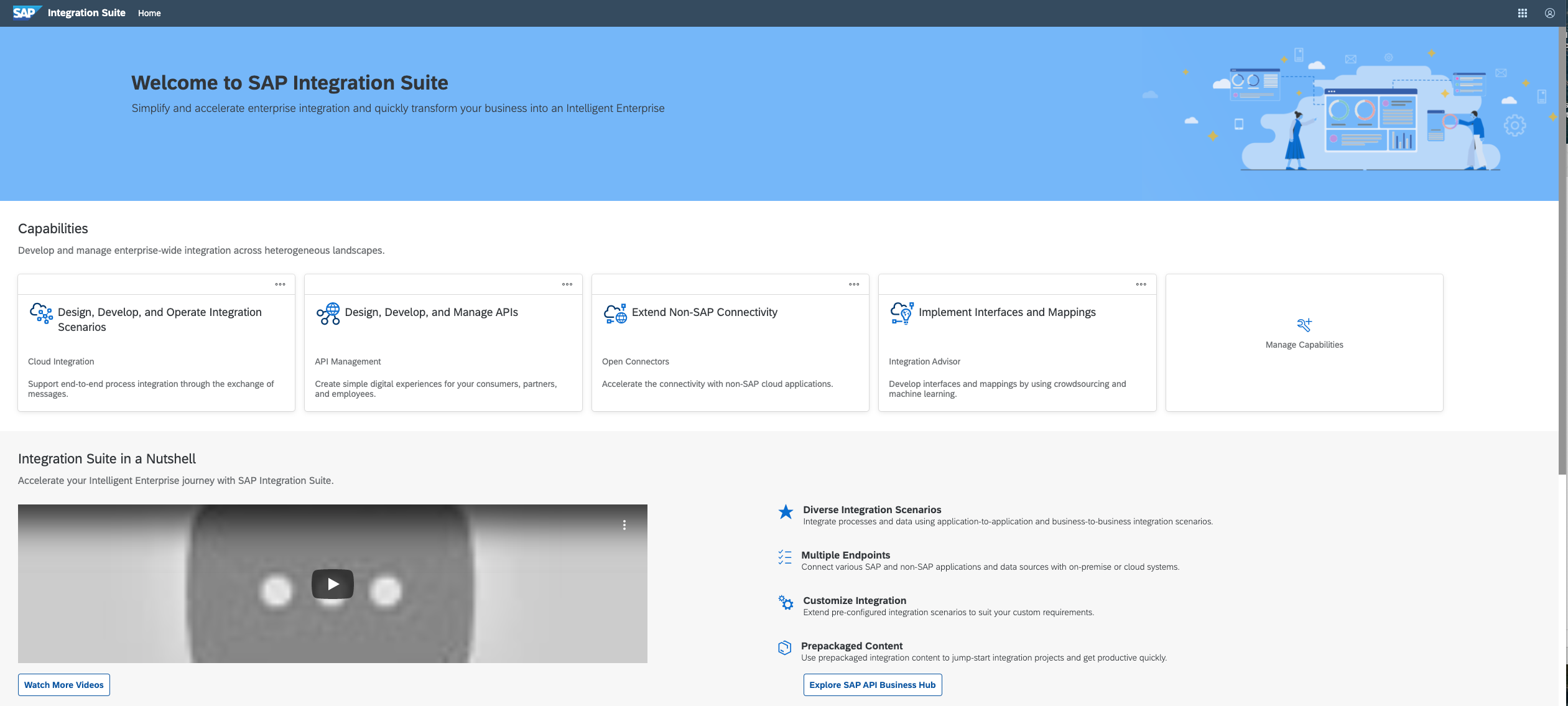
SAP Integration Suite Screenshots

Screenshot of Screenshot of Screenshot of Screenshot of Screenshot of