AWS IoT Core is a managed cloud service that lets connected devices interact with cloud applications and other devices. It includes the Device Gateway and the Message Broker, which connect and process messages between IoT devices and the cloud. AWS IoT Core connects AWS and Amazon services like AWS Lambda, Amazon Kinesis, Amazon S3, Amazon SageMaker, Amazon DynamoDB, Amazon CloudWatch, AWS CloudTrail, Amazon QuickSight, and Alexa Voice Service to build IoT applications that gather, process,…
$0.08
Per Million Minutes
BrowserStack
Score 8.4 out of 10
N/A
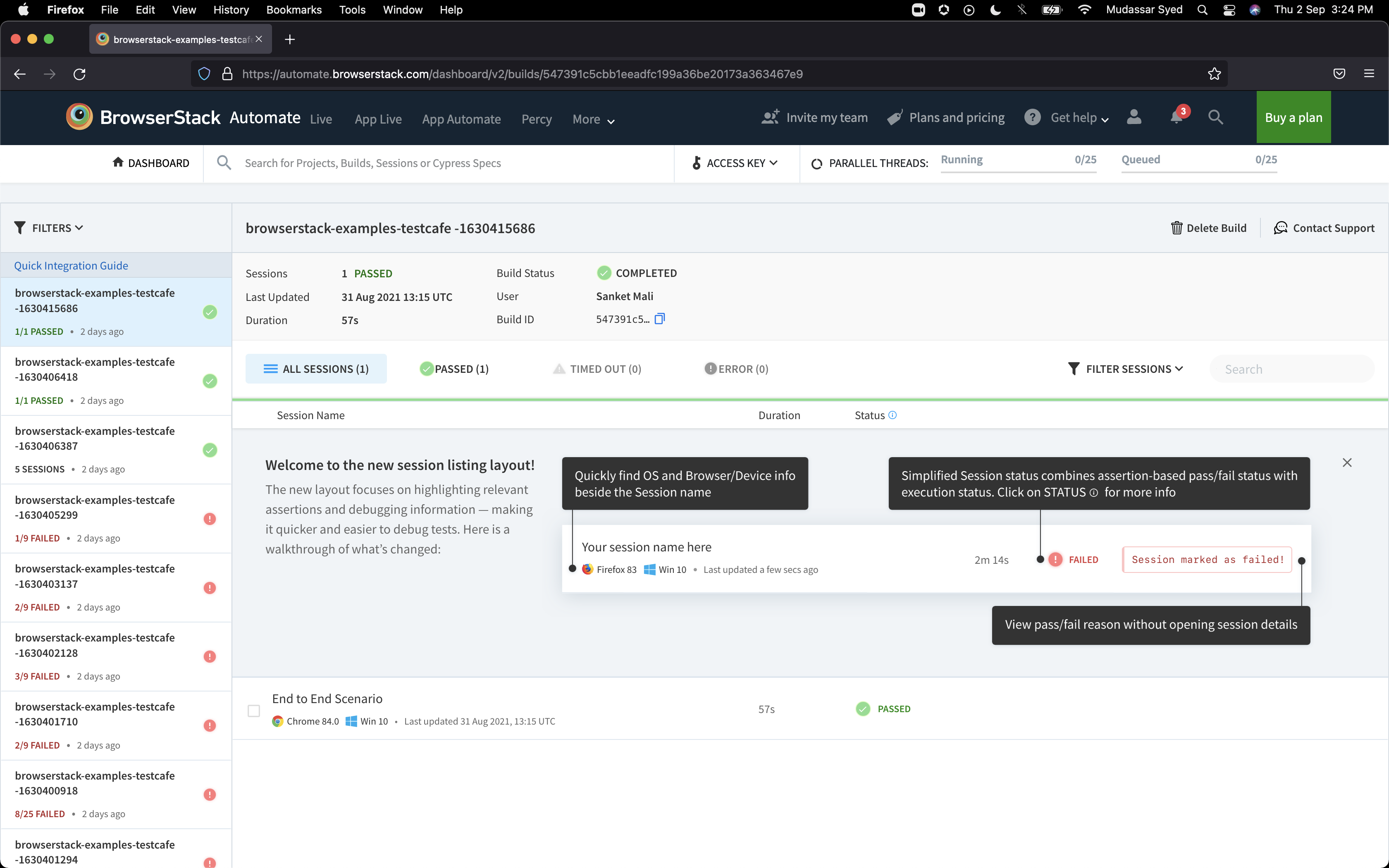
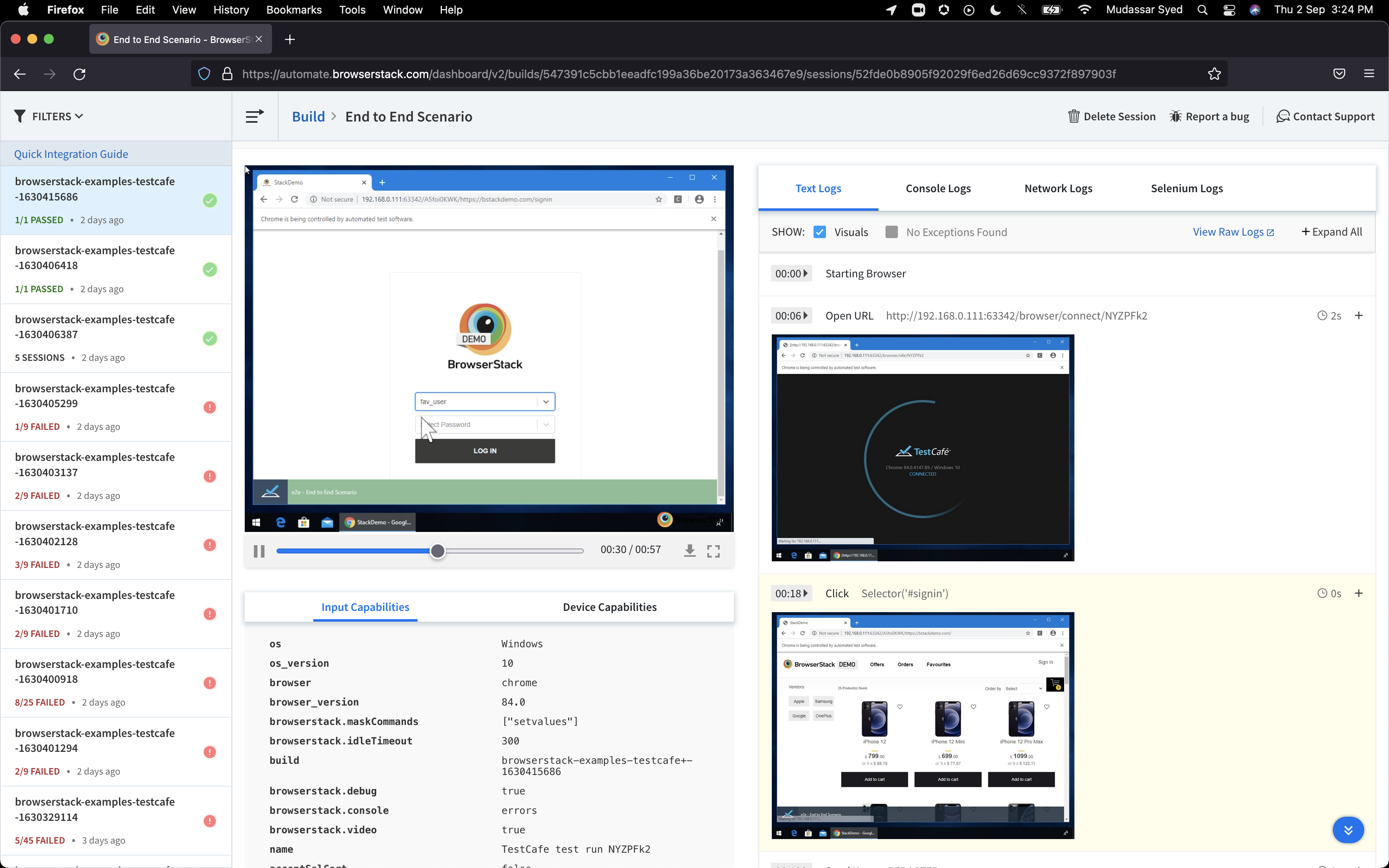
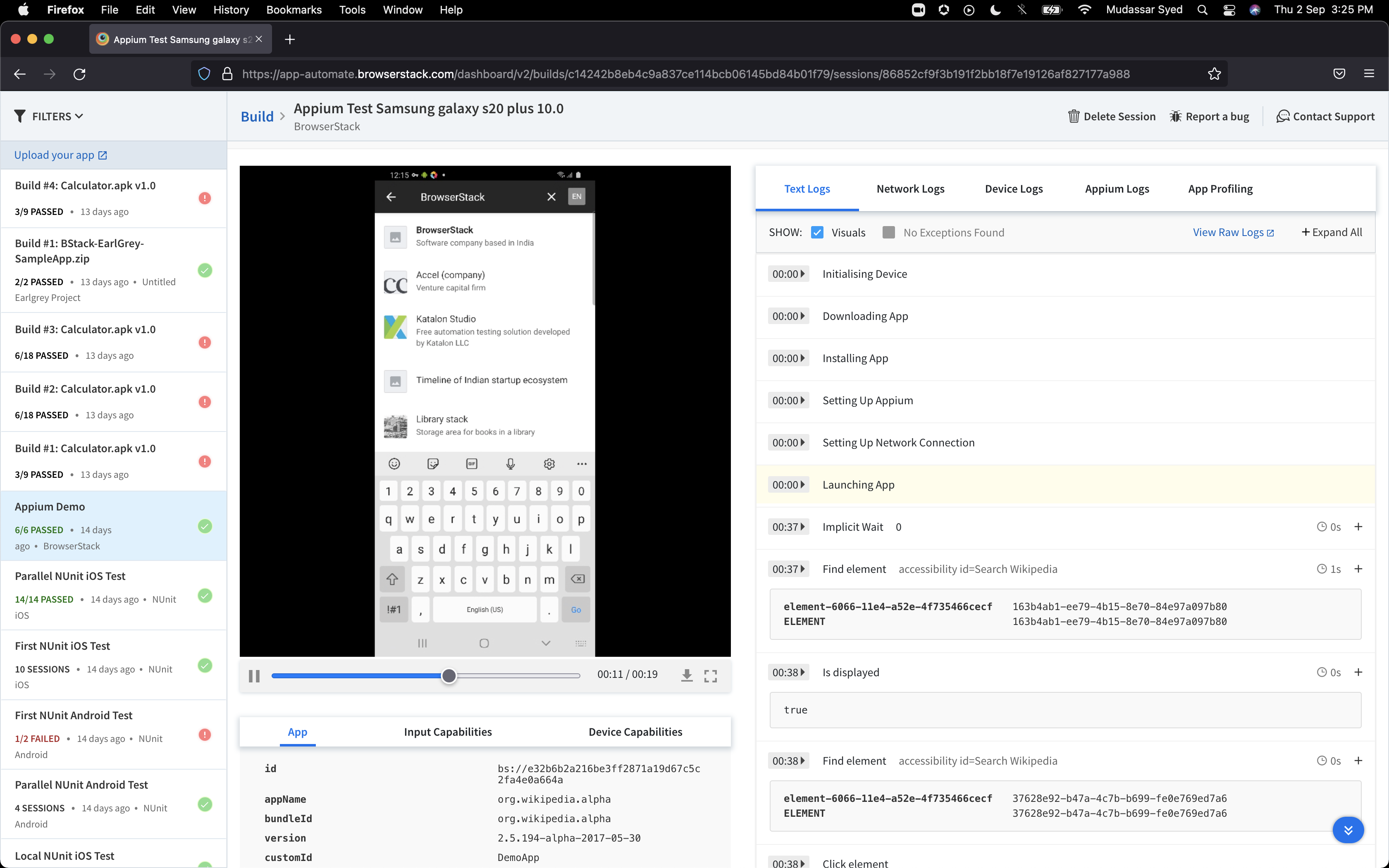
BrowserStack is a test platform built for developers and QAs to expand test coverage, scale and optimize testing with cross-browser, real device cloud, accessibility, visual testing, test management, and test observability. BrowserStack states it currently powers over a billion tests a year for customers who include Amazon, Paypal, Well Fargo Bank, Nvidia, MongoDB, Pfizer, GE, Discovery, React JS, Apache, JQuery and several others rely on BrowserStack to test their web and mobile apps.
$0
per month Unlimited users and 5000 free screenshots
BitBar
Score 6.7 out of 10
N/A
BitBar allows users to test applications across the latest and most popular real browsers and devices. Users can scale testing by increasing test coverage and decreasing test execution time by running automated tests in parallel across browsers and devices. BitBar integrates with the user's current tech stack or CI/CD pipeline. Key Features: * BitBar offers one cloud for all testing platforms whether it be web, native, or hybrid applications. * Test an application across real…
N/A
Pricing
AWS IoT Core
BrowserStack
BitBar
Editions & Modules
Connectivity
$0.08
Per Million Minutes
Rules Engine
$0.15
Per Million Actions
Messaging
$1.00
Per Million Messages
Percy - Free
$0
per month Unlimited users and 5000 free screenshots
App Percy - Free
$0
per month 5000 free screenshots and 100 minutes of infrastructure
Test Observability - Unlimited Free
$0
Accessibility Testing - Free
$0
Test Observability - Observability Pro
$0.01
per month per test execution
Percy - Desktop
$0.02
per month per screenshot
App Percy - Visual Core
$0.02
per month per screenshot
Percy - Desktop & Mobile
$0.02
per month per screenshot
App Percy - Visual Cloud
$0.03
per month per screenshot
Live - Desktop
$39
per month per user
Live - Desktop & Mobile
$49
per month per user
App Live - Individual
$49
per month per user
Automate - Desktop
$129
per month 1 parallel test
Live - Team
$175
per month 5 users
App Live - Team
$175
per month 5 users
Accessibility Testing - Team
$199
per month 5 users
Automate - Desktop & Mobile
$225
per month 1 parallel test
App Automate - Device Cloud
$249
per month 1 parallel test
App Live - Team Pro
$289
per month 5 users
App Automate - Device Cloud Pro
$299
per month 1 parallel test
Automate - Enterprise
Contact sales team
Percy - Enterprise
Contact Sales
App Automate - Enterprise
Contact Sales
App Live - Enterprise
Contact sales team
Live - Enterprise
Contact sales team
App Automate - Device Cloud Pro + Visual Cloud
Contact Sales
App Percy - Enterprise
Contact Sales
Test Observability - Enterprise
Contact Sales
Accessibility Testing - Enterprise
Contact Sales
No answers on this topic
Offerings
Pricing Offerings
AWS IoT Core
BrowserStack
BitBar
Free Trial
No
Yes
Yes
Free/Freemium Version
No
No
No
Premium Consulting/Integration Services
No
No
No
Entry-level Setup Fee
No setup fee
No setup fee
No setup fee
Additional Details
—
—
Enterprise packages are available for larger teams and customers.
Azure IoT is a good product but since our whole suite of tech is now set up in AWS (ec2, s3, sagemaker, cloud formation, etc.), we wanted something that could quickly adapt to our environments. Learning a new tech for IoT was simply a bottleneck that we wanted to avoid at this …
AWS iot core is a good starting point which can be utilized for a variety of enterprise solutions. Barrier to entry to experiment and try AWS iot core is less and AWS eco-system providers ensure that even startups can try a variety of solutions and build key skills and …
Azure IoT service provides more or less the same services as compared to AWS IoT core, however the costing of AWS lead us to continued usage of IoT core over Azure IoT services. Also, considering our existing technology stack is on AWS, it was a natural selection for better …
It turns out that AWS IoT Core is the most mature solution on the market with the best variety of integration tools available. On the downside, it is not the cheapest platform existing out there. Amazon IoT Core is easy to start and set up, and our prior engagement with Amazon …
For our use case, we ended up with AWS because the human resources that were planning to be resourced on this particular project happened to have prior familiarity with the AWS ecosystem. The conversation became can we justify continuing with this ecosystem rather than pivoting …
We have checked other IoT platforms such as IBM Watson IoT and Microsoft Azure IoT, but Amazon IoT Core seems reasonable in terms of pricing and overall functionalities. Amazon IoT Core is easy to start and set up and our prior engagement with Amazon for AWS was a factor to go …
AWS IoT Core is faster, easier, cheaper, and enjoyed by our employees more than Microsoft Azure. We selected AWS IoT because we saw an advertisement for it and have used it ever since. We will continue to use it as long as it is around or until we find one that is better.
We prefer Amazon storage and content delivery S3 services rather than Microsoft Blob Storage. Also, AWS IoT Core seems to be the cheaper alternative compared to Azure IoT.
The main factor contributing to the adoption of BrowserStack over the others we tested is its ease of adaptation. This tool doesn't require much training to adapt. Onboarding is faster, and UAECases testing is very fast, as it includes parallel testing automation capabilities.
Chrome DevTools is free, but it takes a lot of time to manually switch devices/models, etc. And it doesn't let you switch to another system or browser (of course). When we did use it more, we'd also have to find other Chrome extensions to make up for things it didn't have built …
We used LambdaTest, but ultimately it didn't work for us because it put us in a queue when we kicked off a testing job instead of starting immediately. Our continuous integration process is managed by Microsoft Azure DevOps, and the pipeline agents it provides have a 60-minute …
It had all of the features we needed. The user interface is clean and accessible. AWS Device Farm was clunky, slow, and hard to use AND offered very little automation options / APIs.
We really needed a solution that could become part of an automated testing pipeline and …
BrowserStack is simpler and more user friendly than Sauce Labs and can be easily learned by any individual who is new to it and does not require much efforts. Also, BrowserStack is more trusted by the clients that we offer services to, and is always considered the best option …
BrowserStack is much compact and faster compared to katalon studio for mobile testing and supporting a lot of emulators compared to katalon.The licensing cost is also better compared to katalon and the user base of BrowserStack is high with official documentation well in place …
BrowserStack is often favored for its broader device coverage, ease of use, and strong local testing, while Sauce Labs shines with deeper analytics (video, network capture), AI-driven features, and robust performance for large-scale automation, especially for mobile/desktop …
well is a better option for doing testing. I used only Snagit for simple things in documentation, but usinga browser is more complete for the process of doing a large number of test cases. Snagit can crash your system with a lot of pictures, but a browser doesn't do it …
I actually tried BitBar back when they were still called CrossBrowserTesting. They offered a free trial when Browserstack got hacked in 2014. I wasn't a huge fan of their service vs Browserstack, mainly because the UI was less intuitive. I ultimately ended up going back to …
BrowserStack provided similar features at a lower cost than any other platform. All features surpass those of our competitors. Support from the BrowserStack team is awesome.
I chose BrowserStack over Playwright because it was far more simpler to test test cases, builds were already set up and was just right because our web application was not as complex as others. We also used it because of the text and image validation which is what we really …
AWS iot core is very useful if you need to scale very quickly for managing lots of devices without handling the underlying infrastructure cost. It can enable real time publishing and subscription of devices, monitoring and early stage intervention in case of unexpected issues while developing a full stack solution. However, healthcare scenarios where government intervention is needed should be developed and scaled by following the set of compliance policies of the government and the SLA requirements of the customer. Finally, it is great where you need to do data science research after anonymizing data
As per my experience, BrowserStack is more suited for those organizations that have a remote work culture and also for those who need multiple device testing. Also, it is beneficial for those organizations that do not want to spend more on physical devices, as the devices update frequently in the market. It is not appropriate for those organizations which have lesser need of multi- device testing as the subscription model may not be feasible for them. Also a small organization with less number of employees would not opt for BrowserStack as it would be costlier for them.
CrossBrowserTesting is a great tool to use when you have a new page or new content that you want to test on an array of devices/browsers. In the diverse online world nowadays, it is nearly impossible to ensure optimization for every case. CBT allows you to get closer to that goal.
I wish it didn't time out so quickly. I often move back and forth between my native Mac OS system and browsers to BrowserStack for Windows browsers and it often times out so I have to start over.
I am not sure why, but when I've been testing in BrowserStack for a long period of time - maybe over a couple of hours, it sometimes gets buggy and unresponsive or slow to respond. It makes it hard to tell if I'm experiencing an issue with the site I'm testing or if it's an issue with BrowserStack.
If I'm wishing for the moon and stars, I'd ask for the ability to use BrowserStack to also test with JAWS screen reader. But I'm happy having NVDA.
It's simply a must-have tool. As a designer, I have to ensure my work is at least functional in older browsers. I also have to ensure that, when I design for mobile devices, any differences between platforms aren't problematic. BrowserStack allows me to test my work in a fraction of the time, with a whole lot more accuracy.
I give AWS IoT Core's overall usability this rating because it is very easy to use and is enjoyed by all of our staff. The only problem is that it sometimes glitches and it freezes a lot. So overall, the usability of AWS IoT Core is very good, and we will continue to use it.
So many options that it can be a little overwhelming, but the core functions are easy to find and use and it's usually not too hard to figure things out for the more complex tasks. Very easy to boot up a device and a specific browser from the dashboard to begin a manual website test.
I rated BrowserStack's availability a 10 because it is consistently reliable, with minimal to no downtime or unplanned outages. The platform is accessible whenever needed, ensuring uninterrupted testing. Its robust infrastructure and proactive monitoring ensure a seamless experience, allowing us to meet deadlines without delays caused by availability issues and all
The tests are fast considering the fact that they're Appium tests. I've seen tests reliably pass or fail when they're supposed to, with next to zero issues on the BrowserStack side of things. Tests launch only seconds after I kick off them off from my CLI.
It covers all the aspects of IoT services required for an IoT company. It supports all the industry-wide protocols for secure data transmission and integrates powerful AL and ML technology for data analytics. For data storage, Amazon S3 is a great solution. Strong tech support and user community. Since it is widely used as compared to other products, there is an abundance of training and learning material on the web.
I've not had much direct interaction with the BrowserStack support team. The help and community are great and we've not run into any issue that has really required us to reach out. I guess having a stable and easy to use system means you may never need to contact support.
Yes, it was online training on meet, and trainer looks like skilled and technical strong, he has covered end to end all the features and he has answers all the queries. because of this trainings we are able to implement it by our own in the organization, thank you for support and training.
It was a quick training from the support of browserstack, it was nice and easy to understand, thanks again for the support given by the team. and regularly I used to receive mails for training from support for any new feature they launch, I was able to spread same training to all my team and dev.
I rated the implementation satisfaction an 8 because while it went smoothly overall, there were some challenges during the initial learning phase and integration with existing tools. Key insights include the importance of providing sufficient training upfront and ensuring seamless integration with other systems to minimize disruptions and improve adoption speed.
Azure IoT is a good product but since our whole suite of tech is now set up in AWS (ec2, s3, sagemaker, cloud formation, etc.), we wanted something that could quickly adapt to our environments. Learning a new tech for IoT was simply a bottleneck that we wanted to avoid at this point.
We used LambdaTest, but ultimately it didn't work for us because it put us in a queue when we kicked off a testing job instead of starting immediately. Our continuous integration process is managed by Microsoft Azure DevOps, and the pipeline agents it provides have a 60-minute timeout. We need immediate tests instead of flipping a coin, which could cause a false positive failure due to timeouts.
Selenium: 1. Selenium is Open source tool 2. Needs proper framework development and integration with multiple 3rd party tools 3. Not much secure 4. Needs scripting knowledge for people working on it 5. takes time and effort CrossBrowser Testing: 1. Licensed , so secure 2. Less time , less effort 3. Quick results 4. No scripting language knowledge needed 5. More coverage 6. Without any framework creation also we can test on multiple devices/browsers
I may not be the best person to answer this as I am only using it for 1 department and at 1 site but will still try my best As far as Scalability for Devices for Mobile Automation is concerned, it gets a Solid 10, as the users can run cases on upto 10 device parallel and also have the best choices of devices to choose
Browserstack improved our internal confidence level when it came to signing off on testing
Browserstack improved the confidence level of our clients by decreasing the number of bugs found during PVT and providing an entry level opportunity for our clients to perform UAT using the same tools.