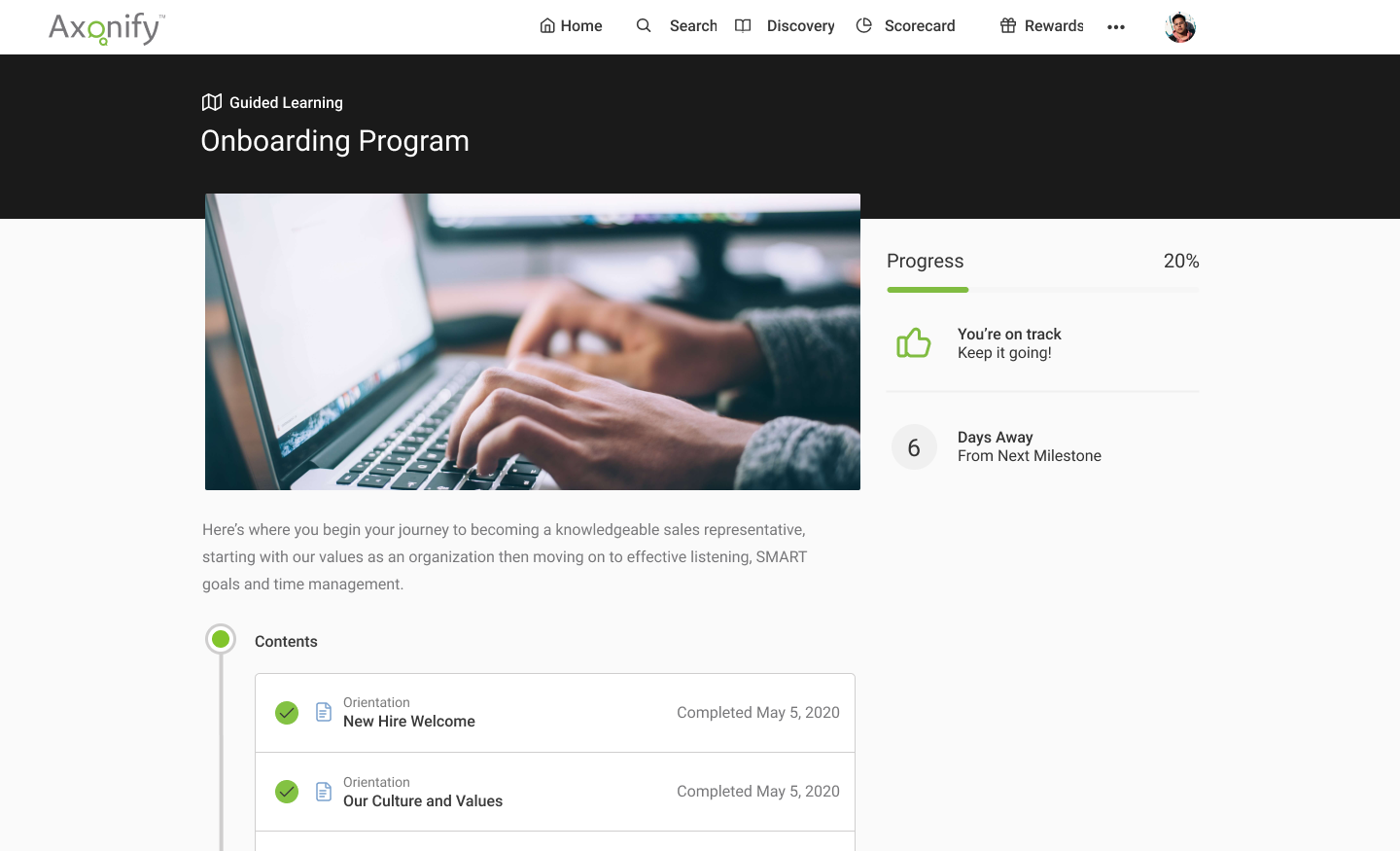
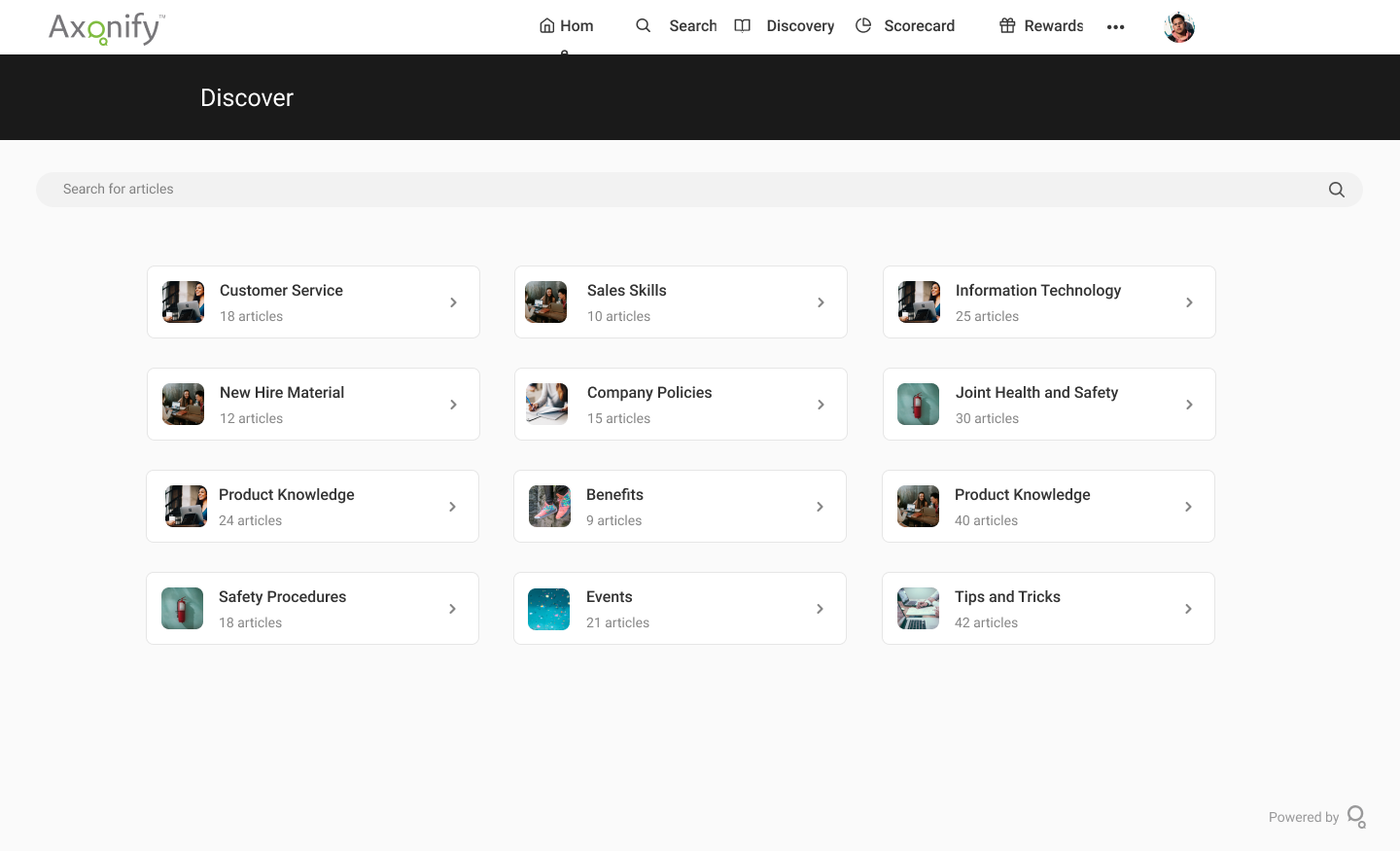
Axonify is a frontline enablement and Microlearning platform designed to facilitate knowledge retention and operational consistency across large-scale, distributed workforces. The system utilizes an AI-driven reinforcement engine based on "brain science" principles—specifically Spaced Repetition and Retrieval Practice—to deliver daily, three-to-five-minute training interactions.
N/A
Cegid Talent
Score 10.0 out of 10
N/A
Cegid Talent (based on technology from the former Technomedia, acquired by Cegid in 2016), allows users to manage candidates recruiting, training, performance, compensation, career development and succession. Its business intelligence tools help identify organizational potential in order to drive HR strategies, from the cloud.
N/A
Jive
Score 8.7 out of 10
N/A
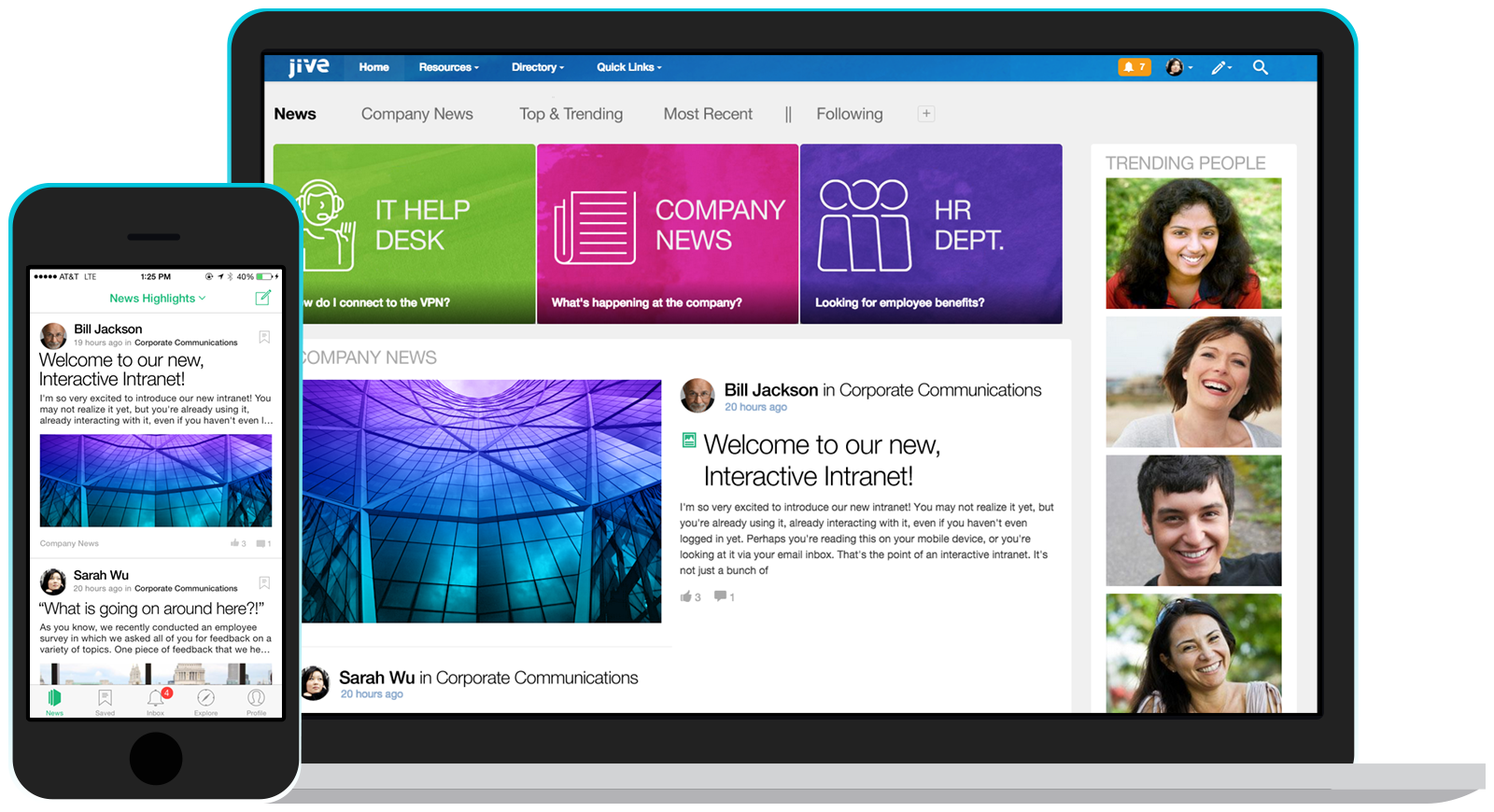
Jive Software, part of the Aurea family of customer experience solutions, provides the gateway to an organization's most important assets – its knowledge and people. Jive's interactive intranet solution promises to connect people, information and ideas to help businesses outpace their competitors. The vendor says the product has more than 30 million users worldwide across every industry, and is consistently recognized as a leader by top analyst firms.
I like the way Axonify provides chunks of information to the learner by overwhelming them by dividing them into bite-size content. The learners don't have a lot of time to give to training, so Axonify has helped has provided just in time training to those teams. It's very much …
Each of the above has its use and I selected Axonify as it's a unique tool that is in its own segment. It meets the needs that other tools, LMS, or learning libraries do not.
There are so many training platforms and increasing numbers of non LMS training platforms that it can be very difficult to figure out what is best for you. It's been a while since I did all the research that led me to Axonify, but below is a short summary of the pros and cons …
Technomedia stacks up below the other listed programs. It may solve the bare minimum of your issues, but when it comes to solving more complex issues and processes, it lacks. When you want to add additions or customize things, the process is very costly and labor intensive as …
We had a Google phone number set up before and Jive was a lot better option than that. It is more consistent and can be configured much easier and with more advanced settings. Additionally, based on the pricing as well as working with the rep on our account, it was a perfect …
We also use Skype to communicate in our organization. They are both useful for organizational communication. The good thing is in Jive, you will have your own personal timeline. Jive also has a newsfeed or timeline that you can browse where you can see the latest updates from …
Jive provided phone support which can be useful in case of emergency. Jive's initial pricing was free which helped jumpstart the process. It also provided JIRA integration which we needed for certain teams. Jive also had Zendesk integration which was useful for support teams to …
We use Jive to keep in touch and share mass updates/important information to the company. It's a good way to keep up to date on what's going on, read articles others share and get to know each other a little better.
We found that Jive had integrations with the existing IT infrastructure/tools which was nicely aligned with our strategy of playing nice with the existing ecosystem, rather than compete against it. Jive uses a technology stack that is well known by our organisation …
I honestly don't recall what we briefly used before Jive - it wasn't good and didn't last long. I think it was under-utilized because you couldn't really do a whole lot with it. Jive does pretty much everything we need it to do, so for that reason alone, Jive is the superior …
I was not involved in the decision to implement Jive versus competitors. My presumption is that the feature set at the time was attractive compared to options like SharePoint. Useful to note that SharePoint seems to have closed the gap in recent years.
I think Jive is a very unique platform in that it is very user intuitive, and acts just like the social networks we've all grown to love and used to. I think it's a great way for the team in disparate locations to stay in touch, and a great way for management to monitor …
Very powerful collaboration tool, intuitive, easy to use and commonly used by software vendors - so once you are experienced with it you can apply your knowledge using it in many places.
Jive is a little behind the curve in comparison with the latest Microsoft features. Jive's lack of native capabilities to support work that requires process or structure increasingly puts it at a disadvantage.
Jive works more with how people actually work and not how admins think that people should work. For example, relying on a folksonomy of tagging instead of a restricted taxonomy is far more practical with how users actually search for content. By putting the power to the users, …
Without getting into specifics, Jive is relatively strong in terms of more 'ready to deploy' business solutions that require less overhead on the client organization side in terms of IT infrastructure, operational support and ongoing administration and maintenance. While some …
Verified User
Anonymous
Chose Jive
Drupal would be much better suited. They have fast version upgrades and immediate customer support. Jive lacked in all those areas
Verified User
Anonymous
Chose Jive
I have worked on Lithium and Liferay. LifeRay has an advantage that it is opensource and will be cheaper. However it lacks the ton of features provided by Jive. Lithium does not support advanced customizations (except for theming). Jive does have the capability to customize …
Well-suited to the original purpose of delivering questions on a daily basis; everything beyond that gets complicated. For example, there are a number of program types available to deliver information (certifications, daily reinforcement, self-directed learning, assigned paths, etc.). However understanding how they all fit together requires advancing weaving together of multiple types of programs for individual groups, and requires more time than you would expect. Nearly 3 years into working with Axonify, we are still trying to iron it all out. We also have side groups of customers who meet to help each other because we all struggle with it too. We have a hard time helping our leaders and subject matter experts understand what is possible and what doesn't work well in the platform, since it is so different and doesn't work as expected. For example, communication to teams is one way - the recipients can't respond.
Recruiting and human resources is a good use for this tool. To some degree, reporting is fairly appropriate as well, unless you want super detailed reports, then I would say no. Anything related to managing candidate flow and making the recruitment process easier is where this tool is best used, upgrades need to be made so it's more useful in other areas before rolling out.
The content in the news section isn't totally responsive - meaning if I have a small window taking up half my screen, the images for the headline articles may not load properly and when I maximize that window, it's left with ugly half-loaded images. Also, the collaboration feature for Office documents is great in theory but tends to cause more pain than it's worth to just download the document and open it separately in Word or Excel.
The commands and controls are fairly user friendly. This is a positive because as recruiters we don't want to waste time having to learn odd or awkward controls, we just want to intuitively click.
The original implementation process was fairly seamless according to industry standards. This made for a smoother rollout, testing, and implementation phase. We didn't waste too much time with overly complicated technical issues, etc.
The reporting function needs to be vastly improved. You can run the most basic reports, but if you want to get more granular it requires customization, extra fees, and involving a developer. This piece should be made easier.
The lag time between load screens, clicking new screens, etc. was very slow at times. We don't believe this was a connectivity issue, rather something on Technomedia's end.
There are always external factors that can impact this decision but currently, the Jive platform is maintaining its lead in the market place in this area. If the innovation in this space by Jive continues, then this number will remain high. Integration with other systems and adaptability to changes in the market or in client needs will also make this decision hard to predict more then 6 months into the future
Axonify is extremely easy to use, for both employees and managers. The platform is visually appealing, and Axonify offers a number of videos and tutorials for any administration and user functionality. The reporting is also very easy to obtain and review, with the ability to drill down to team and individual results.
Uptime was OK. But there was one day that the system crashed for a whole day. Our company was unable to operate. And all the plugins to word/excel froze causing those systems to freeze.
Jive posted a statement to the media saying all customers were up, but we were not.
Axonify has been great for support. We have a dedicated rep but I have also just posted to the official user boards and gotten feedback as well. Axonify also has a conference every year that is a great way to learn. You can also become certified in Content or Administration with Axonify if you so choose.
They did an OK job when I needed them. Except for the one day the system went down. Jive pointed the finger at the hosting company, and the hosting company pointed the finger at Jive. No reliable information came to us.
Jive online training is there. It is OK/average. I feel some other companies are doing better. It is not a piece that is required to have a successfully implementation, but it could be useful to improve it
There are so many training platforms and increasing numbers of non LMS training platforms that it can be very difficult to figure out what is best for you. It's been a while since I did all the research that led me to Axonify, but below is a short summary of the pros and cons of the platforms I looked at and how I decided to implement Axonify.
Compligo- This platform was recommended by the Director of Legal and Regulatory when I first joined my current company. Its main feature is that they provide training on legal and regulatory topics (this is very important to my organization) however, it is a very old school platform, the training tended to be very long, and there was no element of reinforcement. It felt more like "check the box" training than education our workforce, so I opted to continue looking
Docebo- This was my second choice. Docebo is extremely similar to Axonify in the learning philosophy but ultimately I chose Axonify. I won't give my exact reasoning because I'm sure both platforms have made considerable updates since I did my research and I don't want to cause confusion by posting out of date information
Inkling- Inkling is a very cool platform, but not quite as robust as I knew I would need, although I'm sure they have added functionality since I last tested the platform
Technomedia stacks up below the other listed programs. It may solve the bare minimum of your issues, but when it comes to solving more complex issues and processes, it lacks. When you want to add additions or customize things, the process is very costly and labor intensive as well. If it were priced lower, it would make more sense, but there are much better solutions out there.
I honestly don't recall what we briefly used before Jive - it wasn't good and didn't last long. I think it was under-utilized because you couldn't really do a whole lot with it. Jive does pretty much everything we need it to do, so for that reason alone, Jive is the superior tool.
Before, we could not accurately measure if people were really reviewing our monthly safety material or really reading our new policy releases. Now we have nearly 100% compliance.
Over the past two years since we implemented Axonify, we have seen a decrease of $200,000 in our workers comp annual cost. We expect this trend to continue or stay stable due to a staff that is more aware of safety.
We maintain our position as a San Francisco and Silicon Valley Best Place to Work due to our high morale and employee engagement level. 99% of our employees engage with Axonify an average of 13x per month. This ranking has made us an leader in affordable housing with some of the best staff members in our industry.