Chose Conga Composer
NA - We did not evaluate other programs like Conga.

| Product | Rating | Most Used By | Product Summary | Starting Price |
|---|---|---|---|---|
 Conga Composer | N/A | Conga Composer is a document generation and automation tool designed to simplify and streamline the process of creating and distributing customized documents, presentations, and reports. | N/A | |
 Experlogix Document Automation | N/A | Xpertdoc, an Experlogix brand, enables organizations to digitally transform their document-centric processes and automate documents. | N/A | |
 OpenText Documentum | N/A | OpenText acquired Documentum from Dell EMC in 2017, and now supports the enterprise content management (ECM) system. The vendor says users can build content-centric applications and solutions from collaborating on business documents to delivering case-based applications to managing highly precise processes in the most regulated business environments. | N/A |
| Conga Composer | Experlogix Document Automation | OpenText Documentum | ||||||||||||||||||||||
|---|---|---|---|---|---|---|---|---|---|---|---|---|---|---|---|---|---|---|---|---|---|---|---|---|
| Editions & Modules | No answers on this topic | No answers on this topic | No answers on this topic | |||||||||||||||||||||
| Offerings |
| |||||||||||||||||||||||
| Entry-level Setup Fee | Optional | No setup fee | Optional | |||||||||||||||||||||
| Additional Details | — | Contact vendor for pricing information. | — | |||||||||||||||||||||
| More Pricing Information | ||||||||||||||||||||||||
| Conga Composer | Experlogix Document Automation | OpenText Documentum | |
|---|---|---|---|
| Considered Multiple Products |  Conga Composer  Shubhank Shrivastava Support Analyst Chose Conga Composer Only reason was its integration with salesforce. In those apps, we had to manually copy paste the data to generate document and get signed but with conga composer’s salesforce integration, it fetches all the data from salesforce and generate the document for us and once …  Camden Pankratz Sr Salesforce Admin & Developer Chose Conga Composer Fluix and Salesforce CMS  Sofia Fernandez Regional Sales Manager Chose Conga Composer Not as good. |  Experlogix Document Automation No answer on this topic | OpenText Documentum  Chris McCabe Technical Analyst / Technical SME / Tech Lead / Business Analyst Chose OpenText Documentum Sharepoint and others are a bit late to the party -- they have some nice features, but are leaders in the suite spot areas that we found OpenText helping us with.  Ryan Payne Oracle Solution Architect Chose OpenText Documentum Features and underlying technology and development roadmap are much better for both Docushare and Confluence. OpenText product was preselected when I came into the implementation of the project. It should not have been.  Craig Soucie ECM Solution and Strategist Chose OpenText Documentum Subjective but here's how I see it: Heavy duty (in order of how much they can do and how much they can handle): 1)Documentum, 2)FileNet 3)OpenText Middle duty: 1)WCC-WebCenter Content, 2)Alfresco, 3)M-Files (3rd b/c it is Windows only), 4)Nuxeo (only b/c of its newish approach …  Indars Sparnins Software Engineer Team Lead Chose OpenText Documentum While Livelink has many more modules out of the box and provide some more functionality which can be applied to document lifecycle without writing any customizations, from the support perspective Documentum is much cheaper to support and it is much more stable than Opentext ECM …  Rene Wagner Principal Consultant Chose OpenText Documentum There are numerous other products available including SharePoint, Stellent, FileNet, etc. Most offer many of the same solutions and modules that Documentum provides, however some, such as SharePoint, still have significant shortcomings when it comes to true, enterprise-level … |
| Conga Composer | Experlogix Document Automation | OpenText Documentum | |||||||||||||||||||||||||||||||||||||||||||||||||||||||
|---|---|---|---|---|---|---|---|---|---|---|---|---|---|---|---|---|---|---|---|---|---|---|---|---|---|---|---|---|---|---|---|---|---|---|---|---|---|---|---|---|---|---|---|---|---|---|---|---|---|---|---|---|---|---|---|---|---|
| Enterprise Content Management |
|
| Conga Composer | Experlogix Document Automation | OpenText Documentum | |
|---|---|---|---|
| Small Businesses |  airSlate WorkFlow Score 10.0 out of 10 | airSlate WorkFlow Score 10.0 out of 10 |  Square 9 Softworks Score 9.3 out of 10 |
| Medium-sized Companies |  Foxit PDF Editor Score 8.4 out of 10 | Foxit PDF Editor Score 8.4 out of 10 |  MediaValet Score 8.8 out of 10 |
| Enterprises |  DocuSign Score 8.8 out of 10 | Conga Composer Score 8.0 out of 10 | MediaValet Score 8.8 out of 10 |
| All Alternatives | View all alternatives | View all alternatives | View all alternatives |
| Conga Composer | Experlogix Document Automation | OpenText Documentum | |
|---|---|---|---|
| Likelihood to Recommend | 8.3 (0 ratings) | 9.6 (0 ratings) | 9.0 (0 ratings) |
| Likelihood to Renew | 8.9 (0 ratings) | - (0 ratings) | 8.0 (0 ratings) |
| Usability | 7.5 (0 ratings) | - (0 ratings) | - (0 ratings) |
| Availability | 3.6 (0 ratings) | - (0 ratings) | - (0 ratings) |
| Performance | 3.6 (0 ratings) | - (0 ratings) | 9.0 (0 ratings) |
| Support Rating | 6.8 (0 ratings) | - (0 ratings) | 7.0 (0 ratings) |
| Implementation Rating | 3.7 (0 ratings) | - (0 ratings) | 9.0 (0 ratings) |
| Configurability | 1.8 (0 ratings) | - (0 ratings) | - (0 ratings) |
| Ease of integration | 2.7 (0 ratings) | - (0 ratings) | - (0 ratings) |
| Product Scalability | 3.6 (0 ratings) | - (0 ratings) | - (0 ratings) |
| Vendor post-sale | 1.8 (0 ratings) | - (0 ratings) | - (0 ratings) |
| Vendor pre-sale | 3.3 (0 ratings) | - (0 ratings) | - (0 ratings) |
| Conga Composer | Experlogix Document Automation | OpenText Documentum | |
|---|---|---|---|
| Likelihood to Recommend |
|
|
Indars Sparnins Software Engineer Team Lead |
| Pros |
Shubhank Shrivastava Support Analyst |
|
Chris McCabe Technical Analyst / Technical SME / Tech Lead / Business Analyst |
| Cons |
|
|
Craig Soucie ECM Solution and Strategist |
| Likelihood to Renew |
 Kyle Broderick Account Executive | No answers on this topic |
Rene Wagner Principal Consultant |
| Usability |
 Harrison Pershing Salesforce Admin | No answers on this topic | No answers on this topic |
| Reliability and Availability |
| No answers on this topic | No answers on this topic |
| Performance |
 Robin Craigen President / CEO / Co-Founder | No answers on this topic | No answers on this topic |
| Support Rating |
| No answers on this topic |
Chris McCabe Technical Analyst / Technical SME / Tech Lead / Business Analyst |
| Implementation Rating |
| No answers on this topic | No answers on this topic |
| Alternatives Considered |
| No answers on this topic |
Craig Soucie ECM Solution and Strategist |
| Scalability |
| No answers on this topic | No answers on this topic |
| Return on Investment |
| No answers on this topic |
|
| ScreenShots | Conga Composer Screenshots 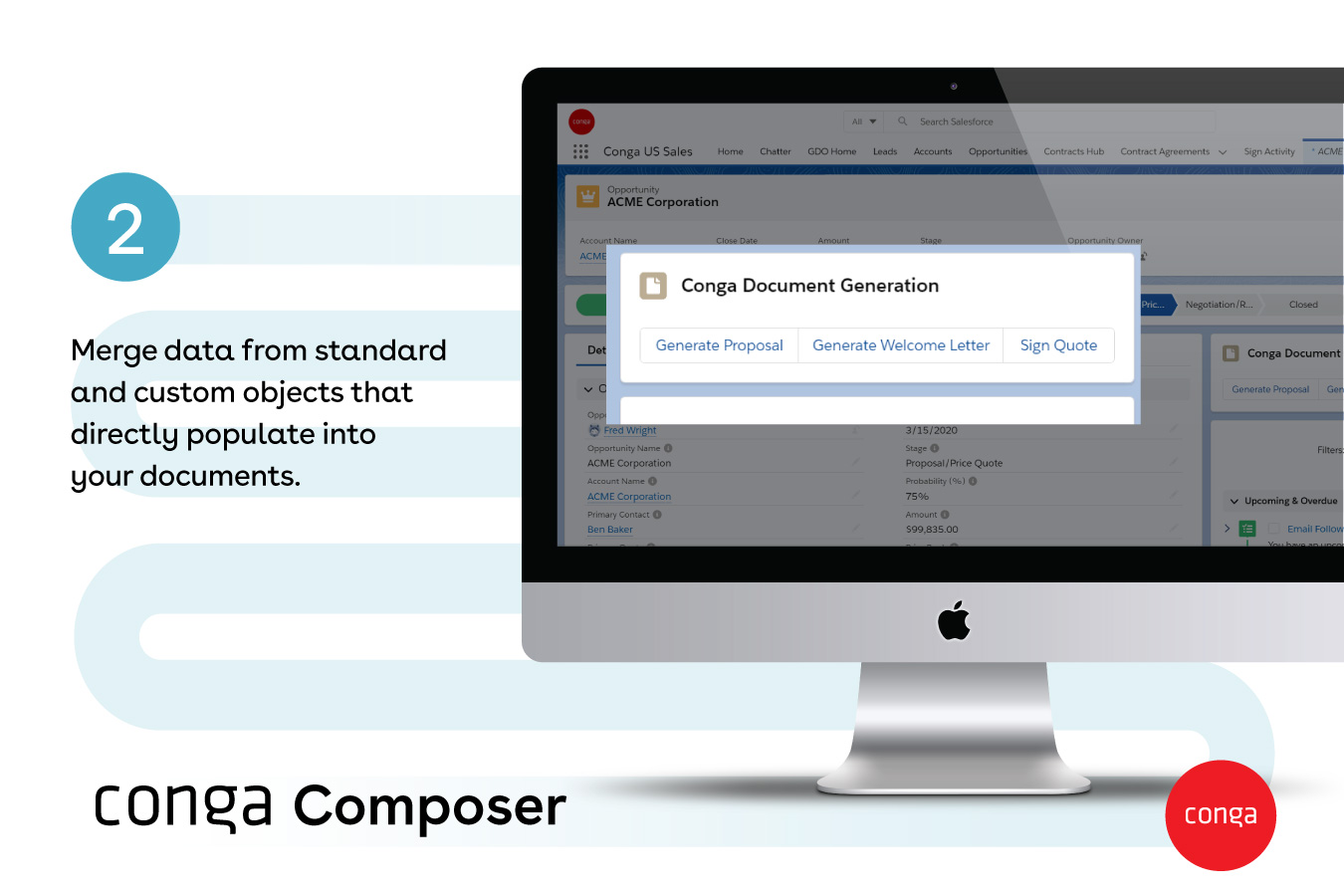  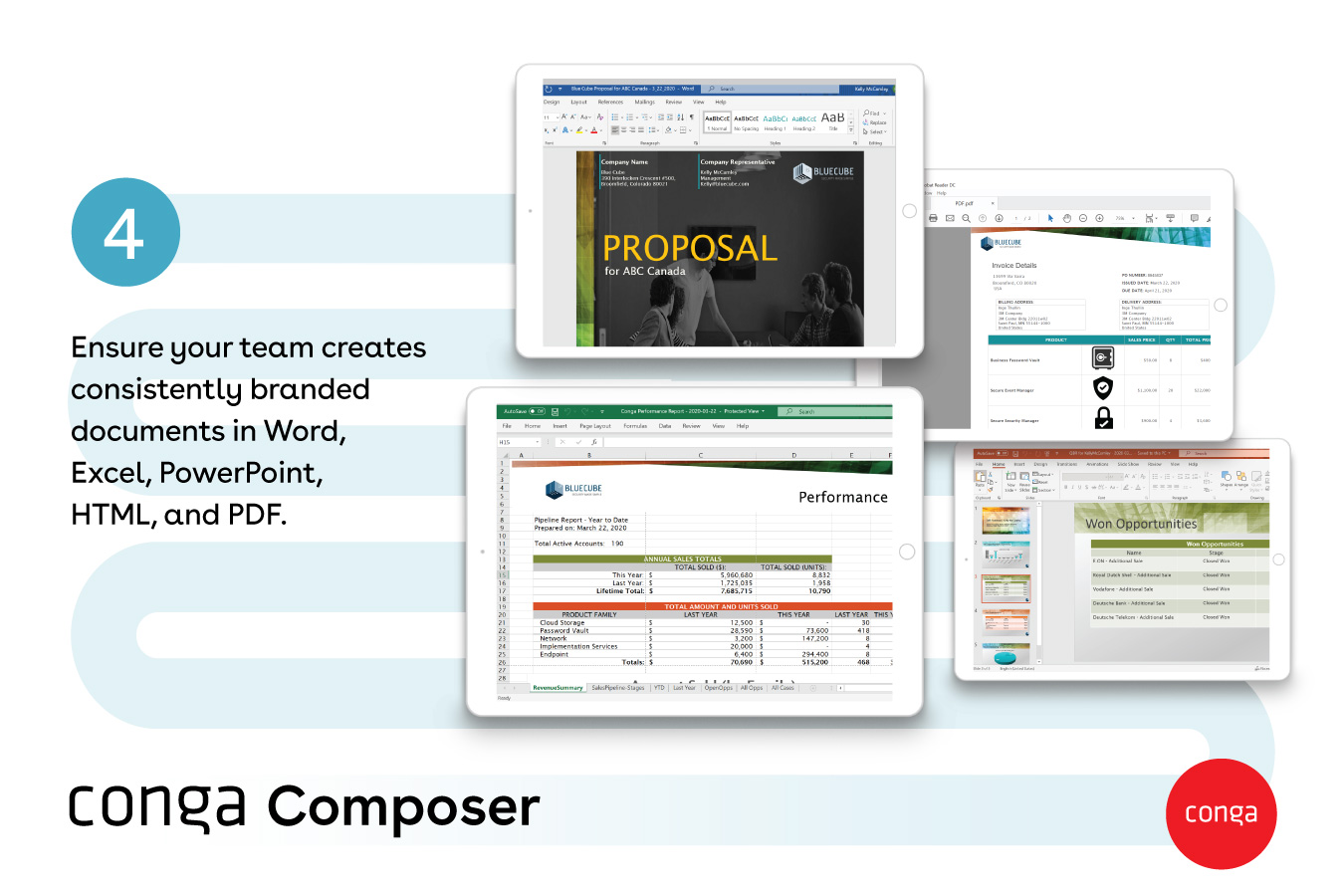   |