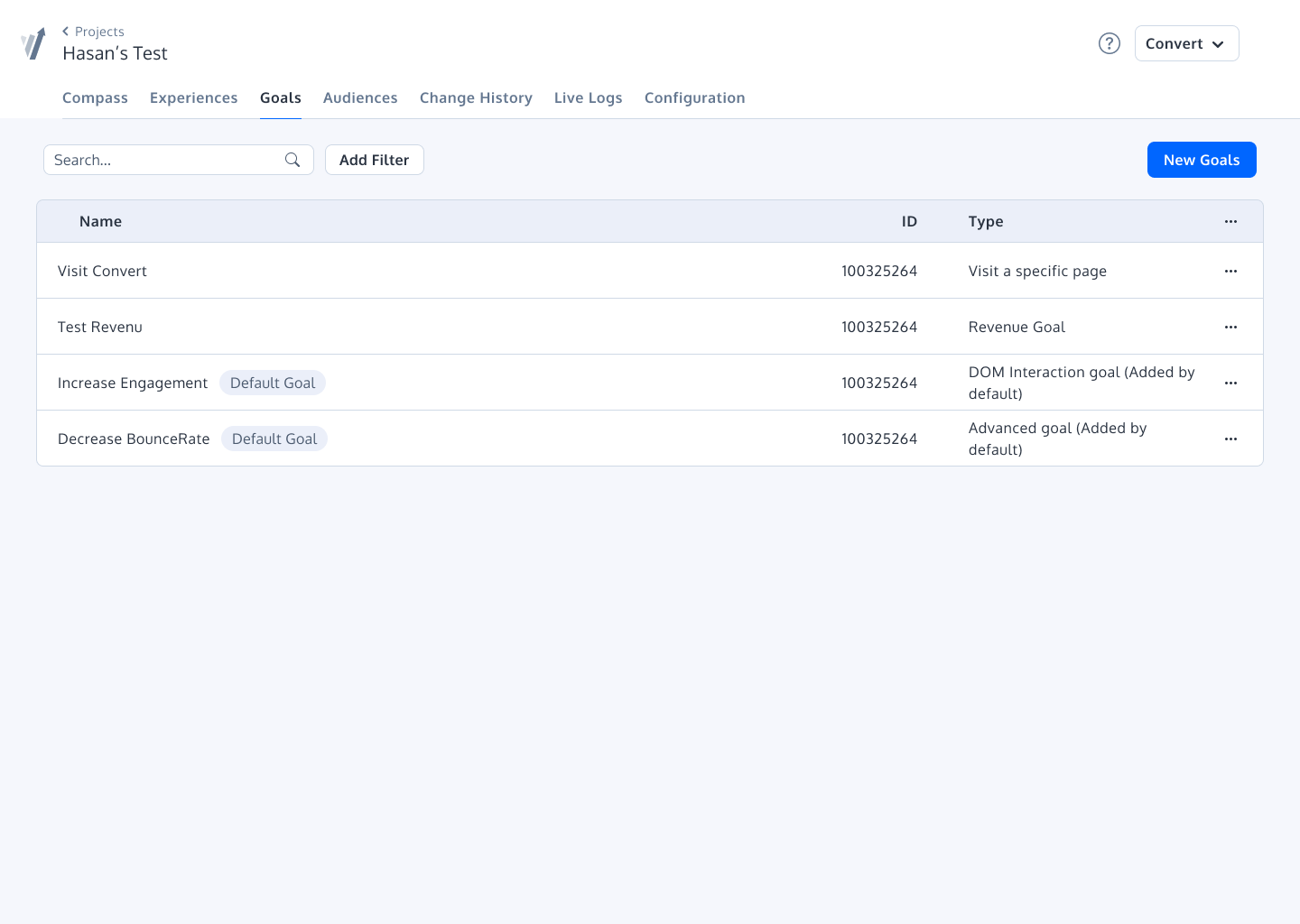
Convert Experiences is an experimentation platform that offers features and support to run A/B tests across multiple growth channels. Its enterprise-ready advanced features include full stack experimentation, multi-page testing, post-segmentation, sequential testing, targeting with 40+ filters, triggering tests based on data in other apps (data sources), dynamic triggers, complex goal tracking, and a secure API. It includes 90+ out-of-the box integrations in a…
$399
per month up to 100k tested users per month
Mouseflow
Score7.7 out of 10
N/A
Mouseflow is a behavior analytics tool used by more than 190.000 digital marketing, UX, Product, Startups and Enterprise clients to optimize their website experiences. With Mouseflow, the user can: Find out what happens between visitors' clicks through watching video recordings of their sessions. Build 6 types of heatmaps for pages automatically to understand what is getting their attention. Set up funnels to watch where and why visitors drop. Use form…
$39
per month
Pricing
Convert Experiences
Mouseflow
Editions & Modules
Growth
$399
per month 100k tested users per month
Pro
$5040
per year 1.5M tested users/year
Enterprise
Pricing available on request
From 1M tested users/mo (billed annually)
Starter
$39
per month
Growth
$129
per month
Business
$259
per month
Pro
$499
per month
Offerings
Pricing Offerings
Convert Experiences
Mouseflow
Free Trial
Yes
Yes
Free/Freemium Version
No
Yes
Premium Consulting/Integration Services
No
No
Entry-level Setup Fee
No setup fee
No setup fee
Additional Details
1. Annual contract or monthly payments available
2. Pricing is not feature dependent. Some features like integrations, goals, Live Logs are necessary to test successfully. This is why Convert caps by unique tested users - basically visitors who have been bucketed to see a variation and are unique to that variation. As a result the app tested users are always </= the site's net traffic.
There is a discount applied to the price if a customer commits to an annual payment plan.
Definitely well suited for budget conscious companies that want a solid array of functionality but without having to pay an exorbitant amount. Great for marketing and analytics team members that need the ability to get in and set up tests w/o dev assistance. But, functionality is there for developers to get in and set up more complicated tests.
Mouseflow is a great when you're working in a busy product development or conversion optimisation environment, and want to understand exactly how customers are interacting with your site or app so you can respond. It's a capable tool that offers some great insight at a fraction of the cost of competitors like SessionCam or ClickTale. It has occasional problems in captures that its competitors suffer from less often, but if you're looking for a general understanding of usage then this is a great tool. It doesn't have built-in integrations with all A/B testing tools, but it does have a built-in Google Tag Manager tag so its very easy to set up without assistance. If you've got the budget to select reliability over cost, then you may choose to opt for a more mature, enterprise offering. But if your budget is limited, or you're just looking to prove the value of session recording as a concept, then Mouseflow will more than do the job.
A de minimis incentive was given to thank the reviewer for their time. The incentive was not used to bias or drive a particular response, nor was the incentive contingent on a positive endorsement. More Info
Over the top powerful Javascript enabled targeting. This feature is called DMP Profiling and is available in the Pro Plan, currently only +$100 more than the plus plan. An article explaining this feature is here for further reading: https://convert.zendesk.com/hc/en-us/articles/206631623-Target-experiment-based-on-a-custom-Javascript-condition-that-evaluates-true-at-a-later-stage. I wrote up a much longer explanation but TR broke it up weirdly. The gist is that you can powerfully use JS to target. This allows me to target users in our SPA in incredibly advanced ways. I can walk their entire history model and assign them an audience value, or I can exclude them. It's MUCH more powerful than just a "Site Area" tool. We recently used it against 900K users to check if they had written a review of their apartment or not yet. This allowed me to only expose the user on the homepage to an experiment that prompted them to write a review while excluding users that couldn't write a review from the experiment (because they had already written one). The experiment converted 50% better than what we do now, generating 9k reviews in a matter of hours.
Audience targeting IN ADDITION to all that fancy DMP targeting. This means I can define demographics or other data as a qualifier AS WELL as the previously mentioned qualifier. This can be setup in so many ways: Traffic source, Visitor Data, Include / Exclude users part of a current experiment (!!), Date/Time, Device/Browser/OS, JS Conditon
Real-time reporting that makes sense to the whole company to view. Seriously, I can share a Convert Report to any level of intelligence on my team and they understand what's happening.
Audiences and Goals are saved as presets, so your entire team can use them. Using the example above, we have an audience called "Wrote a Review" that we exclude from the Review Prompt treatments.
Their customer support is seriously fast at answering questions. I've never had to wait more than a day.
Mouseflow does a great job creating wonderful Heat Maps. These allow you to really see how people are interacting with a page. Great data if you want to create better flow in your pages.
The User Session Recordings are also especially useful and when used in conjunction with the heat maps you can really get a feel and a look at how a page is working. This lets you see where people get stuck, elements that might be distracting, etc.
In the area of the heat maps Mouseflow can handle A/B testing which I think is priceless.
Another advantage to Mouseflow is that unlike many of these types of tools Mouseflow integrates with most Web platforms, well beyond WordPress.
A de minimis incentive was given to thank the reviewer for their time. The incentive was not used to bias or drive a particular response, nor was the incentive contingent on a positive endorsement. More Info
We are aggressive testers and have demanding clients, and if there was any part of the Convert platform where I'd like to see improvement, it would be in the reporting section where I feel a vertical report could present in a more readable fashion to the users.
To use the platform in the context of developing enhanced tests that stretch the platform there is as with most things a learning curve. However, if you're a casual user or have standard experiments that you wish to run you would be easily able to hit the ground running.
Mouseflow is pretty easy to use. You need to be a core technical person to implement it on your site. Mouseflow provided us a tracking code that need to be installed on the website, and if do not have the knowledge of how to work on the backend of the website, you will not be able to install it. Here you will need the help of a technical person who has a good knowledge of your website platform to install the code on the website. There are also videos available giving insight on how to use the Mouseflow platform. I personally haven't faced any problem while using Mouseflow. Just login to this tool and a dashboard will open in front of you.
A de minimis incentive was given to thank the reviewer for their time. The incentive was not used to bias or drive a particular response, nor was the incentive contingent on a positive endorsement. More Info
This is an area where Mouseflow is quite strong. Not only is the support good but they also have some very good training on the use of the product. There is a nicely laid out section of videos that not only cover the use of the tools functions but also how to use the data that Mouseflow produces. They are doing well in the support area.
A de minimis incentive was given to thank the reviewer for their time. The incentive was not used to bias or drive a particular response, nor was the incentive contingent on a positive endorsement. More Info
Convert was selected based on price point, feature set, and UI/UX. All three are very friendly to new testers and small to mid-market size companies. Their UI and tool workflow is the best out of all of the non-enterprise solutions that I have tried. There is some small room for improvement, but that only really affects power users or tests that require significant coding/development work to execute.
Mouseflow is a supplement to Google Analytics and improves on some Analytics functions. Mouseflow adds qualitative data to the quantitative data that Analytics provides to help marketers better understand their website visitors
A de minimis incentive was given to thank the reviewer for their time. The incentive was not used to bias or drive a particular response, nor was the incentive contingent on a positive endorsement. More Info
Using Convert has allowed us to make quick decisions on site edits and price changes. Seeing and sharing quick results makes our operations much more profitable.
Connecting the tests with Shopify has produced very valuable and timely results that we can act upon as soon as we see statistically significant results.
MouseFlow makes a positive impact on our future marketing decisions. We recently had a change in formula for a product and added a variety of ways for people to read about the changes via our website. Mouseflow allowed us to see which method was effective in communicating our message. We were able to replicate the style on other digital platforms.
Mouseflow allows us to save time we would normally spend in developing a website. For example, before building a new website I will spend a couple of weeks analyzing user data via mouseflow. I can clearly see what features are not currently working and where we are loosing people in the current process. This cuts down website revisions by about 10%
A de minimis incentive was given to thank the reviewer for their time. The incentive was not used to bias or drive a particular response, nor was the incentive contingent on a positive endorsement. More Info