Coremetrics / IBM Digital Analytics (discontinued)
Score9.1 out of 10
N/A
Based on the former Coremetrics, IBM Digital Analytics is a discontinued analytics product. IBM acquired Coremetrics in 2010, and re-branded the platform to the IBM Digital Marketing Optimization Solution. Product support was ultimately provided by Acoustic, but the product is not a part of the company's plans going forward.
N/A
Woopra
Score3 out of 10
Enterprise companies (1,001+ employees)
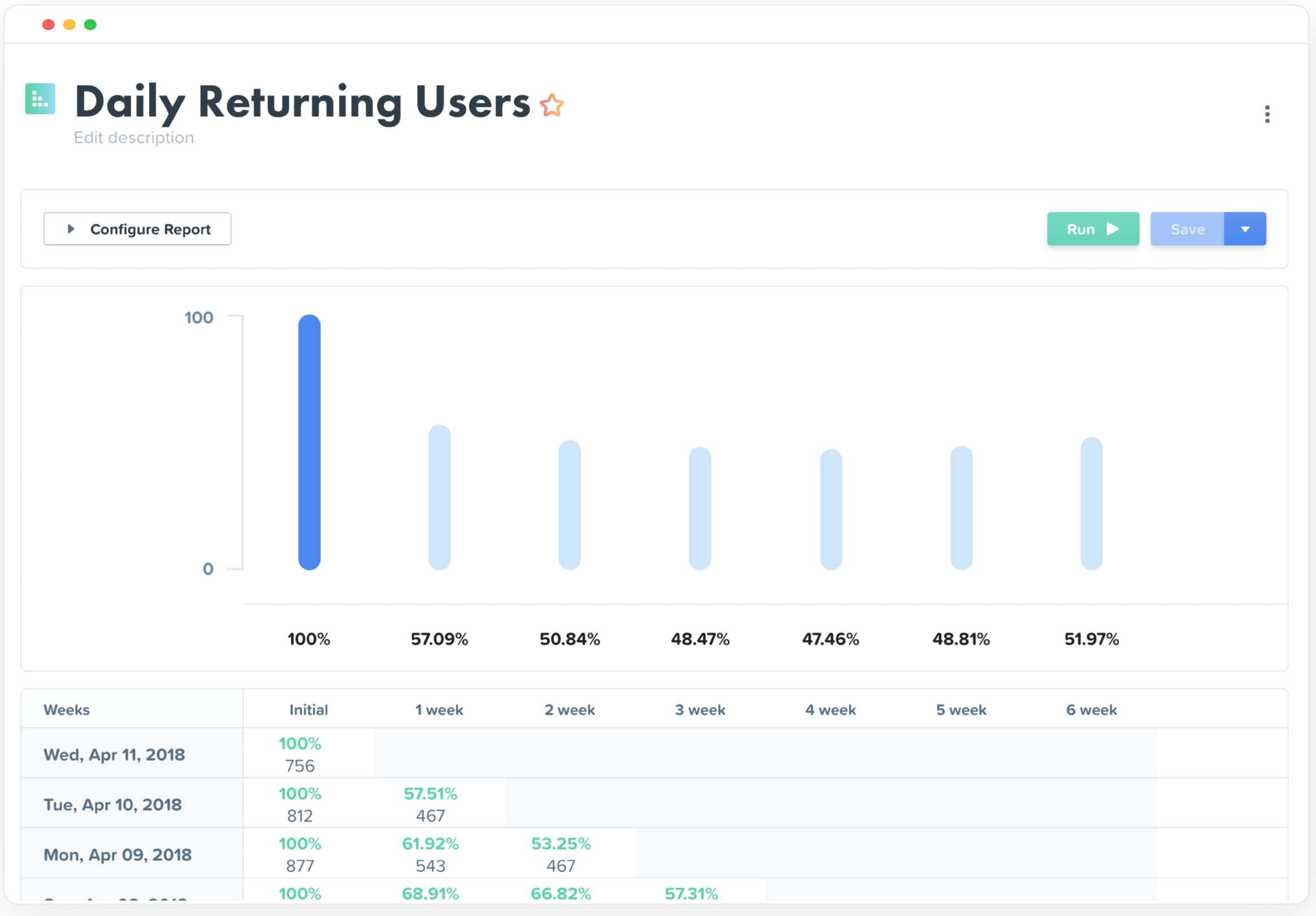
Woopra provides real-time customer analytics. It begins by tracking users across digital touch points (website, mobile app, help desk, marketing automation, etc.) and building a comprehensive behavioral profile for each user. These Customer Profiles are Woopra's building blocks, which are used to generate custom analytics reports, funnel analytics, retention analytics, and more.
$80
per month
Pricing
Coremetrics / IBM Digital Analytics (discontinued)
Woopra
Editions & Modules
No answers on this topic
Pro
$999.00
per month
Offerings
Pricing Offerings
Coremetrics / IBM Digital Analytics (discontinued)
Woopra
Free Trial
No
Yes
Free/Freemium Version
No
Yes
Premium Consulting/Integration Services
No
Yes
Entry-level Setup Fee
No setup fee
Optional
Additional Details
—
—
More Pricing Information
Best Alternatives
Coremetrics / IBM Digital Analytics (discontinued)
Coremetrics / IBM Digital Analytics (discontinued)
Woopra
Likelihood to Recommend
Discontinued Products
IBM analytics has continued to improve upon the days of being the original core metrics. After using the updated version for quite some time, it has been great at providing the needed analytics to measure ROI and goal performance for our quarterly KPI's. It has resulted in a great increase in web engagements although we are a midsize company, smaller outfits may not need such an expensive option.
A de minimis incentive was given to thank the reviewer for their time. The incentive was not used to bias or drive a particular response, nor was the incentive contingent on a positive endorsement. More Info
My rating of Woopra is the absolute best possible. I would recommend them to anyone looking for an analytics website that prefers a visual interface and a beautiful design. I have not encountered any problems using their app -- ZERO! Their integration with other marketing software, such as MailChimp, helps our company zero in on our marketing campaigns and gives us the information we need to make better choices. I LOVE Woopra and think they are the best out there! I have used other websites and there is no comparison!
A de minimis incentive was given to thank the reviewer for their time. The incentive was not used to bias or drive a particular response, nor was the incentive contingent on a positive endorsement. More Info
IBM CXA comprises an acquisition called Tealeaf. This tool has deep heritage and this is evident in its present-day capabilities.
The Universal Behaviour Exchange or UBX puts the concept of personalisation at the forefront. The ability to combine physical (analog) and digital transactions to create the complete picture of a customer journey, is a stand out benefit.
The solution does not have to involve the purchase of software. IBM CXA can be sold as a service bundled with analytics as a service. This not only lowers the cost of ownership, it gets around one of the principal issues. Strong staff with design and analytical capability to drive the solution and deliver tangible benefits.
The seamless integration of Watson AI services to help with the heavy lifiting. Watson reinforces the analytical focus this solution has and can learn to recognise situations specific to a company.
A de minimis incentive was given to thank the reviewer for their time. The incentive was not used to bias or drive a particular response, nor was the incentive contingent on a positive endorsement. More Info
Woopra tracks *individual users and customer accounts*. It cannot be understated how important this is. Google Analytics and other low cost solutions only sample users and provide aggregate data. For enterprise sales, this is critical. Likewise, for product managers trying to segment product usage by types of accounts, this is incredibly useful.
Woopra updates user analytics in real time. This is critical in a sales context as you want to be able to follow up quickly on opportunities. Likewise, it is useful for customer success as they can see usage in real time for an individual they are supporting.
Woopra has the most turnkey integrations of any web analytics solution on the market. By far the most useful are Marketo, SalesForce, and Slack, but there are several more we didn't tap into. While any solution worth its salt has an API, Woopra's integrations usually require a login and/or API key, and you are good to go. Here is the current list: https://www.woopra.com/appconnect/.
Woopra enables B2B product managers to track product and feature usage by revenue, not just clicks. Again, in a B2B context, this is critical, as there are high-value users and low-value users. Knowing the difference is critical.
Woopra's implementation is super simple. We were able to set it up with a couple of hours of one frontend developer and some help from our product intern.
The user interface is in Flash, which can be very frustrating and slow at times. Apparently, this is to be transitioned in a future release.
Can only segment the last 93 days of data. Any historical segmentation beyond the 93 days must be run in Explore (which is credit based, and has its own limitations with the number of credits per month, based on the initial contract with IBM).
Reports can only display 93 days of data at a given time for custom date ranges. There are pre-programmed date ranges setup with IBM during implementation (last week, last month, last quarter etc.), but are not flexible enough to answer more specific questions.
Certain reports cannot have segments applied, making answering some simple questions a bit more tricky. For example, I can create a segment around mobile devices and apply it to the marketing channels report, but I can't create a marketing channel segment and apply it to the mobile reports.
Built in API calls allows for nice report design and automation.
A de minimis incentive was given to thank the reviewer for their time. The incentive was not used to bias or drive a particular response, nor was the incentive contingent on a positive endorsement. More Info
IBM Digital Analytics is a great solution for our clients and I believe they offer the best solution for the retail space. We have access to IBM support via email or live chat and they can answer many of the reporting questions that come up. IBM is receptive to our feedback of the product so I am confident they will continue making improvements
We just really like the tool. There are lots of us using it internally... from Product, to marketing, to customer service, to optimization team, to traffic acquisition, to Executives. Really helps us answer questions about how well things are going, and what is not going well.
The UI and reports are great overall. Creating reports just requires a few too many screens and clicks. Also dashboard tiles can't be resized. Both of these are easy items that are being addressed
As reports are templated, the system is pretty quick. Sometimes you have to wait a bit for a report to render. Or you might have to re-load the page. But there is no real issue here and the system is on par with other similar systems.
Overall, the level of support is very good and I would say it is a strong asset of the solution. However, you can sometimes feel that there is a difference of level among the support team.
Online training is really great. One of the best assets that they have. Lots of great videos, pop quizzes at the end of each module. Fantastic. Other tools have similar features, but not as good.
Compared to other products, the support was a small effort. We only had part time contributions from a product management intern and front end developer.
Much of the work we did in IBM Digital Analytics could have been answered through Google Analytics, a much simpler, agile and FREE solution set. Not mention, given the vast number of Google Analytics USERS, free and actionable support is simply a click away ... this compared to IBM Digital Analytics fractured and often absent support service.
Woopra is much easier to setup and use than Google Analytics. I've spent hours trying to create custom reports in Google Analytics. Woopra does not take this much time to get solid reporting for our site. If you need something that tracks marketing efforts then Google Analytics will likely be a better fit.
A de minimis incentive was given to thank the reviewer for their time. The incentive was not used to bias or drive a particular response, nor was the incentive contingent on a positive endorsement. More Info
This solution can support large amount of data and transaction. The way that user management features are built, it shows it is meant for large organizations.
We spend too much time trying to work around bugs on the new UI.
We spend too much time trying to figure out how to make certain segments work because support and the knowledge center are lackluster.
Our sales rep is very unresponsive and leaves us searching for a lot of answers on our own, including what other products we may benefit from that IBM offers.
A de minimis incentive was given to thank the reviewer for their time. The incentive was not used to bias or drive a particular response, nor was the incentive contingent on a positive endorsement. More Info
Really helped us begin to segment our users based on their engagement and retention.
Helped increase retention by about 1.5% after about 5 months of implementation (don't shoot the messenger if your team can't implement that quickly).
I felt like it had great potential to create a pipeline between sales and the CSM, but I had trouble getting the sales team to implement it properly as they had their noses deep in calls and emails (they struggle entering notes in SalesForces as well, so it's more a company specific problem).
A de minimis incentive was given to thank the reviewer for their time. The incentive was not used to bias or drive a particular response, nor was the incentive contingent on a positive endorsement. More Info