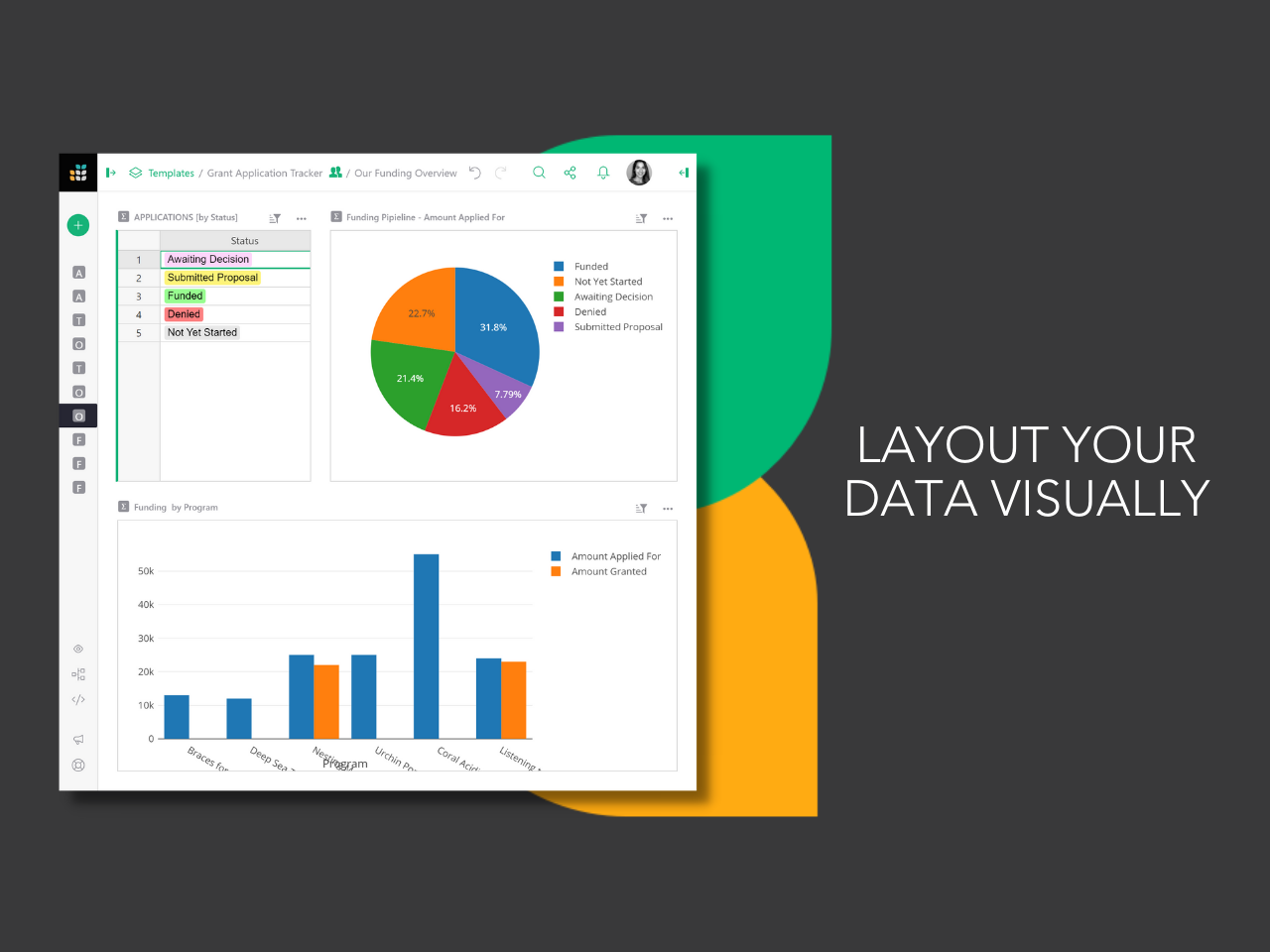
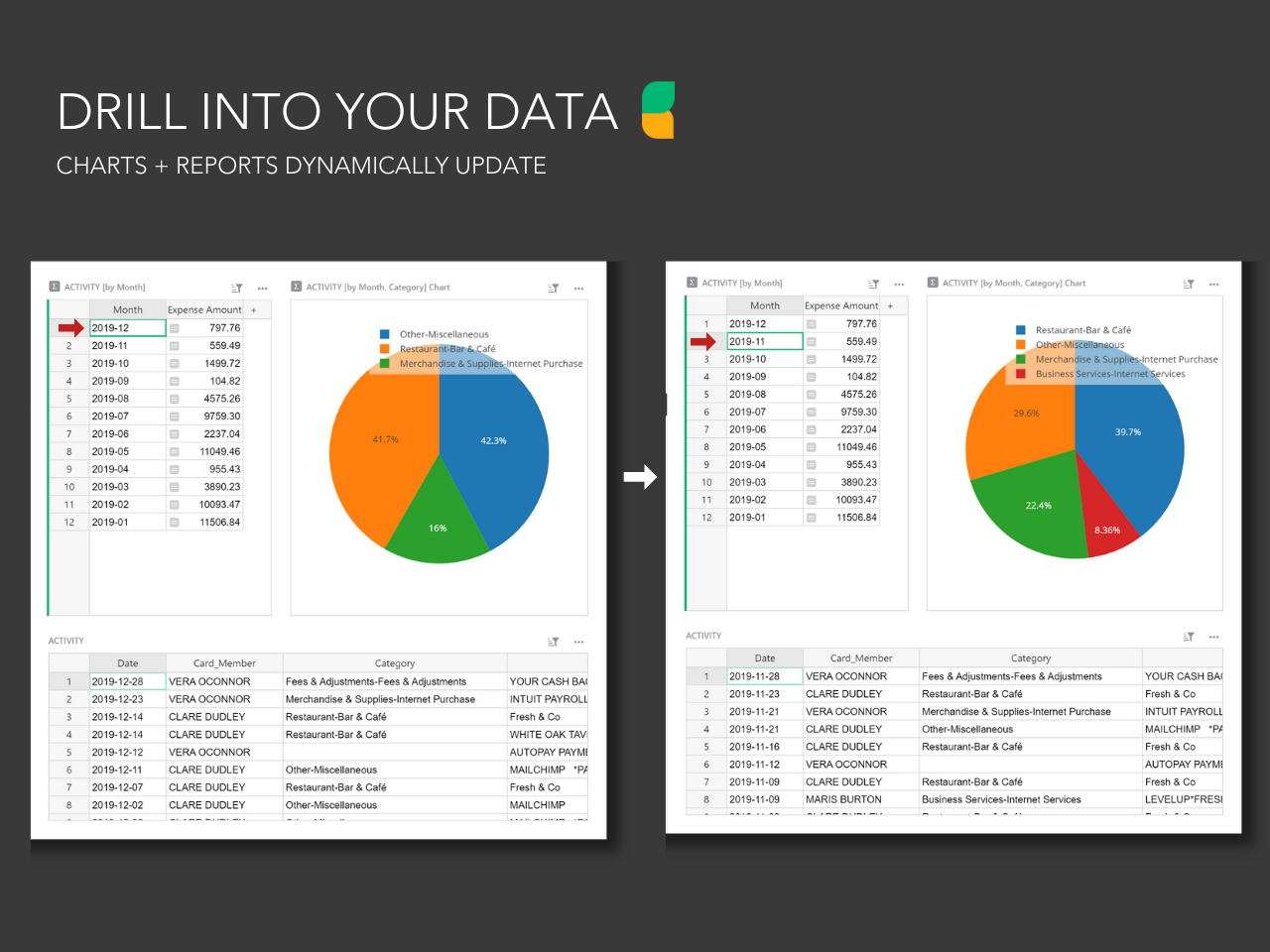
Grist combines the capabilities of spreadsheets, databases and app builders. Using a familiar spreadsheet interface, information can be organized as a relational database, and dashboards built using drag-and-drop. Solving spreadsheet problems Ensures data is well-structured and stored in one place with no duplication, no spreadsheet-wrangling, no merging documents. Collaboration on sensitive data Data is protected…
$8
per month per user
Typeform
Score8.1 out of 10
N/A
Typeform is online form and survey software, focused on high-quality visuals and user experience. Users can create surveys, registration forms, tests & quizzes, contests, tutorials, shopping carts, and contact forms, without needing to write code. Typeform offers freemium plan pricing. Their basic plan is free for one user; their Pro plan in $35/month for one user (includes logic jump, respondent notifications, calculator, custom thank you screen, hidden fields, payment fields, and 2GB file…
This is well suited to someone (or a team) who are technically minded and have a dataset that they need to be able to use in many ways. It's less appropriate for a team who isn't technically minded and/or don't have the data they need to manipulate. It would be useful for things that you could use a database or spreadsheet for such as CRM, Advertising database, Business tracking, Health tracking etc.
A de minimis incentive was given to thank the reviewer for their time. The incentive was not used to bias or drive a particular response, nor was the incentive contingent on a positive endorsement. More Info
Typeform is definitely a leader in the online survey space and that's for a reason. Between logic mapping and the ease of use for the end user, it's a solid app. The unfortunate thing, however, is the price tag--particularly considering the protection you receive from bots. Typeform only allows a certain number of responses at certain package levels, ie: the lowest level, you get a very limited number of responses but in order to receive more responses before your survey is locked, you must upgrade. This is what ultimately lead us to cancel with them. When you post a survey on Typeform, that survey is automatically posted publicly on their website--making it widely available to bots. Typeform offers no easy form of protection like a standardized captcha that you can add to the survey in order to filter bots out. Instead, there are several "work arounds" that they advise users to do that have very limited degrees of success. A quick online search shows that Typeform knows this is clearly an issue, yet they have yet to build in a bot-prevention feature. Since their plan prices vary by number of responses, it seems that they have no incentive to limit the amount of bots filling out surveys I believe. Ultimately, we canceled because, although the app is powerful, it just seemed like their business practices were unethical in my opinion.
A de minimis incentive was given to thank the reviewer for their time. The incentive was not used to bias or drive a particular response, nor was the incentive contingent on a positive endorsement. More Info
The pricing structure is a little steep, especially for the Pro+ plan. It would be nice if they had an a la carte option because there are some features we are paying for that we will never use.
When creating forms, sometimes the cursor will inexplicably leave the field you are typing in and leave you with incomplete sentences.
Even though we are paying for our use, we still have the Typeform branding on our forms, which I think should be removed once you upgrade from the basic plan.
A de minimis incentive was given to thank the reviewer for their time. The incentive was not used to bias or drive a particular response, nor was the incentive contingent on a positive endorsement. More Info
A de minimis incentive was given to thank the reviewer for their time. The incentive was not used to bias or drive a particular response, nor was the incentive contingent on a positive endorsement. More Info
Typeform takes a little bit of getting used to. Compared to Google Forms there are a lot more parts to the software and customizing the form isn't as intuitive. I have also found that embedding it into one smaller section of a webpage seamlessly can be a little tricky. But everything can be figured out eventually and the analytics are very good.
A de minimis incentive was given to thank the reviewer for their time. The incentive was not used to bias or drive a particular response, nor was the incentive contingent on a positive endorsement. More Info
I haven't used the support portion of Typeform, as everything was quite easy to use. I have never encountered a situation where I did not know what to do or how to fix something myself. Typeform is very easy to adopt within any organization, no matter if you understand tech or not.
A de minimis incentive was given to thank the reviewer for their time. The incentive was not used to bias or drive a particular response, nor was the incentive contingent on a positive endorsement. More Info
When looking for a feature rich & flexible / customizable solution, Typeform beats out everyone. However, for specific use cases (like NPS), AskNicely is a clear winner in terms of features, but is much too expensive. Typeform is also fun to use, especially compared to Wufoo which seems so out of date
A de minimis incentive was given to thank the reviewer for their time. The incentive was not used to bias or drive a particular response, nor was the incentive contingent on a positive endorsement. More Info
It's saved a lot of time in both creating an advertising database and managing it week to week effectively. I had previously created in others that haven't worked, and this does, saving me a good 1 hour weekly, and 5 hours or more each time I had problems with the last ones
Being able to stay on track with this has meant I'm following up at the right time (advertisers) and keeping a professional manner and not losing business due to missed communication
Saving me $ from buying a program like Access (or Airtable monthly) and then the learning curve that that has. This has a much easier learning curve to say the least.
A de minimis incentive was given to thank the reviewer for their time. The incentive was not used to bias or drive a particular response, nor was the incentive contingent on a positive endorsement. More Info
Typeform has helped guide our Customer Success, Product, and Marketing teams in strategizing how to engage with customers better, and it has also given us a quick and easy way to do so! By collecting feedback and being able to share it across internal teams, we can coordinate our efforts to build our customers a better tool.
Typeform has proved to be an elegant solution to one of our earlier vexing problems (previous survey tools that looked annoying, had extremely limited branding options/were not customizable, and didn't integrate well with the rest of our tool set) while not breaking the bank for us - it's a very reasonable price point and does WAY more than the previous tools we were paying just as much for.
A de minimis incentive was given to thank the reviewer for their time. The incentive was not used to bias or drive a particular response, nor was the incentive contingent on a positive endorsement. More Info