Hitachi Vantara offers the Hitachi Enterprise Cloud, an infrastructure-as-a-service platform. Hitachi provides a full portfolio of integrated hardware, software and enablement services designed to bring a pre-engineered level of efficiency and predictability to creating a cloud platform.
N/A
IBM Cloud Bare Metal Servers
Score 8.5 out of 10
N/A
IBM Cloud bare metal servers are cloud servers configurable in hourly/monthly options, on-demand, from any location—with a selection of standard features and services for small businesses and enterprise demands. Users can customize RAM and SSDs with 11M+ configurations from which to choose.
$0.51
per hour
IBM Cloud Object Storage
Score 9.1 out of 10
N/A
IBM Cloud Object Storage is an IBM Cloud product in the endpoint backup and IaaS categories. It is commonly used for data archiving and backup, for web and mobile applications, and as scalable, persistent storage for analytics.
$0
per month
Pricing
Hitachi Enterprise Cloud
IBM Cloud Bare Metal Servers
IBM Cloud Object Storage
Editions & Modules
No answers on this topic
IBM Cloud Bare Metal Servers
starting at $0.51
per hour
IBM Cloud Bare Metal Servers
starting at $241.00
per month
One-Rate Plan
As low as USD $12/TB a month
per month
Standard Plan
Free up to 5GB—no minimum fee, pay only for what you use
per month
Offerings
Pricing Offerings
Hitachi Enterprise Cloud
IBM Cloud Bare Metal Servers
IBM Cloud Object Storage
Free Trial
No
Yes
No
Free/Freemium Version
No
Yes
Yes
Premium Consulting/Integration Services
No
Yes
Yes
Entry-level Setup Fee
No setup fee
Optional
Optional
Additional Details
—
IBM Bare Metal Servers offer a choice between hourly or monthly pre-configured servers or can be customized with single to quad processing solutions. Bare metal servers are available worldwide and with no monthly contracts. Amonthly bare metal server built to spec can be ordered and made available in two to four hours—with 500 GB/month outbound bandwidth included. An hourly bare metal server can be ordered, and it is made ready for in 20 to 30 minutes. Public outbound bandwidth is charged per gigabyte.
The One-Rate and Standard service plans for Cloud Object Storage include resiliency options, flexible data classes and built-in security. Pricing is based on the choice of location, storage class and resiliency choice.
1) If you are gathering lots of data from many different points and transforming that data into something customized, and you need it secure yet accessible, this is a great option. 2) If you are looking for a platform and not just a service provider, this would be a great option. As a platform, there is a one-stop-shop feeling that gets you some better customer service and performance. But it also locks you into one provider, so don’t jump in if you feel like you’ll want a lot of flexibility. 3) Building or running VMware is really what this platform is all about. If you’re creating an app drawing from some complex data/sources, it’s an easier go with this tool than most others.
Well suited - 1) To Install required Products/Software in a middleware technology 2) Customize the file system and size of the storage 3) Install required monitoring tools like Tivoli, Splunk, etc. Less appropriate - 1) Maybe for SAAS products that do not require all of the installations.
In my experience, IBM Cloud Object Storage is well suited for projects like the one I am working on. This includes the use of natural language classification and the uploading of data to train a machine learning model for tag suggestions based on a body of text. Using IBM Cloud Object Storage has helped with this greatly. IBM Cloud Object Storage has also been great for Big Data Analytics thanks to its scalablilty and ease of use for large datasets. Alongside IBM Watson and our team's internal big data tools we've managed to process and analyze data more efficiently, leading to key insights that have driven business value for our clients.
It fills a niche that was needed before we as a company fully embraced the cloud with Azure. It was a great introduction to the cloud and there are some features I wish were more readily available with some of our Azure tools. Staying on top of your expenses is much harder without the transparency Hitachi provides.
It allows the small team managing it to simplify cloud operations using prebuilt computing and storage templates. Very easy to monitor, manage and optimize cloud operations.
Pre-Engineered, turnkey solutions with prebuilt services make it quick and easy to select the service needed for each app. With many different suppliers, we cater to many different connectors.
Performance - the servers perform really well, even under stress. We have some long build processes running concurrently, and the server [can] serve other applications without any problems.
Secure - for the most part, the servers are very secure and IBM provides many tools to help [make] sure the servers stay that way.
Highly Available - while we have experienced various downtimes and outages with other IBM Cloud offerings, so far, we have not experienced any with [IBM Cloud] Bare Metal Servers.
IBM Cloud Object Storage is an excellent choice for disaster recovery and backup solutions. Its high durability and geographic redundancy ensure that our backup data is safe and can be quickly restored in case of a disaster. This capability is crucial for maintaining our business continuity and minimizing downtime. We have deployed our loads in an IKS cluster distributed in 3 different AZs with stateful data allocated in COS.
We have a video streaming application and need to store and deliver a vast library of video content to millions of users worldwide, so we store our data in COS, which is cheap and reliable.
We have a bunch of data that must be analyzed and stored in datasets for fraud detection, risk management, and customer insights. In these cases, this data is moved from Onprem to IBM Cloud so we can use cheap storage like COS.
Their ability to offer a public cloud solution that feels like a private cloud solution is a great feature, but not one that is easily understood outside of someone using the tool. I think they need more training and marketing around what they can do for cloud-native development.
I think they are lacking a solution to play in other playgrounds easily. Many of their offerings are better than what Azure provides, so I think there is room for them to leverage Azure size with customized, personalized features.
They really need something big to set them apart from the larger players in this space. I think of Snowflake with their amazing pricing model and the “oops!” button that undoes serious accidental deletes. Something like that would grow the user base and make it a major player.
[In my experience, the] Customer Service Agreement (CSA) has many gaps in terms of responsibility with Bare Metal Servers.
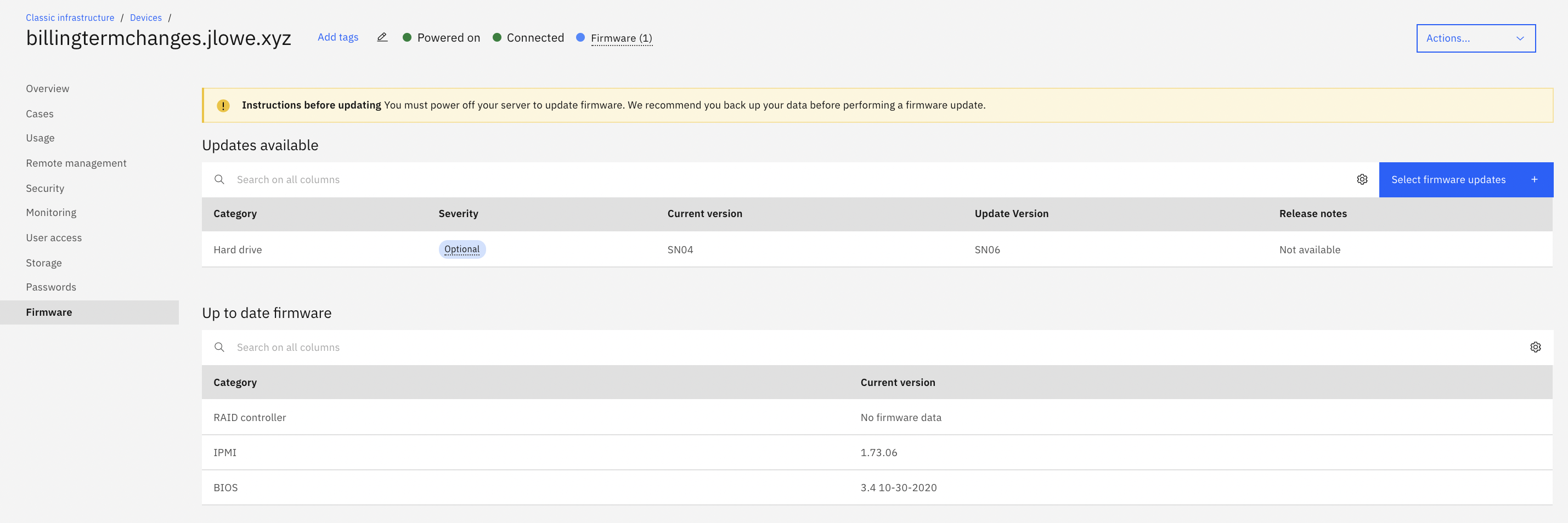
[I believe] IBM should be deploying servers and firmware updating all components before providing them to customers to prevent component failure.
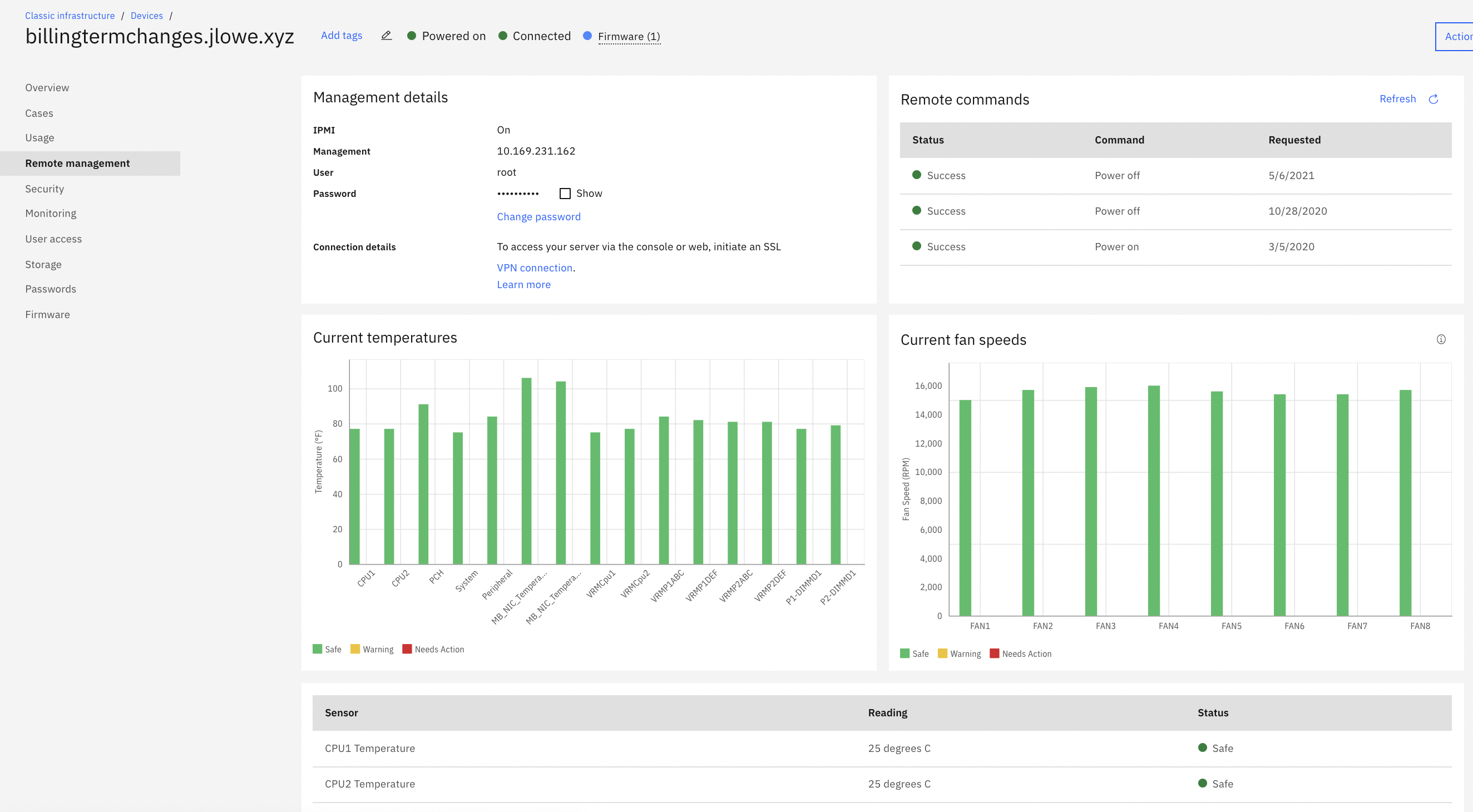
[I feel] IBM needs lots of improvement with their legacy VPN to access IMPI management tools. The level of security of it is unparalleled when it works. Having access to KVM / IPMI is critical for any business, and when their VPN service is not working.
[From my experiences,] IBM deployed faulty hardware, or failed to update firmware per Lenovo notices, only to pass off blame.
[In my opinion,] IBM's General Counsel and Paralegal held our data/company hostage when components failed, [in my experience] to IBM "gross negligence" (in their words), only to release it if we were to limit damages to $1,000.
Searching and retrieving—full-text search or metadata search—is one of the significant areas of improvement. It isn't easy to search for data with this.
Integration with other IBM cloud services is trickier. For example, integrating this with API Connect to access the data from API will be difficult for users.
Support - I think you should have more support community.
Due to cloud computing taking over the market, I have moved to cloud computing. It is so much easier upgrading or downsizing a virtual server on the cloud vs bare metal. I find it way more convenient on cloud computing. The provisioning takes way too long for bare metal servers.
For my use cases, it has been a very smooth experience. Even my new colleagues have been able to get on top of things very quickly. This shows how easy it is to work with
We rarely face downtime or access issues with IBM Cloud Object Storage. It’s mostly available when we need it, even during peak hours or heavy data loads.
I would give it a 9 because it works smooth with our AI and analytics tools, no major slowdown. Pages and dashboards load fine most of the time, and reports finish in decent time even when data is heavy.
Great responsiveness and detailed know-how from the team. Self Explanatory and good resources on the Web to resolve issues. Good communication on issues via email. Good response times on issues which arise and where we have received support from the IBM support team. We believe that IBM is a great Partner to base our IT applications and we believe that a critical infrastructure like a cloud backend will be well served if we continue to base it on IBM.
I have been working in IT sector for more than 15 years. I have worked with various vendors. IBM's sales team, support team have been really helpful. After we start to use their product, their UX design team also contacted us to get feedback from us. They are really interested about our experience.
I just researching and applying the tools on their platforms to ensure a good learning path, based on my needs. Reading the documentation related with resources, tools. Is too big, but I am trying to know more about it every day. It is a good way to know more about their resources. A new way to attract new customers. At the end of the day, we are all involved in improvement and automation of our tasks and resources for customers and end-users.
The implementation of this software took place as we planned. The performance time taken for full functionality was very reliable with positive results. The customer support team was the best team I have ever met in my career experience. They are always with timely responses when reached to offer any help.
Yes Our organization used IBM professional services to implement IBM object storage because of its data consistency and multiple way to upload and download data and its encryption security features. Also that its brand matter for the any organization to secure the layer and storage. It sis also verify that application and system are compatibale for this product
Hitachi Enterprise Cloud is a pleasant surprise, offering better management and control of your cloud containers and VMware. It is a platform and contains all you need to get going, so there is great appeal in smaller companies and isolated divisions/departments in larger companies. If I were managing a small group with a specific endpoint I would no doubt choose a solution like this, but being a large corporation we tend to drive towards larger solutions with internal competencies to support those larger roll-outs.
The Best part of this IBM Cloud Bare Metal Servers is performance and a very highly usable part is Security stuff. everyone needs to secure their data and work with a smoothly running app. for this reason I select this server rather than another one. I will use it in feature [definitely].
Amazon S3 is a great service to safely back up your data where redundancy is guaranteed, and the cost is fair. In the past I have used Amazon S3 for data that we backup and hope we never need to access, but in the case of a catastrophic or even small slip of the finger with the delete command, we know our data and our client's data is safely backed up by Amazon S3. Amazon S3 service is a good option, but based on the features it provides compared with IBM Cloud Object Storage, it is less suitable. IBM Cloud Object Storage is also integrated with more services, like IBM Cloud SQL and IBM Aspera, which AWS does not provide to transfer files at maximum speed in the world.
Scaling up the number of users can lead to significant increases in licensing costs, which, while not a technical limitation, can be a practical constraint for some organizations
The positive pricing aspect has been with the rate card and compute pricing transparency, being better able to manage the budget.
It is a small solution for us, so we are probably not realizing the potential savings we could get by rolling all our corporate cloud work into a single solution, but it is also good to keep multiple irons in the fire, so to speak.
The implementation has done very well in a small, controlled atmosphere. So while the ROI may not have been as high as we’d like to see, the success of the project has made it valuable none the less.
This allows us to recommend a platform to our clients that will quickly help them create new, efficient business processes with very little development.
This saves clients hours and days of manual analysis of images, allowing the system to do the work when attaching Object Storage to models.
There is a learning curve in utilizing the storage and the modeling, but once up and running, it works well during deployment.