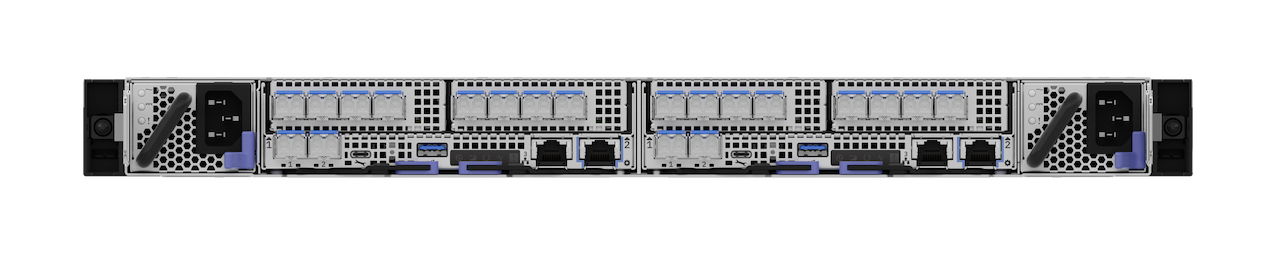
HPE MSA (modular smart array), formerly HP StorageWorks MSA, is a series of storage appliances, from Hewlett-Packard Enterprise, a product line built for a modest budget, available as the HPE MSA 2052 hybrid flash array, the HPE MSA 2500 SAN storage appliance, and the MSA 1050 SAN storage.
N/A
IBM Storage FlashSystem
Score 9.4 out of 10
N/A
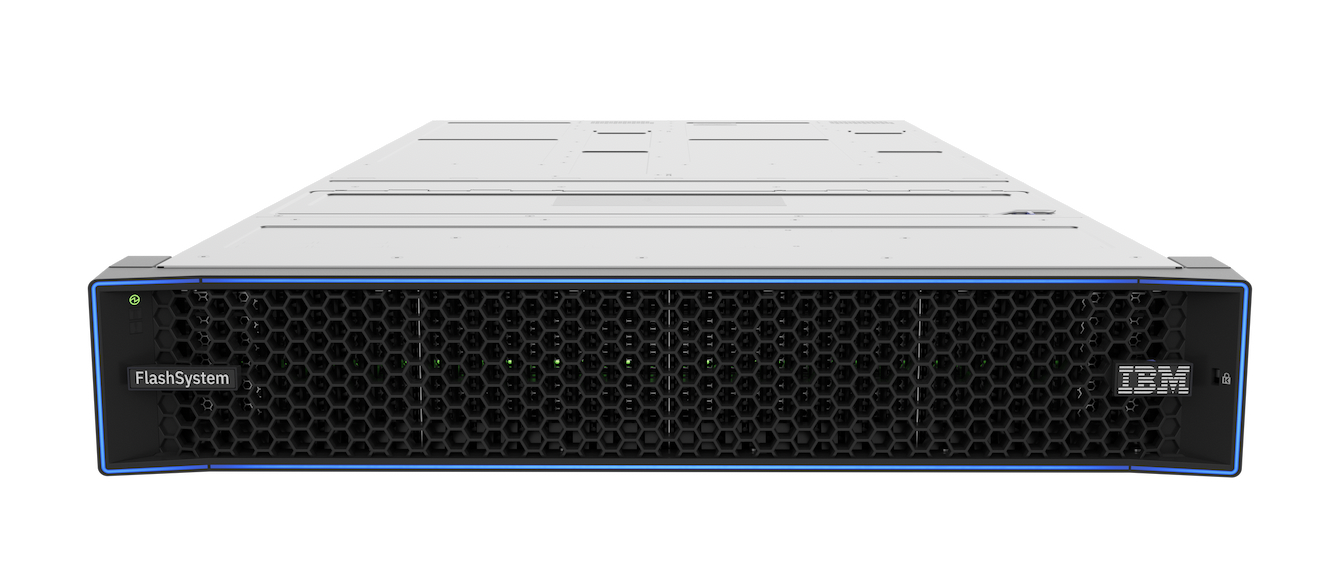
IBM Storage FlashSystem, an all-flash storage array, delivers ~2 PB of effective capacity per single rack unit. Engineered with unique FlashCore Modules, it offloads data services including compression, encryption, deduplication, and ransomware threat detection ensuring optimum performance and resiliency.
$14,200
Nutanix Cloud Infrastructure
Score 8.9 out of 10
N/A
Nutanix in San Jose, California offers their software-defined Enterprise Cloud as a hyper-converged infrastructure solution. The Nutanix Cloud Infrastructure solution combines the Nutanix Acropolis virtualization solution, Nutanix AHV hypervisor (though Acropolis works with other hypervisors), Prism cluster manager, Nutanix Calm and Nutanix Flow server management, and is available on the Nutanix NX series of server hardware appliances, as well as third-party OEM appliances.
N/A
Pricing
HPE MSA
IBM Storage FlashSystem
Nutanix Cloud Infrastructure
Editions & Modules
No answers on this topic
No answers on this topic
No answers on this topic
Offerings
Pricing Offerings
HPE MSA
IBM Storage FlashSystem
Nutanix Cloud Infrastructure
Free Trial
No
Yes
No
Free/Freemium Version
No
No
No
Premium Consulting/Integration Services
No
No
No
Entry-level Setup Fee
No setup fee
No setup fee
No setup fee
Additional Details
—
Entry-Level IBM Storage FlashSystem:
For any organization looking for an all-flash array with features that are both enterprise conducive and budget friendly, the small to entry level offering prices from IBM begin at $18,400.
Mid-Range IBM Storage FlashSystem:
For businesses wanting to take advantage of an enterprise-quality flash array for critical workloads (such as SQL databases, SAP, ERP, CRM, etc.), list prices start at $104,600.
High-Performance IBM Storage FlashSystem:
Organizations seeking a storage array with the ability to run multiple instances of critical applications that are both performance intensive and capacity sensitive, can find IBM prices starting at $368,500.
Contact IBM for configuration and pricing details.
The HPE MSA is best suited for basic SAN requirements. Having dual controllers provides redundancy and allows for firmware upgrades without incurring downtime to the environment. It provides enough IOPS for most workloads be it VMWare or servers requiring storage. For applications such as MS SQL or Exchange, other SAN solutions would be better. Plus the lack of storage snapshot capabilities is also a detriment to the product line. Lack of any reporting capability is also an issue especially when determining workload capabilities.
Top choice for IBMi integration. In general, it's a very good solution for quite a lot of customers. If you need a 3 site replication solution (HA + DR) maybe it's not the best solution, unless you use SVC. FlashCore Modules have very powerful compression rate, while mantaining good performance: high IOPS rate and really low latency
For an organization that requires top-notch performance HCI, Nutanix is the best. You may start with 3 nodes and expand the cluster as required. The management through Nutanix Prism Central and Element was so easy that even a Junior Engineer was able to handle it. The Nutanix platform is not suitable for organizations with a small budget and fewer requirements for high-performance infrastructure, as the Nutanix solution itself is suited for enterprises.
One-click upgrades; whether it's hypervisor, firmware, disk or other updates. This feature has drastically decreased complexity and administration time.
Data Locality. Not all hyperconverged technology is created equal. When I first purchased Nutanix they were the only vendor (and as far as I know, still are) that made sure the storage a VM used was on the same host that VM was running on. Given a normal operating state, the [storage] network is literally only used for replication data.
They got rid of traditional RAID. Nutanix uses software to determine where a VM's storage should be written and replicated to. This dramatically decreases I/O when changing the number of nodes in a cluster, be it on purpose or during a failure scenario. Ex. adding a new node: If one uses RAID arrays then enough space has to be set aside to create a new array that includes the new node, then all the information has to be copied over, and the old array destroyed. RAID arrays do not grow and shrink gracefully so Nutanix has designed a better solution.
The Nutanix management interface was built on HTML5. No more flash headaches!
Firmware upgrades. We have had major issues on two occasions, causing extended downtime. HP was quick to help and resolve, but I am not sure why our simple implementation caused an issue that should have been picked up by testing prior to release. Once was bad, twice painful. The end result is that we purchased a unit solely to test firmware upgrades on, not really great for us!
Support life span. Units go end of life support after around 4 years, a little too short for us.
Definitely we need to be able to extend a volume that is part of a mirror pair or Policy-Based Replication(PBO) on the fly.
Expansion of mirrored volumes/volume groups should resynchronise only the changed data (Almost like making use of change-volumes) and not trigger a full resync.
Please allow us to select downloading drive microcode also from Fix Central directly onto the flashsystem like with updates.
The one downside I have working with Nutanix is the sales team. They seem to try to add in extra goodies to sales quotes or push for extras that you don't really need and you have to tell them to take them out. Don't be afraid to push back on them.
Need to analyze sizing with sales team to ensure right sizing.
It is a functioning Replication system for us and checks all the boxes that the auditors are looking for. Further, it is inexpensive and the storage we purchased was cheap. HP has a good reputation in the industry that plays into the decision also.
As flash technology evolves rapidly, vendors should [adapt] to the changes and onboard them in their products. IBM is a bit slow in adopting advanced technology in [its] portfolio. Even though the current product is good, my decision is purely based on how the transformation of the product [is] being produced and supplied to [the] end-user.
AOS definitely make our dev/test virtual environment management much easier than before. And the consolidation the test/dev environment from Azure and Cisco UCS, we have less need to transfer large amount of data between different hardware platforms which was very big challenge. To expand the capacity is very easy to archive as well.
The integration into our SVC and the midrange systems are very well working. We do use cross site replication and global mirror which in turn is easy setup and the consistency groups are well maintained. The storage does global mirroring but also internal cross room replication as well. The integration of cloud object storage also helps in tiering the overall system.
It's not out of the box easy, but once you get the fundamentals the steep learning curve flattens out and the processes to get things done and how it works becomes very apparent. It's wrapping the slight change in workflow from prior VM management methods took time to unbox and apply the Nutanix Cloud Infrastructure way
IBM Flashsystems is always available for me, it is fiberchannel storage without the fuzz of what iscsi brings. It is a very reliable storage system, I have almost never issues with this system. The only things which go wrong are the updates because the old updates which have been staged on the disks are not properly cleaned in my opinion.
Latency and throughput have been excellent. The compression is done natively on the NVME modules so we do not see an impact there. the distributed parity does not seem to impact write speeds at all. We have found database performace has increased quite a bit over our old hybrid storage solution.
Having a single tier of performance makes it easy to set up SLAs for workloads.
The performance is nothing short of amazing. This is an HCI solution, and as any all-flash HCI solution is amazingly fast, Nutanix AOS fills local IO requests until its local IO is saturated before reaching out over the network. This lowers latency substantially compared to vSAN.
Sometimes the knowledge of the support agent is quite limited and the support always has to route through the level 1 agent to screen all the informtion provided. Then its esclated to the next level support with the all collected data . The logs are always uploaded along wiht the case but still its reviewed at the lower level and then escalated / handed over to the next level if its complex issue to solve.
Our implementation team were great and worked with us and got the program up and running very easily. Every time we called post implementation we immediately talked to an Engineer, which is so unusual in dealing with companies. Everything they have promised they have full filled. I think their support is top notch.
THe training is often selfpaced and easy to follow if you have worked previously with other storage products. The content is clear and contains all the information needed for an admin to learn. However the troubleshooting part is not always included and this is dependent on forums or other sources where the information is not accessible very easily.
I was amazed by the way IBM Flash storage provides a huge amount of storage within the limited footprint, it helped us to replace big fat storage arrays, which aided in the process of moving towards lower hardware, carbon, and energy consumption footprint. We can comfortably say that Flash helped us to host applications fast with a blazing speed and user transactions are quite quick.
IPv6 is needed for link local discovery. We do not have IPv6 configured on our network so the easiest way to get our nodes configured and discovered by foundation was to configure the IPv4 addressing within the node prior to trying to discover with foundation.
The dual controller configuration of the HPE MSA trumps the Synology DiskStation's single controller configuration. For that alone, I would select the HPE MSA. Without that setup, any controller issue or firmware upgrade is disruptive to the systems the SAN is providing storage to. Furthermore, HPE's support is better than what Synology currently provides. The lack of phone support on Synology's part slows down the troubleshooting of issues compared to HPE. Furthermore, HPE's engineers are able to do a remote session and can work on the problems directly compared to Synology's support.
For the past six months, we have been utilizing this technology in our projects to manage a massive workload and produce swift business outcomes on a crucial production database. The IBM FlashSystem 7200, which offers high performance and compression, has so far been a great experience for us. The results and functionality of this product have delighted our consumers.
Nutanix integrates very well with Rubrik for backup and protection of the environment. Nutanix gave us simplicity and scalability compared to VMware and allowed us to extend our infrastructure into the cloud using EC2. One unified management pane for all our workloads, unlike VMWare.
We have been able to scale this storage system whenever there has been requirement for additional capacity and performance. with the help of deduplication we have been able to build quite a robust environment.
We find that return on investment is probably a better metric in most cases.
ROI analysis is more than an exercise. Companies must outline what their future looks like, even if it’s vastly different from what they’re used to and comfortable with.
As good as your financial analysis might be, displacing status quo infrastructure has a lot of emotions tied to it.