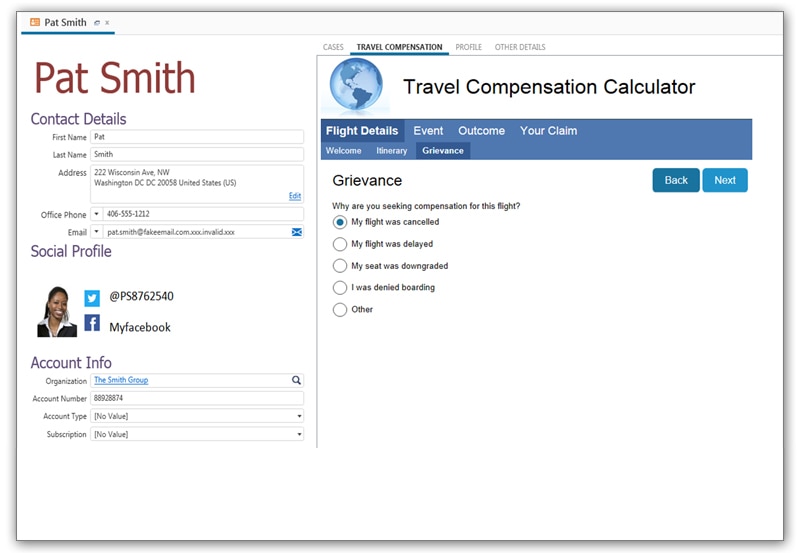
HubSpot Service Hub aims to bring customer service data and channels together in one place, and helps scale support through automation and self-service. According to the vendor, Service Hub provides more time for proactive service that delights, retains, and grows your customer base.
$15
per month per seat
Oracle Service
Score 8.2 out of 10
N/A
Oracle Service is the help desk and customer experience management platform from Oracle. The technology was developed and supported by RightNow Technologies as RightNow CX for cloud-based call center automation, until that company's acquisition by Oracle in 2011 for about $1.5 billion.
N/A
Pricing
HubSpot Service Hub
Oracle Service
Editions & Modules
Service Hub Starter
$15
per month per seat
Professional
$100
per month per seat
Enterprise
$150
per month per seat
Enterprise
Starting at $1,200
per month
No answers on this topic
Offerings
Pricing Offerings
HubSpot Service Hub
Oracle Service
Free Trial
No
No
Free/Freemium Version
Yes
No
Premium Consulting/Integration Services
No
No
Entry-level Setup Fee
No setup fee
No setup fee
Additional Details
A discount is offered for annual billing.
—
More Pricing Information
Community Pulse
HubSpot Service Hub
Oracle Service
Features
HubSpot Service Hub
Oracle Service
Incident and problem management
Comparison of Incident and problem management features of Product A and Product B
HubSpot Service Hub
7.9
16 Ratings
4% below category average
Oracle Service
7.7
78 Ratings
6% below category average
Organize and prioritize service tickets
7.616 Ratings
8.073 Ratings
Expert directory
7.94 Ratings
7.053 Ratings
Subscription-based notifications
8.26 Ratings
7.057 Ratings
ITSM collaboration and documentation
7.65 Ratings
8.050 Ratings
Ticket creation and submission
8.416 Ratings
8.074 Ratings
Ticket response
7.816 Ratings
8.074 Ratings
Self Help Community
Comparison of Self Help Community features of Product A and Product B
HubSpot Service Hub
8.7
16 Ratings
8% above category average
Oracle Service
7.0
74 Ratings
14% below category average
External knowledge base
8.816 Ratings
6.065 Ratings
Internal knowledge base
8.516 Ratings
8.074 Ratings
Multi-Channel Help
Comparison of Multi-Channel Help features of Product A and Product B
I'd recommend HubSpot Service Hub for sure. When switching from a different platform to HubSpot Service Hub orgs and admins can count with a vast number of trainings in HubSpot Academy and most of them are free. This means users will find the resources they need without needing to reach for their superiors for training sessions or guidance.
Oracle Right (Oracle Service Cloud) was an important evolution in the group's ombudsman channel management processes. We brought the Oracle Service Cloud to digitize the processes for capturing and managing the group's ombudsman channel, no longer operating manually (MS Excel).
Oracle Service Cloud (Right Now) brought about an important evolution in the management processes of the group's ombudsman channel, where activities that were performed manually, repetitively and with risk of errors, are now operated by the Right Now platform itself, whether by API, or by automation of the tool.
We've had some issues setting up the Client Portal functionality because we merged with another company and are still operating under two domains; Setting up the Client Portal could be easier or they could provide better support to help us work through it
We've been able to do everything we need to do with HubSpot Service Hub
Oracle Service Cloud needs a better built in integration with Oracle Social Cloud or it needs to build in more Social network capabilities.
SMS is handle via a third party application but could be built in as part of the product.
The knowledge foundation product needs a better way to handle multiple languages. Currently you have to purchase an additional interface for each language. You can purchase the more expensive Knowledge Advance which does have a better language feature.
Although RightNow is extremely flexible, the flexibility comes with a price. It is often not intuitive which settings you need to change (and under which menus these setting are buried) to enable the system to do what you want. Also, sometimes the system can do things you need, but you don't initially realize it. When RightNow sells a system to a new customer, I think it should come with X hours of consulting time with a RightNow expert. The customer should be able to consult with this expert over the next year to get advice concerning how to configure the system to achieve desired needs. Often RightNow Support would just answer "no" when I asked if I could do something, but then I would find another way to achieve my goals after talking with other companies using RightNow.
I'd give it a 9 or 10 for the survey functionality because that is what we use regularly. I left it at an eight because we don't yet have experience with some of the other functionalities within the ServiceHub. Based on our demos, the ticketing system and the ChatBot are great, and we look forward to adding them soon.
The learning curve is fairly steep; but for something that has this much capability, it's nearly impossible to make it "easy". The layout and organization are at least reasonably intuitive. The hardest part-- the "weakest link"-- is the portal development (where you can build help centers and other end-user pages.) The capabilities there are significant, but the learning curve for that part is especially steep and it takes a fair amount of expertise to be able to update it.
We use a lot of tabs and fields on our incident workspace, which should slow the system down, but it's still quite fast, and we continue to optimize whatever is possible.
Technicians seem to be assessed based solely on how quickly they close the issues. I've had to reopen requests multiple times because they didn't actually solve my problem. Also, when the issue has even a moderate amount of complexity, the technicians often instruct me to "open another SR" to handle the other issue. I'm the customer, I shouldn't have to follow their processes, they should handle that for me. But even when I create the new SR, it seems like their right hand isn't talking to their left - they aren't reading back to the previous issue for context. So I get bounced around a lot, and I have to tell them how to do their job
Most of our training was given while doing user acceptance testing, and getting the system approved by the market. When ever we were in doubt, our implementer helped us along. Later on we started exploring by our selves.
Work with a RightNow expert during the implementation. Explain features that would you like to have. Often, somebody who really knows the system can show you what you need to do to achieve the desired results. Where a RightNow support engineer or a consultant might say "the system can't do that," a RightNow application engineer will listen to what you need, and often come up with an alternate path to achieve it
HubSpot [Service Hub] had many integrations we needed to connect to our CRM, and the cost was just right from them VS the others. We had to look at all the features, and HubSpot CRM just had way more than the others and more bang for your buck. So the Service Hub was just a bonus with their CRM tools.
TCS' customers who also selected Oracle Service Cloud over Salesforce Service Cloud and GE's ServiceMax in the Mfg. vertical in which I work, did so because of the robust ability of Oracle Service Cloud and its APIs to integrate with other value-add solutions for manufacturers such as IoT applications, Big Data Analytics, and Field Service applications.
Easy to keep track of leads and track their journey into becoming a customer. For example, we can tell which leads open what emails and target people differently to help increase sales.
Even though HubSpot Service Hub is very expensive, I do think it is worth the price because we can keep track of all leads/ customers very easy, track the customer journey, rework emails with AI, etc.
HubSpot Service Hub also has reporting so you can track everything which helps to improve our sales