Huntress is a security platform that surfaces hidden threats, vulnerabilities, and exploits.
The platform helps IT resellers protect their customers from persistent footholds, ransomware and other attacks.
N/A
ThreatDown, powered by Malwarebytes
Score 9.4 out of 10
N/A
ThreatDown (formerly Malwarebytes for Business), combines Malwarebytes' endpoint security capabilities in four bundles. The basic Core tier includes incident response, Next-gen AV, device control, vulnerability assessments, and the ability to block unwanted application.
$345
per year 5 endpoints (minimum)
Microsoft Defender for Endpoint
Score 8.8 out of 10
N/A
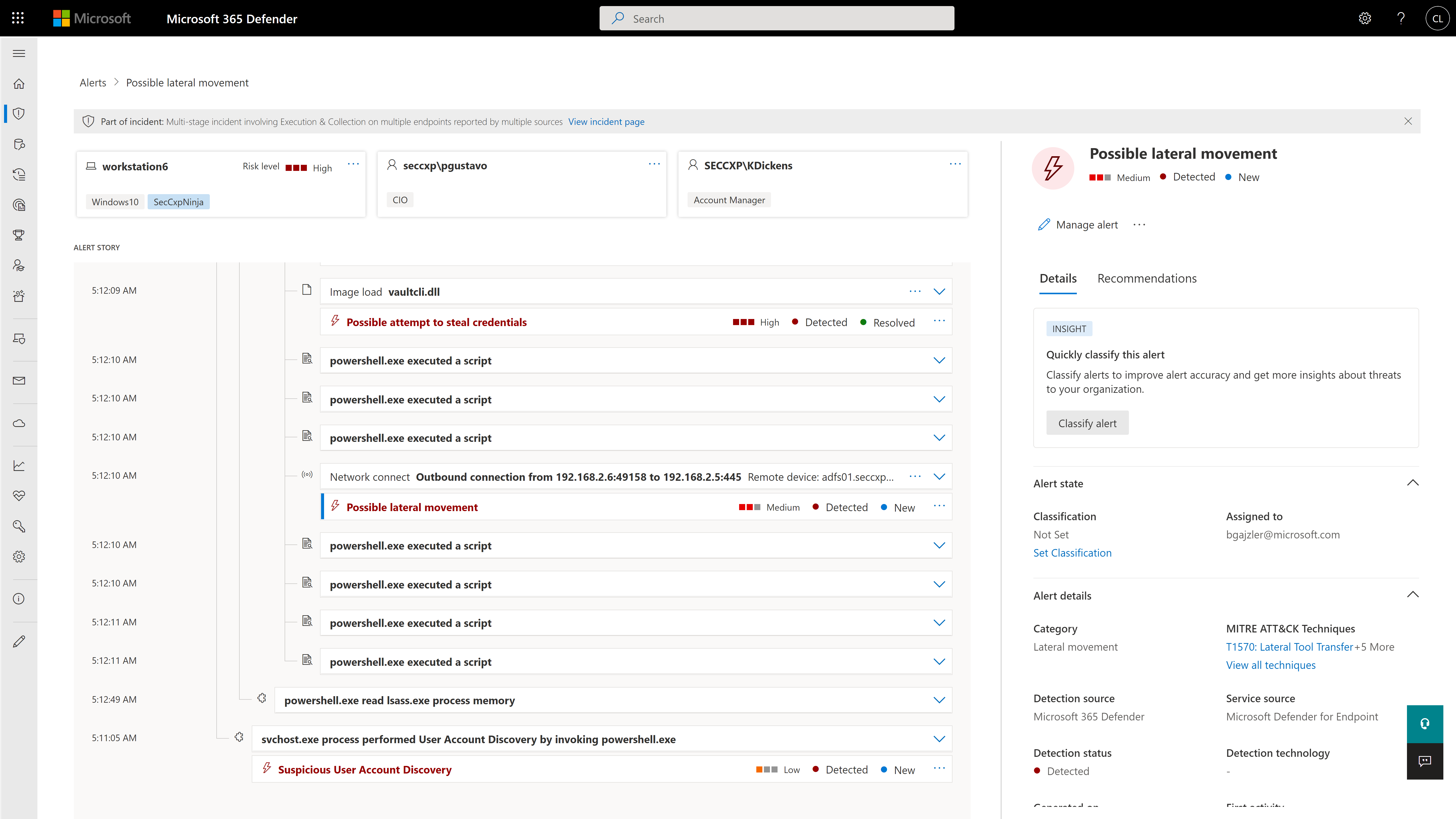
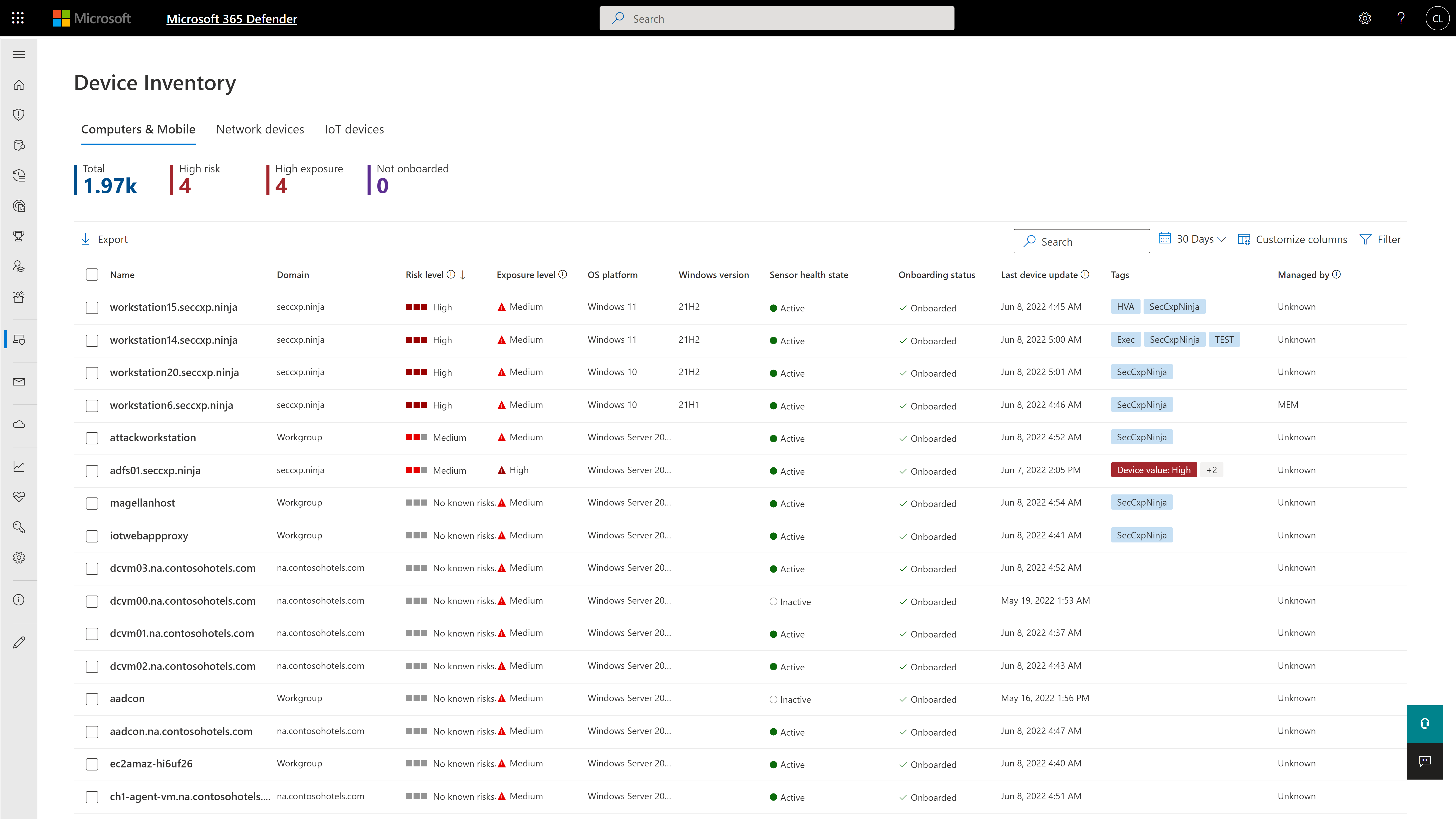
Microsoft Defender for Endpoint (formerly Microsoft Defender ATP) is a holistic, cloud delivered endpoint security solution that includes risk-based vulnerability management and assessment, attack surface reduction, behavioral based and cloud-powered next generation protection, endpoint detection and response (EDR), automatic investigation and remediation, managed hunting services, rich APIs, and unified security management.
$2.50
per user/per month
Pricing
Huntress
ThreatDown, powered by Malwarebytes
Microsoft Defender for Endpoint
Editions & Modules
No answers on this topic
Core
$345
per year per endpoint (minimum 5)
Advanced
$395
per year per endpoint (minimum 5)
Elite
$495
per year per endpoint (minimum 5)
Ultimate
$595
per year per endpoint (minimum 5)
Academic
$2.50
per user/per month
Standalone
$5.20
per user/per month
Offerings
Pricing Offerings
Huntress
ThreatDown, powered by Malwarebytes
Microsoft Defender for Endpoint
Free Trial
Yes
Yes
Yes
Free/Freemium Version
No
No
No
Premium Consulting/Integration Services
No
No
No
Entry-level Setup Fee
Optional
No setup fee
No setup fee
Additional Details
—
Optional Add-Ons include server and mobile device protection. Server protection ranges from $129 to $179 per annum depending on service tier. Mobile security is $10 per device, no matter the service tier. A 10% discount is offered for choosing a two-year billing plan.
Malwarebytes Endpoint Protection is dedicated to protecting against and the remediation of malware. No other product does it better. Their consumer version of the software is often refereed to by other security products and security researchers to clean infected systems. It …
In my opinion, Microsoft Defender for Endpoint is inferior to the competition. Combined with Huntress it is good (they are designed to integrate), but in my opinion, no need to use the paid version of Microsoft Defender for Endpoint when combining with Huntress, so not really …
We choose Microsoft Defender for Endpoint as an additional solution to fill gaps and also to keep more of our solutions under one pane of glass (Microsoft 365).
Huntress is great for a managed service provider to provide a better cybersecurity stack to their endpoints/customers. Some smaller clients cannot afford high-priced SOC services but require SOC-level protection. Along with a couple of other layers of security, Huntress provides peace of mind for the MSP that if a threat were to arise, they would be notified with specific instructions for dealing with that threat.
I think Malwarebytes is the best anti-malware company. I think it is well-suited for any situation and any device. I think Malwarebytes does the best on Windows and on MacOS. Also, Malwarebytes is always improving, and you can tell they are a company that stays on top of cybersecurity trends. If you have a tight budget or looking for the cheapest solution, then Malwarebytes may not be the solution for you. To clarify, I don't think Malwarebytes is that much more expensive compared to its closest competitors.
I can definitely tell you where it’s more suited, because we haven’t come across any less appropriate scenarios. But definitely in regard to how we centrally manage our user space and our endpoints, it’s been beneficial from an API perspective and is really transferable, with strong collaboration with our Azure stack. It works very well.
Using the latest industry knowledge of threats that have been ongoing, but not previously known and projecting it back in time against their installed endpoints to identify machines that are vulnerable or breached and when it these events occurred
Very quiet. If they alert, it is a thing.
Very good at remediation.
They communicate extremely well when it matters.
While there are the most extensive products more often than not they are the first to alert us to a threat.
Protects against malware - No matter how much training you give end users on social hacking, there is always a breach at some point.
Protects against ransomware - Ransomware could spell disaster for a company...it could literally shut the doors for good.
Centralized administration - Without a terrific centralized method to manage all the systems being protected, it would require an extra position just to maintain all endpoints.
Definitely on the threat action and response. We didn't have a stress-response option before, but the dependent brand point provided it instantly. Also, it's doing UVA and machine learning, which we didn't have before. So it's definitely providing more sophisticated threat-detection capabilities than we had before.
The only thing is sometimes, because Microsoft has so many platforms, it gets a little confusing, like am I in the security platform? Am I in Purview? Where am I at right now? Because there's so many sites that are kind of doing a lot of the same thing, and so that does get a little confusing from time to time, but outside of that, it's a pretty good product.
When I first used the tool in my home systems MANY years ago, I wished for a Business version. I was once at a focus group for a major antivirus company, and one attendee’s feedback to “what could we do better?” was “buy out MalwareBytes and add it to your tool”. I’ve used the Business version since it first became available, and have continued to be a dedicated user through the many iterations and improvements
Cost add-ons for Security features is nickel and diming the process to keep pace with cybercrime. Limited Education budgets require us to be more pro-active in finding cost-effective measures to protect our devices, staff and students. Defender is a strong, well-featured product that is pricing itself out of the education market
We dropped SentinelOne in favor of Huntress because the UI was much more simplistic for the tier 1 techs to maintain. It beats the old web design model of three clicks to where you want to go. It is very intuitive. No one needs training to figure out how to navigate its console.
It simply works. It doesn't require the hand-holding and monitoring that some other solutions do. It's simple to deploy and maintain, and adding custom content such as Exceptions require minimal effort. I’ve had to add a few exceptions for internal-use, in-house-developed tools, but it’s quite simple to do so within the online interface
Microsoft Defender for Endpoint is a great EDR to have that works quickly and silently in the background and it integrates well with other Microsoft services. As an IT manager, I can appreciate that I do not get bombarded by alerts for every small detail. On the flipside, the management site can use some work in being more clear and should be more streamlined so I'm not clicking through multiple pages to figure out what happened
Microsoft Defender for Endpoint chugs along just fine no matter what we throw at it and what systems it's running on. It doesn't take up a lot of resources either, so that's welcomed.
As I mentioned, we have only email support. Their phone support was very expensive. If we ever have any issues, we have to email them and wait for their response. In most cases, I have figured out the issue on my own. The software is very stable so we haven't used their support much.
The first time I tried to onboard my macOS endpoints to MDE I struggled for quite a bit. I had to reach out to Microsoft's MDE support team. The tech was very helpful in walking me through the steps during a screen share session
I first implemented this more than 10 years ago, when it required an in-site setup with SQL Server (or SQL Express), and even that was pretty easy. With the move to centralized web management some treats ago, it’s become even easier to deploy
Deployment was handled by our team here and everything went pretty smoothly. We did have a few hiccups in our test group, but that only took a bit to get ironed out.
Firstly from a business model, [VMware] Carbon Black [Cloud Managed Detection] was not outfitted for the MSP where Huntress is very MSP-friendly from an affordably easy point to entry to value for money licensing. Carbon Black TS is not bad in anyway, well, that we found, but Huntress is a new layer of security that fits between the OS and AV layers to provide additional information, monitoring, and detection. With Huntress backing the MSP, [it] sure does help as well.
It's no contest. Cisco AMP, Umbrella and Endpoint use vast amounts of resources and provide little protection when compared with Malwarebytes. One client recently replaced Cisco with MWB and found over 7,300 vulnerabilities on 352 endpoints, including 120 listed as Critical and 7,180 listed as High, with CVE's dating back to 2008.
Previously, we've used Sophos. We've used, way back when, McAfee, Norton, Symantec, all those. And we finally settled on Microsoft Defender for Endpoint. We're a Microsoft technology stack shop. So obviously it was natural. It's built into Windows, so we're not adding additional agents. Some of the other vendors and their agents, for a while, would compete with CPU usage. And so it actually slowed down the machines. Because Microsoft Defender for Endpoint is built into the Windows product, Microsoft is going to ensure that it does not affect the other productivity tools that a user may use.
The ease of remediation has saved our IT team a number of hours manually installing, for example, the free version of Malwarebytes to remove infections, and then cleaning the machine up. Being able to centrally send commands to clean the device is much more efficient.
The centralised management has also alerted us to infections on machines that we might not otherwise have known about, as the existing AV had not detected them, saving us potential data loss, or system damage.