IBM Cloud App ID helps
developers who are not security experts to add authentication to their
apps, and protect their APIs and app back-ends running on IBM Cloud. Developers
can add a variety of login-in types: Email or username and password Enterprise Social App ID includes a cloud user repository to on-board new
users, so they can log-in with email/username & passwords, with pre-built
self-service workflows (password reset, email validation etc.)…
N/A
WatchGuard AuthPoint
Score 9.0 out of 10
N/A
AuthPoint Total Identity Security provides businesses with a solution to protect user accounts and credentials. With
multi-factor authentication and dark web credential
monitoring, AuthPoint mitigates the risks associated with workforce credential
attacks. AuthPoint adds an extra layer of security by monitoring for
potential credential exposure in the dark web for both personal and corporate
accounts.
In my opinion, the IBM Cloud App ID are far from, thus, requires a lot of improvement compare to these matured, has long years of experiences in offering similar application of purpose. The IBM has a lot of room to improve more so that their client would definitely choose their …
The reputation of IBM Cloud App ID across the market and pricing solution for our large organization was the main driving factor. Also, user documentation and customer support were an add on.
IBM Cloud App ID is our first supplier when it comes to app authentication. IBM is a very known provider and we didn't have to research its trustworthiness or hesitate [on] our purchase decision. Even though it can be a bit expensive, efficiency is our top priority.
Both the software have different use cases, like IBM Cloud App ID, which will be more suitable for internal websites and apps or specific event website authentications, Auth0 can be suitable for consumer websites, e-commerce sites, where social media login is preferred more by …
I was building my application’s back end on IBM Cloud Functions, so naturally I had to use App ID. Because of the seamless integration between App ID and Cloud Functions, I can create protected API endpoints for my Single Page Application (SPA) and not have to write middleware …
The features that IBM App ID includes are incredibly beneficial to the developer process in terms of simplicity and security. I have found using this app a prominent staple in app development and plan to use it furthermore.
Using WatchGuard AuthPoint provides an independent layer of restriction with a different vendor than Microsoft. It syncs well with Microsoft active directly and provides a single pane of glass for security insights. It balances security and usability well so that it is easy to …
WatchGuard is superior in one way that is very important for our small team, and that is price, it is much cheaper than intune. It also offers most of the same suite of features as well as some extra (dark web monitoring is the only one I can think of) however the fact that it …
I chose Watchguard for the bundle of features and customer support, not to mention the transparency you get with a paid program versus an open-source version. Mainly, I liked having so many of the solutions I needed in one place without having to find separate programs.
WatchGuard AuthPoint is easier to manage on a company-wide scale than Google Authenticator. We do use AuthPoint in conjunction with the Microsoft Authenticator but for different services. WatchGuard also has other features available, like dark web monitoring and device …
I really like the ease of use of the WatchGuard AuthPoint and it has been a good move when our previous VPN appliance went out of support. Working with and using the WatchGuard AuthPoint has been a very easy transition and great improvement over the Sonicwall we previously …
We use different 2FA providers to secure different things. We are actively using Duo now, as well as WatchGuard AuthPoint. Each provider has different strengths, and you must test the applicability of a service in your own environment.
Started looking at Yubikeys and RSA, but WatchGuard AuthPoint had complete package instead of piecemealing tokens with one vendor and then using softkeys from Microsoft or another vendor.
The biggest reason we selected Watchguard was support. We already use Watchguard firewall products and have received excellent support from our third-party vendor, Watchguard.
If you already have WatchGuard firewall, this just integrates a lot better than any other product. We tried Microsoft Authenticator but not nearly as seemless for the experience as it is with WatchGuard AuthPoint. It is all built into the same portal as the firewall and can be …
WatchGuard AuthPoint is less expensive than most competitors, easier to manage through WatchGuard Cloud, and the MFA solutions is rock solid and secure. We do not worry about vulnerabilities with WatchGuard AuthPoint.
Whenever you need to provide Security Provider functionality for a web based application it is well suited. You can also integrate with other directory services (e.g. SAML, Facebook, Google), but not so easily with other Auth0 based services. The customization of the login page is very intuitive, but does not allow much customisation. using the integrated Cloud Directory, you do not need to integrate with existing security providers and you can build up your own user base - including Multi-Factor Authentication settings and password policies.
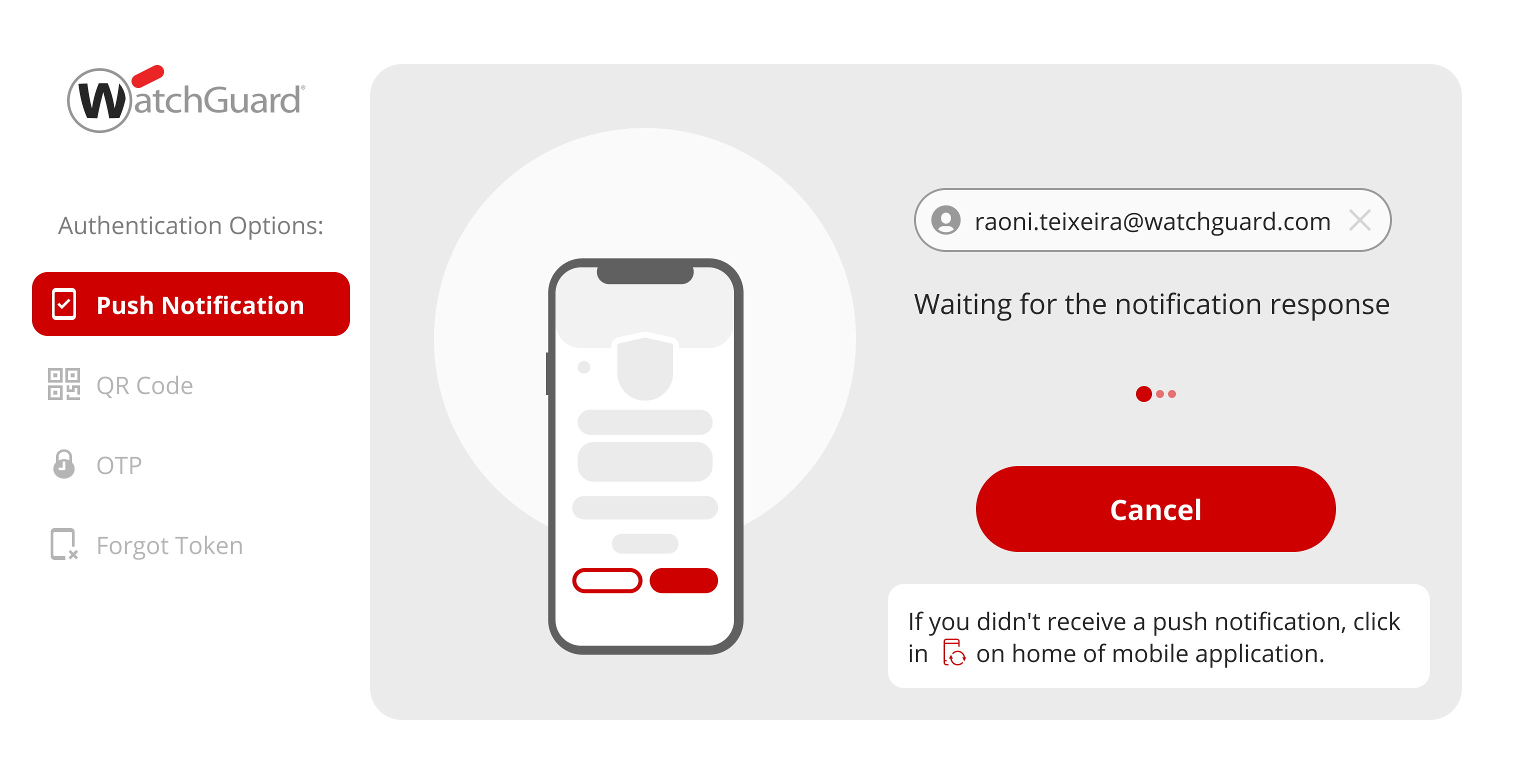
We use multiple authenticators at my company. We use WatchGuard AuthPoint just for our VPN for security purposes. The app works very well and over the past year we've only had a handful of issues with the authentication service, and these were resolved relatively quickly. We do have to remind people to enable push notifications from the app, or have the app open when they need to use it to authenticate, otherwise they won't get the push to approve. The biggest issue I've found is that people will forget to do this and then say that the VPN isn't working - the VPN is working, it's just that they didn't get/approve the push from AuthPoint in time.
Works well with the free Authpoint client and the OpenVPN clinet.
Token management is simple and hosted completely in the cloud to reduce overall complexity
Setup was simple and and staighforward
Suppports several authentication methods we have used both RADIUS and SAML effectively, but ADFS, IDP, RDWeb, and RESTful API, and other custom apps are supported.
Geofencing for RDP has been very useful as it is independant of our firewall geofencing. This is quite useful for organizations like us who do not Geofence at at the firewall level so as to provide global access to resources on the DMZ.
Email support is SLOW unless I want to allow a stranger to access my production firewall. That is never allowed here, so our hands are tied in terms of being able to get support in less than 48 hours.
Again, support takes far too long because you refuse to employ any staff that works in US time zones during normal business hours.
There has to be another option besides: 1) you take full control of my systems or 2) I wait on SLOW email support that isn't that great.
We are very happy with Authpoint and see no reason to make any change to it. If only there was a policy to set minimum password strength requirements and to force users change their password every xx days, then it would be a 10!!!
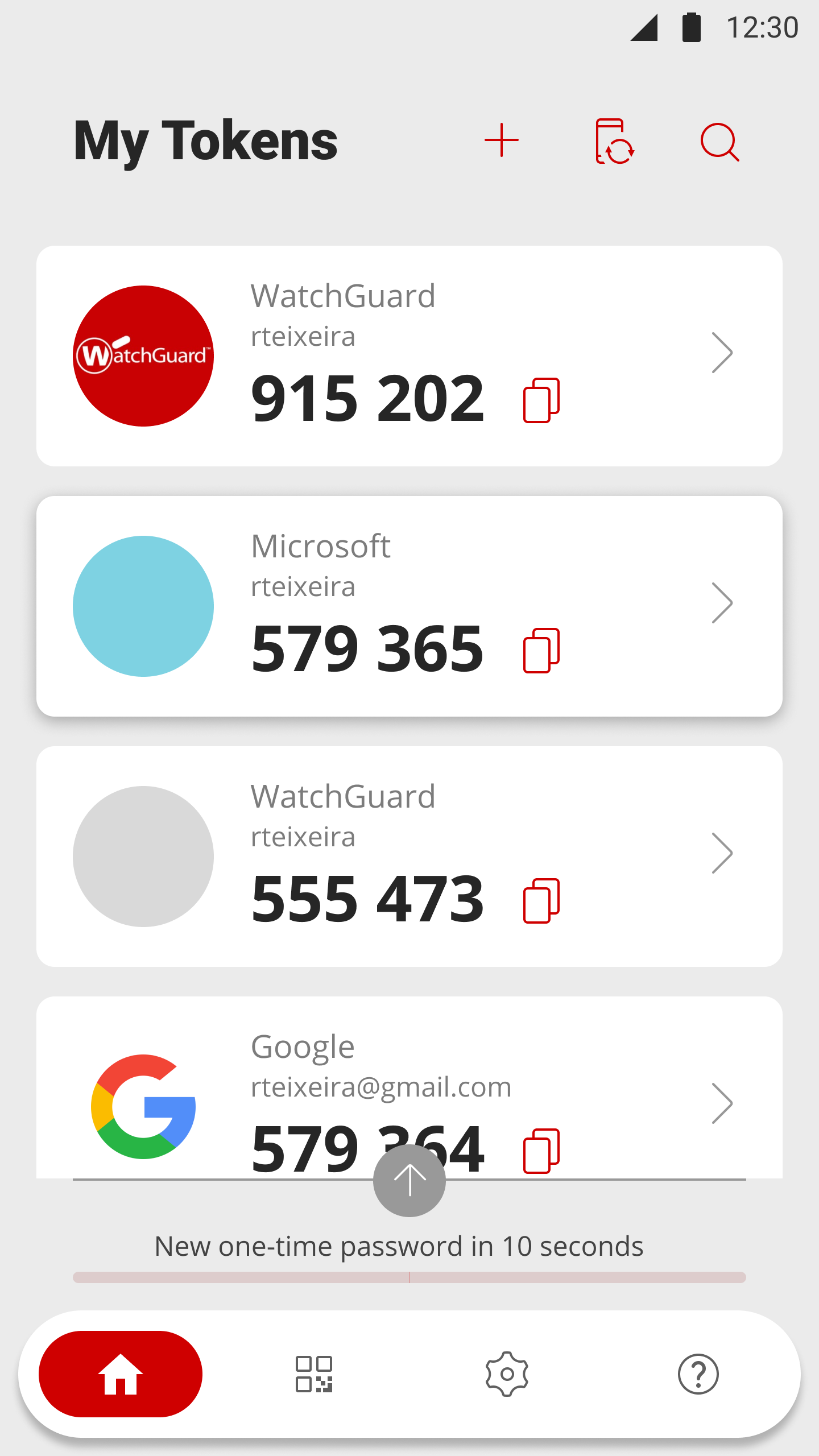
After initial setup, it practically runs itself. Onboarding new users is fast and easy as it should be. The AuthPoint mobile app is small and simple to use. The only reason I do not give it a 10 is that I frequently get complaints from end users that the AuthPoint app is "constantly downloading". In fact, it's not downloading anything and that what the users are seeing in the app is a timer for the 6-digit code that changes every minute.
WatchGuard support is always quick and reliable. They have urgency levels that you are able to select when creating your support ticket, and they respond in accordance to the severity that you have set. I have never had an issue with getting someone on the phone in the same business day, even for very low priority issues.
It was an Onsite demo at the ditributor with the benefits of Watchguard Authpoint. Was very nice to see the abilities of the product. This Demo was a few years back, since then Authpoint changed allot. It is very nice for partners that you can get this demo without any aditional cost.
We use the online training for all our employees. There are both sales and technical trainings available and there even is a technical certification. You can use this for the Watchguard Partner Program which can give you aditional benefits. Every now and then you have a webinar that discusses multiple Watchguard products.
the first time it takes more effort. It is helpful to already understand how each authentication type works. Then it's much easier to understand the MFA solution that you implement. It is useful to check the release notes from time to time and update the key parts of the Watchguard Authpoint. Authpoint Gateway, Logon App, RDWeb... Also, it's useful to set up notifications when something goes wrong or sometimes check the statistics of how many requests are being approved/denied, etc.
Both the software have different use cases, like IBM Cloud App ID, which will be more suitable for internal websites and apps or specific event website authentications, Auth0 can be suitable for consumer websites, e-commerce sites, where social media login is preferred more by the users. Both have their own capabilities so can be chosen according to their needs.
I chose Watchguard for the bundle of features and customer support, not to mention the transparency you get with a paid program versus an open-source version. Mainly, I liked having so many of the solutions I needed in one place without having to find separate programs.
We currently have 300 users on Authpoint, and most of them use insecure passwords. Authpoint gives us peace of mind that we don't have to police individual employee passwords.
In line with the comment above, with so many people in our organization using insecure passwords, I'm sure that Authpoint has already saved us from many potential security breaches.
Security breaches can cost a lot of money. Preventing them saves the company money and helps to achieve our bottom line.