InEight's modular project controls software connects complex project data to improve visibility and delivery in capital construction.
N/A
Project Insight
Score4 out of 10
N/A
Project Insight is a web-based project and portfolio management software. Project teams can access, edit and update their projects information anytime, anywhere, with any supported browser, tablet and mobile device. Features for experienced project managers include: MS Project import/export, intelligent scheduling, resource allocation, Outlook integration, document management, approvals, time/expense tracking, issue management, 100s of dashboards and advanced permissions.
$45
per user or volume licensing options.
Pricing
InEight
Project Insight
Editions & Modules
No answers on this topic
Enterprise
$45
per user or volume licensing options.
Free
Sign Up & invite your team
#3 ADD-ONS
Grow as you go
Offerings
Pricing Offerings
InEight
Project Insight
Free Trial
No
Yes
Free/Freemium Version
No
No
Premium Consulting/Integration Services
No
No
Entry-level Setup Fee
No setup fee
No setup fee
Additional Details
InEight offers a modular, integrated project controls platform. Because the InEight platform covers the entire construction lifecycle, customers purchase the software based on their specific needs – purchasing stand-alone products, a bundle of products, or the entire platform. As a result, the pricing will vary depending on the specific product, number of users and length of contract. Once InEight has identified the highest impact areas, they offer potential customers a custom proposal. The options they consider include:
Per user pricing: typically annual subscriptions.
Revenue-based: using a percentage of the customer’s revenue.
Project-based: software use dedicated to a specific project or program of work.
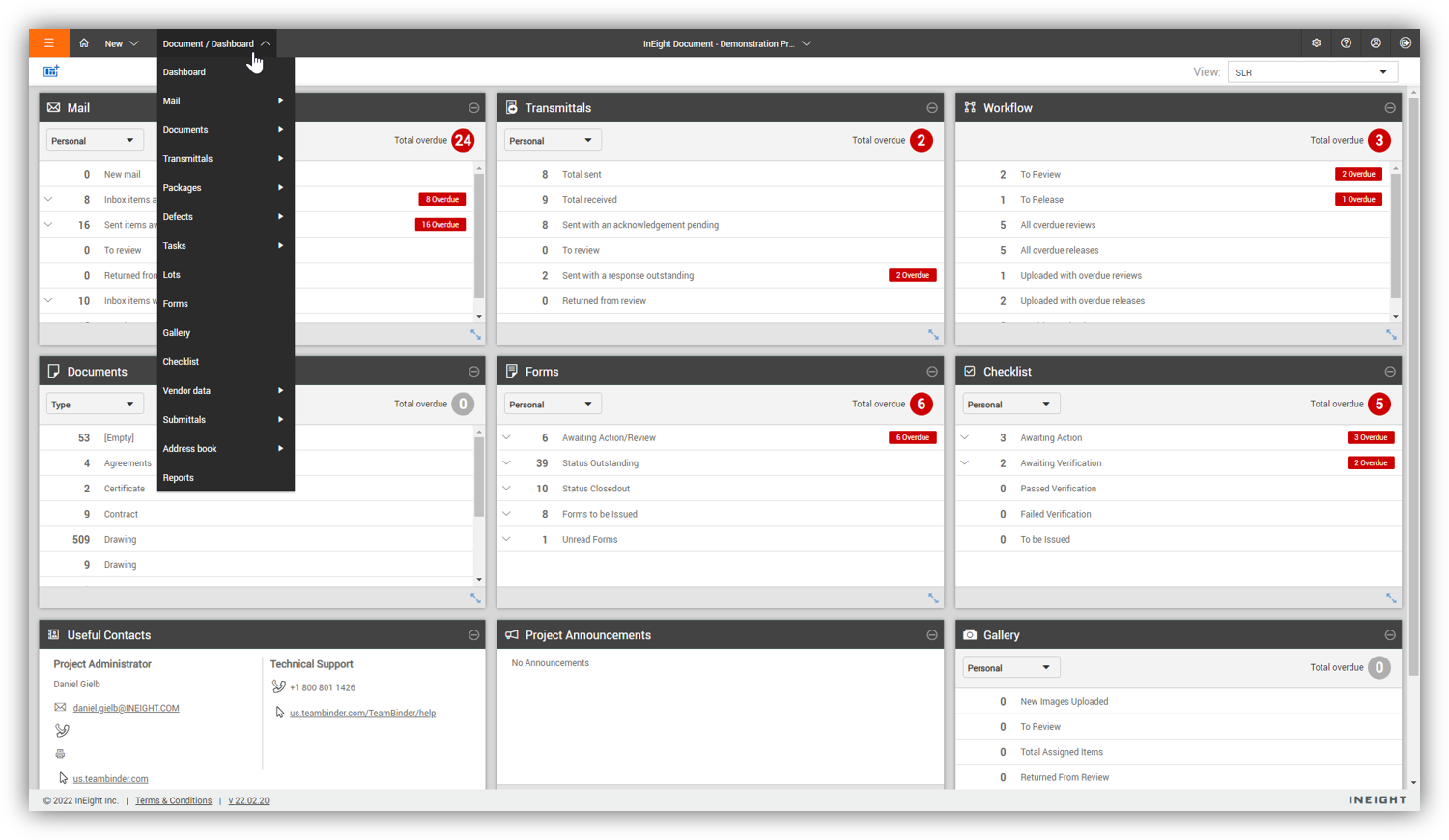
For engineering and constructions project, InEight Document is one of the best out there. It is flexible, end-user and admin friendly and has enough features for any size company. If you need to be able to track documentation and have good revision control, easy review workflows, and good transmittal workflows, InEight Document is great.
A de minimis incentive was given to thank the reviewer for their time. The incentive was not used to bias or drive a particular response, nor was the incentive contingent on a positive endorsement. More Info
My rating would vary depending on the types of projects that need to be managed. Since I am in software, I don't think it was an excellent fit to manage software projects unless they are small projects with only a few tasks. On the other hand, if you are needing to manage a wide range of departments that are working on a single project with many moving pieces, then I would think that PI might be a better fit. Think of it as a jack of all trades, but master of none.
A de minimis incentive was given to thank the reviewer for their time. The incentive was not used to bias or drive a particular response, nor was the incentive contingent on a positive endorsement. More Info
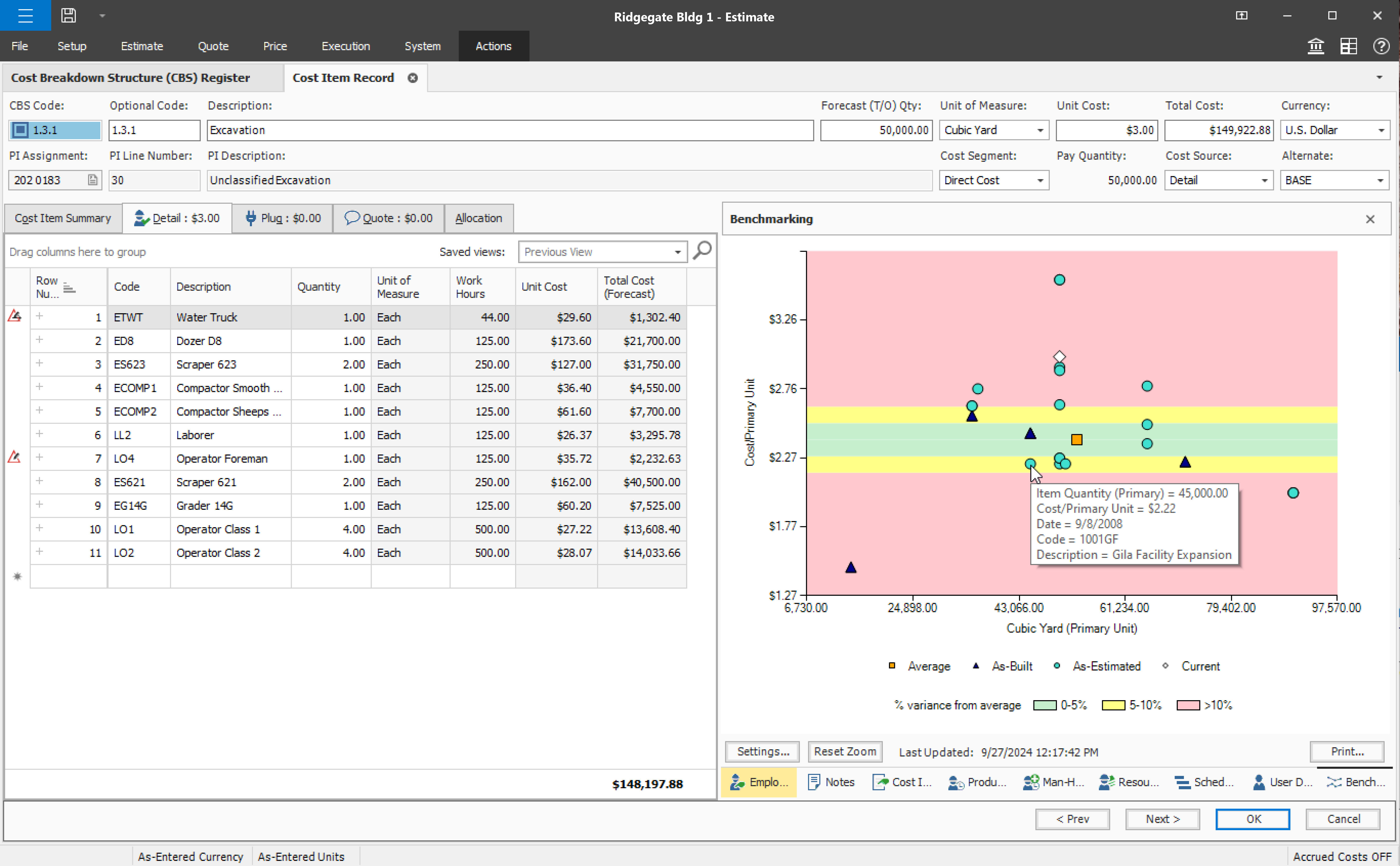
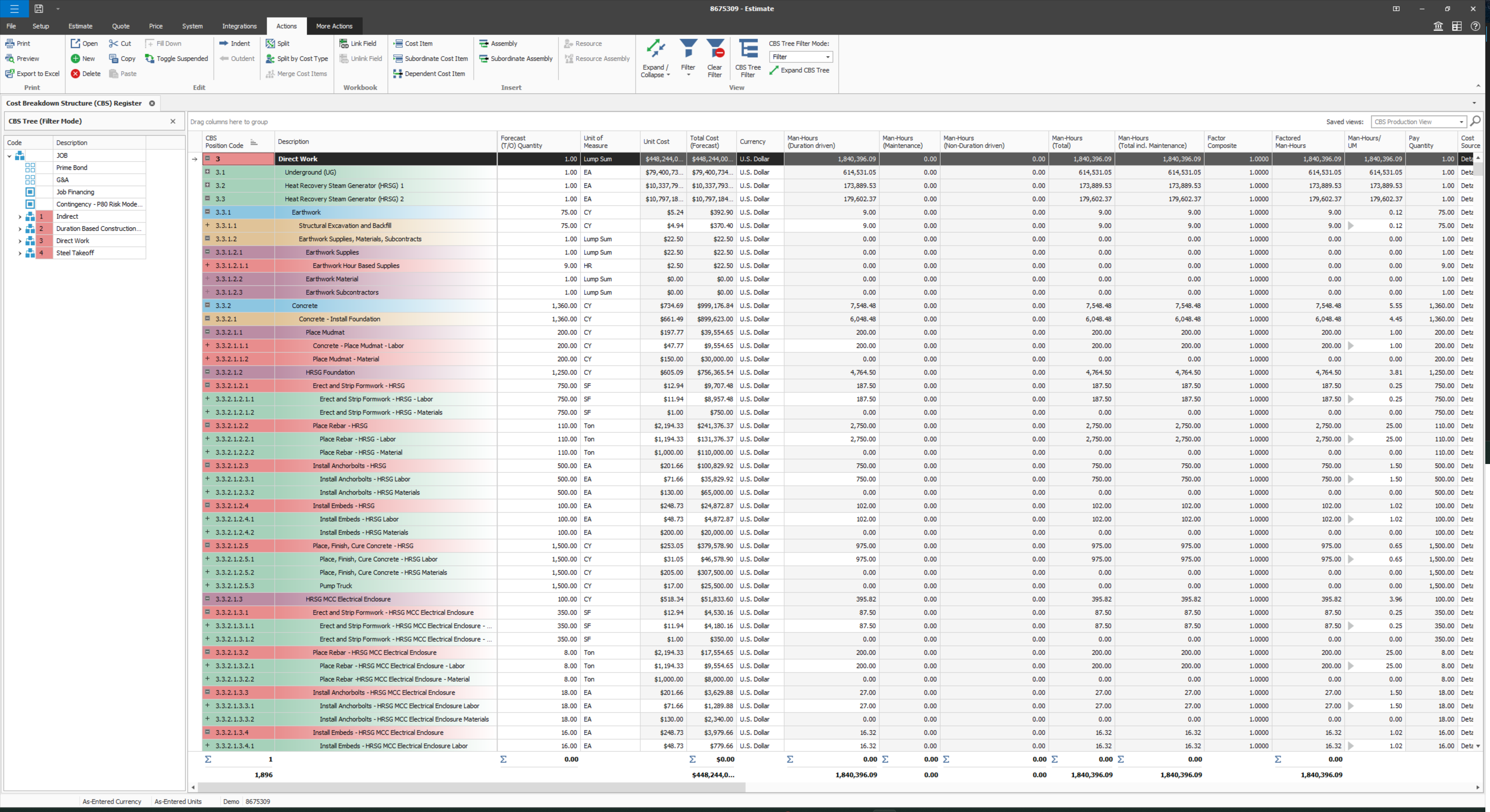
User defined views and descriptions for all screens.
Customizable ribbons to provide an efficient use of the software.
Multiple layers/dependents to allow for an extreme drill down of the work and the ability to roll up to a more useful level for upper management review.
You can bid the work as you would build it, in detail.
A de minimis incentive was given to thank the reviewer for their time. The incentive was not used to bias or drive a particular response, nor was the incentive contingent on a positive endorsement. More Info
A de minimis incentive was given to thank the reviewer for their time. The incentive was not used to bias or drive a particular response, nor was the incentive contingent on a positive endorsement. More Info
Provide a simpler version (cliff notes) of the knowledge database
Offer versions of InEight for smaller companies, i.e. less than 20 emplyees, under $5M in revenue
When an estimate is complete, offer a dialog box to ask if the job was won, lost, or still in progress. We tend to leave most of our estimates in the bidding column. This is a user error, but the prompt would be helpful.
A de minimis incentive was given to thank the reviewer for their time. The incentive was not used to bias or drive a particular response, nor was the incentive contingent on a positive endorsement. More Info
A de minimis incentive was given to thank the reviewer for their time. The incentive was not used to bias or drive a particular response, nor was the incentive contingent on a positive endorsement. More Info
Some features with InEight's TeamBinder are worthy of single use, however the review feature and subsequent revision and version numbering could be improved. We will be aiming to roll out the package to encompass our internal documentation in the near future and will be in a better position to judge the usability after that point in time.
A de minimis incentive was given to thank the reviewer for their time. The incentive was not used to bias or drive a particular response, nor was the incentive contingent on a positive endorsement. More Info
I would give it an 8 out of 10 because the software can be a bit cumbersome to new users. It also takes a long time to set up the library and input all of your companies needs so that the software will provide the level of service required to estimate projects. However, once the software is set up it is a powerful tool. We only use a portion of what the software is capable of delivering
A de minimis incentive was given to thank the reviewer for their time. The incentive was not used to bias or drive a particular response, nor was the incentive contingent on a positive endorsement. More Info
A de minimis incentive was given to thank the reviewer for their time. The incentive was not used to bias or drive a particular response, nor was the incentive contingent on a positive endorsement. More Info
A de minimis incentive was given to thank the reviewer for their time. The incentive was not used to bias or drive a particular response, nor was the incentive contingent on a positive endorsement. More Info
Why do we call support? Always because some things got broken, right? And when it happens, the likelihood of us getting in troubles waiting the support to fix it, it's tremendously high, almost certain. Through my experience with InEight, I'm really concerned whenever I see an update message in the screen, we got really used to see errors in reports right after an update is released. You can see by my tickets, that some of my issues last too long, as client perspective. We had to send messages to our clients excusing us for the weekly report that is being shared due to internal issues, not once, not twice.
A de minimis incentive was given to thank the reviewer for their time. The incentive was not used to bias or drive a particular response, nor was the incentive contingent on a positive endorsement. More Info
I found Project Insight somewhat opaque overall. I thought the training was sparse and answers to questions few and far in between. There was a lot of power there for the dedicated user/administrator. For me, who was a casual user and administrator, I found support lacking. I didn't administer Project Insight much, just some work on integrations with other tools.
A de minimis incentive was given to thank the reviewer for their time. The incentive was not used to bias or drive a particular response, nor was the incentive contingent on a positive endorsement. More Info
The support we had was phenomenal and very detail oriented, which was a necessity during the implementation phase and level of complexity of the projects we had ongoing at that time.
A de minimis incentive was given to thank the reviewer for their time. The incentive was not used to bias or drive a particular response, nor was the incentive contingent on a positive endorsement. More Info
A de minimis incentive was given to thank the reviewer for their time. The incentive was not used to bias or drive a particular response, nor was the incentive contingent on a positive endorsement. More Info
Since the original inception, I have been required to overhaul the system so that it is more user friendly and combines both aspects of our business, documentation and drawings. Being able to control revision and version numbering has been a key struggle that only staff training has been able to mark this as complete.
A de minimis incentive was given to thank the reviewer for their time. The incentive was not used to bias or drive a particular response, nor was the incentive contingent on a positive endorsement. More Info
Both Sage Estimating and InEight programs have their unique capabilities. Sage Estimating is much more configured for use in detailed construction, the majority of which are for non-nuclear projects. InEight has so many more capabilities, especially in creating our own libraries of data, which are vital in creating an estimate. The ability to access historical data (pricing), is an outstanding feature of the program.
A de minimis incentive was given to thank the reviewer for their time. The incentive was not used to bias or drive a particular response, nor was the incentive contingent on a positive endorsement. More Info
When I got to the company where I used Project Insight, we had our own custom tool that fit the tasks that it was designed for but wouldn't grow with the company unless resources were put onto expanding capabilities. We needed something more.
We replaced that tool with Redmine. It worked well and was easy to use, but it looked pretty dated when we got it, and since we didn't have many resources for managing, it looked dated after a few years without receiving upgrades. It was a decent tool for small teams that were focused on similar tasks. Redmine was much more straightforward than Project Insight and felt more reliable since we never had an issue with our internal servers. On the other hand, Redmine felt dated and didn't fit as many of the tasks that were needed. Redmine's price was right if you installed it locally and was probably still cheaper if you used their SAAS version.
Jira, on the other hand, felt like an excellent tool for software teams. Jira had a great project and task management and felt right for a software team. Jira also had useful integrations, even with Project Insight. Jira seemed pretty unreliable, worse than Project Insight. Our team would have preferred Jira, but I think it didn't work for other teams.
A de minimis incentive was given to thank the reviewer for their time. The incentive was not used to bias or drive a particular response, nor was the incentive contingent on a positive endorsement. More Info
InEight is a good system that has scaled nicely as the company has grown. the tools are still readily available and applicable for our larger scope of work. It has kept up with the growth of the company very nicely
A de minimis incentive was given to thank the reviewer for their time. The incentive was not used to bias or drive a particular response, nor was the incentive contingent on a positive endorsement. More Info
A de minimis incentive was given to thank the reviewer for their time. The incentive was not used to bias or drive a particular response, nor was the incentive contingent on a positive endorsement. More Info
A de minimis incentive was given to thank the reviewer for their time. The incentive was not used to bias or drive a particular response, nor was the incentive contingent on a positive endorsement. More Info