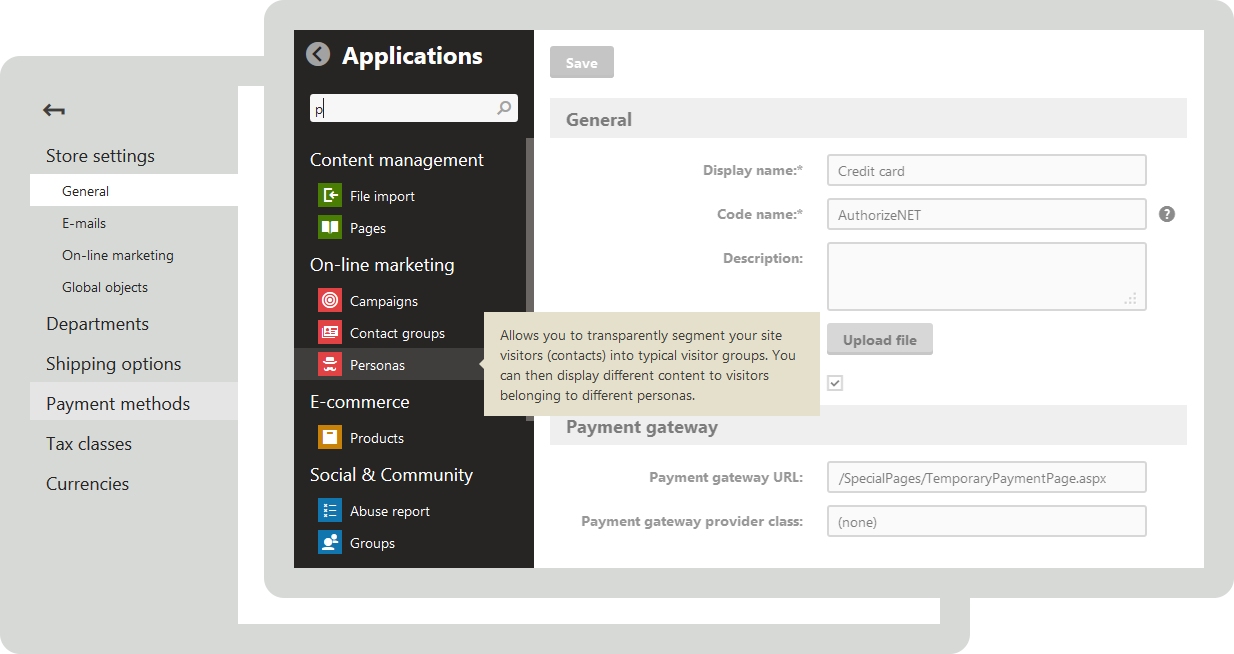
Kentico is a web content management system for building websites, online stores, intranets, and Web 2.0 community sites. Kentico CMS uses ASP.NET and Microsoft SQL Server for development via its Portal Engine, using Visual Studio, or through Microsoft MVC.
$9,999
Subscription license
Umbraco CMS
Score7 out of 10
N/A
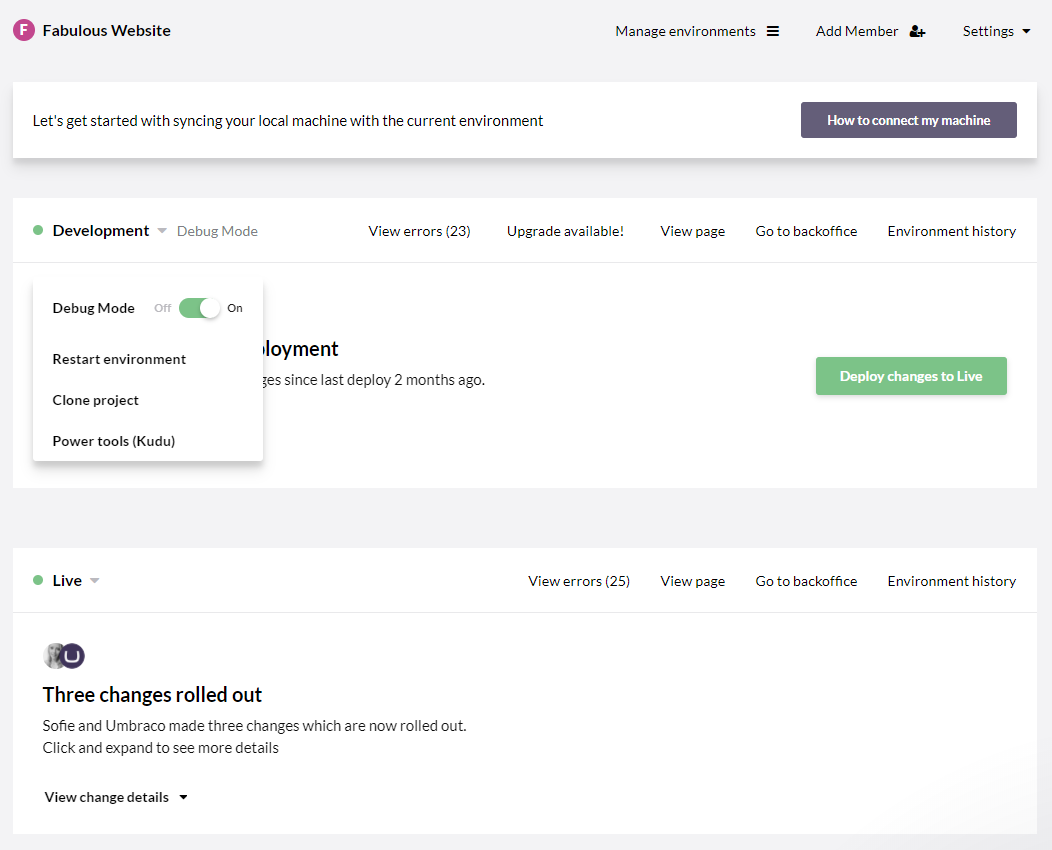
Umbraco is an open-source .NET Core CMS with over 700,000 active installs worldwide and with more than 200,000 active community members. It was first released on February 16th, 2005, and is still to this day an open-source project backed by a commercial company. To ensure Umbraco is always running the latest technology, the company has aligned with Microsoft's .NET release schedule to always have the Umbraco CMS…
$0
Pricing
Xperience by Kentico
Umbraco CMS
Editions & Modules
Kentico Xperience Business
$9,999 / year
Subscription license
Kentico Xperience Business
$14,999
Perpetual license
Kentico Xperience Enterprise
$17,999 / year
Subscription license
Kentico Xperience Enterprise
$29,999
Perpetual license
Kentico Xperience Corporate
Upon request
Umbraco Free
$0
Umbraco Starter
$53
per month
Umbraco Standard
$320
per month
Umbraco Professional
$860
per month
Umbraco Cloud Enterprise
Custom Pricing
per month
Offerings
Pricing Offerings
Xperience by Kentico
Umbraco CMS
Free Trial
Yes
No
Free/Freemium Version
Yes
Yes
Premium Consulting/Integration Services
Yes
Yes
Entry-level Setup Fee
Optional
No setup fee
Additional Details
—
The Umbraco CMS and all of its core features are the same across all plans.
More Pricing Information
Community Pulse
Xperience by Kentico
Umbraco CMS
Considered Both Products
Kentico software
Verified User
Chose Xperience by Kentico
Better than all of the above on almost every level. SiteFinity comes closest from a developer tool perspective and Umbraco from a flexibility perspective.
A de minimis incentive was given to thank the reviewer for their time. The incentive was not used to bias or drive a particular response, nor was the incentive contingent on a positive endorsement. More Info
Founder in Information Technology at Uptica (Marketing and Advertising, 1-10 employees)
Chose Umbraco CMS
Umbraco vs WordPress Umbraco has more flexibility and customization options, but less features, reliability/stability, and community support. WordPress offers less customization for data and content, but it is immensely more stable, has better features /plugins, and includes an …
A de minimis incentive was given to thank the reviewer for their time. The incentive was not used to bias or drive a particular response, nor was the incentive contingent on a positive endorsement. More Info
Verified User
Chose Umbraco CMS
The learning curve to develop a web application is very short. The time to market is then insignificant.
A de minimis incentive was given to thank the reviewer for their time. The incentive was not used to bias or drive a particular response, nor was the incentive contingent on a positive endorsement. More Info
Key User Insights
Would buy again
No answers on this topic
No answers on this topic
Delivers good value for the price
No answers on this topic
No answers on this topic
Happy with the feature set
No answers on this topic
No answers on this topic
Lived up to sales and marketing promises
No answers on this topic
No answers on this topic
Implementation went as expected
No answers on this topic
No answers on this topic
Features
Xperience by Kentico
Umbraco CMS
Security
Comparison of Security features of Xperience by Kentico and Umbraco CMS
Feature
Xperience by Kentico
9.0
25 Ratings
11% above category average
Umbraco CMS
9.0
12 Ratings
9% above category average
Role-based user permissions
9.025 Ratings
9.012 Ratings
Platform & Infrastructure
Comparison of Platform & Infrastructure features of Xperience by Kentico and Umbraco CMS
Feature
Xperience by Kentico
9.0
22 Ratings
12% above category average
Umbraco CMS
8.5
11 Ratings
8% above category average
API
9.021 Ratings
8.010 Ratings
Internationalization / multi-language
9.019 Ratings
9.010 Ratings
Web Content Creation
Comparison of Web Content Creation features of Xperience by Kentico and Umbraco CMS
Feature
Xperience by Kentico
8.6
26 Ratings
19% above category average
Umbraco CMS
8.0
12 Ratings
2% above category average
WYSIWYG editor
8.025 Ratings
10.012 Ratings
Code quality / cleanliness
8.026 Ratings
10.012 Ratings
Admin section
8.026 Ratings
7.012 Ratings
Page templates
9.026 Ratings
8.012 Ratings
Library of website themes
7.013 Ratings
6.011 Ratings
Mobile optimization / responsive design
9.024 Ratings
6.011 Ratings
Publishing workflow
10.025 Ratings
10.012 Ratings
Form generator
10.025 Ratings
7.010 Ratings
Web Content Management
Comparison of Web Content Management features of Xperience by Kentico and Umbraco CMS
Kentico is a robust and flexible CMS platform that is great for managing multiple websites and multiple environments (dev, stage, and production for instance). It makes content management very easy and makes it easy to keep the environments synced with the same content. However, the Kentico CMS does require a bit more technical understanding to get it set up properly and requires a bit more effort and support than, say, free open-source options.
A de minimis incentive was given to thank the reviewer for their time. The incentive was not used to bias or drive a particular response, nor was the incentive contingent on a positive endorsement. More Info
Umbraco CMS is the perfect tool for a company that is looking to keep their website updated. The simple to use tools and templates means updating and creating new pages is easy. The WYSIWYG editor is a nice feature, however, for accessibility, there should be some more guidance on what is suitable to be used on the CMS.
A de minimis incentive was given to thank the reviewer for their time. The incentive was not used to bias or drive a particular response, nor was the incentive contingent on a positive endorsement. More Info
I love the intuitive top and left navigation within the content management platform. I can easily find what section, sub-section, and page I'm looking to edit
For creating content, the WYSIWYG editor is so intuitive; it feels like you're working on an MS Word doc!
The tab for adding metadata in simple fields takes away the headache of having to hunt and peck through code to add H1 tag, page description etc.
A de minimis incentive was given to thank the reviewer for their time. The incentive was not used to bias or drive a particular response, nor was the incentive contingent on a positive endorsement. More Info
Kentico needs to invest in more enterprise class environment management utilities -- example: global CDN support via the CMS is sorely lacking. There are work-arounds, but it should be more elegant.
The Kentico staging module could be improved to support the concept of bundled releases. Current staging module functionality is good, but could be improved.
Kentico ecommerce support is a touch immature. While content management is superb, Kentico lags in this area when compared to many open source ecommerce engines.
Kentico is lacking MVC support. 99% of the time this isn't an issue for the end-user or business user, but can be a hurdle for technology teams depending on the team's makeup.
A de minimis incentive was given to thank the reviewer for their time. The incentive was not used to bias or drive a particular response, nor was the incentive contingent on a positive endorsement. More Info
Speed for older sites - Umbraco content can load slowly if you have thousands of pages of content. Of course, this would not be a problem for simpler websites
Complexity - since the product is free out-of-the-box, it will take technical expertise to get Umbraco setup properly
A de minimis incentive was given to thank the reviewer for their time. The incentive was not used to bias or drive a particular response, nor was the incentive contingent on a positive endorsement. More Info
We are locked into Kentico for the long haul. It provides us with an easy and flexible solution for a very non technical company to create a site and have the features they want, especially with the inclusion of EMS into our license. Now we have a true platform to build and grow our solutions.
It seriously is one of the best interfaces I have ever used. I also love the fact that I can use UI personalization to secure any functionality by user or role that I don't want that role to have access to. The best part is the customization of the UI, I can add in any button, tab, or menu item I want through it, no code required.
A de minimis incentive was given to thank the reviewer for their time. The incentive was not used to bias or drive a particular response, nor was the incentive contingent on a positive endorsement. More Info
Umbraco CMS effectively addresses enterprise content management needs. It's quite mature .NET based CMS, standing out as a leader among its competitors. Websites built with Umbraco are blazing fast. Extensive customization capabilities, and user-friendly content publishing interface makes it an ideal choice for businesses looking for a mature CMS solution.
A de minimis incentive was given to thank the reviewer for their time. The incentive was not used to bias or drive a particular response, nor was the incentive contingent on a positive endorsement. More Info
A de minimis incentive was given to thank the reviewer for their time. The incentive was not used to bias or drive a particular response, nor was the incentive contingent on a positive endorsement. More Info
Working in the admin panel (adding / reviewing / editing content) is very slow. The public facing site speed is dependent on what the pages are doing and how well the code was written (whether it is optimized for speed).
A de minimis incentive was given to thank the reviewer for their time. The incentive was not used to bias or drive a particular response, nor was the incentive contingent on a positive endorsement. More Info
Their support staff is friendly, knowledgeable, and will work with you until your issue is fixed. This could take a few phone calls back and forth, but they are very diligent in helping you.
A de minimis incentive was given to thank the reviewer for their time. The incentive was not used to bias or drive a particular response, nor was the incentive contingent on a positive endorsement. More Info
A de minimis incentive was given to thank the reviewer for their time. The incentive was not used to bias or drive a particular response, nor was the incentive contingent on a positive endorsement. More Info
A de minimis incentive was given to thank the reviewer for their time. The incentive was not used to bias or drive a particular response, nor was the incentive contingent on a positive endorsement. More Info
Spend the time to wireframe the content structure prior to diving in. This helps speed the process of implementation and it serves as documentation for end users.
A de minimis incentive was given to thank the reviewer for their time. The incentive was not used to bias or drive a particular response, nor was the incentive contingent on a positive endorsement. More Info
I've used Sitecore, Ektron, Joomla!, WordPress, and SharePoint (if you want to count that as a competitor for CMS). Kentico 8 blows them all out of the water. Nothing is more intuitive in the way that content is created, the way the site is setup, and how efficient rollouts can be with Content Staging.
A de minimis incentive was given to thank the reviewer for their time. The incentive was not used to bias or drive a particular response, nor was the incentive contingent on a positive endorsement. More Info
Umbraco's templating is far superior than WordPress, Drupal and Joomla, but it's update process is WAY behind those platforms. The release schedule of Umbraco is way to often and most releases are to fix something missed in the previous release and not an improvement or new feature of the CMS
A de minimis incentive was given to thank the reviewer for their time. The incentive was not used to bias or drive a particular response, nor was the incentive contingent on a positive endorsement. More Info
Kentico has enabled faster speed to market for SMEs. They are empowered to enter content them selves while still having that content go through editorial review to ensure tone of voice and brand are maintained.
Deploying Kentico has freed up web developer resources from manual content entry enabling them to build more useful solutions to support the business efforts
Tapping into the Kentico event pipelne allows us to trigger external system events when product content is published.
A de minimis incentive was given to thank the reviewer for their time. The incentive was not used to bias or drive a particular response, nor was the incentive contingent on a positive endorsement. More Info