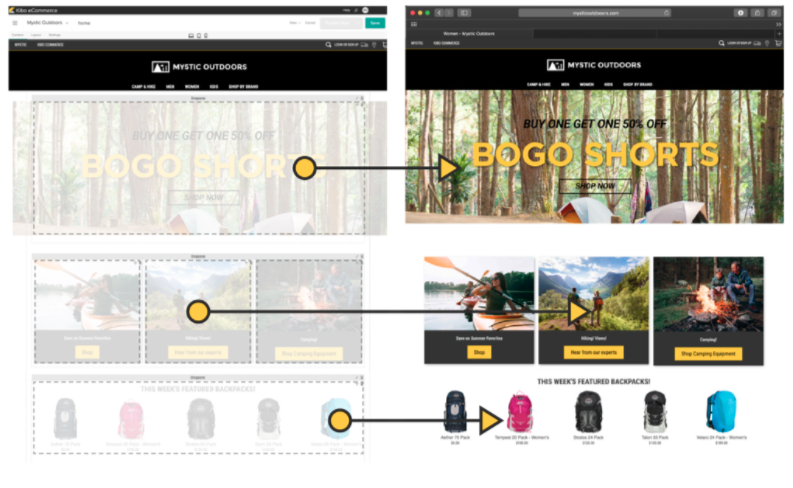
Kibo Software offers Kibo eCommerce (formerly Mozu), designed to support retailers with online offer creation and deployment, content publishing and landing pages, and many tools and widgets out of the box with a retail-oriented ecommerce solution.
Mozu was acquired by Kibo Software from Volusion in October 2016.
N/A
Shopify Plus
Score 8.8 out of 10
N/A
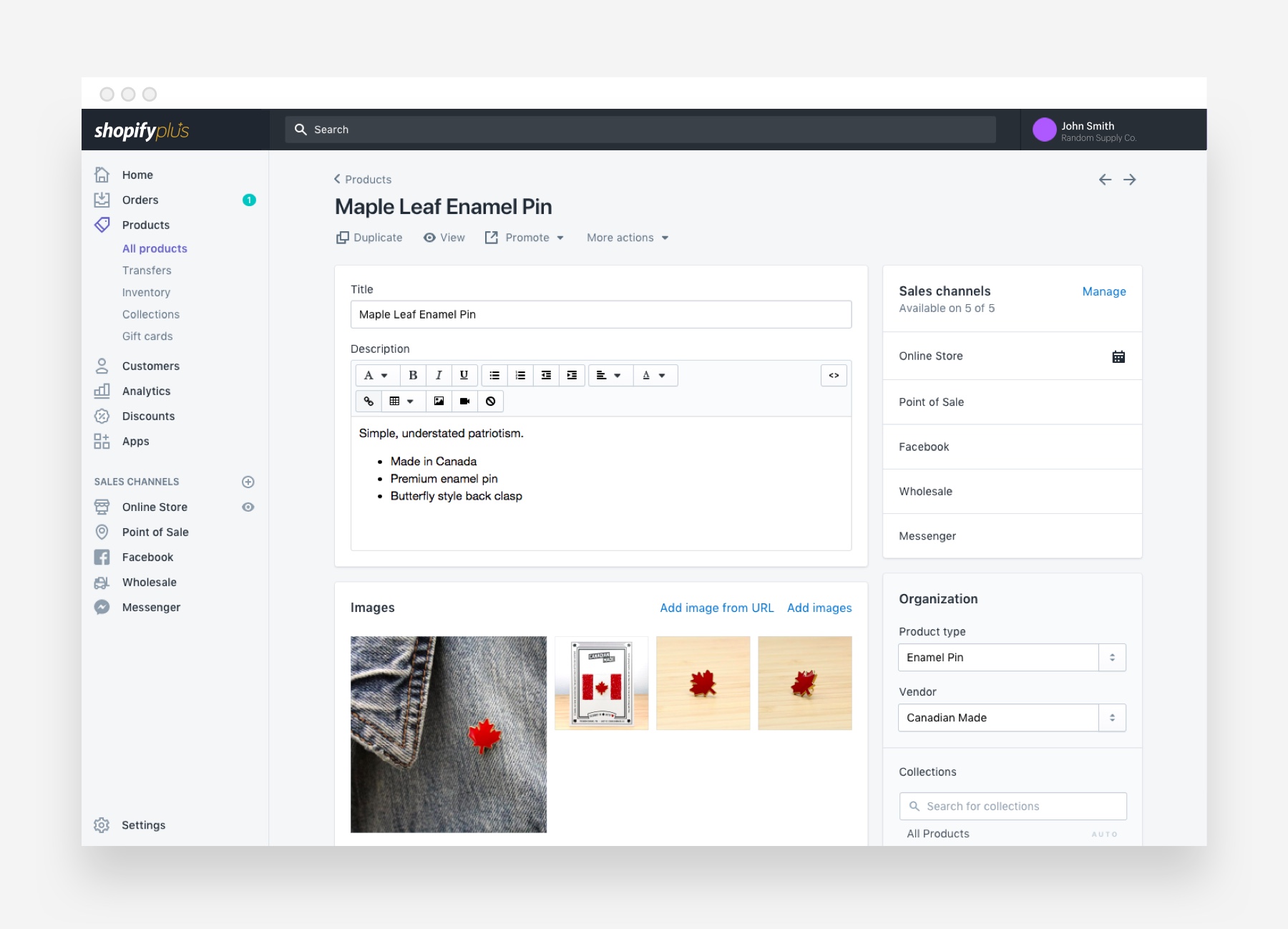
Shopify Plus is an eCommerce solution built for enterprise-level companies that enables them to sell online and offline across social channels like Facebook , Pinterest, and marketplaces like Amazon and eBay.
$2,300
per month with a 3-year commitment
Pricing
Kibo eCommerce
Shopify Plus
Editions & Modules
No answers on this topic
3-year term
$2300
per month
1-year term
$2500
per month
Offerings
Pricing Offerings
Kibo eCommerce
Shopify Plus
Free Trial
No
No
Free/Freemium Version
No
No
Premium Consulting/Integration Services
No
No
Entry-level Setup Fee
No setup fee
No setup fee
Additional Details
—
—
More Pricing Information
Community Pulse
Kibo eCommerce
Shopify Plus
Considered Both Products
Kibo eCommerce
No answer on this topic
Shopify Plus
Verified User
Director
Chose Shopify Plus
Shopify is more robust and has more functionalities than its competitors like BigCommerce and Kibo. It offers the best UI in the business and the most exhaustive app marketplace ecosystem. It is more cost effective than big system and doe snot require large teams of developers …
Features
Kibo eCommerce
Shopify Plus
Online Storefront
Comparison of Online Storefront features of Product A and Product B
Kibo eCommerce
8.3
6 Ratings
6% above category average
Shopify Plus
8.4
45 Ratings
7% above category average
Product catalog & listings
8.46 Ratings
8.743 Ratings
Product management
8.26 Ratings
8.644 Ratings
Bulk product upload
7.65 Ratings
8.540 Ratings
Branding
8.26 Ratings
8.342 Ratings
Mobile storefront
8.56 Ratings
8.643 Ratings
Product variations
8.55 Ratings
7.543 Ratings
Website integration
8.04 Ratings
8.239 Ratings
Visual customization
8.16 Ratings
8.343 Ratings
CMS
8.74 Ratings
8.840 Ratings
Online Shopping Cart
Comparison of Online Shopping Cart features of Product A and Product B
Kibo eCommerce
9.0
2 Ratings
16% above category average
Shopify Plus
8.8
44 Ratings
14% above category average
Checkout user experience
9.02 Ratings
8.743 Ratings
Abandoned cart recovery
00 Ratings
8.842 Ratings
Online Payment System
Comparison of Online Payment System features of Product A and Product B
Kibo eCommerce
8.4
6 Ratings
0% above category average
Shopify Plus
8.6
42 Ratings
3% above category average
eCommerce security
8.46 Ratings
8.642 Ratings
eCommerce Marketing
Comparison of eCommerce Marketing features of Product A and Product B
Kibo eCommerce
7.7
6 Ratings
0% below category average
Shopify Plus
8.6
44 Ratings
11% above category average
Promotions & discounts
8.56 Ratings
8.643 Ratings
SEO
7.02 Ratings
8.543 Ratings
Personalized recommendations
00 Ratings
8.538 Ratings
eCommerce Business Management
Comparison of eCommerce Business Management features of Product A and Product B
The platform has flexibility at its core and we have made full use of that capability. Even if Kibo [eCommerce] hasn't been ready to provide features and functions we need, we have the opportunity to build them ourselves. The platform started as Mozu and while it was relatively well-developed for DTC, it lacked a lot of basic B2B functionality. As a result, when we were ready to move into that arena, we built a lot for ourselves (including a multi-level account system and a tool to manage it). Keep in mind, too, that Kibo eCommerce is part of a larger suite of tools. The company has purchased a mobile Point-of-Sale system, Baynote, Certona, Monetate, and an OMS. If you need a full-scale solution, they can offer a lot. As I mentioned previously, their support and documentation need shoring up. They're not terrible, but they hinder (rather than help) when it comes to fulfilling the platform's promise of letting the customers be self-service in building out their capabilities.
Shopify Plus makes order management simple and less error prone. Connecting our ERP allows us to seamlessly manage our product listings, fulfill orders, and sync customer data. Limitations to the number of product variants requires attention from our staff to make sure our products sync without issue. Other than being arbitrary, there's really no need to limit the number of product variants.
Prebuilt Integration - There is not currently a large number of preexisting integrations, but custom integrations are fairly quick
Time to Deploy - Don't get me wrong, We have deployed in the timeline we expected, but if you are trying to get something off the ground fast, Kibo might not be right for you. It is a robust platform that take some time to get up and running.
Complicated Shipping - if you have a complicated shipped process, you might want to look for a tool to help, Kibo does not have very robust out of the box shipping capabilities.
When linking to our communication service some customers have several emails with orders and only one email generates orders. It would be nice if we could combine all of this information into one account.
If a customer has multiple accounts you are also unable to edit the email address as it is already used, another reason merging accounts would be helpful.
Some of the processes in Shopify are too easy to complete. I’m certain scenarios a peony of “are you sure you would like to complete(this action)” would be extremely helpful and avoid mistakes that are not reversible.
It is extremely easy for merchants to get to know how Shopify Plus works. Comparitive to other platforms such as Magento and WooCommerce it is extremely lean and easy to operate, meaning clients who migrate over to it find it very intuitive to use. There is also a lot of guides and up to date information online
One positive note is that I have always been able to get someone on the phone in support whenever I have called, even at 1 AM. Getting someone on the phone is only half the battle though. In the first few months of using Mozu it often seemed that support didn’t know anymore about Mozu than we did. This has slowly started to change, but as a daily user you are likely to be on par with support in terms of knowing what to do when you encounter a problem. The support phone number is really most useful for having them put in a support ticket for you rather than typing it all out yourself and emailing it. It is very rare that the support reps are actually empowered to solve the problem at hand. Unless the issue you are having is user error, they will just take your information and pass it on the proper department. Your request or problem will then be ignored for months on end. Some day, it might actually get fixed but you are unlikely to be notified that this has happened. Most of these issues are assigned an internal ID that they use for tracking. Support is more than happy to pass this ID along, but it is useless. There is no way to actually see where the issue lies in the endless queue of similar issues.
At the time of our implementation Mozu did not have any processes or procedures set up around going live. We basically were forced to just wing it and hope for the best
We had a custom, in-house ecommerce website before moving to Kibo. It was brittle, slow, and wasn't going to scale nearly well enough or fast enough to keep up with our requirements
Shopify had the quickest go-to-market and most robust API among the products we compared. CommerceCloud required a VERY LONG integration phase that we just didn't have time for. BigCommerce fell short on the number of features and API coverage that we needed. Overall Shopify gave us the most bang for the buck.
The pricing of Shopify Plus over the regular Shopify Account solution is about 10x if not 20x the cost. But with this cost comes the increased reliability and trust you have in your eCommerce Software solution/website. We still have a great ROI with the Shopify Plus Pricing.
With Shopify Plus, we have been able to drill deeper into a more robust eCommerce experience for our customers
With Shopify Plus, we have been able to customize our Website further with recommended apps, features, and customizations based on our Dedicated Account Reps expertise.