
Chose MongoDB
MongoDB vs. Redis Software vs. Microsoft SQL Server
MongoDB vs. Redis Software vs. Microsoft SQL Server
| Product | Rating | Most Used By | Product Summary | Starting Price |
|---|---|---|---|---|
 MongoDB | N/A | MongoDB is an open source document-oriented database system. It is part of the NoSQL family of database systems. Instead of storing data in tables as is done in a "classical" relational database, MongoDB stores structured data as JSON-like documents with dynamic schemas (MongoDB calls the format BSON), making the integration of data in certain types of applications easier and faster. | $0.10 million reads | |
 Redis Software | N/A | Redis is an open source in-memory data structure server and NoSQL database. | N/A | |
 Microsoft SQL Server | N/A | Microsoft SQL Server is a relational database. | $1,418 Per License |
| MongoDB | Redis Software | Microsoft SQL Server | ||||||||||||||||||||||
|---|---|---|---|---|---|---|---|---|---|---|---|---|---|---|---|---|---|---|---|---|---|---|---|---|
| Editions & Modules |
| No answers on this topic |
| |||||||||||||||||||||
| Offerings |
| |||||||||||||||||||||||
| Entry-level Setup Fee | No setup fee | Optional | No setup fee | |||||||||||||||||||||
| Additional Details | Fully managed, global cloud database on AWS, Azure, and GCP | — | — | |||||||||||||||||||||
| More Pricing Information | ||||||||||||||||||||||||
| MongoDB | Redis Software | Microsoft SQL Server | |
|---|---|---|---|
| Considered Multiple Products |  MongoDB  Gene Baker Vice President, Chief Architect, Development Manager and Software Engineer Chose MongoDB I just felt MongoDB was easier to use and more cost-effective. Aggregation pipelines are great.  Sonaj Gupta Software Developer Chose MongoDB optimize web application.  Jon Kern Manager Strategic Products Chose MongoDB I only briefly looked at CouchDB after I already began using MongoDB. Naturally, I have used many relational SQL databases. Since MongoDB did everything I needed, I saw no need to look around for alternatives.  Devaraj Natarajan Senior Software Engineer Chose MongoDB The way MongoDB handles the data is unique and the indexing of data is powerful.  Jeff Sherard Senior Leader Chose MongoDB MongoDB was the most full-featured NoSQL database we evaluated - that offered atomic transactions at a document level, built-in HA & DR, open source, robust queries, and enterprise level support. Other platforms had specific parts of what we were looking for - MongoDB had it all.  Eddy Wong Cofounder and CTO Chose MongoDB - Mongo had a query language - Mongo could be run easily on my laptop  Arnold Daniels Freelance web developer Chose MongoDB  Joshua Austill Application Developer Chose MongoDB I selected MongoDB because it works for well with web interfaces. All of the RDBMS alternatives would have required a lot more time writing schemas and working around retrieving data and mapping it. That could have been somewhat mitigated with Entity Framework, but that again … |  Redis Software  Adam Stern CTO (Chief Technical Officer) Chose Redis Software Redis is great at set operations and is very fast. Riak is a fast long-term data store, but it is expensive to run. MongoDB is good for small, quick projects. Elasticsearch is great at indexing and searching. Choose the right tool for the job, and don't be afraid to …  prakash ps Software Project Manager Chose Redis Software  Roberto Luna Rojas Software Architect Chose Redis Software Couchbase doesn't keep up with what they offer and what really does. MongoDB just doesn't scale out, reads are performed across multiple nodes but writes still go to the single master. DynamoDB is good overall but just way too expensive.  Guljar Prasad Web Developer Chose Redis Software We have also done lot of research over NoSQL databases to find what is a good fit for our application. We finally decided to use Redis because:
 Leonel Quinteros Director of Technology Chose Redis Software Every time you don't need a document DB, you can't go wrong with Redis over MongoDB. Google Cloud Pub/Sub may have solved one use case, but we'd still have to deploy Redis instances for other use cases, and adding another tech stack would only add complexity to our …  Esteban Ignacio Masoero Principal SRE Chose Redis Software Redis is faster, provides documents JSON-wise with the proper odule and it is far more stable than MongoDB (we had really bad experiences with Mongo, especially when ops tends to increase). Gene Baker Vice President, Chief Architect, Development Manager and Software Engineer Chose Redis Software All are good products. MongoDB is a great NoSQL DB but didn't seem to have the high performance caching of Redis. Coherence and Xtreme Scale are expensive. In my opinion for our particular use case, Redis was the clear winner.  Anush Ramani Co-Founder, CTO Chose Redis Software We initially tried ElastiCache with Redis hosting. While it did the job of running Redis, we still had to deal with server sizing. We switched to Redis Cloud since that had auto-scaling and easy to use tools.  victor pease solano General Manager Chose Redis Software One key feature: easy to use. you can install and use it under minutes. For the rest of the options, you have to do more configuration and settings. Besides all these, Redis is in-memory so the performance is a blast. Considering that simple is better, the proof of the concept …  Adam Lauer Software Engineer Chose Redis Software Redis is had higher performance at a cheaper cost than any of these alternatives. The downside is the data is not as durable as these alternatives. Redis is like SQL where you pay of the instance running 24/7 where dynamo and s3 you pay per usage. Redis schema most closely … | Microsoft SQL Server  Pritesh Patel Product Manager, Partnerships & Data Services Chose Microsoft SQL Server Microsoft SQL Server is a comprehensive solution as transactional database, data warehouse, analytics, reporting, and ETL. It also integrates with the cloud well (Azure). The ease of use and setup makes this better than Oracle Database because the query syntax is also different …  Michelle Sollicito Cloud Consultant Chose Microsoft SQL Server SQL Server is better for large databases containing structured relational data. It makes it easy to group and order, to sum and create tables of data from any data stored in a table or related tables. While Dynamodb is very good at STORING huge amounts of unstructured data, it …  Akshaya Bhardwaj Consultant Chose Microsoft SQL Server Lots of internet communities and the data processing speed is very high. It is very cost-effective and easy to learn.  Andy G Teasdale Analyst - Asset Managment Chose Microsoft SQL Server Microsoft is more appropriate for the requirements of this particular organisation due to its ability to handle structured data efficiently and the fact that it is already widely used. |
| MongoDB | Redis Software | Microsoft SQL Server | |||||||||||||||||||||||||||||||
|---|---|---|---|---|---|---|---|---|---|---|---|---|---|---|---|---|---|---|---|---|---|---|---|---|---|---|---|---|---|---|---|---|---|
| NoSQL Databases |
|
| MongoDB | Redis Software | Microsoft SQL Server | |
|---|---|---|---|
| Small Businesses |  IBM Cloudant Score 7.4 out of 10 | IBM Cloudant Score 7.4 out of 10 |  InterSystems IRIS Score 8.0 out of 10 |
| Medium-sized Companies | IBM Cloudant Score 7.4 out of 10 | IBM Cloudant Score 7.4 out of 10 | InterSystems IRIS Score 8.0 out of 10 |
| Enterprises | IBM Cloudant Score 7.4 out of 10 | IBM Cloudant Score 7.4 out of 10 |  SAP IQ Score 10.0 out of 10 |
| All Alternatives | View all alternatives | View all alternatives | View all alternatives |
| MongoDB | Redis Software | Microsoft SQL Server | |
|---|---|---|---|
| Likelihood to Recommend | 10.0 (79 ratings) | 8.0 (76 ratings) | 8.0 (107 ratings) |
| Likelihood to Renew | 10.0 (67 ratings) | 8.7 (12 ratings) | 9.0 (8 ratings) |
| Usability | 10.0 (15 ratings) | 9.0 (6 ratings) | 7.6 (17 ratings) |
| Availability | 9.0 (1 ratings) | - (0 ratings) | 10.0 (1 ratings) |
| Performance | - (0 ratings) | - (0 ratings) | 9.0 (1 ratings) |
| Support Rating | 9.6 (13 ratings) | 8.7 (5 ratings) | 7.9 (26 ratings) |
| In-Person Training | - (0 ratings) | - (0 ratings) | 9.0 (1 ratings) |
| Online Training | - (0 ratings) | - (0 ratings) | 9.0 (1 ratings) |
| Implementation Rating | 8.4 (2 ratings) | 7.3 (1 ratings) | 9.0 (6 ratings) |
| Configurability | - (0 ratings) | - (0 ratings) | 10.0 (1 ratings) |
| Ease of integration | - (0 ratings) | - (0 ratings) | 9.0 (1 ratings) |
| Product Scalability | - (0 ratings) | - (0 ratings) | 9.0 (1 ratings) |
| Vendor post-sale | - (0 ratings) | - (0 ratings) | 9.0 (1 ratings) |
| Vendor pre-sale | - (0 ratings) | - (0 ratings) | 9.0 (1 ratings) |
| MongoDB | Redis Software | Microsoft SQL Server | |
|---|---|---|---|
| Likelihood to Recommend | MongoDB
 Kendal Droddy Senior System Engineer | Redis
| Microsoft
|
| Pros | MongoDB
 Ronald Melendez Desarrollador de software | Redis
| Microsoft
|
| Cons | MongoDB
 Joshua Weaver Developer | Redis
| Microsoft
|
| Likelihood to Renew | MongoDB
Jon Kern Manager Strategic Products | Redis
 Rahul Chaudhary Senior Software Engineer | Microsoft
 Lisandro Fernigrini Sr Database Administrator / Developer |
| Usability | MongoDB
 Jose Manuel Ortega Software Engineer && Security researcher | Redis
| Microsoft
 Andy Erickson Senior Consultant |
| Reliability and Availability | MongoDB No answers on this topic | Redis No answers on this topic | Microsoft
|
| Performance | MongoDB No answers on this topic | Redis No answers on this topic | Microsoft
|
| Support Rating | MongoDB
 Mehmet Fatih Onal Technical Architect | Redis
Gene Baker Vice President, Chief Architect, Development Manager and Software Engineer | Microsoft
|
| In-Person Training | MongoDB No answers on this topic | Redis No answers on this topic | Microsoft
|
| Online Training | MongoDB No answers on this topic | Redis No answers on this topic | Microsoft
|
| Implementation Rating | MongoDB
 Tom Maiaroto Sr. Platform Developer / UX Designer / Optimization Engineer | Redis
| Microsoft
 Bill Starling Database Administrator |
| Alternatives Considered | MongoDB
 Oleg Chumin Java Software Engineer | Redis
| Microsoft
|
| Scalability | MongoDB No answers on this topic | Redis No answers on this topic | Microsoft
|
| Return on Investment | MongoDB
Jeff Sherard Senior Leader | Redis
| Microsoft
|
| ScreenShots | MongoDB Screenshots     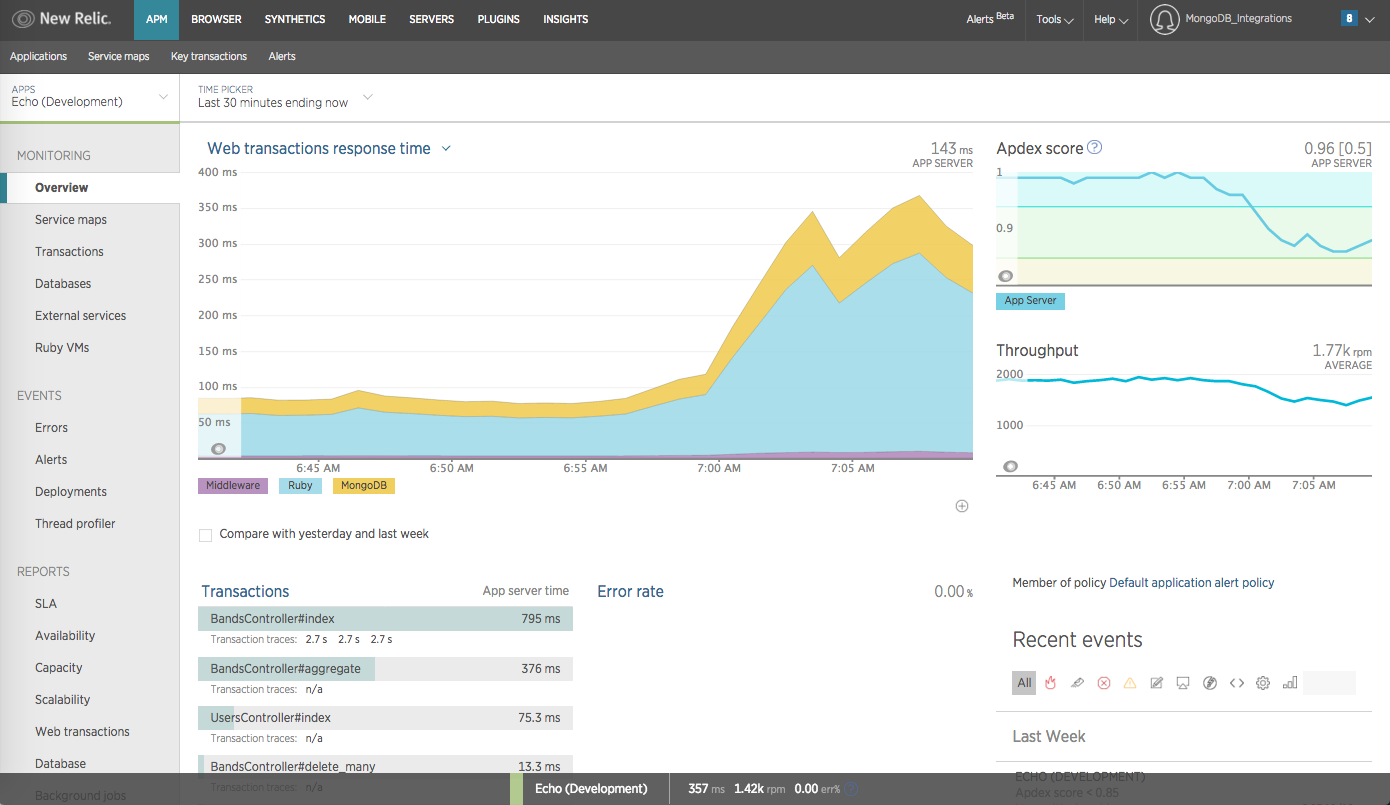 | Redis Software Screenshots     |
