Omnisend is an email and SMS marketing platform with features made to help ecommerce stores grow their audience and sales. It features one-click integration with major ecommerce platforms, pre-made automation and email templates, and 24/7/365 live customer support.
$16
per month 500 contacts, 6,000 emails / month
Salesforce Marketing Cloud
Score 7.8 out of 10
N/A
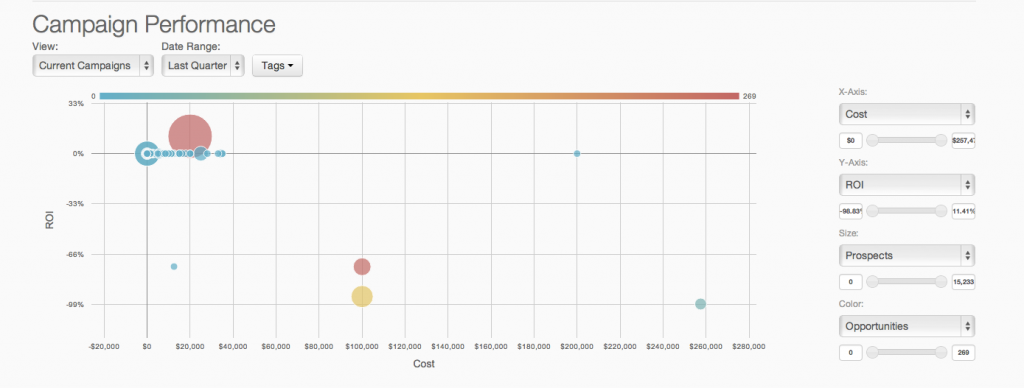
Marketing Cloud is an AI-powered, cloud-based digital marketing platform within the Salesforce Customer 360 ecosystem. Marketers can segment their audience, deliver personalized messages, track campaign performance, engage leads and accounts, and optimize strategies based on real-time insights.
$1,250
per month per installation
Pricing
Omnisend
Salesforce Marketing Cloud
Editions & Modules
Free plan
$0
Standard plan
$16
per month
Pro plan
$59
per month
Account Engagement
$1,250
per month
Engagement
$1,250
per month
Intelligence
$3,000
per month
Loyalty Management
$20,000
per month
Personalization
$100,000
per year
Data Cloud for Marketing
$108,000
per year
Offerings
Pricing Offerings
Omnisend
Salesforce Marketing Cloud
Free Trial
No
Yes
Free/Freemium Version
Yes
No
Premium Consulting/Integration Services
No
Yes
Entry-level Setup Fee
Required
No setup fee
Additional Details
Omnisend offers three pricing plans: Free, Standard and Pro.
The Free plan is used to explore all of Omnisend's features (emails, SMS, push notifications, popups, segmentation, analytics, etc), send up to 500 emails and push notifications, plus 60 SMS per month at no cost.
The standard plan starts at $16 per month and includes everything in Free, unlimited web push notifications, a customer success manager and 24/7 support.
From $59 per month, the Pro plan can be used to send unlimited emails and push notifications, get advanced reporting features, a dedicated Customer Success Manager, and priority 24/7 support. It also includes free SMS credits equal to the price of the Pro plan selected.
—
More Pricing Information
Community Pulse
Omnisend
Salesforce Marketing Cloud
Considered Both Products
Omnisend
No answer on this topic
Salesforce Marketing Cloud
Verified User
Manager
Chose Salesforce Marketing Cloud
Pardot is pretty much on the same level. We chose Pardot because it integrates directly with Salesforce. We already use Contentful for landing pages, so we weren't too worried about using Pardot's builder. I really liked the simplicity of the visual email workflows. Coming …
It's kind of an automation workflow, but for example you can set up a popup to appear at a specific time on a specific product page and offer the visitor something. The visitor then signs up and then (after you've set up your automation sequence) that visitor gets a specific welcome page based on the popup they signed up through, and then a specific order confirmation email and everything else flows from that specific popup. That's great because it's allowed us to sort of fine-tune our offerings to get our visitors' emails in the first place and offer, for example, someone browsing a product page for 3 minutes something different than someone staying 20 seconds on the homepage and then leaving.
I think the product, by definition, is meant for marketing — and we use it exactly for that, for running campaigns. That’s the best-suited use case for the product. I don’t think it’s really meant to be used for anything else — that’s just not how it’s designed.
Newsletter campaigns - the content editor is the usual one you see on email marketing apps, but it works so smoothly and well. Of course, there's Product Picker that allows you to just pick a product from your store and it goes straight into your newsletter--no need to add images or descriptions. Really easy.
Popups are great because they look amazing right out of the box. It's all pre-filled so if you don't like looking at a blank screen, you can just adapt the wording and it's there. voila!
Automation really is nice and it's the bulk of what we're doing now. It's like second level ecommerce marketing I guess, because you really see after some time how having automated steps can really save you time and make you a lot more money. Omnisend's automations are really good and intuitive and was really easy to learn and implement.
Initial setup wasn't firing right, support issue was handled pretty quickly and easily.
It does not go back and put previous orders/customers into the automation. It will only work with go-forward customers from the time you install the product. (At least that's what the outcome of our support inquiry told us...).
Would like to see more sample templates and campaigns.
As of right now we have not seen any other program that integrates as seamlessly into our Salesforce platform. We have barely scratched the surface of all the features and use cases. It would be irresponsible to make a move to another platform in the near future. We have not come up against any limitations that would prompt a need to switch
You won't find another solution that has as many features as Salesforce Marketing Cloud Interaction Studio. We all know Salesforce, we all know how big they are and it's not for nothing... Their tools do most of the things you want, need and even imagine. Using it is complicated, but the usability is infinite.
Upgrades and timing of the upgrades were communicated well and planned during off hours for our work. If we did have a campaign scheduled during that time, it would kick-off after the system was back active. There were a few unplanned system down times, but it was a rare occurrence and those times were also short in duration.
Though the make up of MA apps is not built this way today, it would be nice to see them become more real-time. The integration between Salesforce and Pardot is not a true real-time integration. If I modify something in Salesforce, those changes are not automatically reflected in Pardot immediately. There is a delay of about 15 minutes before the systems sync. This delay, although not long, is less than ideal We would love the systems to be integrated real time such that changes are propagated from one system to the other immediately.
Support is weird. They ask you to keep everything in one thread, but they can't see your replies if they forward it to tech, and things easily get lost. Also tech support is HORRIBLE, they just seem snobby, and give horrible advice liek to test things on a live version vs staging
They are really responsive and more than not solve the problem or give you insight to how you can manage the solution yourself. I do find however sometimes a long delay on the more complex issues when they need to loop in other departments. but overall a good experience with support
The trainers at the Pardot user conference (Elevate and Connections) were very knowledgeable and presented the material well. Again, the content was targeted to more of a new user audience, and was not really relevant for folks who had been using the product for 2+ years.
Pardot's online training touches on all topics briefly and vaguely without much indepth exploration into how a final outcome could look, such as Nurturing Campaigns, Email templates, landing page templates, etc... The only true way to uncover Pardot's full capabilities is to have Front End design and coding experience. Without this key skill set, I would not recommend Pardot to another business.
From an IT perspective, once you set up the Javascript beacon and start collecting data there is a waiting game. During this time you can start labeling your site actions which can be labor intensive for a single person, but you don't really have the final end-users on the platform yet. We did a lot of training so users were experienced, but it wasn't until they had their first tasks to accomplish that they started using the system and had questions. I'd recommend setting up some immediate goals for an end-user to start segmenting for the purpose of displaying message campaigns so you can jump start end-user action.
We can create marketing campaigns that can span across multiple channels so that we can reach more customers regardless of the platform they are using. The system combines multiple channels into a single workflow for maximum engagement. Comes with various features that make it easy to personalize messages based on the customer's journey.
We use Salesforce Marketing Cloud for lead management, generating reports, tracking customer and dealer information, inputting orders, and more. I prefer HubSpot for email marketing and automation because it is easier to use and the emails are designed much better. We currently use Salesforce and HubSpot, and we are very happy to have both, as they have different pros/cons.
Prior to this, we had no solution and literally were doing things on paper in a world where technology is outpacing paper. Having this process optimized has made it easier for the sales and marketing people to change information. From the training perspective, it has allowed us to see holes in where we could create additional support training, so the ROI here has been a lot more than just the optimization of a process.
Salesforce Marketing Cloud allows us to more efficiently reach out to a higher number of prospects.
Salesforce Marketing Cloud allows us to nimbly communicate important messages in a timely fashion to facilitate conversion.
Salesforce Marketing Cloud allows us to track who is opening our messages so that we can stop sending to those not interested and focus on the most engaged audiences.