Tableau Cloud (formerly Tableau Online) is a self-service analytics platform that is fully hosted in the cloud. Tableau Cloud enables users to publish dashboards and invite colleagues to explore hidden opportunities with interactive visualizations and accurate data, from any browser or mobile device.
$15
per month per user
Visier People
Score 8.2 out of 10
Enterprise companies (1,001+ employees)
Visier aims to give organizations a "Workforce AI Edge:" A set of AI-powered capabilities that help leaders understand the relationship between people and work, elevate employee productivity, and win by adapting to change faster. The company offers people analytics, workforce planning, and compensation allocation. All Visier technology is underpinned by its Real-time People Data Platform, which uses AI to unlock the business-transforming potential of people data, work data, and the fusion…
I definitely would place Visier above these. Tableau is awesome, do not get me wrong; however, Visier is good for what it does and Tableau is good for its purposes. It would not be fair to compare the two though honestly since I am currently living in Visier, daily.
If you're using Tableau as the primary BI tool, then Tableau Cloud is well suited to publish and share the results with a wide(r) audience. It is well suited for various degrees of self-service proficiency, from pure consumers of analytical work to more advanced users who can use web editing for smaller or larger adjustments, and even for desktop power users who will publish their work to Tableau Cloud. It has many good ways to organize the content and make it easily accessible via search, favorites, folders, collections ("playlists for your data"), or history ("recents"). It might not be ideally suited if there are many on-prem sources to be used (even though there are options to connect them) or if you have very special requirements regarding custom server setup, which is limited in a shared cloud environment like Tableau Cloud.
Visier People is well-suited for organizations that require the ability to record thorough information on analytics of the company, and to have the change of measuring training's productivity impact. The software isn't well-suited for those who tend to feature a lot of models into the software as the platform doesn't record/support most models, so some data isn't able to be recorded.
Tableau Online is completely cloud based and that's why the reports and dashboards are accessible even on the go. One doesn't always need to access the office laptop to access the reports.
The visualizations are interactive and one can quickly change the level at which they want to view the information. For example, one person might be more interested in looking at the country level performances rather than client level. This is intuitive and one doesn't need to create multiple reports for the same.
The feature to ask questions in plain vanilla English language is great and helpful. For quick adhoc fact checks one can simply type what they are looking for and the Natural Language Programming algorithms under the hood parse the query, interpret it and then fetch the results accordingly in a visual form.
The database is very complete and detailed, thus being able to enhance a deep analysis of each user.
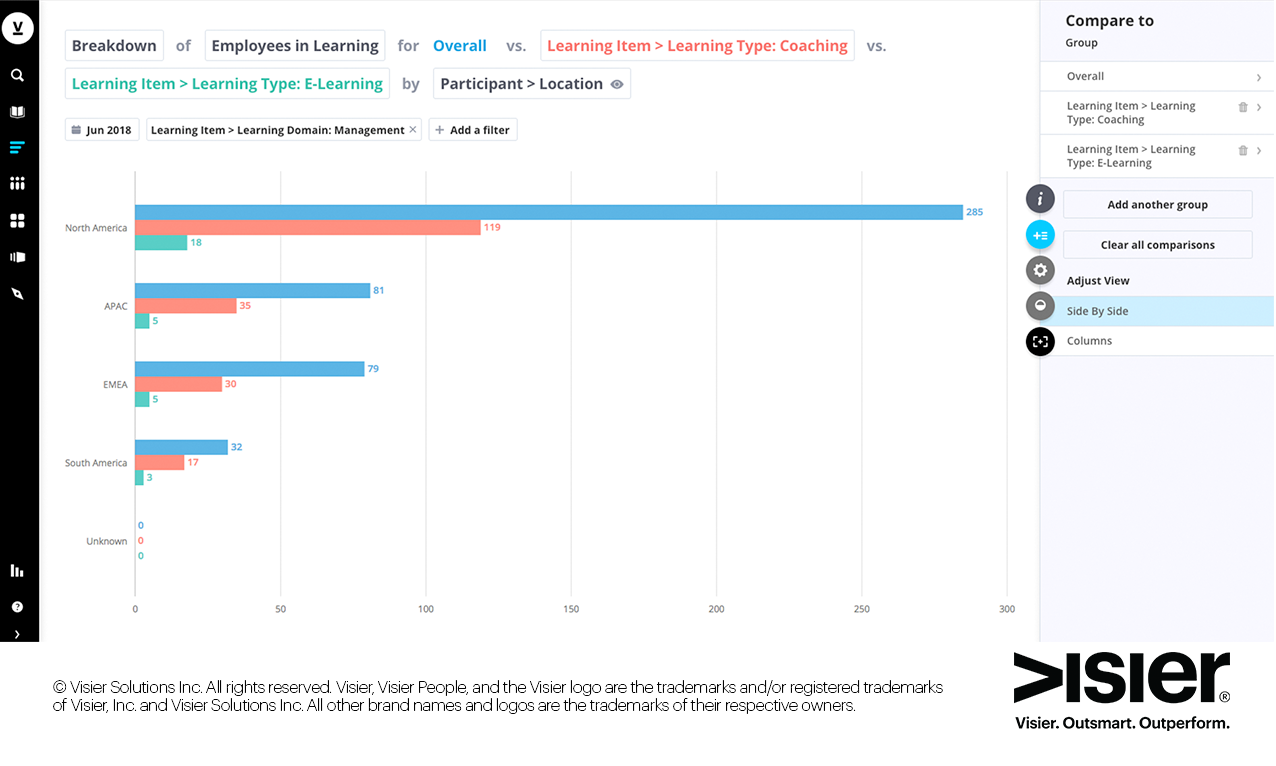
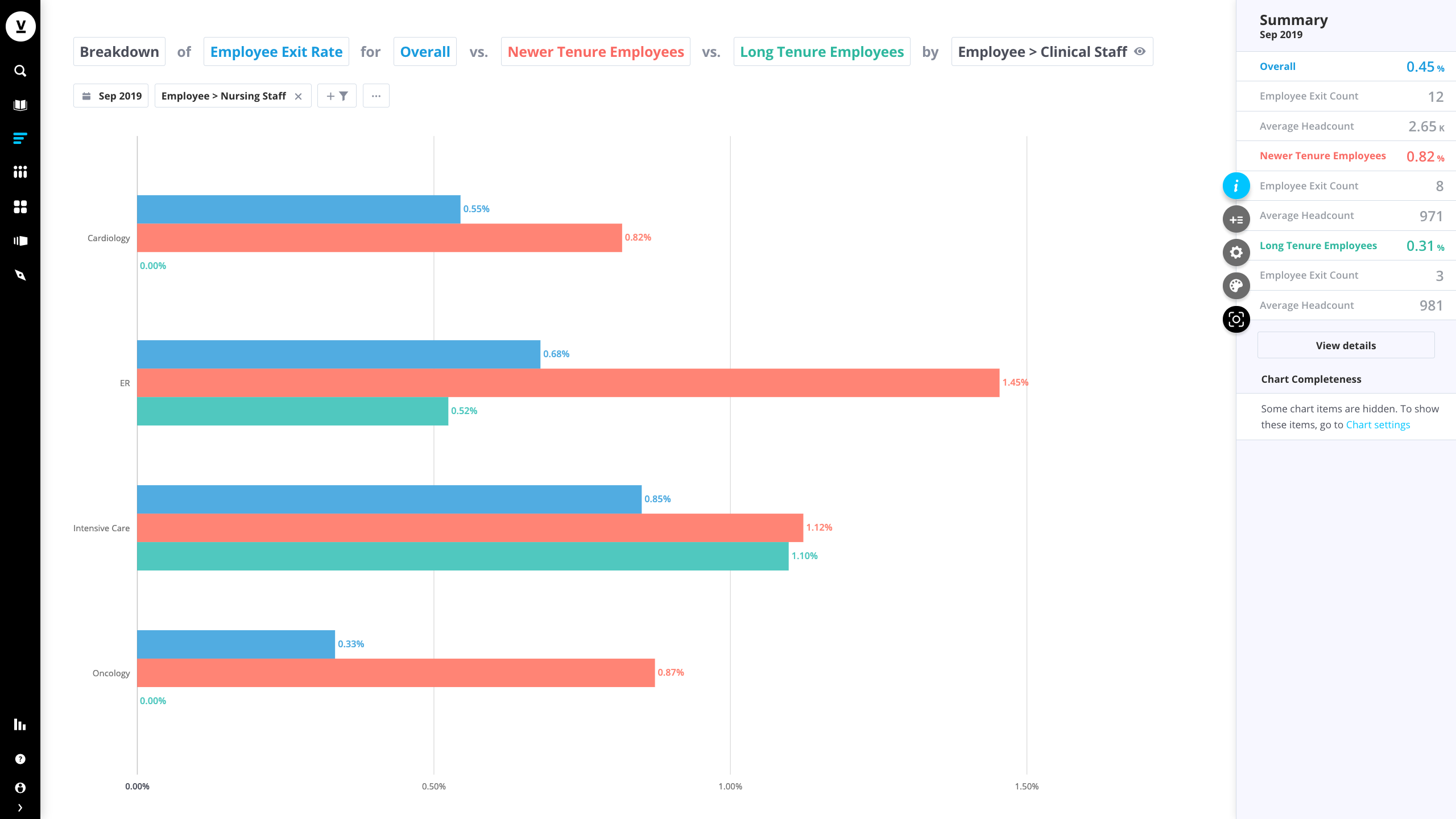
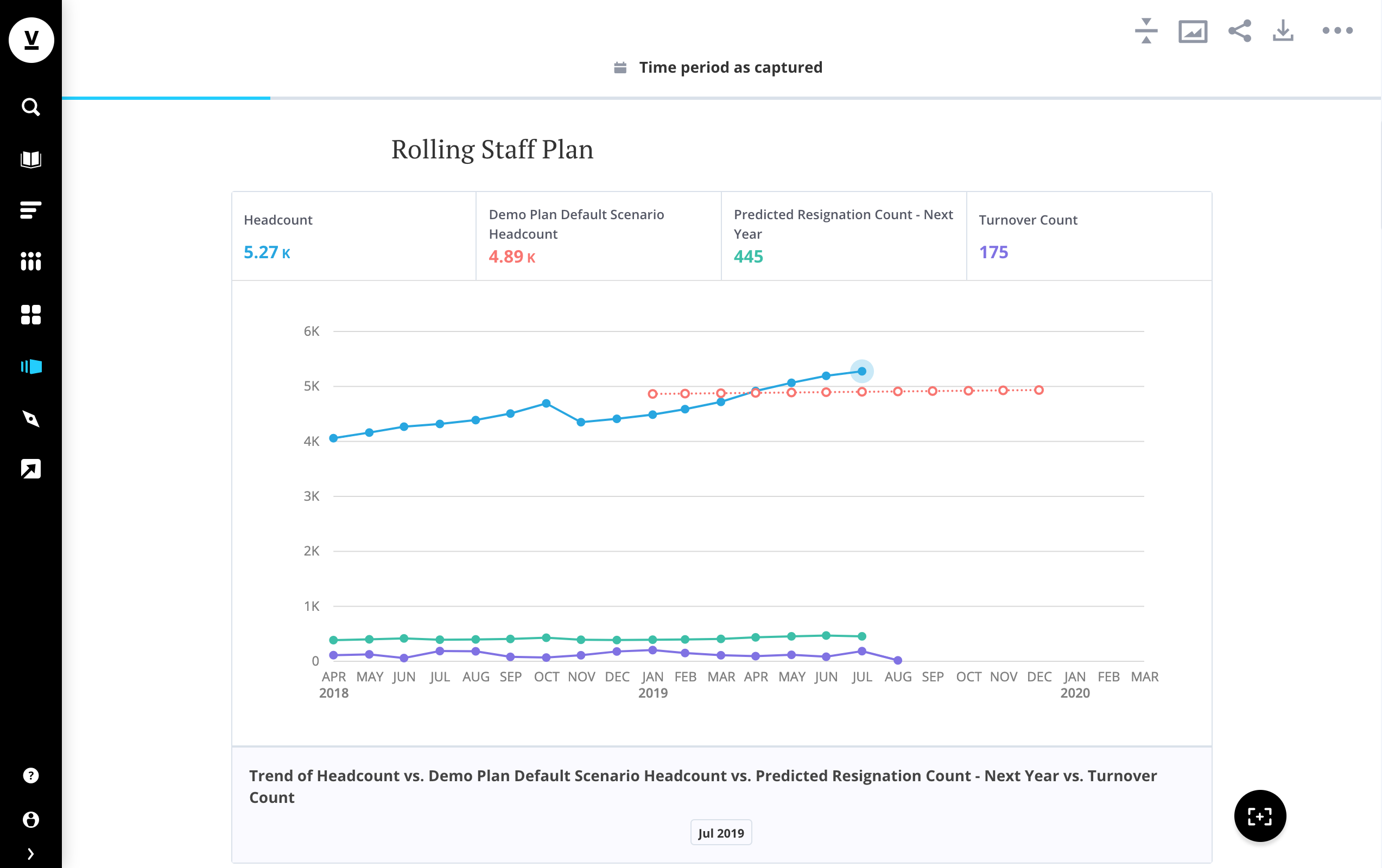
The Visier dashboard is extremely attractive and friendly, helping staff understand every detail of the analyzes conducted on the company's workforce.
Despite not being a great and complete solution to work with HR within this platform, however, data can be shared to exchange information between the head of each department of the company and HR staff and to speed up the analysis process and determine what to do with a low-performing employee.
It excellently determines the productivity of each employee and also determines risk by monitoring patterns and behavior.
Visier is a people analytics tool, so all data points are tied to employees. It can be difficult to analyze data points that aren't tied to employees (e.g., certain job data) since the data is driven by people metrics.
Visier releases updates quarterly. While this cadence does provide room for updates and enhances to be implemented in the tool throughout the year, other software providers operate on a more continuous update schedule.
It is a software with great resources, it increases the possibility that the entire workforce is productive, it gives us quick answers, it is the most powerful workforce analysis software that exists so far.
Based on comments from our clients, I awarded it this grade. Non-technical customers frequently compliment us on the ease with which they can utilize Tableau Online. Usability is rarely a source of contention amongst our customers. Few complaints have come from me as a user of our internal products.
Visier People makes it very easy for all end users to go in and see, pull, or dig in to their data where previously my team would have to pull or schedule a report of the data to each user. It is also very fast in updating charts/analyses when changing or adding filters, which makes the ease of use better. Last, the charts and analyses are very visually appeasing, making users want to use the platform more.
I have not had any issues that require customer support from Tableau at this time, which speaks well to Tableau. I have taken an online course with Tableau and it was very professional and well done, so based on that I would assume a similar level of quality for their customer service.
Visier can move as quickly or as slowly as the client needs. The topic-by-topic approach separates the project in clear phases and allows for focus on specific data. Depending on the size of the implementation team, implementation could move more rapidly if the subject matter experts are responsible for the individual topic data sets.
In determining whether to go with Tableau Online versus Alteryx, two important factors stood out in determining our go-to solution. First, while Alteryx is an impressive tool for data cleansing, it did not stack up in terms of data visualization capabilities. Tableau, on the other hand, provided us everything we needed in terms of visualizing our data and analytics. The second factor is cost. Well neither solution would be considered cheap, Tableau was the more cost effective solution for our needs.
Visier People has a user-friendly interface and easy-to-use virtualization as compared to other similar tools available in the market. It also provides multiple prebuild templates for HR and workforce analytics which reduces the time and effort required for manual implementation. It can seamlessly be integrated with other ranges of HR and business systems to make it easier for organizations to centralize the workforce and HR data for analysis.
In one case, we were able to realize a 25% reduction in turnover in a key job group by leveraging the insights we derived from Visier workforce analytics.
In one case, we were able to identify key turnover trends that would place a business' strategy at risk (due to the fact that turnover was in revenue-generating roles).
In both businesses I've used Visier, we were able to significantly reduce manual reporting (by more than 80%), enabling our data analysts to do more consultative work (vs. query generating work) with HR business partners.