TrustRadius: an HG Insights company

Lucid Visual Collaboration Suite

Score9 out of 10

1,980 Reviews and Ratings

Learn More

Contact about Lucid Visual Collaboration Suite

Please fill out the form below to get in touch.

Lucid Software

Connect with Lucid Software

What are you interested in?

Already have an account?

You hereby consent to have TrustRadius share the information supplied on this form with Lucid Software so that Lucid Software and TrustRadius may contact you in regard to the information requested.

What is Lucid Visual Collaboration Suite?

The Lucid Visual Collaboration Suite empowers teams to ideate, plan, design, build, and launch game-changing solutions from a shared infinite canvas.

Read more details.

Media

Screenshot of how Lucid helps teams to clarify complexity, align their insights.
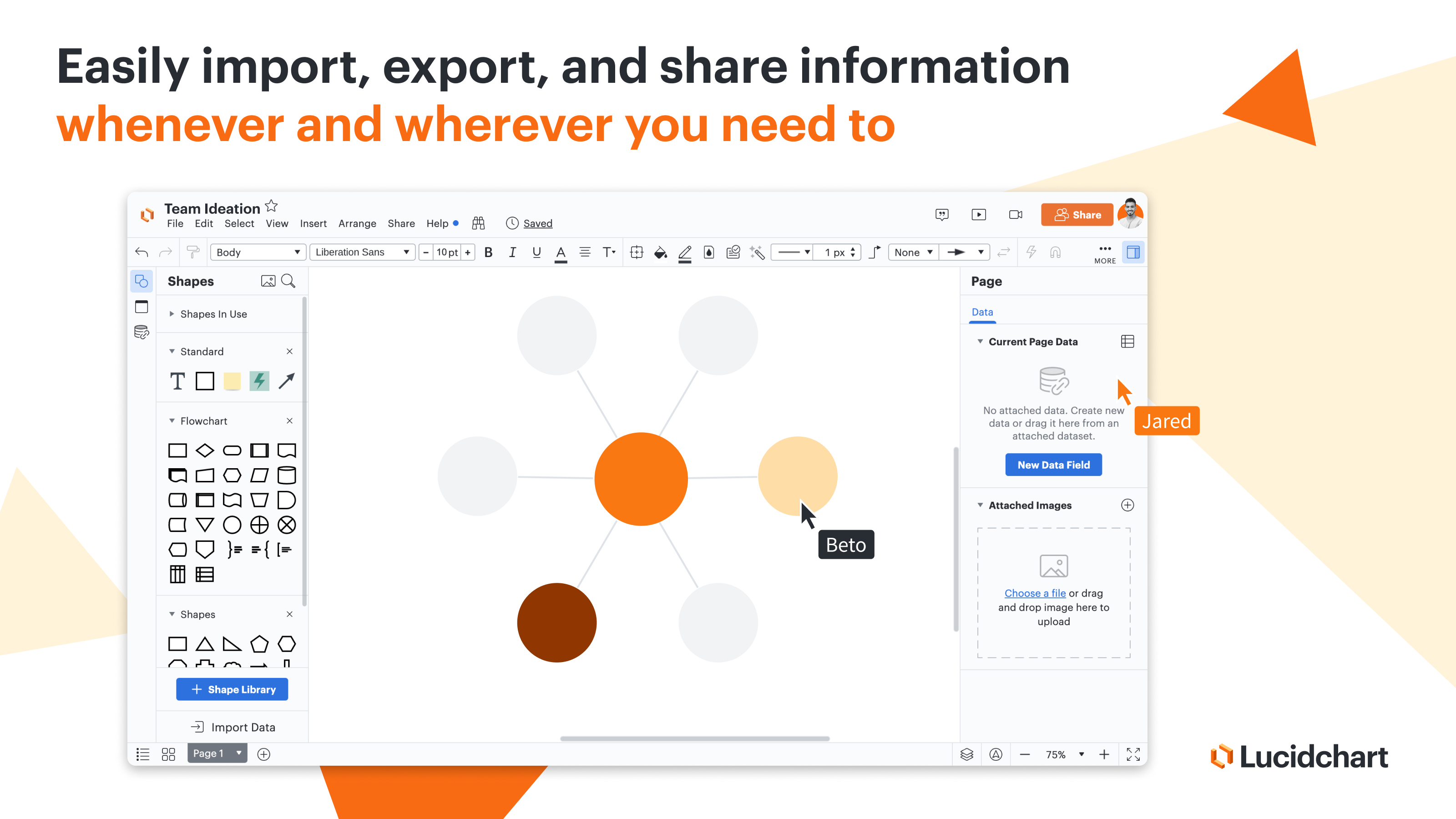
Screenshot of where information can be imported, exported, and shared whenever and wherever it is needed.
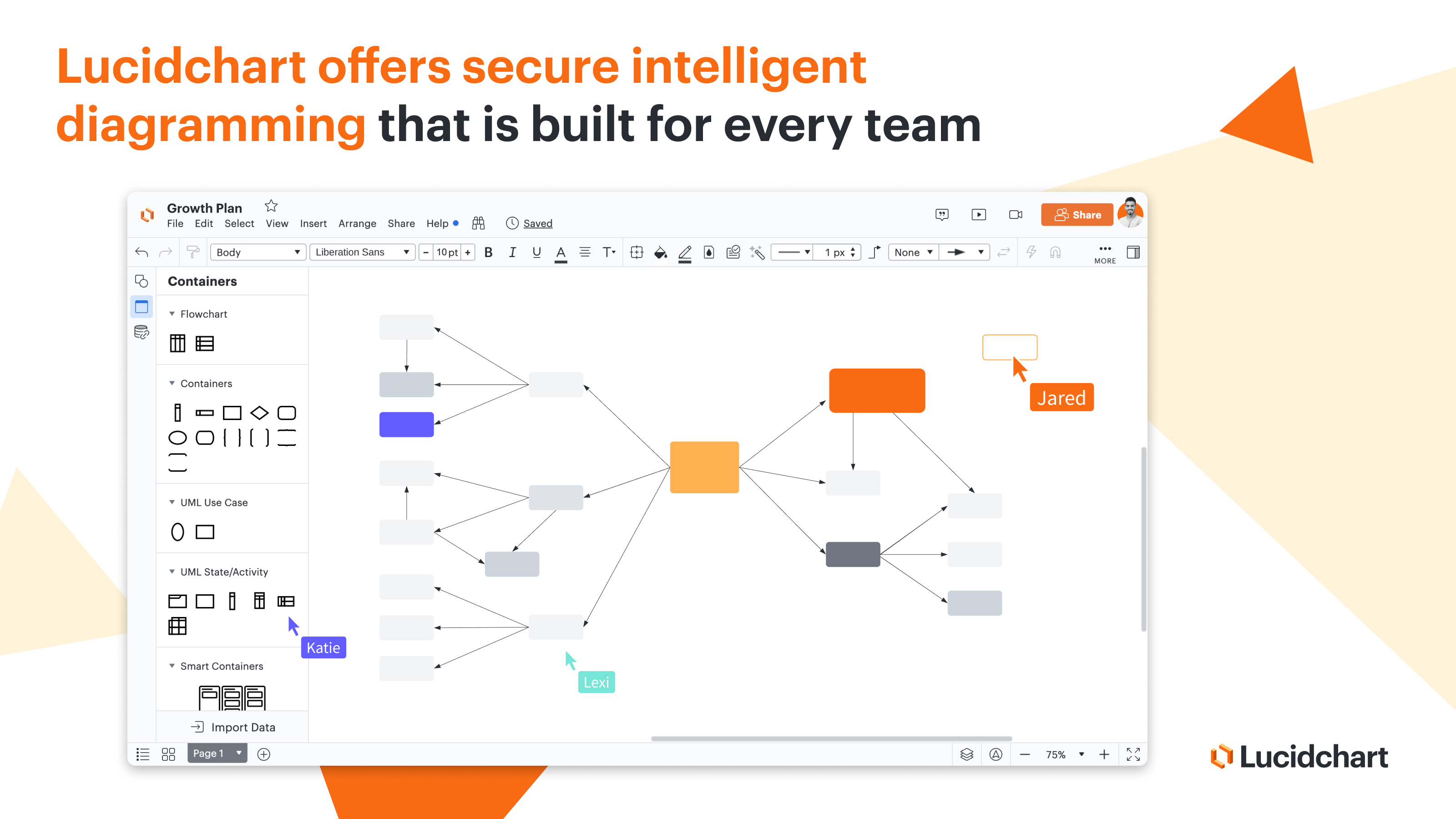
Screenshot of how Lucidchart offers secure intelligent diagramming that is built for teams.

1 / 3

Screenshot of how Lucid helps teams to clarify complexity, align their insights.

Who Buys & Uses Lucid Visual Collaboration Suite

Pros

  • Intuitive, user-friendly interface with drag-and-drop functionality
  • Robust real-time collaboration features enabling simultaneous editing and mouse tracking
  • Extensive template library providing quick starts for various diagrams

Cons

  • User interface and navigation could offer finer control and clarity
  • Search functionality is difficult for locating specific documents or components
  • Templates lack flexibility and variety for specific needs

Good for some things but not innovating fast enough

Use Cases and Deployment Scope

We largely use the Lucid Visual Collaboration Suite for project management, capacity planning, brainstorming sessions, and team retrospectives. I also use it to personally organize my thoughts and work. It helps us keep aligned on what resources we are using for a multitude of projects and the timelines for those projects. We have about 20 people using the planning capabilities, though 3 of us keep it updated regularly.

Pros

  • Ease of getting content on the canvas
  • Universal cards that can be used in different frames / shapes

Cons

  • Integrations with other project management tools, so it is truly the visualization layer (e.g. Linear, Asana, etc.)
  • Having linked elements that stay up to date in multiple places (e.g. I have a card and I need it represented in 2 timelines)
  • Having the data on cards actually reflect in the containers (e.g. if I put dates and an assigned person on a card and drag it in... it should move to those dates / assigned people)

Return on Investment

  • Team alignment across multiple projects
  • Capacity planning, so we don't overextend resources

Usability

Alternatives Considered

Miro, Figma, FigJam, Asana and monday.com

Other Software Used

Linear, Slack

If It's Not Lucid Visual Collaboration Suite It Doesn't Exist

Use Cases and Deployment Scope

My organsation uses Lucid Visual Collaboration Suite to store a visual workflow of all our processes. This means that if anyone in the team is out of the office anyone can step into their role and find the particular process they need to undertake, and carry out the work by following the process documented on Lucid Visual Collaboration Suite.

Pros

  • collaboration on work flows for teams
  • clear visualisation of complex workflows
  • Fast creation of professional diagrams

Cons

  • Version control tracking could be much better
  • Formatting and templates can be more consistent with better standardisation controls across teams
  • Integration is limited with project tools

Return on Investment

  • It has a positive impact on operational resilience and productivity
  • Enables more consistent ways of working
  • Reduced downtime when covering roles when people are absent

Usability

Alternatives Considered

draw.io

Other Software Used

Microsoft 365 Copilot, Microsoft Teams, Microsoft SharePoint

Lucid Visual Collaboration Suite unlocks remote work efficiency

Use Cases and Deployment Scope

We mainly use the diagram tool for live collaboration. It allows us to brainstorm when working remotely, as the whiteboard is synced quickly and multiple people can edit at the same time without de-sync issues.
When we started working remotely, we stopped doing live PoC design sessions until we tried Lucid Visual Collaboration Suite, it was the closest option to being all together in the office with a whiteboard.

Pros

  • Live sync with low delay
  • Extensive diagraming options
  • No loading times, instant access

Cons

  • Dashboard. We tend to just share links instead of logging in the website to select the diagram we're looking for.
  • Jira AI integration. Transform diagrams to user stories.

Return on Investment

  • Lucid Visual Collaboration Suite enables remote work efficiency, removing common friction points.
  • Saving whiteboards allows for better documentation, sharing designs and collaboration.

Usability

Alternatives Considered

draw.io and Microsoft Visio

Other Software Used

Atlassian Jira, Google Cloud Platform, GitHub, GitHub Copilot, Microsoft Visual Studio Code, Google Gemini

Amazing for workflows and customer journeys.

Use Cases and Deployment Scope

We use Lucid Visual Collaboration Suite to create process maps, workflows, and brainstorming diagrams for marketing and e-commerce projects. It helps improve team collaboration, simplify complex processes, and keep everyone aligned, and we use it across marketing and operations for planning, documentation, and visual communication! It really works, and the team loved it!

Pros

  • Creates workflows.
  • Creates maps.
  • Creates customer journeys.

Cons

  • The navigation was difficult at the beginning.

Return on Investment

  • Time saving!
  • Improve productivity.
  • Easy to share with others.

Usability

Other Software Used

Perplexity, Anthropic Claude

Amazing tool for online collaboration

Use Cases and Deployment Scope

Software solution design with remote collaboration. We use the diagraming tool frequently to show proof of concept to the squad and do brainstorming.
One of the issues we fixed with Lucid was doing synchronous remote collaboration, since our squad works from different countries and other alternatives did not allow frictionless remote collaboration.

Pros

  • Synchronous remote collaboration
  • Diagraming
  • Project sharing

Cons

  • Legacy support
  • Learning curve
  • Locating data in a big canvas

Return on Investment

  • Reduced friction when transitioning to remote work
  • Allows usage of diagrams as source of truth
  • Improved online presentations

Usability

Alternatives Considered

draw.io

Other Software Used

GitHub Copilot, Atlassian Jira, Atlassian Confluence