Overview
ProductRatingMost Used ByProduct SummaryStarting Price
Adobe Commerce
Score 8.1 out of 10
N/A
Adobe Commerce delivers personalized shopping at scale. Delivered as Adobe Commerce as a Cloud Service (ACCS), it boosts conversion with an AI-powered storefront, built-in merchandising, and GenAI-driven content. ACCS supports rapid expansion through multi-site, multi-language, and multi-brand capabilities, handling millions of SKUs, complex catalogs, and custom pricing. Always-on SaaS innovation lowers total cost of ownership by removing upgrade overhead and minimizing…N/A
Magento Open Source
Score 8.4 out of 10
N/A
Magento Open Source is an ecommerce content management solution originally developed by Varien Inc and presently supported by Adobe. The Open Source product is for developers and merchants that is available as a free download, and supported with free upgrades from the Magento Community.N/A
Magnolia
Score 9.9 out of 10
Mid-Size Companies (51-1,000 employees)
Founded in Switzerland in 1997, Magnolia is a CMS used to build composable digital experiences. Magnolia helps create fully integrated customer experiences and speeds up digital delivery of content. Magnolia boasts 480 enterprise customers, thousands of Community Edition deployments, and more than 200 certified Magnolia Partners around the world. They further state that their enterprise customers include Sanofi, Generali, the Atlassian, The New York Times, Harley Davidson, and Union…
$3,500
per month
Pricing
Adobe CommerceMagento Open SourceMagnolia
Editions & Modules
No answers on this topic
DX Core
$3500
per month
DX Cloud
$6000
per month
Offerings
Pricing Offerings
Adobe CommerceMagento Open SourceMagnolia
Free Trial
NoNoYes
Free/Freemium Version
NoNoNo
Premium Consulting/Integration Services
NoNoNo
Entry-level Setup FeeNo setup feeNo setup feeNo setup fee
Additional DetailsMust contact sales team for pricing.Pricing for Magento will vary greatly depending on outsourcing support and maintenance services.
More Pricing Information
Community Pulse
Adobe CommerceMagento Open SourceMagnolia
Considered Multiple Products
Adobe Commerce
Chose Adobe Commerce
Shopify, Akinon Commerce Cloud and SAP Commerce Cloud
Chose Adobe Commerce
WooCommerce is unreliable and often has a lot of downtime and issues. Shopify is a lot more reliable, scalable and offers a lot of features out of the box or with easy and well-vetting apps and plugins. I would suggest that unless there is a very clear limitation of Shopify or …
Chose Adobe Commerce
Adobe Commerce is in the lead, more scalable and flexible than Shopify, more robust than Kibo and Big Commerce and more open and easier to implement than Spryker and SalesForce. It is a strong contender for organization with development capabilities, needing a multisite, …
Chose Adobe Commerce
Bigcommerce offers strong saas simplicity and lower maintenance, but it lacks the customisation and multi store flexibility., woocommerce is cost effective and easy to use and come with a huge extension directory most of them freely available, but it is suited for smaller …
Chose Adobe Commerce
Shopify is also a great solution for the customers that comes with different set of benefits and limits when comparing with Adobe Commerce. Shopify provided very limited b2b support, limits in the integration with third party, checkout and theme custimization is limited, …
Chose Adobe Commerce
Open source nature of Magento was a key consideration, particularly when launching in new markets. Cost is another key factor here and the GMV model is an important enabler for us as we continue to grow.

Adobe Commerce is highly extensible and advanced customization and …
Chose Adobe Commerce
Adobe Real-Time Customer Data Platform and Adobe Customer Journey Analytics
Chose Adobe Commerce
more alignment to biz and since we were using already AEM
Chose Adobe Commerce
Adobe Commerce offer the best combination of power and adaptability to meet our business ojectives
Chose Adobe Commerce
Shopify is just better. In my opinion, it can save quotes, have different pricing for resellers, have multiple catalogues, do blogs, change the website, etc. It feels like Shopify is designed to do everything and does it all quite well overall, whilst Magento is for one thing …
Chose Adobe Commerce
Shopify has the bad habit of charging transaction fees unless you use Shopify Payments, and this aspect only is usually a no-go if you have a big eCommerce to handle.
Salesforce has very similar capabilities and probably has a better ecosystem, but it's customization capability …
Chose Adobe Commerce
Shopify and BigCommerce are great if you are a small business that is creating your first business and don't have many Skus or complex pricing. For us, having over 2 million Skus and a very complex inventory management of those Skus, Adobe Commerce (Magento Commerce) being …
Chose Adobe Commerce
Great balance of flexibility and power features. Also great B2B functionality and multi store and multi source inventory options.
Chose Adobe Commerce
Magento Commerce was previously put into place and used right when I came onboard. We used it for quite some time, but ultimately the need for our company's specific customizations became too difficult to manage during core updates. We specifically needed a more specialized way …
Chose Adobe Commerce
Magento comes as an enterprise platform, other platforms match smaller projects better.
Chose Adobe Commerce
Magento was far superior in terms of its global abilities... It excels in offering multi-currency/language/warehouse/credit card payments.
Chose Adobe Commerce
Magento Commerce Cloud is much more robust then Magento Open Source for e-commerce online stores who have a lot of orders and need a lot of security and speed. Using one of the common smaller web hosts, or even your own web servers, might not be up to par when your company has …
Magento Open Source
Chose Magento Open Source
Shopify is a closed ecosystem; the moment a client has a complex, custom workflow or needs to integrate with a legacy ERP system, Shopify’s app-based model falls short. WooCommerce just does not scale like Magento, and its architecture is not made for enterprise-scale …
Chose Magento Open Source
Magento is completely open source, and this means that not only is free, but can be adapted to your needings. Magento is also a framework, and this means the his customization capabilities go well beyond pure eCommerce functionalities. For this reason, if you need to create …
Chose Magento Open Source
Magento was open source and customizable unlike Shopify. Also it was built using PHP which everyone was proficient in - which helps a lot! Joomla wasn't as e-comerce oriented under the hood compared to Magento - plus we had someone in the team who knew Magento well already as …
Chose Magento Open Source
Magento is more advanced, but at the same time it requires more tech expertise to setup the store. It provides more freedom as compared to Shopify and WooCommerce, but at the same time it's comparatively difficult to use. Shopify is almost no code platform, but still we chose …
Chose Magento Open Source
Magento vs Prestashop
Magento is good for big-scale projects that require a lot of features or a lot of custom development. Prestashop is a good, lightweight platform that can handle most e-commerce use cases. When it comes to which is easier to use, especially for non-tech …
Chose Magento Open Source
While Magento does have higher development cost overall, it is a much better platform for ecommerce and it does not a take a fee from your sales which is nice.
Chose Magento Open Source
In looking at a different platform to migrate to from Magento 1, we looked primarily at Big Commerce, Shopify and Shopify Plus. Our host was very negative about Magento 2, but we determined after a couple years it was due to the fact it had even more complexity (and very …
Chose Magento Open Source
The full customization and integration benefits made us stay with Magento.
Chose Magento Open Source
the shopping extentions for wordpress (whoocommerce) didn't seem to be the best fit. Drupal was too complex to start with.
We found a good partner that had experience with Magento development and we felt that they + Magento Open Source were a good fit for our needs.
especially …
Chose Magento Open Source
Magneto Open Source allowed for a lot of customizations, and it seemed like a cheaper version. However, the cost added up really quickly. I would probably go with Shopify or BigCommerce for a small business when making decisions in the future.
Chose Magento Open Source
I inherited the Magento Open Source website we are currently using, but after evaluating everything that was wanted for the new website, we switched over to Shopify. After using Shopify for some of our other websites, we learned that you have to pay a large sum each month to …
Chose Magento Open Source
OpenCart is a better shopping cart platform then Magento for larger corporate clients who may want a ton of customizations and very specific functionality. Although Magento is "open-source", its code is not as easy to understand and modify as OpenCart. Shopify is a better …
Chose Magento Open Source
The three main reasons we went with Magento: 1. It was recommended by our NCR Counterpoint, VAR. 2. It's the best platform to integrate tightly with that NCR Counterpoint. It's also the best eventual platform to integrate with our wholesale ERP, so it's one platform to run …
Chose Magento Open Source
Magento is the heaviest by far, in a few senses of the word. It has the steepest learning curve both for administrators and programmers, but it also has the highest potential to run a high traffic, high volume ecommerce store. Other products will get you up and running faster …
Chose Magento Open Source
In our experience, Magento is more robust but also more complex for users to maintain.
Chose Magento Open Source
When compared to WooCommerce, we used Magento as we're able to have more control over our product listings, category listings, and shipping options.
Chose Magento Open Source
Magento is excellent for large shops, with large quantities of products and makes scaling as the shop grows easy and quick. But it does truly require a dedicated server and an experienced developer to get things up and going.

I prefer WooCommerce for smaller shops as its quick …
Chose Magento Open Source
WooCommerce, when fully "plugged-in" required server resources which drowned our host. We hit a wall with growth due to these resources and researched redevelopment on Woo or migration to a new platform. We chose the latter.
Shopify and BigCommerce were limited to their closed …
Chose Magento Open Source
Magento is hands down better than any hosted platform (i.e., BC), but only if you have a good development team. Hosted platforms are very limiting as to what you can accomplish "outside the box." Magento is much better than WooCommerce in its user friendliness and its …
Chose Magento Open Source
In a few words:
  • WooCommerce: easy to setup, huge community and easy to customize. Hard to scale, but can be done.
  • PrestaShop: poor brother of WooCommerce. Less community, less customization... not sure why anybody would use it.
Chose Magento Open Source
Magento is definitely built for developers by developers and in my opinion is best suited for large-scale e-commerce stores. When you need to create a large store or require advance customization Magento is really the only way to go. We have tried using platforms like …
Chose Magento Open Source
I have worked with Shopify, osCommerce, and WooCommerce.
Chose Magento Open Source
Compared to other small - medium sized business e-commerce solutions, Magento is by far requires the most development resources to implement and maintain. Creating a custom Drupal or Wordpress based e-commerce solution requires development resources as well, but the complexity …
Chose Magento Open Source
In the past, I've used Shopify, Wordpress + Woocommerce and Drupal + Drupal Commerce. Magento CE is much easier to use since it's open source and it's bundled together in one package. It's built specifically with e-commerce in mind so there are no worries about …
Magnolia
Chose Magnolia
Magnolia DXP offers similar or more capability compared to the other platform, while much easier to implement. For example, Adobe Experience Manager tend to be more monolithic in nature, heavier footprint compared to Magnolia. Hence when implementing a DXP, it is much faster to …
Chose Magnolia
The Broadleaf CMS was quite basic and was not a full fledged CMS and hence we had to chose Magnolia to address the business requirement for our B2B platform
Chose Magnolia
I need to specific and say I've had experiences of these platform from previous roles, they were not considered by Good Things Foundation.

My experience is that Magnolia delivers the power of these high end platforms but is generally more accessible to get going and develop …
Chose Magnolia
Magnolia is in a league of it's own vs the other platforms I have previously used. Rather than being a turnkey solution Magnolia puts the power into the hands of your company and developers allowing you to build anything you can imagine. Being a DXP rather than a CMS Magnolia …
Chose Magnolia
Magnolia is not as costly as other enterprise grade platforms and is easier to deploy, more reliable and less resource hungry. It's often also easier to use and certainly easier to use than it's Open Source counterparts. It also manages content in a much more structured manner …
Chose Magnolia
I've used several CMSs like AEM and EpiServer, and comparatively, they all excel at different things. Magnolia is the best to develop for/against. Episerver has the best/most fluid UI in terms of content editing, and the overall admin experience AEM is just all around sucks.
Chose Magnolia
Similar to how one might choose a specific programming language to solve a specific problem, Magnolia has its place among the rest, depending on the use case. While it does not have the most pleasant user experience compared to others, its customization options are streets …
Chose Magnolia
Cost was prohibitive for SiteCore. We liked the support that Magnolia gives us in terms of being an actual Company. We love open-source, but have had problems with Umbraco in the past in terms of upgrade paths etc.
Chose Magnolia
Of all the ones we looked at that met our requirements Magnolia was clearly the best value for money and had a solid background that you could trust and that could take care of you in case of problems.
Chose Magnolia
For us, Magnolia is the best option for our needs. FirstSpirit by eSpirit is missing on the list. We are moving away from FirstSpirit as it feels outdated. Wix has better usability, but is not suitable for enterprise. WordPress I would only recommend for private projects. …
Chose Magnolia
Putting all together: capabilities, support, community and price... Magnolia is the best combination, maybe not the best on each aspect, but for sure in the combination
Chose Magnolia
I choose Magnolia in front of everyone since it is one of the content managers that best adapts to all the modifications that are required by businesses
Chose Magnolia
Magnolia gains in ease of content creation but loses in documentation and practical examples for developers.
Chose Magnolia
One of the most important points that magnolia has over other products is the possibility of extending its functionalities. Being open-source, it is possible to inspect how everything is done and replicate it to change functionalities. In this way, many features that customers …
Chose Magnolia
When developing, I find Magnolia is better in many different ways, mainly in the consistency of how to create new components and page templates.
Chose Magnolia
I use magnolia because my client asked for it in the beginning because he had a long history of using magnolia for years. I think magnolia is middle-hight rated in the stack of similar products. Maybe it's not very well-publicized and it needs better marketing techniques or …
Chose Magnolia
Good documentation and examples Online demos to mess with and test functionalities Easier to install Better knowledge about the product Ability to centralize content of the same type in apps Better performance in some scenarios Better usability: In the newest versions, …
Chose Magnolia
Magnolia is a good competitor in the DXP scenario: Reduced costs License costs are contained, what brings customers the ability to develop their business with a minor impact Open source platform It helps customers to adapt the platform to some special needs DXP …
Chose Magnolia
Magnolia has all flexible capabilities that offer the user the best cloud marketing experience and great functionalities for effective data analytics generation. Reporting through Magnolia tools is also another important aspect since it allows the production of effective …
Chose Magnolia
Pricing was the major concern for us and we found this to be our option.
Chose Magnolia
Proximus was using Magnolia when I started working.
Chose Magnolia
Used CMS: Hybris CQ5/Adobe CMS AEM
Chose Magnolia
Magnolia has an automatic, and speedy social media publication extension, which spread content to all social sites. Also, the insertion of extensions and plugins is more effective when on Magnolia against the opponents. Magnolia admits and adopts diversity, hence, it is a …
Features
Adobe CommerceMagento Open SourceMagnolia
Online Storefront
Comparison of Online Storefront features of Product A and Product B
Adobe Commerce
7.3
Ratings
6% below category average
Magento Open Source
7.4
Ratings
5% below category average
Magnolia
-
Ratings
Product catalog & listings8.50 Ratings9.40 Ratings00 Ratings
Product management8.10 Ratings9.00 Ratings00 Ratings
Bulk product upload6.50 Ratings9.00 Ratings00 Ratings
Branding7.10 Ratings6.80 Ratings00 Ratings
Mobile storefront6.90 Ratings4.00 Ratings00 Ratings
Product variations6.50 Ratings9.40 Ratings00 Ratings
Website integration7.10 Ratings8.20 Ratings00 Ratings
Visual customization7.50 Ratings5.60 Ratings00 Ratings
CMS7.10 Ratings5.00 Ratings00 Ratings
Online Shopping Cart
Comparison of Online Shopping Cart features of Product A and Product B
Adobe Commerce
7.6
Ratings
0% below category average
Magento Open Source
7.3
Ratings
4% below category average
Magnolia
-
Ratings
Abandoned cart recovery7.90 Ratings5.80 Ratings00 Ratings
Checkout user experience7.30 Ratings8.80 Ratings00 Ratings
Online Payment System
Comparison of Online Payment System features of Product A and Product B
Adobe Commerce
8.2
Ratings
2% below category average
Magento Open Source
8.7
Ratings
4% above category average
Magnolia
-
Ratings
eCommerce security8.20 Ratings8.70 Ratings00 Ratings
eCommerce Marketing
Comparison of eCommerce Marketing features of Product A and Product B
Adobe Commerce
7.3
Ratings
5% below category average
Magento Open Source
6.4
Ratings
18% below category average
Magnolia
-
Ratings
Promotions & discounts7.70 Ratings9.30 Ratings00 Ratings
Personalized recommendations6.60 Ratings2.00 Ratings00 Ratings
SEO7.60 Ratings7.90 Ratings00 Ratings
eCommerce Business Management
Comparison of eCommerce Business Management features of Product A and Product B
Adobe Commerce
8.0
Ratings
0% below category average
Magento Open Source
9.6
Ratings
18% above category average
Magnolia
-
Ratings
Multi-site management8.10 Ratings10.00 Ratings00 Ratings
Order processing8.20 Ratings9.40 Ratings00 Ratings
Inventory management8.10 Ratings9.40 Ratings00 Ratings
Shipping7.80 Ratings9.40 Ratings00 Ratings
Custom functionality7.90 Ratings10.00 Ratings00 Ratings
Security
Comparison of Security features of Product A and Product B
Adobe Commerce
-
Ratings
Magento Open Source
-
Ratings
Magnolia
8.0
Ratings
3% below category average
Role-based user permissions00 Ratings00 Ratings8.00 Ratings
Platform & Infrastructure
Comparison of Platform & Infrastructure features of Product A and Product B
Adobe Commerce
-
Ratings
Magento Open Source
-
Ratings
Magnolia
8.1
Ratings
4% above category average
API00 Ratings00 Ratings8.50 Ratings
Internationalization / multi-language00 Ratings00 Ratings7.70 Ratings
Web Content Creation
Comparison of Web Content Creation features of Product A and Product B
Adobe Commerce
-
Ratings
Magento Open Source
-
Ratings
Magnolia
8.0
Ratings
2% above category average
WYSIWYG editor00 Ratings00 Ratings8.50 Ratings
Code quality / cleanliness00 Ratings00 Ratings8.40 Ratings
Admin section00 Ratings00 Ratings8.00 Ratings
Page templates00 Ratings00 Ratings8.90 Ratings
Library of website themes00 Ratings00 Ratings7.00 Ratings
Mobile optimization / responsive design00 Ratings00 Ratings8.50 Ratings
Publishing workflow00 Ratings00 Ratings7.50 Ratings
Form generator00 Ratings00 Ratings6.90 Ratings
Web Content Management
Comparison of Web Content Management features of Product A and Product B
Adobe Commerce
-
Ratings
Magento Open Source
-
Ratings
Magnolia
7.5
Ratings
0% above category average
Content taxonomy00 Ratings00 Ratings7.60 Ratings
SEO support00 Ratings00 Ratings7.20 Ratings
Bulk management00 Ratings00 Ratings7.60 Ratings
Availability / breadth of extensions00 Ratings00 Ratings7.90 Ratings
Community / comment management00 Ratings00 Ratings6.90 Ratings
Best Alternatives
Adobe CommerceMagento Open SourceMagnolia
Small Businesses
Ecwid by Lightspeed
Ecwid by Lightspeed
Score 10.0 out of 10
Ecwid by Lightspeed
Ecwid by Lightspeed
Score 10.0 out of 10
ManageWP
ManageWP
Score 10.0 out of 10
Medium-sized Companies
Shopify Plus
Shopify Plus
Score 8.9 out of 10
Shopify Plus
Shopify Plus
Score 8.9 out of 10
RWS Tridion Sites
RWS Tridion Sites
Score 9.0 out of 10
Enterprises
IBM Digital Commerce
Score 9.0 out of 10
IBM Digital Commerce
Score 9.0 out of 10
RWS Tridion Sites
RWS Tridion Sites
Score 9.0 out of 10
All AlternativesView all alternativesView all alternativesView all alternatives
User Ratings
Adobe CommerceMagento Open SourceMagnolia
Likelihood to Recommend
8.2
(0 ratings)
8.0
(0 ratings)
8.1
(0 ratings)
Likelihood to Renew
9.0
(0 ratings)
10.0
(0 ratings)
8.1
(0 ratings)
Usability
7.8
(0 ratings)
6.0
(0 ratings)
8.0
(0 ratings)
Availability
10.0
(0 ratings)
-
(0 ratings)
-
(0 ratings)
Performance
9.0
(0 ratings)
-
(0 ratings)
8.5
(0 ratings)
Support Rating
8.0
(0 ratings)
-
(0 ratings)
9.1
(0 ratings)
Online Training
8.0
(0 ratings)
-
(0 ratings)
8.2
(0 ratings)
Implementation Rating
8.0
(0 ratings)
-
(0 ratings)
-
(0 ratings)
User Testimonials
Adobe CommerceMagento Open SourceMagnolia
Likelihood to Recommend
We need to do a lot of quotes, and sometimes customers call and want to pay. Adobe Commerce (Magento) did not let you keep saved quotes, so you had to put people on hold whilst you started making the order from scratch rather than just taking payment, which was very annoying.
Read full review
It's well suited for large eCommerce stores as it requires much effort to set up and the development cost for setting it up is high. It's less appropriate to use Magento where you are looking for quick development and launch of the store. Also, it is required to have a developer or sometimes the entire tech team to manage an e-commerce store, so you may need to hire a few PHP developers.
Read full review
If you need a business CMS that brings along a good amount of features and also give you the chance to develop features on your own, Magnolia would be a good choice. Even if you have not the fitting infrastructure around, Magnolia provides you different ways like SAAS oder PAAS. If you have to review your code our have any problems the team behind will helps in a short time. Without using the connectors it is not so easy to connect special functionalities like Marketing tools or optimization tools. The DAM is very slow if you have an huge amount of documents and pictures to store for your website - you have to add an external DAM.
Read full review
Pros
  • Magento Commerce Cloud allows us to develop our own custom solutions for problems that we need solved.
  • Magento Commerce Cloud can also be integrated with many of the third part vendors that we use. This has made many implementations go very smoothly and tends to be much quicker than developing our own custom solution.
  • There are many features available right out of the box. Many of them we have not implemented yet, but it is great to have them available to us when we are ready.
Read full review
  • Magento is perfect if our web design client likes a specific pre-made template and wants a fast solution.
  • Magento allows us to customize its open-source code to create additional features and functionality.
  • Magento saves small businesses time and money if they only need a simple solution.
Read full review
  • Use of YAML to define content models with code.
  • Versatility of defining actions for custom handlers.
  • Reloading classes when code is modified in a local dev environment is nice. While it doesn't seem to work when changes extend beyond the method body (i.e., adding methods), it remediates the pain of long startup times.
Read full review
Cons
  • The Magento admin is not as user-friendly has other e-commerce platforms, and this is why I never recommend it for smaller ecommerce stores.
  • You absolutely need a skilled developer to customize and extend Magento. A skilled developer can make Magento amazing, but if you're looking for a DIY website option, Magento will frustrate you.
  • Magento takes a lot of server resources, so you will not be able to run on it a shared hosting account. You will need a dedicated server for it.
Read full review
  • Magento 2 community is full of known and new bugs with long-pending pull requests and the community is on the hook for changes. Submit an very obvious issue to the github repo, and you will likely be met with a "this is open source and you use at your own risk." I counter this poor attitude with the fact that open source community has standards, and we do not label a "release" until those standards are met. Otherwise it's just a alpha, beta or numbered build. We don't release obviously bad software until it's fully working.
  • Magento is expensive to maintain. You will need a well-paid php developer with apache and hosting knowledge, or you will have to hire an external firm. Either option will turn your website into an additional $100k/yr cost center, so you'd better be ready to ramp up sales. Every feature update or bugfix in the past year has uncovered more bugs, which my devs fix, but at the cost of timelines and billed hours way outside of my budget and target dates.
Read full review
  • As a developer the learning curve is long, you can start developing relatively quickly but getting to know the platform in depth takes time.
  • Having a history of modifications not only at the page level but also at the Content Apps level would be very useful.
Read full review
Likelihood to Renew
Magento is well-supported by a big development team at eBay, which not only addresses bug reports very quickly, but also is constantly working on improvements to the platform. The wealth of Magento third party modules ensures that the platform will be up to date with future changes to
Payment or ERP systems.
Security is always a concern and with the Zend framework as a foundation, Magento has had very few security-related patches since I have started to work with it
Read full review
It's the dominant force in the SMB open source market. With the continued support of eBay/PayPal, Magento will continue to evolve and should be a market leader for some time.
Read full review
Magnolia is an innovative CMS, for example it is possible to use the ipad to manage the contents. Magnolia’s team works hard to improve the product; the community is small but active and the support for the enterprise version is good. Magnolia’s team asks the users what they think and what they need, and the new functionalities planned for Magnolia 5.3 are very exciting for example the content personalization.
Read full review
Usability
It is a simple platfrom for users and an open code platfrom for developers making it one of the easiest ecosystem in ecommerce. It is flexible and controlable. It enables speed and scale. Documentation is readily available and there is a large pool of experience developers and expert as it is a leading platfrom for some time
Read full review
Magento has a relly step learning curve. This means that you need to find experienced developers who can lead junior ones, otherwise the overall development process can be a disaster. However, once you are comfortable in developing on the platform, the customization capability are basically limitless and you can adapt the platform to any use case you can imagine. Also, there are many alredy developed marketplace modules that can solve, out of the box, many problems you may face.
Read full review
There are a ton of small things that could make this CMS great Off the top of my head... 1) Better navigation between a component and its corresponding node in the jcr ( devs often have to flip between a page and a spot in the jcr even though there could be a button to take you from a page/component in the pages app to its location in the JCR) 2) Why does a content editor need to open the page to edit the page properties? They could just as easily edit the dialog from the tree view if they have many pages to touch, and it would save them time by not having to render the page.
Read full review
Performance
No answers on this topic
It's a lean and performant platform. You don't need to put reverse proxy servers in front of it to speed it up (although that does make it go even quicker) as there are various layers of caching built in to the application. While it's a little cryptic, the internal caching system is actually quite configurable and can be tuned to the right sort of content.
Often what tends to surprise many an IT manager is that you can run it on relatively modest hardware. We've often been met with "are you sure ?" but the reality is that it doesn't need a whole lot of horsepower.
Read full review
Support Rating
The technical service was impeccable. They were on point and were very knowledgeable.
Read full review
No answers on this topic
You always get an answer based on your SLA. But you always get a solution. That's the successfactor in this case. To often i was frustrated about people in a company without even a clue what there product is about or how to solve a problem. Magnolia's Support Team does a very good job and try to help you in most of the cases
Read full review
Online Training
Great value for an flexible, open source platform.
Read full review
No answers on this topic
Alternatives Considered
Open source nature of Magento was a key consideration, particularly when launching in new markets. Cost is another key factor here and the GMV model is an important enabler for us as we continue to grow. Adobe Commerce is highly extensible and advanced customization and flexibility built in meaning that we can shape the product into exactly what we require.
Read full review
Shopify is a closed ecosystem; the moment a client has a complex, custom workflow or needs to integrate with a legacy ERP system, Shopify’s app-based model falls short. WooCommerce just does not scale like Magento, and its architecture is not made for enterprise-scale e-commerce. SAP Commerce Cloud is a very close competitor, but it comes with licensing costs and sometimes can be overkill. It's, however, perfect if the customer already has something SAP in their ecosystem.
Read full review
Magnolia DXP offers similar or more capability compared to the other platform, while much easier to implement. For example, Adobe Experience Manager tend to be more monolithic in nature, heavier footprint compared to Magnolia. Hence when implementing a DXP, it is much faster to build using Magnolia, at a much lower TCO. The other platform like Kontent.ai and Strapi are pure headless platform and offer lesser features. What really make Magnolia different is the APAC team, who are all out to support their client in the implementation, ensuring their client maximize their platform and the project implementation is successful. This is some thing that is not experienced when using other platform(s)
Read full review
Return on Investment
  • When we first went LIVE with Adobe Commerce our SEO / Organic traffic plummeted and so did our conversion so our initial take of Adobe Commerce wasn't great. This was partly to do with business decisions but also to do with out of box functionality not being as expected.
  • Fast forward and we basically did a redesign on the platform and partnered with a fantastic SEO partner and improved results and now are doing extremely well on the Magento platform. Much improved!
Read full review
  • Better Total Cost of Ownership than bespoke e-commerce solutions due to being open source and the wide range of free/commercial extensions available to extend the platform.
  • Often more extensive to set up and maintain than other open source alternatives, such as WooCommerce.
Read full review
  • We have placed web content management in the hands of the organisation than retained it within the technology team.
  • We were able to quickly move to MVP and release and we are now focussed on moving the platform forward at some pace whilst not being burdened with BAU work inside the technology team as so much as self-service to trained organisational users
  • The use of the SAAS/PASS has inbuilt business resiliency as specialist work and aspects such as underlying security is done by Magnolia and we are able to focus internal effort on building out the platform.
Read full review
ScreenShots

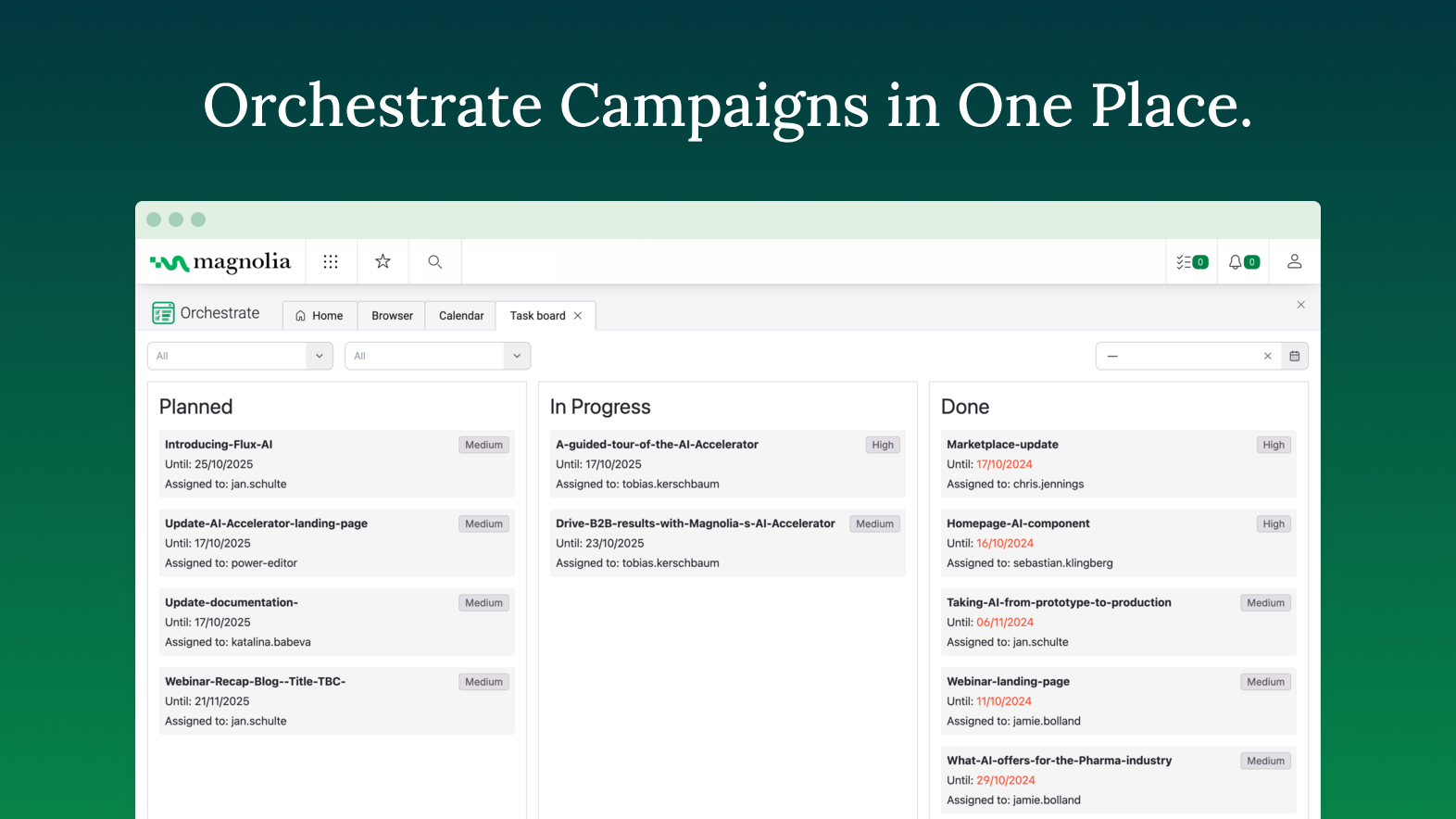
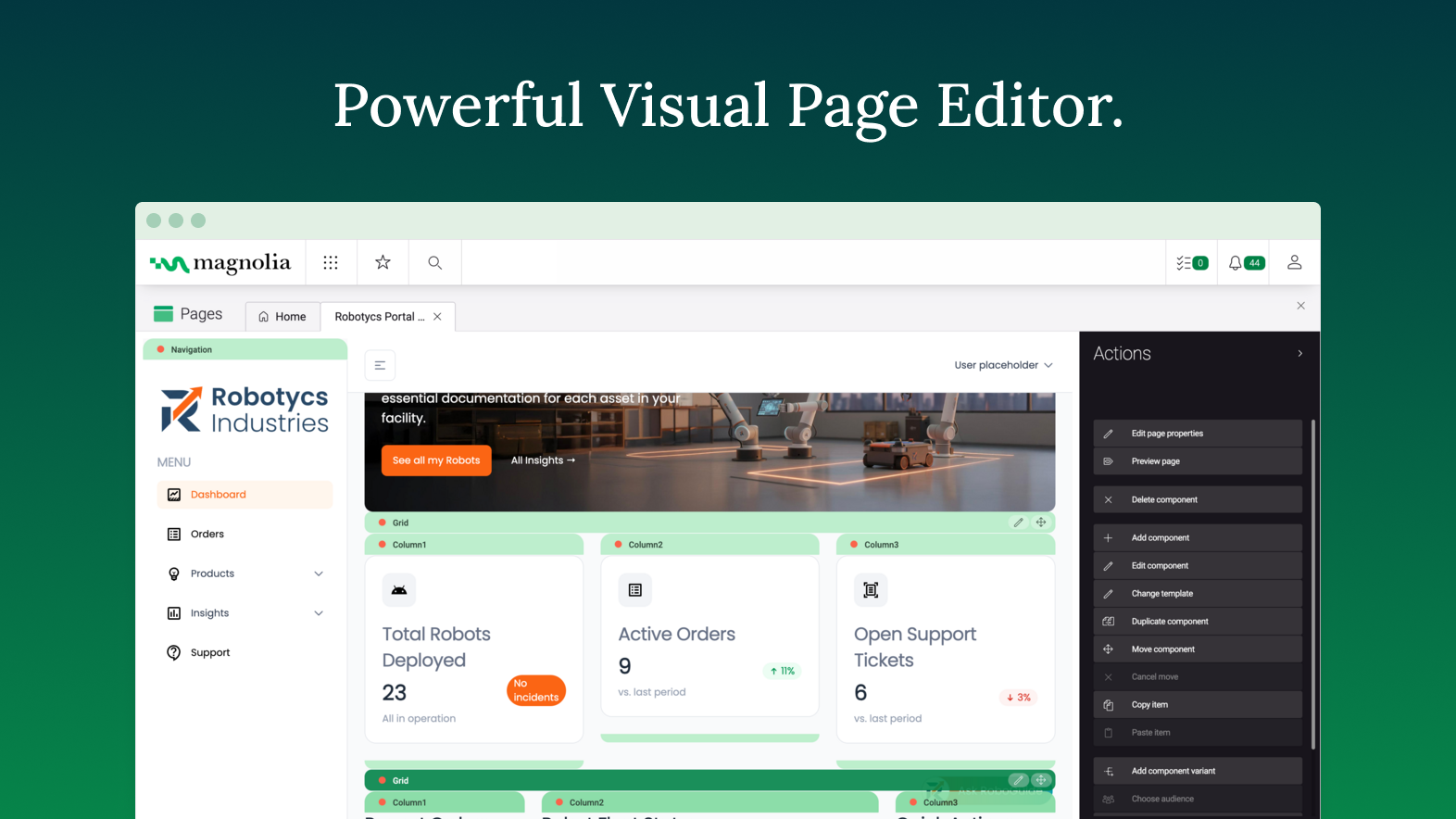
Magnolia Screenshots

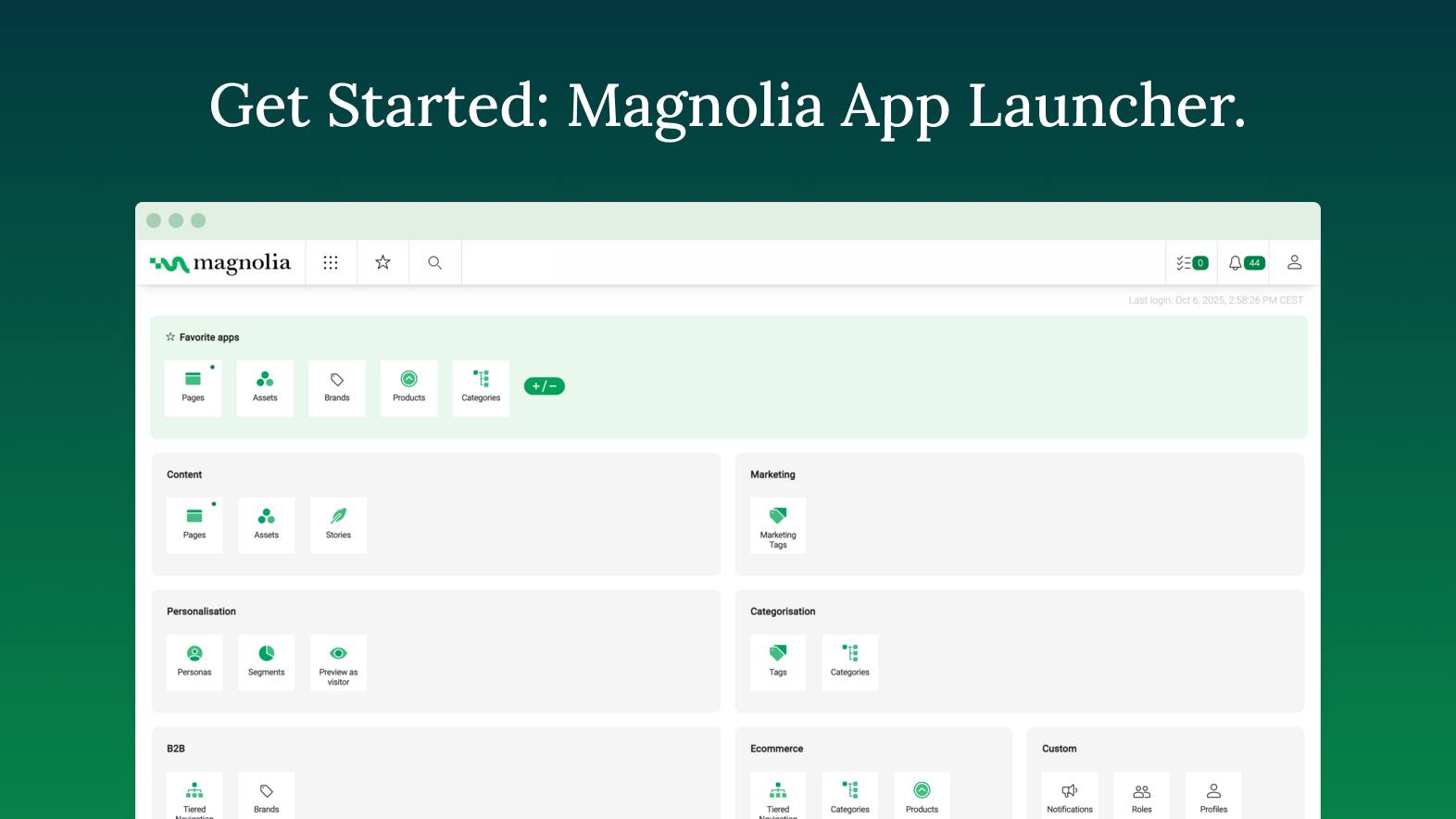
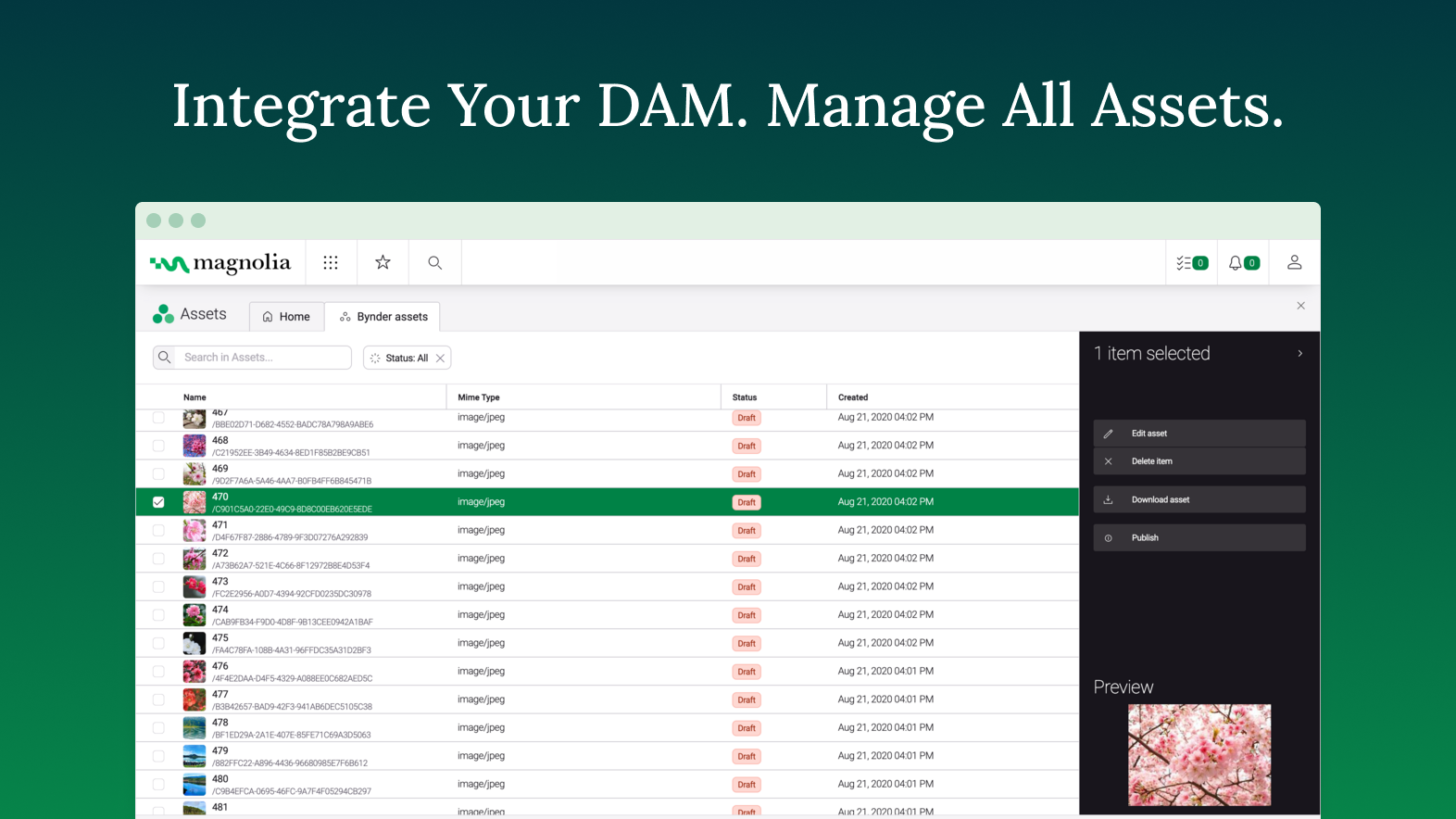
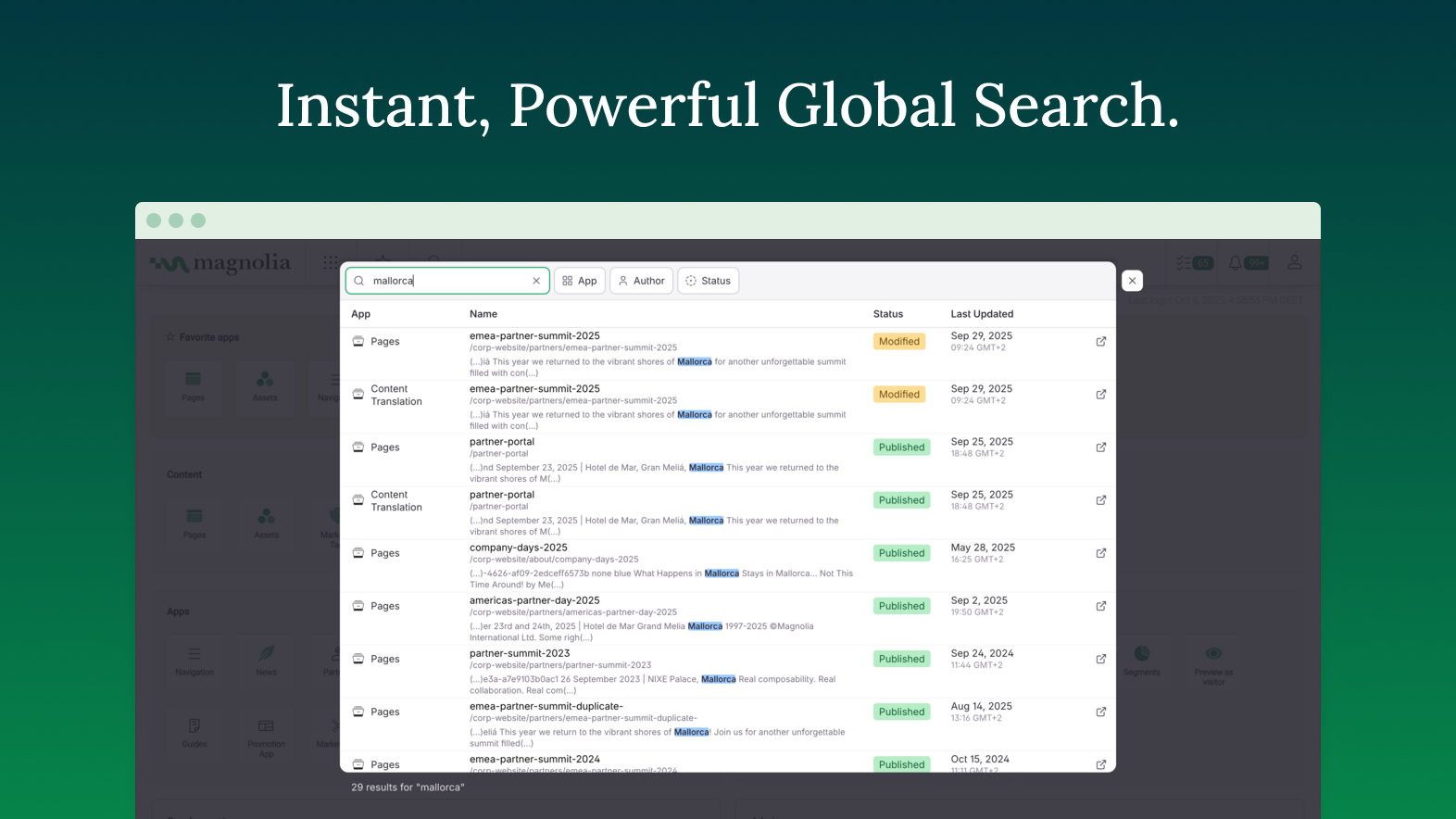
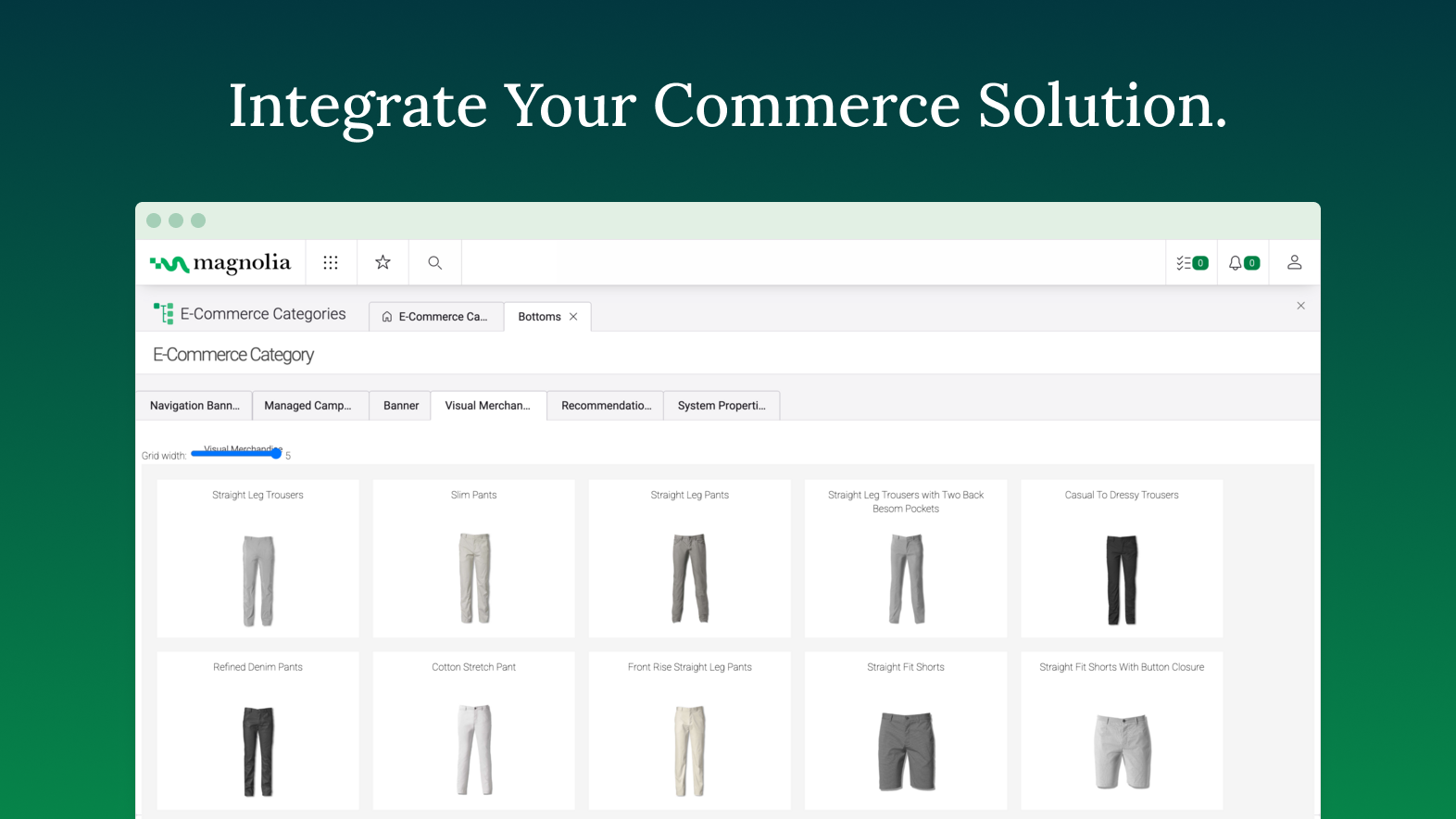
Screenshot of the Magnolia App Launcher, used to switch between workspaces and manage pagesScreenshot of the customer experience. This brings together content and audiovisual digital assets to form more compelling digital experiences.Screenshot of global search that brings relevant content, no matter where it resides.Screenshot of customizing the ecommerce experience.Screenshot of Magnolia Orchestratem where users can manage and track campaignsScreenshot of the WYSIWYG page editor