Amazon Elastic Compute Cloud (Amazon EC2) is a web service that provides secure, resizable compute capacity in the cloud. Users can launch instances with a variety of OSs, load them with custom application environments, manage network access permissions, and run images on multiple systems.
$0.01
per IP address with a running instance per hour on a pro rata basis
Amazon Web Services
Score 8.5 out of 10
N/A
Amazon Web Services (AWS) is a subsidiary of Amazon that provides on-demand cloud computing services. With over 165 services offered, AWS services can provide users with a comprehensive suite of infrastructure and computing building blocks and tools.
$100
per month
IBM Cloud Bare Metal Servers
Score 8.6 out of 10
N/A
IBM Cloud bare metal servers are cloud servers configurable in hourly/monthly options, on-demand, from any location—with a selection of standard features and services for small businesses and enterprise demands. Users can customize RAM and SSDs with 11M+ configurations from which to choose.
$0.51
per hour
Pricing
Amazon Elastic Compute Cloud (EC2)
Amazon Web Services
IBM Cloud Bare Metal Servers
Editions & Modules
Data Transfer
$0.00 - $0.09
per GB
On-Demand
$0.0042 - $6.528
per Hour
EBS-Optimized Instances
$0.005
per IP address with a running instance per hour on a pro rata basis
Carrier IP Addresses
$0.005 - $0.10
T4g Instances
$0.04
per vCPU-Hour Linux, RHEL, & SLES
T2, T3 Instances
$0.05 ($0.096)
per vCPU-Hour Linux, RHEL, & SLES (Windows)
Free Tier
$0
per month
Basic Environment
$100 - $200
per month
Intermediate Environment
$250 - $600
per month
Advanced Environment
$600-$2500
per month
IBM Cloud Bare Metal Servers
starting at $0.51
per hour
IBM Cloud Bare Metal Servers
starting at $241.00
per month
Offerings
Pricing Offerings
Amazon Elastic Compute Cloud (EC2)
Amazon Web Services
IBM Cloud Bare Metal Servers
Free Trial
No
Yes
Yes
Free/Freemium Version
No
Yes
Yes
Premium Consulting/Integration Services
No
No
Yes
Entry-level Setup Fee
No setup fee
No setup fee
Optional
Additional Details
—
AWS allows a “save when you commit” option that offers lower prices when you sign up for a 1- or 3- year term that includes an AWS service or category of services.
IBM Bare Metal Servers offer a choice between hourly or monthly pre-configured servers or can be customized with single to quad processing solutions. Bare metal servers are available worldwide and with no monthly contracts. Amonthly bare metal server built to spec can be ordered and made available in two to four hours—with 500 GB/month outbound bandwidth included. An hourly bare metal server can be ordered, and it is made ready for in 20 to 30 minutes. Public outbound bandwidth is charged per gigabyte.
We have been using EC2 for so much longer, that even though we use Azure's other features and services more then the equivalent AWS features and services, we don't usually go for Azure's VM offerings first over EC2. I guess that that means this recommendation is mostly based …
Amazon Elastic Compute Cloud (EC2) for me is the easy choice for servers. There are so many tools out there, specifically terraform and packer, that allow easy integration with EC2. It is great for any sized company. I have also used Google and Digital Ocean, but my first …
AWS is by far the most mature platform, but others are catching up. We will be keeping a close eye on the competition and using them whenever they're a better fit for the workload than AWS.
It is better than other products in terms of their support team, documentation and initially, you can set up your services almost without paying anything. Apart from them, AWS services do have the best availability in any region in compared to other cloud products available …
When it comes to AWS EC2, the technical aspects are about equal to many of the other cloud services, but where AWS EC2 shines at is its management, and growth capabilities. You can start your web based business using AWS for literally zero start-up costs: you use the same …
OCI and Google Compute Engine are a bit cheaper than AWS but AWS has better chargeback and more granular monitoring of various KPIs. But at the same time, AWS has a learning curve while GCE especially is much easier to use. Microsoft Azur has a much better partner and developer …
Azure is the other product that we have used for some of our clients. In certain places Azure was very competitively priced and clients chose to go with Azure as a platform. Billing by the minute is definitely a competitive advantage in certain cases. AWS pricing structures …
I considered AWS EC2, but found the difference in operating costs compared to IBM Cloud Bare Metal Servers to be too great. It is the data transfer fee.AWS EC2: 0 cost for upload, pay-as-you-go for download IBMCloud Bare Metarl Servers: no cost for both upload and downloadIn …
The servers themselves are a commodity product. Dell is Dell, HP is HP. When comparing vendors for this service, you are looking at price, SLA, and easy of use for support.
AWS and Google are also providing very similar solutions but when we take a closer look at our needs and the pricing model each of the providers have, it is quite obvious for us to choose IBM.
Cloud vs Bare Metal is a tough call. We chose EC2 to move our solution from IBM because we needed more flexibility. I believe that the choice of one or the other solution must be thought through very carefully. Neither of those is heaven. For us, the change comes in the …
IBM Bare Metal Servers are super configurable. It's very easy to tailor them to your needs. The pricing is super cheap and they do come with included 20TB of free data transfer. For our company, we choose IBM Bare Metal Servers because they support GPU servers, unlike the …
Not sure as of yet. So far, it seems like it has a lot of nice features. If anything, we can definitely say it is easier to figure out what machine to deploy and configure over something like VMWare where you have to have a lot of training in order to do it just right. …
In general we have found that the provisioning and permissions and switching between instances of bare metal and virtual machines were easier in AWS than in IBM. Also the billing in AWS has much greater transparency. The UI interface is also easier to navigate and understand. …
Suitable for companies that are looking for performance at a competitive price, flexibility to switch instance type even with RI, flexibility to add-on IOPS, option to lower running cost with the regular introduction of new instance type that comes with higher performance but at a lower cost.
This is something that is actually common across most cloud providers. A comprehensive understanding of one's use cases, constraints and future directions is key to determining if you even need a cloud solution. If you are a 2-person startup developing something with a best-scenario audience of 1k DAU in a year, you would very likely best served by a dirt-cheap dedicated Linux server somewhere (and your options to graduate to a cloud solution will still be open). If, however, you are a bigger fish, and/or you are actively considering build-vs-buy decisions for complicated, highly-loaded, six-figure requests per minute systems, global loadbalancing, extreme growth projections - then MAYBE you solve all or part of it with a cloud provider. And depending on your taste for risk, reliability, flexibility, track record - it might be AWS.
Well suited - 1) To Install required Products/Software in a middleware technology 2) Customize the file system and size of the storage 3) Install required monitoring tools like Tivoli, Splunk, etc. Less appropriate - 1) Maybe for SAAS products that do not require all of the installations.
Performance - the servers perform really well, even under stress. We have some long build processes running concurrently, and the server [can] serve other applications without any problems.
Secure - for the most part, the servers are very secure and IBM provides many tools to help [make] sure the servers stay that way.
Highly Available - while we have experienced various downtimes and outages with other IBM Cloud offerings, so far, we have not experienced any with [IBM Cloud] Bare Metal Servers.
The choices on AMIs, instance types and additional configuration can be overwhelming for any non-DevOps person.
The pricing information should be more clear (than only providing the hourly cost) when launching the instance. AWS DynamoDB gives an estimated monthly cost when creating tables, and I would love to see similar cost estimation showing on EC2 instances individually, as not all developers gets access to the actual bills.
The term for reserving instances are at least 12 months. With instance types changing so fast and better instances coming out every other day, it's really hard to commit to an existing instance type for 1 or more years at a time.
[In my experience, the] Customer Service Agreement (CSA) has many gaps in terms of responsibility with Bare Metal Servers.
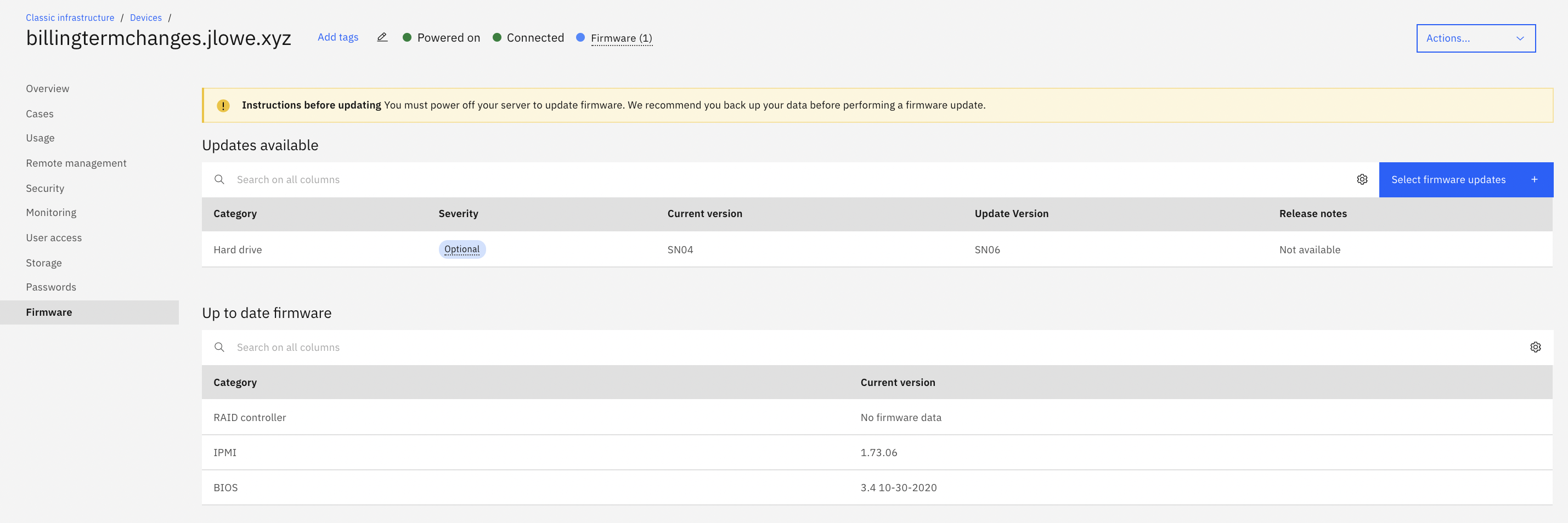
[I believe] IBM should be deploying servers and firmware updating all components before providing them to customers to prevent component failure.
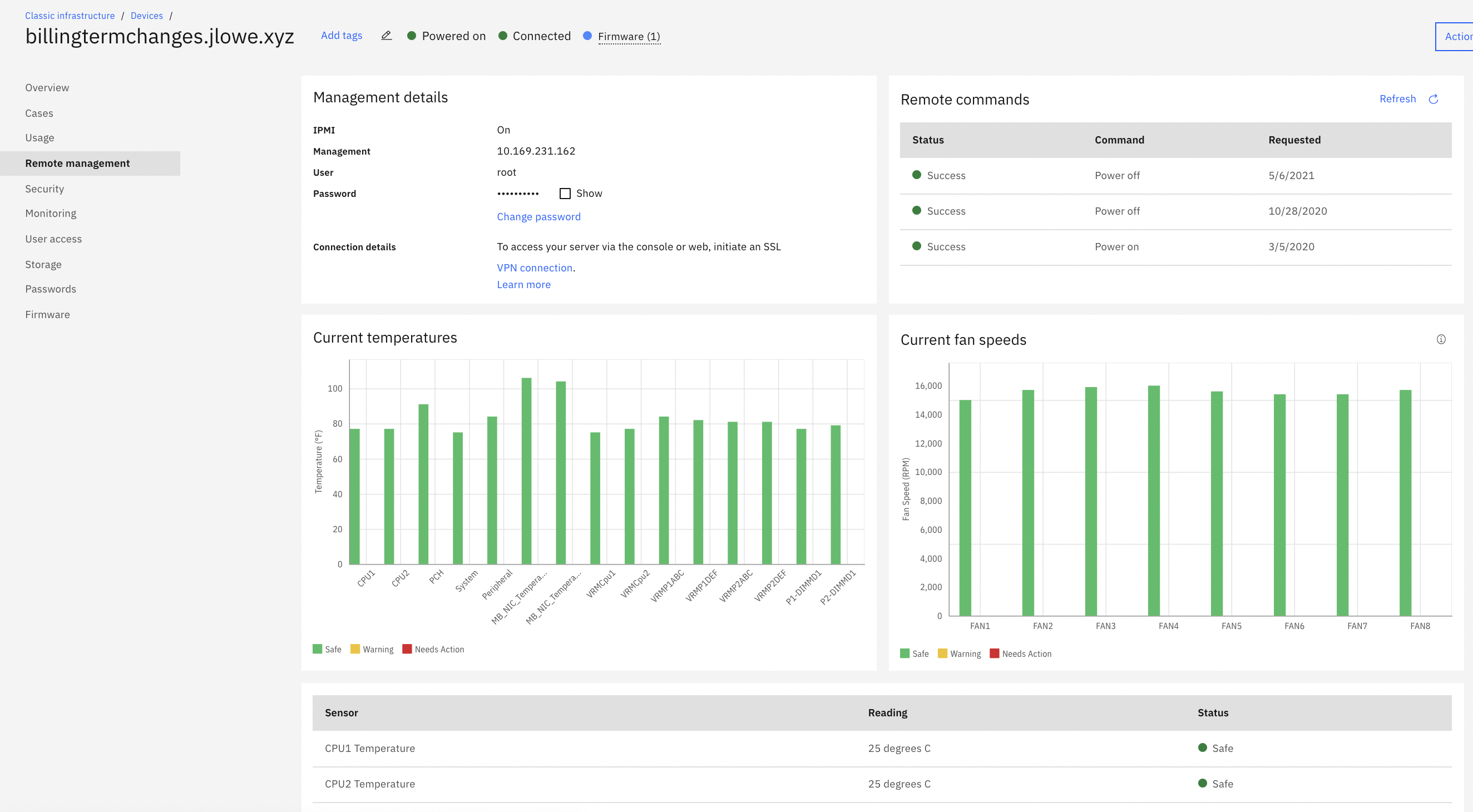
[I feel] IBM needs lots of improvement with their legacy VPN to access IMPI management tools. The level of security of it is unparalleled when it works. Having access to KVM / IPMI is critical for any business, and when their VPN service is not working.
[From my experiences,] IBM deployed faulty hardware, or failed to update firmware per Lenovo notices, only to pass off blame.
[In my opinion,] IBM's General Counsel and Paralegal held our data/company hostage when components failed, [in my experience] to IBM "gross negligence" (in their words), only to release it if we were to limit damages to $1,000.
We are almost entirely satisfied with the service. In order to move off it, we'd have to build for ourselves many of the services that AWS provides and the cost would be prohibitive. Although there are cost savings and security benefits to returning to the colo facility, we could never afford to do it, and we'd hate to give up the innovation and constant cycle of new features that AWS gives us.
Due to cloud computing taking over the market, I have moved to cloud computing. It is so much easier upgrading or downsizing a virtual server on the cloud vs bare metal. I find it way more convenient on cloud computing. The provisioning takes way too long for bare metal servers.
You an start using EC2 instances immediately, is so easy and intuitive to start using them, EC2 has wizard to create the EC2 instances in the web browser or if you are code savvy you can create them with simple line in the CLI or using an SDK. Once you are comfortable using EC2, you can even automate the process.
AWS offers a wide range of powerful services that cater to various business needs which is significant strength. The ability to scale resources on-demand is a major advantage making it suitable for businesses of all sizes. The sheer volume of options and configurations can be overwhelming for new users leading to a steep learning curve. While functional the AWS management console can feel cluttered and less intuitive compared to some competitors which can hinder navigation. Although some documentation lacks clarity and practical examples which can frustrate users trying to implement specific solutions.
AWS does not provide the raw performance that you can get by building your own custom infrastructure. However, it is often the case that the benefits of specialized, high-performance hardware do not necessarily outweigh the significant extra cost and risk. Performance as perceived by the user is very different from raw throughput.
AWS's support is good overall. Not outstanding, but better than average. We have had very little reason to engage with AWS support but in our limited experience, the staff has been knowledgeable, timely and helpful. The only negative is actually initiating a service request can be a bit of a pain.
The customer support of Amazon Web Services are quick in their responses. I appreciate its entire team, which works amazingly, and provides professional support. AWS is a great tool, indeed, to provide customers a suitable way to immediately search for their compatible software's and also to guide them in a good direction. Moreover, this product is a good suggestion for every type of company because of its affordability and ease of use.
Great responsiveness and detailed know-how from the team. Self Explanatory and good resources on the Web to resolve issues. Good communication on issues via email. Good response times on issues which arise and where we have received support from the IBM support team. We believe that IBM is a great Partner to base our IT applications and we believe that a critical infrastructure like a cloud backend will be well served if we continue to base it on IBM.
The implementation of this software took place as we planned. The performance time taken for full functionality was very reliable with positive results. The customer support team was the best team I have ever met in my career experience. They are always with timely responses when reached to offer any help.
Amazon EC2 is super flexible compared to the PaaS offerings like Heroku Platform and Google App Engine since with Amazon EC2, we have access to the terminal. In terms of pricing, it's basically just the same as Google Compute Engine. The deciding factor is Amazon EC2's native integration with other AWS services since they're all in the same cloud platform.
Amazon Web Services fits best for all levels of organisations like startup, mid level or enterprise. The services are easy to use and doesn't require a high level of understanding as you can learn via blogs or youtube videos. AWS is Reasonable in cost as the plan is pay as you use.
The Best part of this IBM Cloud Bare Metal Servers is performance and a very highly usable part is Security stuff. everyone needs to secure their data and work with a smoothly running app. for this reason I select this server rather than another one. I will use it in feature [definitely].
It reduced the need for heavy on-premises instances. Also, it completely eliminates maintenance of the machine. Their SLA criteria are also matching business needs. Overall IAAS is the best option when information is not so crucial to post on the cloud.
It makes both horizontal and vertical scaling really easy. This keeps your infrastructure up and running even while you are increasing the capacity or facing more traffic. This leads to having better customer satisfaction.
If you do not choose your instance type suitable for your business, it may incur lots of extra costs.
Using Amazon Web Services has allowed us to develop and deploy new SAAS solutions quicker than we did when we used traditional web hosting. This has allowed us to grow our service offerings to clients and also add more value to our existing services.
Having AWS deployed has also allowed our development team to focus on delivering high-quality software without worrying about whether our servers will be able to handle the demand. Since AWS allows you to adjust your server needs based on demand, we can easily assign a faster server instance to ease and improve service without the client even knowing what we did.