Amplitude Analytics is an analytics platform for mobile and web. It is designed to help organizations segment users and analyze funnels, retention and revenue. Amplitude Analytics helps product marketers to achieve actionable insights from customer digital journeys and uses behavioral graphs to build customer-focused products. Amplitude also optimizes digital products for increased quality engagements, increased conversion rates, and long-term customer loyalty.
$49
per month (paid annually)
Bound
Score 10.0 out of 10
N/A
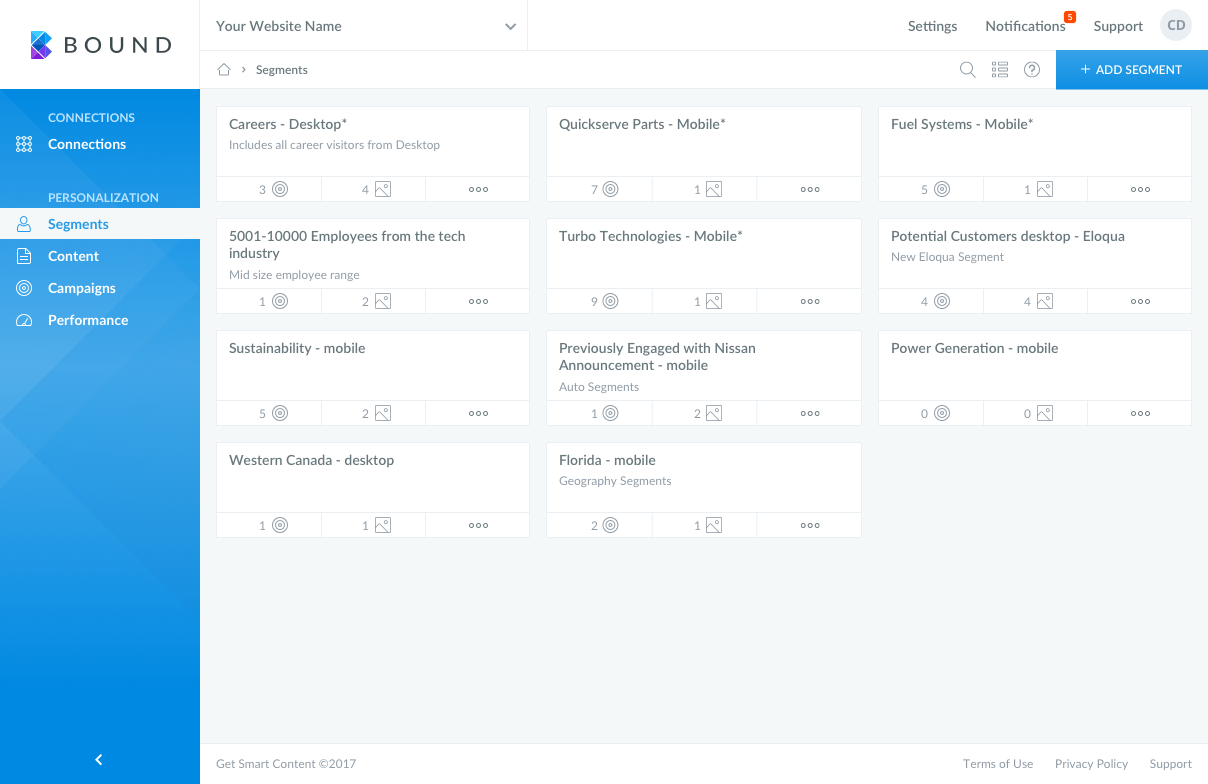
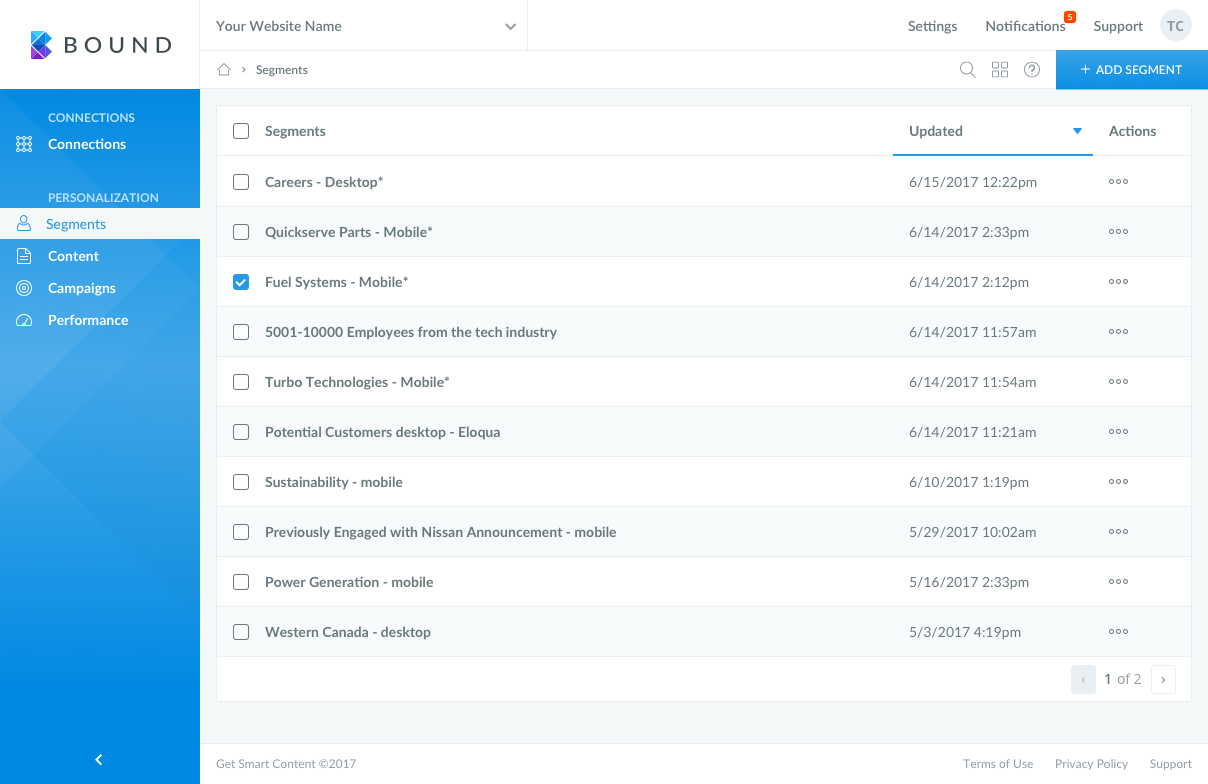
Bound (formerly Get Smart Content) is a website segmentation and targeting platform that enables marketers to read a website visitor's digital body language and serve relevant content based on the person's stage in the buying journey. Using behavioral, demographic, and firmographic data, Bound creates personalized web experiences for both anonymous and known website visitors to increase the effectiveness of marketing efforts and dramatically reduce the buyer's path to conversion. Bound partners…
N/A
Pricing
Amplitude Analytics
Bound
Editions & Modules
Plus
$49
per month (paid annually)
Growth
Contact Sales
Enterprise
Contact Sales
Starter
Free
No answers on this topic
Offerings
Pricing Offerings
Amplitude Analytics
Bound
Free Trial
No
Yes
Free/Freemium Version
Yes
No
Premium Consulting/Integration Services
No
No
Entry-level Setup Fee
No setup fee
Optional
Additional Details
—
—
More Pricing Information
Community Pulse
Amplitude Analytics
Bound
Considered Both Products
Amplitude Analytics
Verified User
Anonymous
Chose Amplitude Analytics
Amplitude Analytics is a robust platform that can take your data reporting beyond what's currently capable in GA. Heap is a great intermediate tool, that takes data analysis a step further and is an excellent product in it's own right. Mixpanel is the most comparable both have …
Mixpanel was the top competitor to Amplitude when my organization was reviewing analytics tools. We went with Amplitude because it was more robust when it came to experimentation features and proactive insights. Amplitude also had an edge in team collaboration and data …
Amplitude provides better capabilities to consume real time event data and provide meaningful insights compared to other products like Mixpanel. It also provides better data governance capabilities to maintain accurate and high data quality.
I think i am not the only one who loves it and want to stay with it. Go see for yourself. This really is a good one and the rest are good but i see that they lack productivity
Amplitude Analytics provides much more granular data than Google Analytics and gives you much more flexibility in how you can segment and splice the data. It also provides the ability to create closed funnels, which I have yet to find out how to do in Google Analytics. …
Amplitude Analytics & Mixpanel are both evenly matched in terms of features and value. Amplitude Analytics scores better in terms of conversion drives and cohort analysis in my opinion. In addition to that, Amplitude Analytics has done a lot more in terms of guiding …
It's the best in class with all the bells and whistles. Other options could suit you just fine at a lower price point, but you need to be sure of what you are not getting and the switching cost associated with when you do need it.
I think Adobe Analytics is ok for web analytics but just not nearly as good as Amplitude for mobile apps. I much prefer the Amplitude user experience. I think that it is much more well-designed for use with mobile apps and easier to set up the dashboards I need in order to …
Amplitude has more advanced reporting whereas Mixpanel is mostly a “do-it-all” analytics tool. Choose Amplitude if you have enterprise-level marketing/users. Choose Mixpanel if you want to send notifications.
I would say it's largely different; Looker was able to be embedded directly into the platform and was valuable for people creating their own dashboards whereas Amplitude is more valuable for understanding usage, performance, and health of the platform itself -- more for …
Amplitude Analytics has a better database than Adobe Analytics. Amplitude Analytics works a lot faster and is much easier to work with than the Splunk tool.
I find Amplitude much easier to use than Mixpanel or GA are. The UX is easy to grasp and as long as you have an intuitive set-up or good documentation on how your events are set up it makes for quick onboarding. Looker does a better job of easily allowing customization with SQL …
Amplitude is easy to implement and simple as compare to Adobe analytics(AEM)although there is a vast difference in terms of UI, functionality and cost. Most of the user specially product team like Amplitude as compare to AEM.
A lot of data can be tracked via manual tracking or linking to an excel sheet, but with such a huge amount of data, it is far easier to have all of it laid out in an easy to read format. The charts and graphs are easy to use and are really pretty user-friendly. The hardest part …
Amplitude Analytics is an easier tool to use. It requires less knowledge of SQL and as long as you have notions of data analysis and retrieving data in general. It is much more user-friendly and allows for easy and quick reporting. It can be used by different teams and …
We've used a ton of analytics tools and Amplitude allows us to do everything we need for free. The other options we tried were either not robust enough to report on user level stats, or cost $. The platforms in this space are super competitively aligned so functionality wise …
It has the inability to export subject line or ISP complaints that require manual pulling by each campaign when needed. Results from variable tests are also reported only as a percentage of chosen KPI (opens, clicks, etc.). There's no ability to see hard numbers from the tests …
Get Smart Content is what we primarily use to serve up segmented content. The only other method or tool we've used to do so while leveraging our Demandbase variables is Optimizely. We selected Get Smart Content because they make the process of segmentation using Demandbase …
Get Smart Content is quite cost effective, simple to use with great support. The support systems and simplicity based on other products used and evaluated is the best in the industry.
I would highly recommend Amplitude to people in the product and business analytics domains who have a need for deep, data-driven insights into customer behavior, accessible in a self-service platform. Amplitude stands out in its comprehensiveness and flexibility; once events are implemented, there are a multitude of options to combine, track, form journeys, and dive deeper into user behavior. Though the barrier for entry is a little bit steep, Amplitude is more friendly to non-technical users than other business insight platforms, without compromising the effectiveness of the analysis tools. Amplitude may not be best suited for web marketing analytics - traffic, page views, etc - since it is more focused on full-platform product analytics.
It provides me great answers about my critical questionnaire, by which I can easily explore behavioral data across any chart, persona, and cohort that are simple and intuitive to understand as they have made easy segmentation.
It offers its services for SQL queries due to which I have reduced the workload and save the time that was spent in finding out the technical aspects.
There are some additions we would like to see, such as a better experience in the Performance section. It'd be great if we could see an overall view of the metrics instead of having to drill down. We do a monthly KPI report which takes me a while to create due to the back and forth nature of comparing metrics within Get Smart Content. I also have to use Google Analytics to help with this.
We had some issues with the tool not updating Eloqua contacts, but that has since been resolved. The process for discovering the cause of the problem was lengthy and frustrating.
It would be great if you could see metrics of an A/B test within the campaign/rule, instead of having to go to the Performance section and find it. A small snapshot of info would be very helpful and it would allow us to compare and update the rule without leaving that page.
Great product Good value for the cost/initiate Support docs and FAQs are great - they limit the necessity of reaching out to in-person support. So when you do call them ... it is for a legit question/issue, no just a "where is it" or a "how to I do xyz123?"
It's a fairly straightforward platform that's beginner friendly. The biggest usability hurdle is most often created by your own team, as it's imperative to know what event sources are being sent to Amplitude and what those event names are. Within being properly onboarded by a team member it can be hard to get started using Amplitude. It takes time to understand what data your company may be sending to the product, the naming conventions of events (especially if there are old or deprecated events names
Alway up and running, or if there is a problem we can get back in the game right away. The reliability was a big selling point for me, and it was true when this company got it. Rollouts can be tough, but this was pretty seamless. Good support throughout the process, good documentation to handle questions/tips
No issues, problems, or negative remarks from us!! We had a plan, vendor support was rock solid, our data folks have experience, OCM supported as needed, and we got the rollout done on time, on budget, and with only minor hiccups. SInce the rollout, most of us have already forgotten the hiccups and generally speak highly of the product
I haven't used the Amplitude support other than their training docs so I can't speak too much to the in-person support but the docs are serviceable. Nothing too crazy but between the user tips, email notifications, and the decent number of docs I was able to get the support I needed to ramp up on the tool.
Virtual Not bad considering the timeframe and turnaround. The biggest benefit was for my end-users to hear a voice (other than mine/ours! LOL) telling them about the new features and capabilities. The in-person training was really good for having an expert that knows the answers and could refer to past experiences, problems, solutions. THey were a great resource to ease the transition ... basically a "you are gonna be okay with this change ... you got this etc.!" kinda vibe
Good enough to get strong baseline. I always make sure our our users go to and/or focus on the vebndor-provided support docs rather than any formal training. Our instructors come and go, but written policy and how-to docs live much longer in a corporate setting. That said, the online training is sufficient. I like that the training curric is stacked and progressive.
My team members all have background as data analysts, so Amp was pretty easy to for them. There was sufficient online training available. We also used the available support documents. The actual rollout went well. We did significant testing beforehand. We did a phased rollout, with partial silent rollout (part of OCM's plan) for the smallest line of business. THe silent one was "silent" b/c it was done without fanfare or public notices ... it was just a "we're doing some things, it wont impact your work or workday
Amplitude Analytics is a robust platform that can take your data reporting beyond what's currently capable in GA. Heap is a great intermediate tool, that takes data analysis a step further and is an excellent product in it's own right. Mixpanel is the most comparable both have very similar reporting/dashboarding functionality. Amplitude can often be preferred by product and data engineering teams for it's ease of setup and impressive analytics displays.
Get Smart Content is what we primarily use to serve up segmented content. The only other method or tool we've used to do so while leveraging our Demandbase variables is Optimizely. We selected Get Smart Content because they make the process of segmentation using Demandbase variables easy
Like all the other grades, it was mostly an easy implementation ... we have experience people, the rollout in general is well planned, and the vendor was very supportive