JMeter, from Apache, is a load and performance testing tool.
$0
BrowserStack
Score 8.5 out of 10
N/A
BrowserStack is a test platform built for developers and QAs to expand test coverage, scale and optimize testing with cross-browser, real device cloud, accessibility, visual testing, test management, and test observability. BrowserStack states it currently powers over a billion tests a year for customers who include Amazon, Paypal, Well Fargo Bank, Nvidia, MongoDB, Pfizer, GE, Discovery, React JS, Apache, JQuery and several others rely on BrowserStack to test their web and mobile apps.
$0
per month Unlimited users and 5000 free screenshots
Selenium
Score 8.3 out of 10
N/A
Selenium is open source software for browser automation, primarily used for functional, load, or performance testing of applications.
N/A
Pricing
Apache JMeter
BrowserStack
Selenium
Editions & Modules
No answers on this topic
Percy - Free
$0
per month Unlimited users and 5000 free screenshots
App Percy - Free
$0
per month 5000 free screenshots and 100 minutes of infrastructure
Although Selenium is designed for automating real-world tests in browser and JMeter is designed to perform load testing, in some cases, JMeter based tests may be enough to verify application functionality. These products don't directly compete with each other and it should be …
We only have compared it with LoadNinja and in many aspects Apache JMeter is a better option. The LoadNinja is the enterprise tool so it does not offer the same flexibility and integration with other systems. The community support is great with Jmeter compared to LoadNinja.
It has very powerful capabilities and for free!!! It's ease of use and installation and easy to get started are highlights. A lot of community support and youtube videos from JMeter developers to help you understand various functionalities within JMeter to support you. You can …
LoadRunner and Silk Test were the tools I used in the past to compare with JMeter. I thought LoadRunner had a more commercial appearance and it comes with HP support from your service provider. It also comes at a steep price. JMeter and LoadRunner have a similar learning curve …
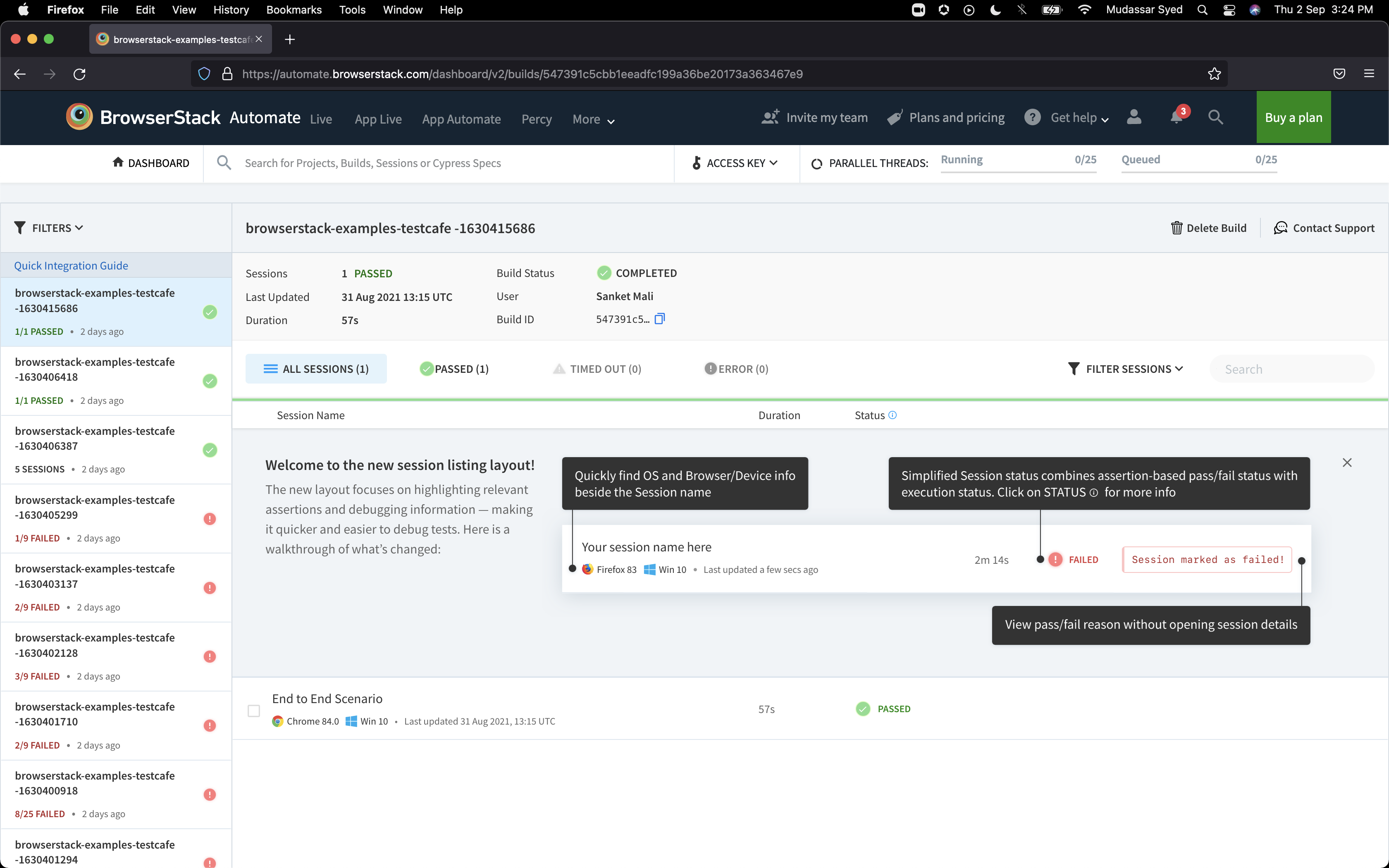
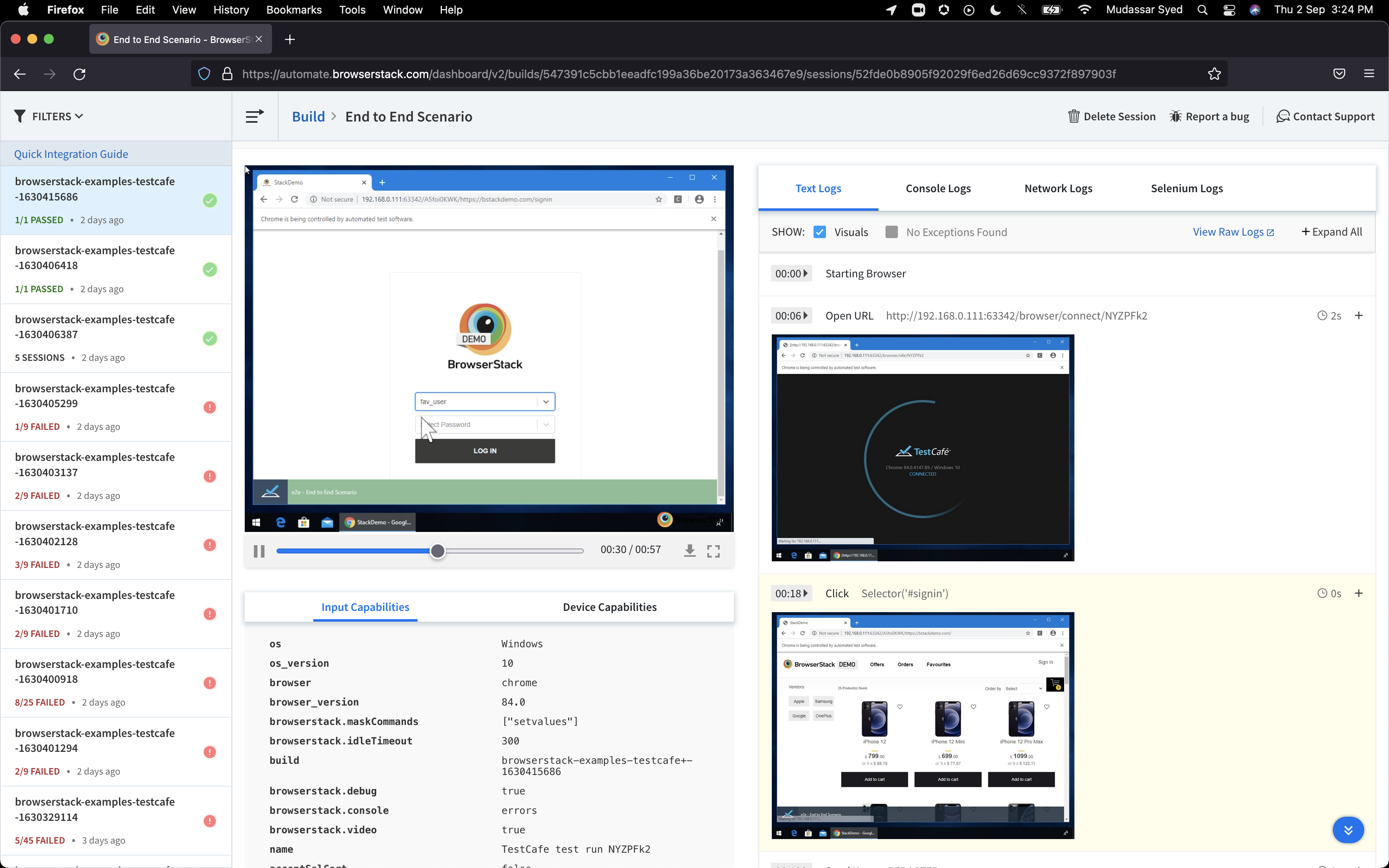
When we are comparing BrowserStack have faster session start times compared to Sauce Labs. And also simpler, user friendly setup and UI. This help to our team members to navigate and use. Browser stacks have reliable parallel execution with stable performance. We can get better …
We chose BrowserStack as our solution as it provides a comprehensive, all-in-one package. This integrated approach ensures that all your needs are met in one place, eliminating the need for multiple tools or services. It streamlines processes, improves efficiency, and …
It is one of the product which each software organisation should include in their end to end product development journey. I have explored other products in this category and I can proudly say that BrowserStack is a clear winner in terms of its Features, Performance and Product …
Price looks little high for browserstack , they need to introduce more flexible plans to stack their customers, support team must be more quick, sometimes they take more than 2-3 days to resolve the issue. other tools are available in less cost with same features. so later on …
I have used Saucelabs with Jenkins and would say both of them are really comprehensive. Yet I suggested BrowserStack to our customers and team since I have used it recently and felt it easy to use and implement Tests on it. BrowserStack support team is another reason behind why …
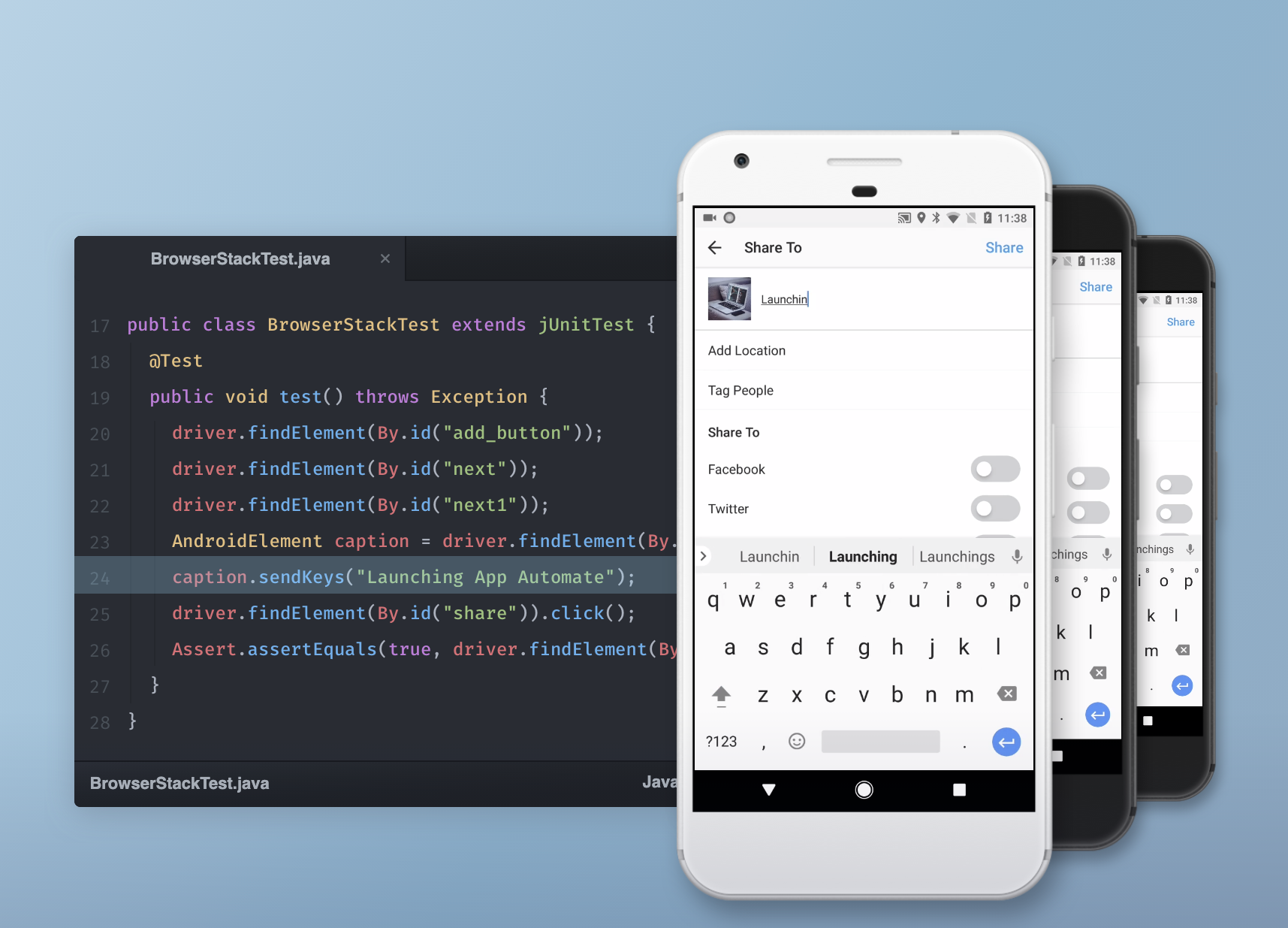
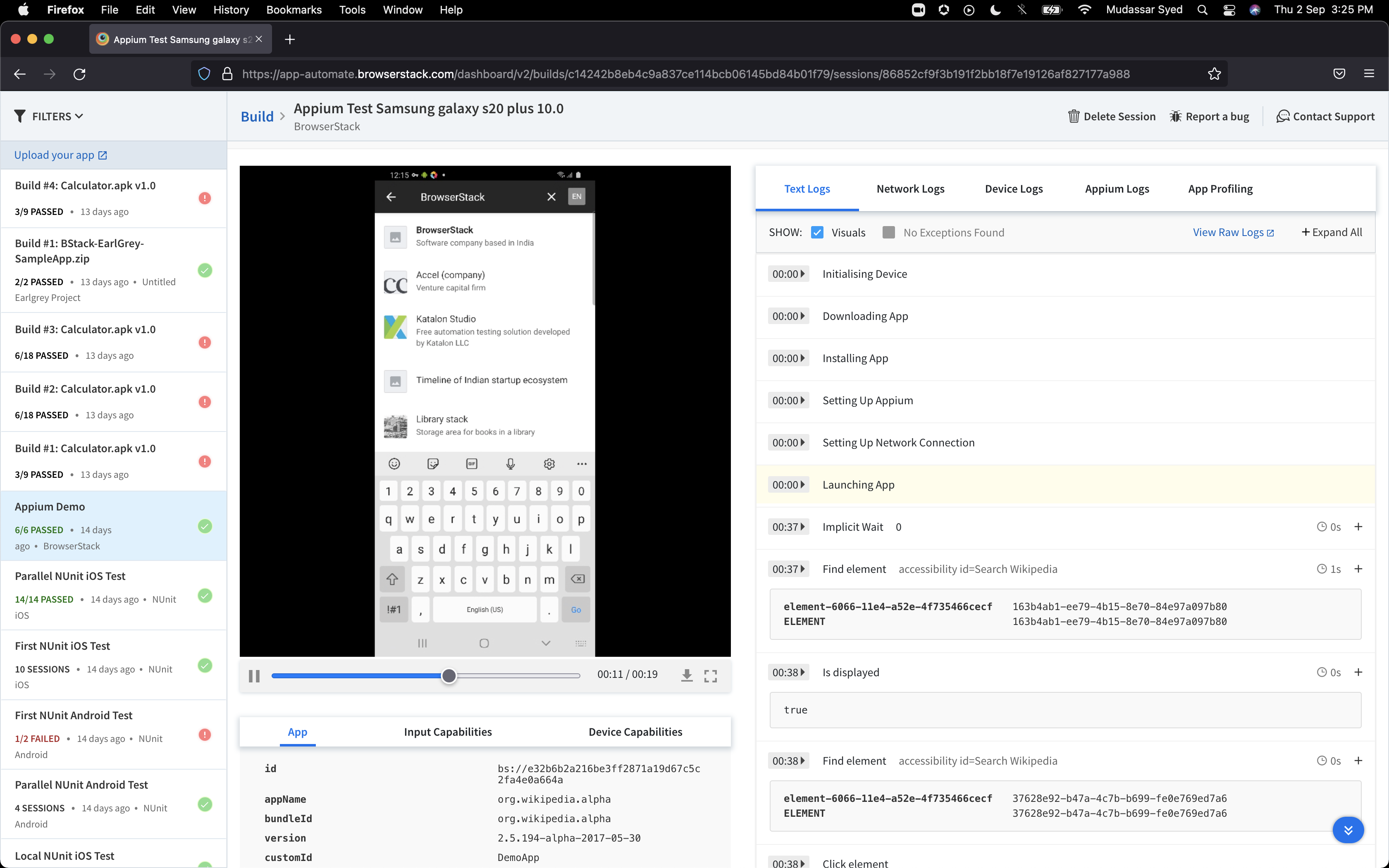
I'm using the app automate feature for Automation of mobile application. So, we are add Jenkins for CI process to use on BrowserStack. For mobile application testing, We are using Appium with java client in our framework and also integrate with BrowserStack capabilities.
Easy to start using the first tier plan and from there you could easily upgrade based on your team's need and if you need to extend to other users. A good and wide selection of server locations helps us oversee how an actual user experience might be. His credentials in terms …
Before using BrowserStack, we had limited access to virtual machines for testing. Booting up each of these devices was time consuming and difficult to manage when multiple users needed to test. BrowserStack opened up our testing to more devices, being accessible by anyone who …
Open sourced and free: Multiple language support: The community: Wide plugin support: Easy installation and intuitive usage: Cross-browser support: Remote testing: Multiple testing and parallel testing execution:
QTP is a good tool to be used by beginner automation engineers with no prior experience in test automation. However unlike selenium, QTP is limited by its architecture and VB Script. Selenium allows for being integrated in any framework using any of the most popular languages …
I have the most experience with selenium. I have used form filler, which is a Google add-on that allows you to create a form quickly. This is a little easier to use and has less setup time than selenium IDE, however, it is less powerful. I picked selenium because it is an …
All alternatives are not listed here (like QTP), but Selenium beats all of them because it's free, there are tons of guides and tutorials on the internet, and there are lots of extra libraries that use Selenium.
JMeter is well suited for Java applications where the user can script the scenario once and make changes to accommodate for as many numbers of users for load test execution. The image and selection of any files or exporting files scenario is handled well.
It is less appropriate to test Ajax applications where it is required to script click per use.
If you need immediate testing (for example, from Azure pipelines agents), use BrowserStack instead of LambdaTest (which makes you wait in a "pool" until the device/platform combo you are querying is accessible). If you don't need your tests to be immediate and prefer a wider range of devices, then use Lambdatest.
When you have to test the UI and how it behaves when certain actions are performed, you need something that can automate the browsers. This is where Selenium comes to the rescue. If you have to test APIs and not the frontend (UI), I would recommend going with other libraries that support HTTP Requests. Selenium is good only when you have no choice but to run the steps on a browser.
Easy of use - in generate load like HTTP requests, and processing/analyzing the responses. No coding is necessary at the basic level, just need to understand load testing and the infrastructure being tested.
Automatic management of things like cookies to help with session state support - so you don't specifically have to worry about it or handle it
Lots of testing/configuration options to suit your needs in making the right load generation (sampling requests), and analyzing the results, including any pre and post processing of the results first. Things like the Beanshell/BSF pre/post processors, response assertion, regular expression extractor, XPath extractor, CSV data set config
There is a JMeter cloud service called BlazeMeter that I think would be useful for those that need to scale up high load without provisioning their own systems. I've not personally tried it though, but I recently attended a meetup presentation that highlighted nice useful features that BlazeMeter provides. One should evaluate the service if they are considering JMeter and need to expand beyond existing hardware resources.
Jmeter requires many tweaks with respect to its configuration file and thread properties. users need to edit theses files themselves. There could be some interface where we can edit this fields.
Jmeter cannot handle more threads and hangs up when we increase the number of threads. This causes lot of inconvenience. In these situations, user can be notified that such change would be lead to slow performance so that user can do as required. The same appears when we try to view huge files on graph listener.
Jmeter should optimize the read and write access to output csv since it acts as overhead to the I/O performance. This affects our test results for the application which we are testing.
Selenium is pretty user-friendly but sometimes tests tend to flake out. I'd say roughly one out of twenty tests yields a false positive.
Selenium software cannot read images. This is a minor negative because a free plug-in is available from alternate sources.
Slowness may be a minor factor with Selenium, though this is an issue with basically any testing software since waiting on a site to execute JavaScript requires the browser to wait for a particular action.
Price, Wiki and user sharing. Having access to the information provided by the developers and other open source providers is key for me. The ability to share information and get answers directly is very important to success in software testing. And the price of this product currently is amazing. Too many companies charge way too much money for products that are far behind in their value and pertinence
It's almost the 3rd year for us and it's renewal time for us. So yes, we are already discussing how many licenses we need to increase as users are increasing internally. So it's 100% sure that we are already planning renewal this year as well BrowserStack with live and app automate.
We love this product mainly because of its high customization abilities and the ease of use. Moreover, its free and can be learned easily through online communities and videos. The tests are more consistent and reliable as compared to Manual tests. It has enabled us to test a large number of features all in one go, which would have impossible through manual tests. The reports generated at the end of the tests are really helpful for the QA and the development teams to get a fair view of the application.
The purpose related to performance and load testing through Apache JMeter works fine but the usability of the tool should be improved quite a lot. If someone starts with the Jmeter fresh without prior experience, they need to put more efforts in understanding the tool. The UI is not that great which is the main reason not to give high rating on usability.
So many options that it can be a little overwhelming, but the core functions are easy to find and use and it's usually not too hard to figure things out for the more complex tasks. Very easy to boot up a device and a specific browser from the dashboard to begin a manual website test.
For those who are unfamiliar with coding, there is a bit of a learning curve. There is plenty of helpful documentation and resources but it can take a little time to get the software up and running. Once you get the hang of how Selenium works, and what it can do, you realize how many things you can use it for, and how many processes you can automate.
I rated BrowserStack's availability a 10 because it is consistently reliable, with minimal to no downtime or unplanned outages. The platform is accessible whenever needed, ensuring uninterrupted testing. Its robust infrastructure and proactive monitoring ensure a seamless experience, allowing us to meet deadlines without delays caused by availability issues and all
The tests are fast considering the fact that they're Appium tests. I've seen tests reliably pass or fail when they're supposed to, with next to zero issues on the BrowserStack side of things. Tests launch only seconds after I kick off them off from my CLI.
I have been using JMeter for the last year. By using this tool, you can make sure the system will work under varied loads. It helps us to simulate real time scenarios by creating required virtual users and make sure the application will work under load. Perform load, stress, and stability testing using JMeter.
I've not had much direct interaction with the BrowserStack support team. The help and community are great and we've not run into any issue that has really required us to reach out. I guess having a stable and easy to use system means you may never need to contact support.
The Selenium app has a pretty fat community of users. For the problems we are experiencing, we are primarily receiving support from these communities. In addition, there is widespread service support. Instant support is given to the problems we experience when we need Online support. We and our team are happy to provide this support, especially before important deployment processes
Yes, it was online training on meet, and trainer looks like skilled and technical strong, he has covered end to end all the features and he has answers all the queries. because of this trainings we are able to implement it by our own in the organization, thank you for support and training.
It was a quick training from the support of browserstack, it was nice and easy to understand, thanks again for the support given by the team. and regularly I used to receive mails for training from support for any new feature they launch, I was able to spread same training to all my team and dev.
I rated the implementation satisfaction an 8 because while it went smoothly overall, there were some challenges during the initial learning phase and integration with existing tools. Key insights include the importance of providing sufficient training upfront and ensuring seamless integration with other systems to minimize disruptions and improve adoption speed.
We did everything we needed to use it. Now we can execute our tests on different operational systems and browsers running few tests simultaneously. We also implemented Appium framework to execute our tests on mobile devices, such as iPhones, iPads, Android phones and tablets. We use SauceLabs for our test execution and Jenkins for continuous integration.
I have used LoadRunner and Silkperformer, and so far Jmeter turns out be the easiest to use of all these. While each of them have their own ROI, Jmeter can be picked by anyone in hours and start testing within a day. While with other tools, we need to get license, install them (takes a while) and setup tests and firewalls, etc.
BrowserStack products has been found better for low code automations and visual regression techniques. We have been struggling to maintain the API endpoint sanity tests and writing a lot of code for them while releasing the builds, while we chose BrowserStack accessibility solutions, we found it a way easier than we thought and worked it up.
At the time of adoption, there were not many other alternatives that were even close to being competitive when it comes to browser testing. As far as I know now to this day, there is still little competition to Selenium for what it does. Any other browser-based testing still utilises Selenium to interact with the browser.
I may not be the best person to answer this as I am only using it for 1 department and at 1 site but will still try my best As far as Scalability for Devices for Mobile Automation is concerned, it gets a Solid 10, as the users can run cases on upto 10 device parallel and also have the best choices of devices to choose