Chose Basecamp
We have Teams, at our organization. But, we cannot add people who do not have our email address extension. We started to look into Teams to do the same thing as Basecamp, but it was too complicated and difficult to set up.

| Product | Rating | Most Used By | Product Summary | Starting Price |
|---|---|---|---|---|
 Basecamp | N/A | Basecamp is a web-based project-management tool. Basecamp offers features standard to project management platforms, as well as mobile accessibility, unlimited users, and 3rd party integrations. Basecamp is priced by space requirements and concurrent projects. | $15 per month per user | |
 monday.com | Mid-Size Companies (51-1,000 employees) | monday.com Work OS is an open platform designed so that anyone can create the tools they need to run all aspects of their work. It includes ready-made templates or the ability to customize any work solution ranging from sales pipelines to marketing campaigns, CRMs, and project tracking. | $12 per month per user | |
 Orbit Online | N/A | N/A | N/A |
| Basecamp | monday.com | Orbit Online | ||||||||||||||||||||||
|---|---|---|---|---|---|---|---|---|---|---|---|---|---|---|---|---|---|---|---|---|---|---|---|---|
| Editions & Modules |
|
| No answers on this topic | |||||||||||||||||||||
| Offerings |
| |||||||||||||||||||||||
| Entry-level Setup Fee | No setup fee | Optional | No setup fee | |||||||||||||||||||||
| Additional Details | — | An 18% discount is available for annual billing. | — | |||||||||||||||||||||
| More Pricing Information | ||||||||||||||||||||||||
| Basecamp | monday.com | Orbit Online | |
|---|---|---|---|
| Considered Multiple Products |  Basecamp  James Roy Office Manager Chose Basecamp Each platform has pros and cons. We ultimately switched away from Kantata (formerly Mavenlink) because our clients were more familiar with Basecamp.  Muneeb Bhat Recruitment Professional Chose Basecamp Although I favored the alternative products' price models, Basecamp is unrivaled in terms of user-friendliness.  Andrea Hester Director Of Operations Chose Basecamp Basecamp is the best application we've found for our team to interface with external clients. It makes project management simple, and allows our clients visibility into their projects, which in turn builds trust, fosters open communication, and improves customer satisfaction. …  Tapesh bhargava Alphonic Network Solutions Chose Basecamp We tried other software while selecting paid plans of Basecamp; its customer service is fast and very prompt in comparison to others. Interface and UI & UX is also very good, which is very good for team members. The team loves this product and they are very happy with it. We …  Robert Ross Director of Corporate Infrastructure Chose Basecamp [Basecamp is] simpler to use less ramp-up. It's cheaper per user and allows for a better mobile experience.  Blake Baron Senior Financial Analyst - Cost Analytics Chose Basecamp Pretty good, but [Basecamp] has its drawbacks. Honestly I find the interface non-intuitive and sometimes have trouble figuring out how to change the status of a task. Perhaps it has something to do with the way it was originally set up by the admin, but I'm not sure. I liked … |  monday.com  Micah King Sr. IT Security Administrator Chose monday.com monday.com feels like it offers a lower barrier to entry as well as more versatility, extensibility without becoming too complex. Atlassian is geared more for larger companies requiring a greater degree of granular controls. Both platforms have a number of integrations (though, …  Daniel Cascarina PMO Specialist Chose monday.com Cost is a big factor as the alternatives stacked up poorly in user costs and built in features. Also, the business was already using a different facet of monday.com so it was a quick setup and we already had experience and people were Jo knew the platform. Less complex and also …  Gina Jehn Director of Human Resources Chose monday.com Features and automation blow this product out of the water!  Chance Johnson Production Supervisor Chose monday.com We have only ever tried one other software that was designed to work similarly to monday.com. I will not name the company but our experience with it was just short of harrowing. The company was friendly and supportive but the product they designed was not user friendly. It did …  Aviv Degani Cloud Solutions Architecture Manager Chose monday.com monday.com is the sweet spot of rich feature set and simplicity  Giovanni Jurado Business Analyst Team Lead Chose monday.com monday.com offer much of the standard tools and seems to be ever evolving. They seem to take feedback and constantly upgrade the tools. If all the tools are there, the differentiating factor might be the cost, any integrations you may need, and the visual "chemistry". To me, …  Brandon Stokes Customer Operations Enablement Manager Chose monday.com When I arrived at my org, I was initially disappointed to hear that we used something other than Asana for project management. Fast forward just a few months, and I became a complete monday.com convert. While its organization is similar to Asana's, it's user interface, … | Orbit Online No answer on this topic |
| Basecamp | monday.com | Orbit Online | |||||||||||||||||||||||||||||||||||||||||||||||||||||||||||
|---|---|---|---|---|---|---|---|---|---|---|---|---|---|---|---|---|---|---|---|---|---|---|---|---|---|---|---|---|---|---|---|---|---|---|---|---|---|---|---|---|---|---|---|---|---|---|---|---|---|---|---|---|---|---|---|---|---|---|---|---|---|
| Project Management |
| ||||||||||||||||||||||||||||||||||||||||||||||||||||||||||||
| Professional Services Automation |
|
| Basecamp | monday.com | Orbit Online | |
|---|---|---|---|
| Small Businesses |  Stackby Score 8.9 out of 10 | Stackby Score 8.9 out of 10 | Stackby Score 8.9 out of 10 |
| Medium-sized Companies |  InEight Score 8.2 out of 10 | InEight Score 8.2 out of 10 | InEight Score 8.2 out of 10 |
| Enterprises | InEight Score 8.2 out of 10 | InEight Score 8.2 out of 10 | InEight Score 8.2 out of 10 |
| All Alternatives | View all alternatives | View all alternatives | View all alternatives |
| Basecamp | monday.com | Orbit Online | |
|---|---|---|---|
| Likelihood to Recommend | 9.9 (0 ratings) | 8.6 (0 ratings) | - (0 ratings) |
| Likelihood to Renew | 10.0 (0 ratings) | 9.1 (0 ratings) | - (0 ratings) |
| Usability | 9.3 (0 ratings) | 8.6 (0 ratings) | - (0 ratings) |
| Availability | 10.0 (0 ratings) | 8.2 (0 ratings) | - (0 ratings) |
| Performance | 7.3 (0 ratings) | 8.6 (0 ratings) | - (0 ratings) |
| Support Rating | 8.8 (0 ratings) | 8.1 (0 ratings) | - (0 ratings) |
| In-Person Training | - (0 ratings) | 9.1 (0 ratings) | - (0 ratings) |
| Online Training | 5.0 (0 ratings) | 9.1 (0 ratings) | - (0 ratings) |
| Implementation Rating | 7.7 (0 ratings) | 9.1 (0 ratings) | - (0 ratings) |
| Configurability | 8.0 (0 ratings) | 8.2 (0 ratings) | - (0 ratings) |
| Ease of integration | - (0 ratings) | 9.0 (0 ratings) | - (0 ratings) |
| Product Scalability | - (0 ratings) | 6.9 (0 ratings) | - (0 ratings) |
| Vendor post-sale | - (0 ratings) | 9.0 (0 ratings) | - (0 ratings) |
| Vendor pre-sale | - (0 ratings) | 9.0 (0 ratings) | - (0 ratings) |
| Basecamp | monday.com | Orbit Online | |
|---|---|---|---|
| Likelihood to Recommend |
Robert Ross Director of Corporate Infrastructure |
| No answers on this topic |
| Pros |
|
| No answers on this topic |
| Cons |
 Heather Miller Senior Graphic Designer |
 Joshua Rodriguez Digital Strategy Manager | No answers on this topic |
| Likelihood to Renew |
|
| No answers on this topic |
| Usability |
|
| No answers on this topic |
| Reliability and Availability |
 Lisa Keyser Developer & Designer |
| No answers on this topic |
| Performance | No answers on this topic |
| No answers on this topic |
| Support Rating |
|
| No answers on this topic |
| Online Training | No answers on this topic |
| No answers on this topic |
| Implementation Rating |
 Jenni Waggoner Marketing Content Manager | Social Media | Newsletter | Blog | White Papers |
 Joseph Madere Learning Management System Analyst -- CornerstoneOnDemand | No answers on this topic |
| Alternatives Considered |
Andrea Hester Director Of Operations |
Micah King Sr. IT Security Administrator | No answers on this topic |
| Scalability | No answers on this topic |
| No answers on this topic |
| Return on Investment |
James Roy Office Manager |
Brandon Stokes Customer Operations Enablement Manager | No answers on this topic |
| ScreenShots | monday.com Screenshots 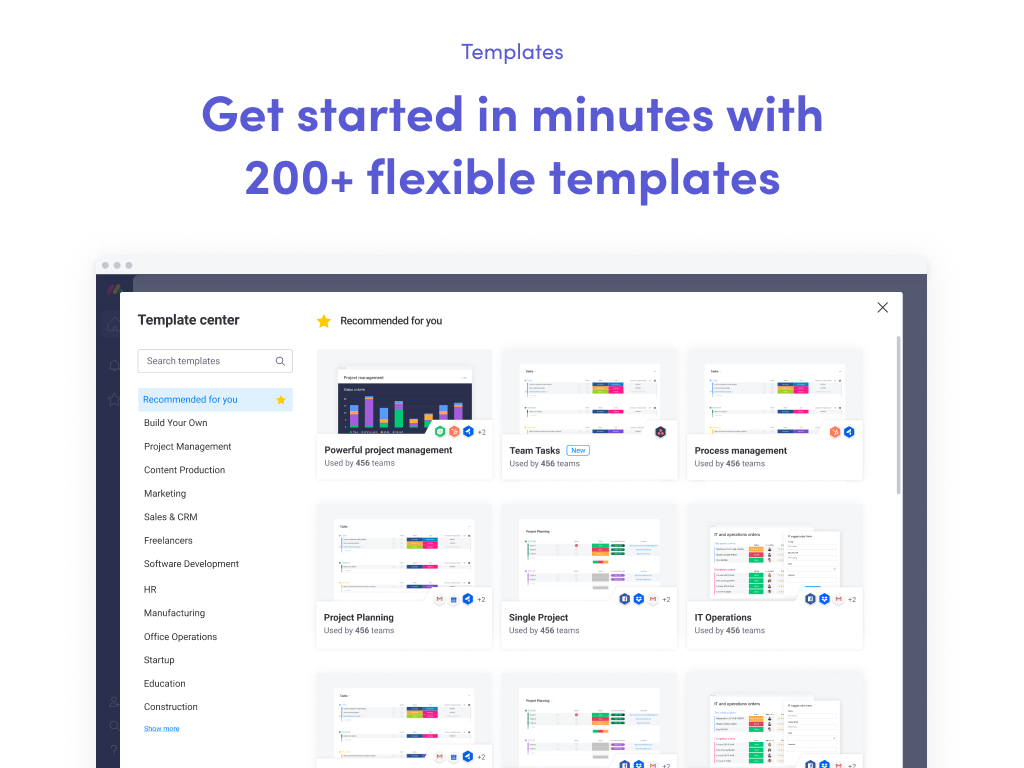     |
