
Chose BigCommerce
BigCommerce vs. Joomla! vs. OpenCart
BigCommerce vs. Joomla! vs. OpenCart
| Product | Rating | Most Used By | Product Summary | Starting Price |
|---|---|---|---|---|
 BigCommerce | Small Businesses (1-50 employees) | BigCommerce is a SaaS platform that allows SMBs to develop eCommerce sites. Features include the capabilities to design the storefront, configure products, manage payments, generate traffic, and optimize conversion. | $39 per month | |
 Joomla | N/A | Joomla! is a free and open source content management system used to publish web content. Included features are page caching, RSS feeds, printable versions of pages, news flashes, blogs, polls, a search function, and support for language internationalization. | N/A | |
 OpenCart | N/A | OpenCart is an open-source eCommerce platform. It features support for unlimited categories and products, multiple currencies and languages, shipping, payments, and mobile access. | $0 |
| BigCommerce | Joomla! | OpenCart | ||||||||||||||||||||||
|---|---|---|---|---|---|---|---|---|---|---|---|---|---|---|---|---|---|---|---|---|---|---|---|---|
| Editions & Modules |
| No answers on this topic | No answers on this topic | |||||||||||||||||||||
| Offerings |
| |||||||||||||||||||||||
| Entry-level Setup Fee | No setup fee | No setup fee | No setup fee | |||||||||||||||||||||
| Additional Details | A discount is offered for annual billing. | — | — | |||||||||||||||||||||
| More Pricing Information | ||||||||||||||||||||||||
| BigCommerce | Joomla! | OpenCart | |
|---|---|---|---|
| Considered Multiple Products |  BigCommerce  JoAnna Cohen Project Design Engineer Chose BigCommerce Most reliable and robust e-commerce solution for the price. Easy to learn and to continue to use. Great user and customer management. Product capabilities are way better than the competition. It doesn't take a long time to onboard an entire business' inventory and get to … Chose BigCommerce BigCommerce gave us room to grow. It seemed to offer options further than we would have had [an] interest in going. The list/choices of apps were great. I do not know if the individuals who wrote the 3rd party apps were vetted, it really felt like they were. They know …  Vinny Hebert Owner/Web Developer Chose BigCommerce Being a Joomla developer my experience with e-commerce has been with those extensions built for this platform. The one I've dealt most with was Hikashop and while it is an excellent program, very powerful and in some ways superior to Bigcommerce, I find the later easier to use …  Danny Leary Front End Web Developer Chose BigCommerce The other systems can be awesome depending on the needs and situation. However, with ecommerce you don't want to be wasting time making sure everything works. You want to run the business not worry about functionality and sluggishness over time or stability of the platform, … | Joomla  Ricardo Melo Network Analyst 1 Chose Joomla! Joomla has a more general and wide use, more documentation, forums and community that develops many templates and extensions for almost all purposes. It has a great web-based administration environment and, with the correct permissions setting, it can be prepared for a regular …  Jen Garfinkel-Canseco Owner - Web Designer/Developer/Marketer Chose Joomla! For complex websites, with unique customizations, Joomla is my go to. If my clients want a user-friendly administration and plan on making changes to their website content themselves, I choose WordPress. Joomla's templating system is quicker and simpler to create completely …  Alex Jewell Web Developer Chose Joomla! Drupal, compared to Joomla!, is even more customizable and flexible, and is even more modular. Joomla! reels the developer in a bit more and offers a less complicated way to get from start to finish. The outcome, of course, is that Drupal has a steeper learning curve and can … | OpenCart |

| BigCommerce | Joomla! | OpenCart | |||||||||||||||||||||||||||||||||||||||
|---|---|---|---|---|---|---|---|---|---|---|---|---|---|---|---|---|---|---|---|---|---|---|---|---|---|---|---|---|---|---|---|---|---|---|---|---|---|---|---|---|---|
| Online Storefront |
| ||||||||||||||||||||||||||||||||||||||||
| Online Shopping Cart |
| ||||||||||||||||||||||||||||||||||||||||
| Online Payment System |
| ||||||||||||||||||||||||||||||||||||||||
| eCommerce Marketing |
| ||||||||||||||||||||||||||||||||||||||||
| eCommerce Business Management |
| ||||||||||||||||||||||||||||||||||||||||
| Security |
| ||||||||||||||||||||||||||||||||||||||||
| Platform & Infrastructure |
| ||||||||||||||||||||||||||||||||||||||||
| Web Content Creation |
| ||||||||||||||||||||||||||||||||||||||||
| Web Content Management |
|
| BigCommerce | Joomla! | OpenCart | |
|---|---|---|---|
| Small Businesses |  Ecwid by Lightspeed Score 10.0 out of 10 |  ManageWP Score 10.0 out of 10 | Ecwid by Lightspeed Score 10.0 out of 10 |
| Medium-sized Companies |  Shopify Plus Score 8.9 out of 10 |  RWS Tridion Sites Score 9.0 out of 10 | Shopify Plus Score 8.9 out of 10 |
| Enterprises |  IBM Digital Commerce Score 9.0 out of 10 | RWS Tridion Sites Score 9.0 out of 10 | IBM Digital Commerce Score 9.0 out of 10 |
| All Alternatives | View all alternatives | View all alternatives | View all alternatives |
| BigCommerce | Joomla! | OpenCart | |
|---|---|---|---|
| Likelihood to Recommend | 8.2 (458 ratings) | 8.2 (75 ratings) | 9.9 (8 ratings) |
| Likelihood to Renew | 10.0 (54 ratings) | 10.0 (28 ratings) | - (0 ratings) |
| Usability | 10.0 (28 ratings) | 8.1 (14 ratings) | - (0 ratings) |
| Availability | 8.2 (6 ratings) | 9.9 (2 ratings) | - (0 ratings) |
| Performance | 8.2 (6 ratings) | 7.8 (2 ratings) | - (0 ratings) |
| Support Rating | 10.0 (28 ratings) | 10.0 (4 ratings) | - (0 ratings) |
| Online Training | 8.2 (3 ratings) | 8.0 (2 ratings) | - (0 ratings) |
| Implementation Rating | 9.2 (15 ratings) | 8.7 (3 ratings) | - (0 ratings) |
| Configurability | 8.2 (4 ratings) | - (0 ratings) | - (0 ratings) |
| Ease of integration | 8.2 (4 ratings) | - (0 ratings) | - (0 ratings) |
| Product Scalability | 7.9 (362 ratings) | 9.9 (3 ratings) | - (0 ratings) |
| Vendor post-sale | 8.2 (3 ratings) | - (0 ratings) | - (0 ratings) |
| Vendor pre-sale | 9.1 (3 ratings) | - (0 ratings) | - (0 ratings) |
| BigCommerce | Joomla! | OpenCart | |
|---|---|---|---|
| Likelihood to Recommend | Commerce.com
 Bart Krause Head of Digital Strategy Web | The Joomla Project
| OpenCart
 Lichaa TRAD Managing Director |
| Pros | Commerce.com
| The Joomla Project
| OpenCart
 .Kim Murphy Owner |
| Cons | Commerce.com
| The Joomla Project
 Lisa Keyser Owner | Principal | OpenCart
|
| Likelihood to Renew | Commerce.com
| The Joomla Project
 Leontine Vandermeer Owner | OpenCart No answers on this topic |
| Usability | Commerce.com
| The Joomla Project
 Rita Lewis Freelance Web Designer and Content Strategist | OpenCart No answers on this topic |
| Reliability and Availability | Commerce.com
 Ken Falta Owner/Op | The Joomla Project No answers on this topic | OpenCart No answers on this topic |
| Performance | Commerce.com
Ken Falta Owner/Op | The Joomla Project
 James Fauria Webmaster \ Web Developer for the City of Pomona | OpenCart No answers on this topic |
| Support Rating | Commerce.com
| The Joomla Project
Jen Garfinkel-Canseco Owner - Web Designer/Developer/Marketer | OpenCart No answers on this topic |
| Online Training | Commerce.com
Vinny Hebert Owner/Web Developer | The Joomla Project
 Johann Joubert Owner | OpenCart No answers on this topic |
| Implementation Rating | Commerce.com
 Francis Vassallo Creative Marketing Manager | The Joomla Project
James Fauria Webmaster \ Web Developer for the City of Pomona | OpenCart No answers on this topic |
| Alternatives Considered | Commerce.com
| The Joomla Project
 Fernanda Ministerio Especialista de Desenvolvimento Industrial | OpenCart
Jen Garfinkel-Canseco Owner - Web Designer/Developer/Marketer |
| Scalability | Commerce.com
| The Joomla Project No answers on this topic | OpenCart No answers on this topic |
| Return on Investment | Commerce.com
 Paul Francis Jones eCommerce, Web and Graphic Design for Small to Medium Sized Businesses | The Joomla Project
 Miles Szkoda Web Content Manager | OpenCart
|
| ScreenShots | BigCommerce Screenshots  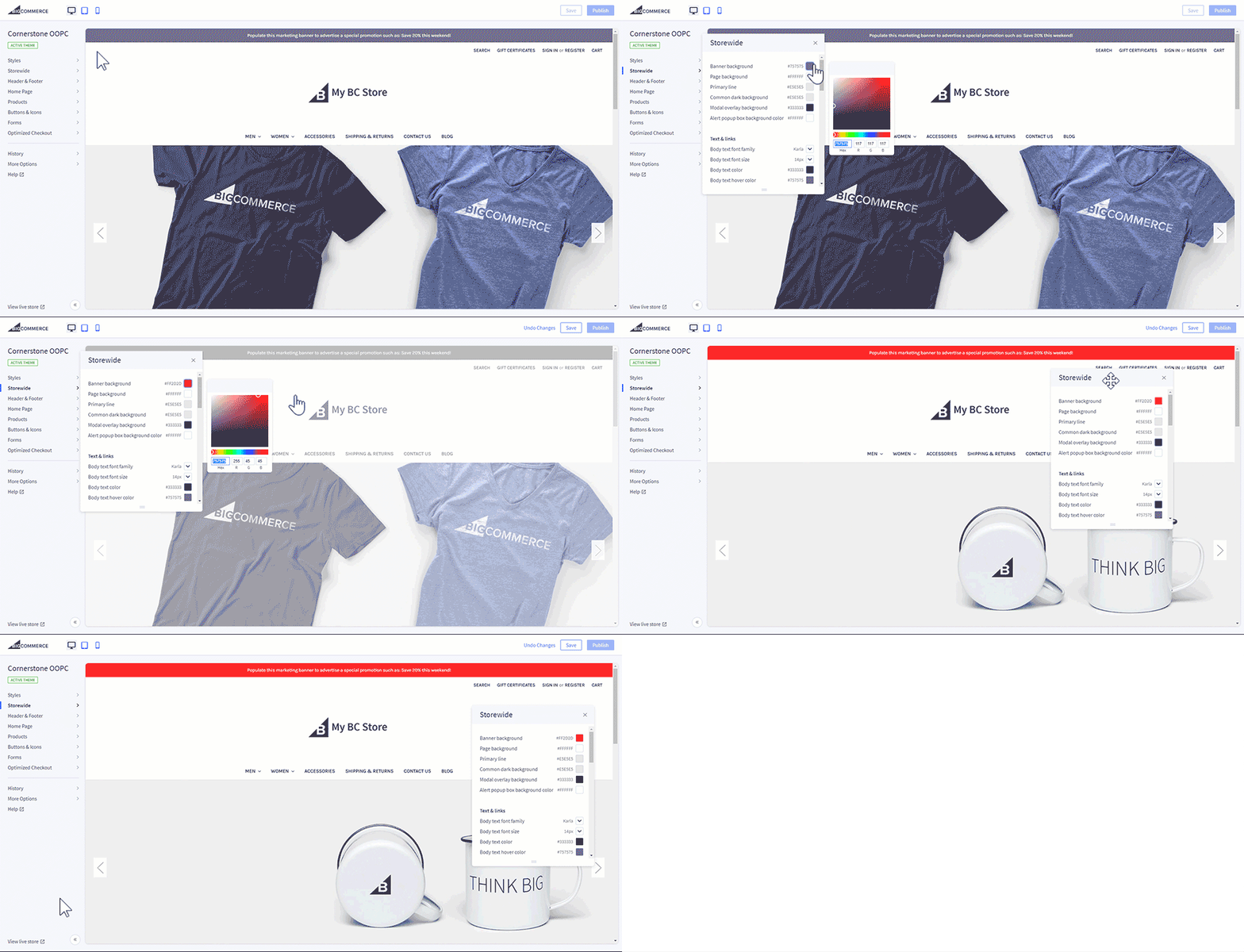 | OpenCart Screenshots      |