The Cisco Catalyst 9800-80 is a modular wireless controller with optional 100 Gigabit Ethernet (G) modular uplinks boasting seamless software updates for large enterprises and campuses, and security with ETA and SD-Access.
N/A
Datadog
Score 8.6 out of 10
N/A
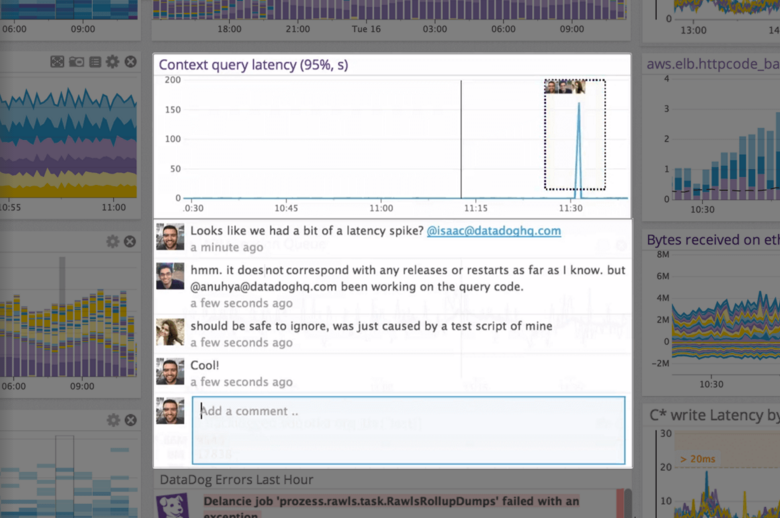
Datadog is a monitoring service for IT, Dev and Ops teams who write and run applications at scale, and want to turn the massive amounts of data produced by their apps, tools and services into actionable insight.
$18
per month per host
Intermapper
Score 8.4 out of 10
N/A
Intermapper is a network monitoring and mapping software for hybrid environments. Intermapper provides real-time performance alerts and bandwidth monitoring with cross-platform functionality.
N/A
Pricing
Cisco Catalyst 9800 Series Wireless Controllers
Datadog
Intermapper
Editions & Modules
No answers on this topic
Log Management
$1.27
per month (billed annually) per host
Infrastructure
$15.00
per month (billed annually) per host
Standard
$18
per month per host
Enterprise
$27
per month per host
DevSecOps Pro
$27
per month per host
APM
$31.00
per month (billed annually) per host
DevSecOps Enterprise
$41
per month per host
No answers on this topic
Offerings
Pricing Offerings
Cisco Catalyst 9800 Series Wireless Controllers
Datadog
Intermapper
Free Trial
No
Yes
Yes
Free/Freemium Version
No
Yes
Yes
Premium Consulting/Integration Services
No
No
Yes
Entry-level Setup Fee
No setup fee
Optional
Optional
Additional Details
—
Discount available for annual pricing. Multi-Year/Volume discounts available (500+ hosts/mo).
Intermapper pricing is based on number of devices monitored. Intermapper is free for 5 devices or less. Subscription pricing starts at $303 for 25 devices. Device-based pricing starts at $765 for 25 devices.
Well suited for most of our customer base because it is a versatile, scalable, large multi-campus organizations. Not so: Brandish deployments where there's a much more simplified feature set needed. So where we can basically rely on Meraki as a cloud base with easier to deploy.
Datadog may be better suited for teams that have a more out-of-the-box infrastructure, on the primary platforms Datadog supports. You may also have better results if you have a bigger team dedicated to devops and/or a bigger budget. We found that trying to adapt it to our use case (small team, .NET on AWS Fargate) wasn't feasible. We continually ran into roadblocks that required us to dig through documentation (and at times, having to figure out some documentation was wrong), go back and forth with support, and in my opinion, waste money on excessive and unintended usages due to opaque pricing models and inaccurate usage reports, as well as broken/non-functional rate sampling controls.
Intermapper is a light weight, quick and easy to use monitoring application. It will get you up and monitoring key infrastructure devices with a simple management interface and effective alert system that doesn't generate a lot of noise. It provides mobile device access through a web interface and is relatively inexpensive.
I think the updates are great. ISSU upgrading code is fantastic. I think the speed with which CAPWAP converges or reconverges, I think the redundancy mechanisms for roaming APs to other controllers is very good. I think overall, getting away from more of a monolithic processor where subprocesses handle what they call the WNCD tasks, I think fundamentally is an improvement in performance.
The radioactive tracing, all of the troubleshooting and all of the logging and all of the importing and exporting features for logging and analytics within the controller itself is really, really good compared to the predecessor AireOS.
The thing which Datadog does really well, one of them are its broad range of services integrations and features which makes it one step observability solution for all. We can monitor all types of our application, infrastructure, hosts, databases etc with Datadog.
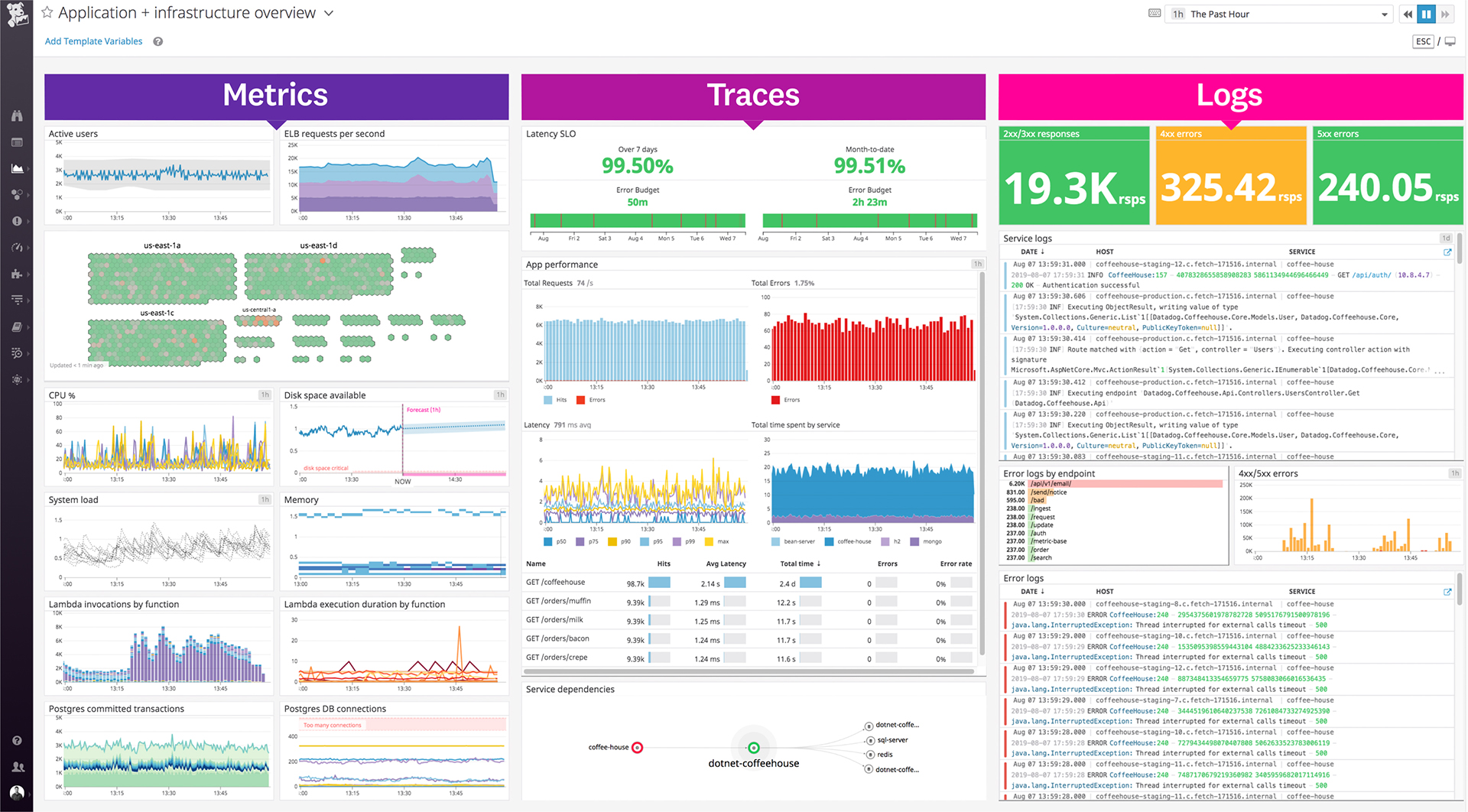
Its custom dashboard feature which helps us to visualize the data in a better way . It supports different types of charts through those charts we can create our dashboard more attractive.
Its AI powered alerting capability though that we can easily identify the root cause and also it has a low noise alerting capability which means it correlated the similar type of issues.
The best thing about Intermapper is that it is map-based. You start by building your map, which is done completely automatically. I've used many different monitoring software packages, Solarwinds, Nagios, Opmanager, and it is a royal PITA to create live maps with those.
Another great feature is that it shows you, visually, the bandwidth utilization of your network by using "ants" and color codes. Incredibly useful.
Alarms are very easy to setup, again much easier than the packages mentioned above.
The biggest issues we have had have been software related. Requiring code upgrades or reloads to fix an unfixable problem.
Some of the troubleshooting utilities aren't perfectly clear as to what theyre doing or how to set them up or what to expect results wise or resource wise.
I think there is a lack of filtering in certain displays where you cannot use the "contains" option for certain device type filtering. But those options should be universal in all views.
Alert windows cause lag in notifications (e.g. if the alert window is X errors in 1 hour, we won't get alerted until the end of the 1 hour range)
I would appreciate more supportive examples for how to filter and view metrics in the explorer
I would like a more clear interface for metrics that are missing in a time frame, rather than only showing tags/etc. for metrics that were collected within the currently viewed time frame
Despite common software and hardware issues this is still the best product on the market for large scale enterprise deployments. Cisco has worked with us extensively to reduce the amount of bugs in every iteration however new bugs are introduced or new incompatibilities always arise with major releases. Thus, while I'm hesitant to recommend the product it's still much better than all the other competitors such as Aruba and Juniper in the WIFi space. There is also extensive integration with DNAC/Catalyst Center and ISE in an SDA deployment. Recently there has been a number of critical issues with the controller software and Cisco has proved themselves to be incapable of timely troubleshooting and diagnosis. This has reduced our confidence in the product and it's current and future stability and maintainability. At it's current state the product is taking up too much of our engineering resources to maintain despite also paying for premium support from Cisco. As such I have reduced by rating as we are likely to look at alternative vendors for our long-term wireless management solution
There are so many features that it can be hard to figure out where you need to go for your own use case. For example, RUM monitoring us buried in a "Digital Experience" sidebar setting when this is one of our key use cases that I sometimes struggle to find in the application. It appears that ECS + Fargate monitoring was recently released which is great because we had to build a lambda reporting solution for ephemeral task monitoring. But this new feature was never on my radar until I starting clicking around the application.
Honestly, in the six years that we've been using it, we've had one, I would say show stopping event. There was an issue with in an HA setup they would every so often when rebooted lose all configuration. So that was a bit disappointing, required quite a few hours to resolve, but Cisco had to fix very quickly and once we implemented that, we've not had any further additional issues.
We have been using the Cisco Catalyst 9800 Series Wireless Controllers for over 2 years and the whole system has been very stable. We currently run them in HA and have found when this has been activated (due to power issues etc.) the units change roles seamlessly, minimising the downtime to almost nothing. Except when we have had major issues, our wireless networks have a solid uptime and keeps our whole borough up 24/7 without problems.
the overall support on the 9800 Wireless lan controller is good. Wireless issues are sometimes hard to troubleshoot since it's the RF that make it complex and the diversity in clients and requirements. The engineers do a good job in understanding the scope and issue, altough not all issues can be solved
The support team usually gets it right. We did have a rather complicate issue setting up monitoring on a domain controller. However, they are usually responsive and helpful over chat. The downside would be I don’t think they have any phone support. If that is important to you this might not be a good fit.
The product works well and is very easy to maintain. As such, we haven't had many occasions to use support. When we have called them they were easy to contact and responsive to our questions. We have had the product for years and it may have been a year or better since the last time we contacted them.
Ubiquiti WLAN is very much a consumer platform. It is not production ready, it is buggy, it has issues. It is cheaper than Cisco, but you get what you pay for. Aruba doesn't integrate nicely with our existing largely Cisco based networks, so when time came to replace AireOS, the Cisco Catalyst 9800 Series Wireless Controllers came out on top.
Our logs are very important, and Datadog manages them exceptionally well. We frequently use Datadog services for our investigations. Use case: Monitor your apps, infrastructure, APIs, and user experience.
Key features:
Logs, metrics, and APM (Application Performance Monitoring)
Real-time alerting and dashboards
Supports Kubernetes, AWS, GCP, and other integrations
RUM (Real User Monitoring) and Synthetics
✅ Best for backend, server, and distributed systems monitoring.
Intermapper is a cross between WhatsUp Gold and Nagios. WhatsUp Gold being for a less technical end-user and Nagios doing more than just SNMP scans and up down monitoring.
Positive impacts, yeah, is good to have a central location to control all these profiles for different countries and locations. And the drawback, like I said to you really because of the too many integrations that have a dependency on the software version. For example, Cisco ONE for Access have certain software that can run through and then this scatter center need to make sure it's working with the others APS version that is currently working. And we also, the Cisco Catalyst Center also have some kind another version of software that you need to support this controller. So it's like two tier three tiers of the software version that we need to match. Then only it can work.
Downtime costs money. Every minute we can get ahead of an outage is time that a plant is not sitting there waiting. We don't need to wait for a call from a plant, we know they are down immediately and we can begin troubleshooting.