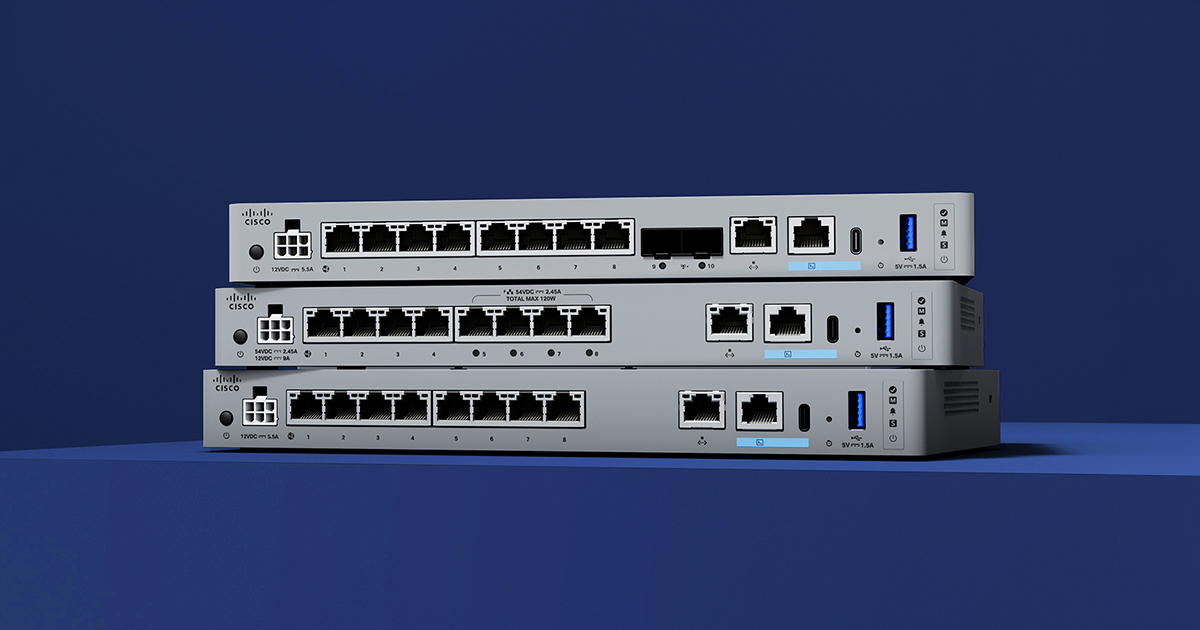
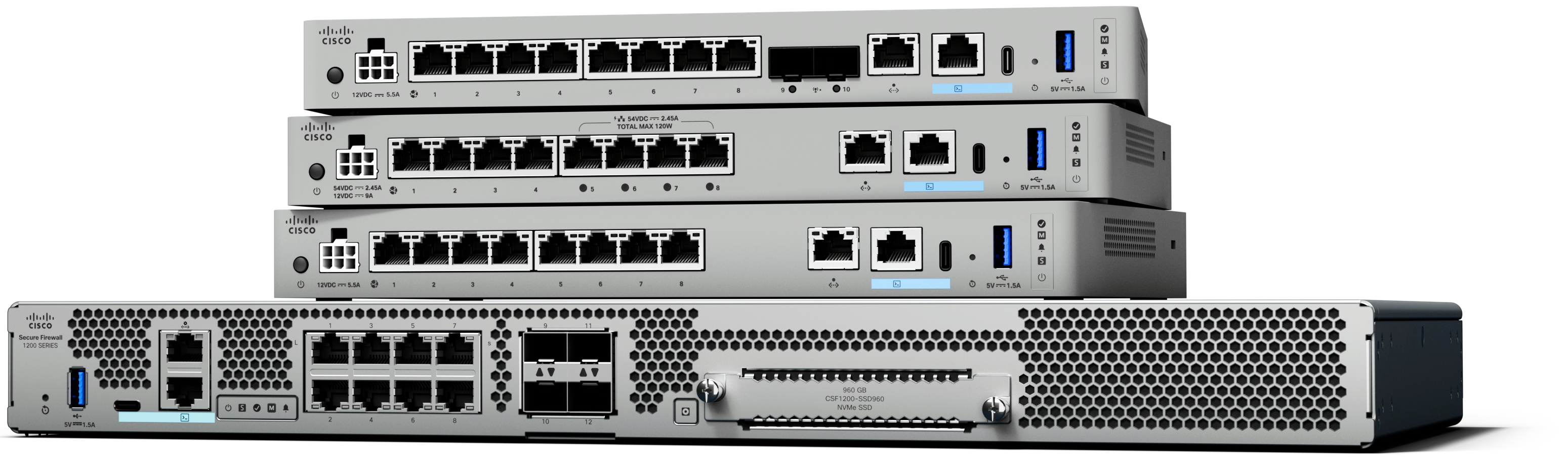
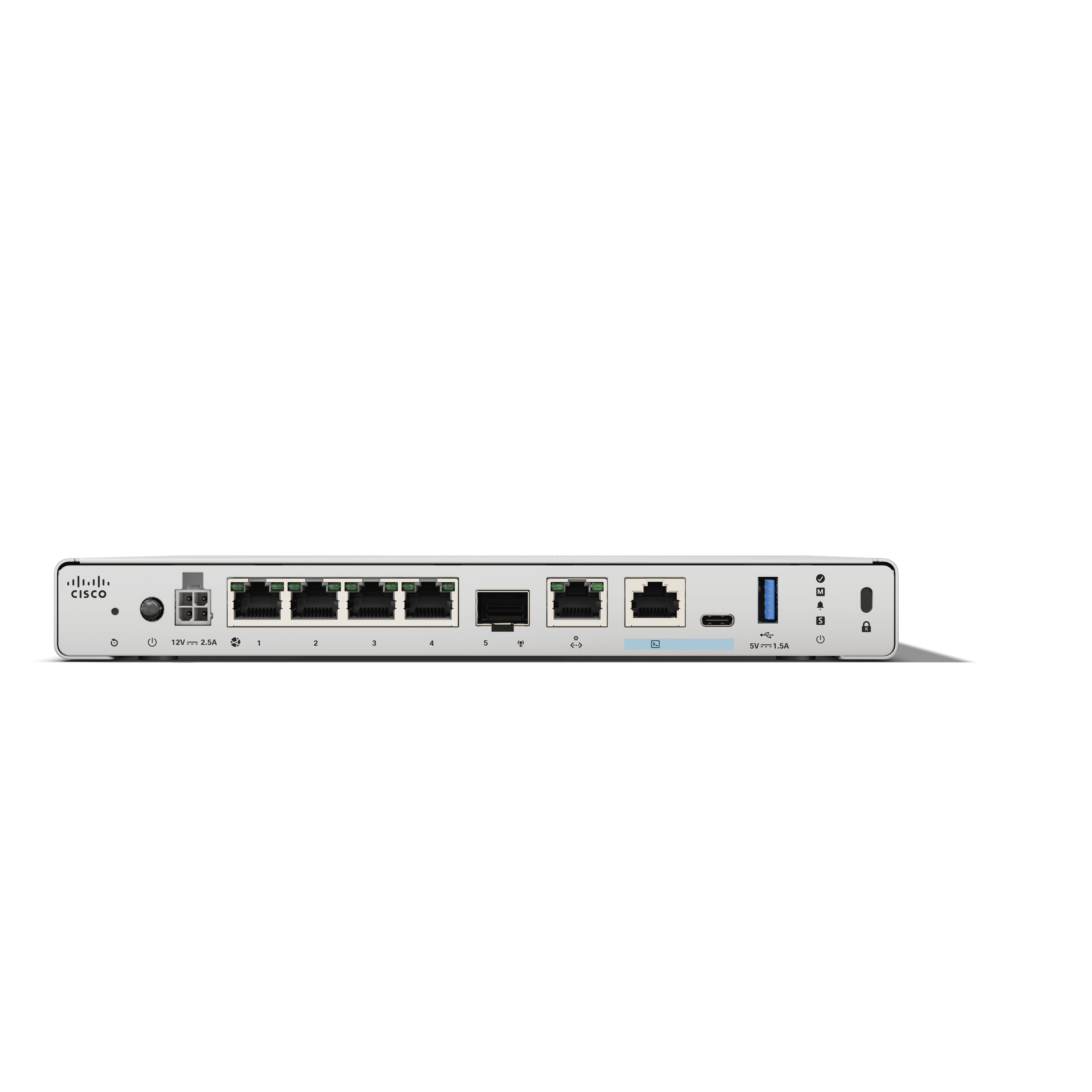
Cisco Meraki MX Firewalls is a combined UTM and Software-Defined WAN solution. Meraki is managed via the cloud, and provides core firewall services, including site-to-site VPN, plus network monitoring.
$595
per appliance
Cisco Secure Firewall
Score 8.4 out of 10
N/A
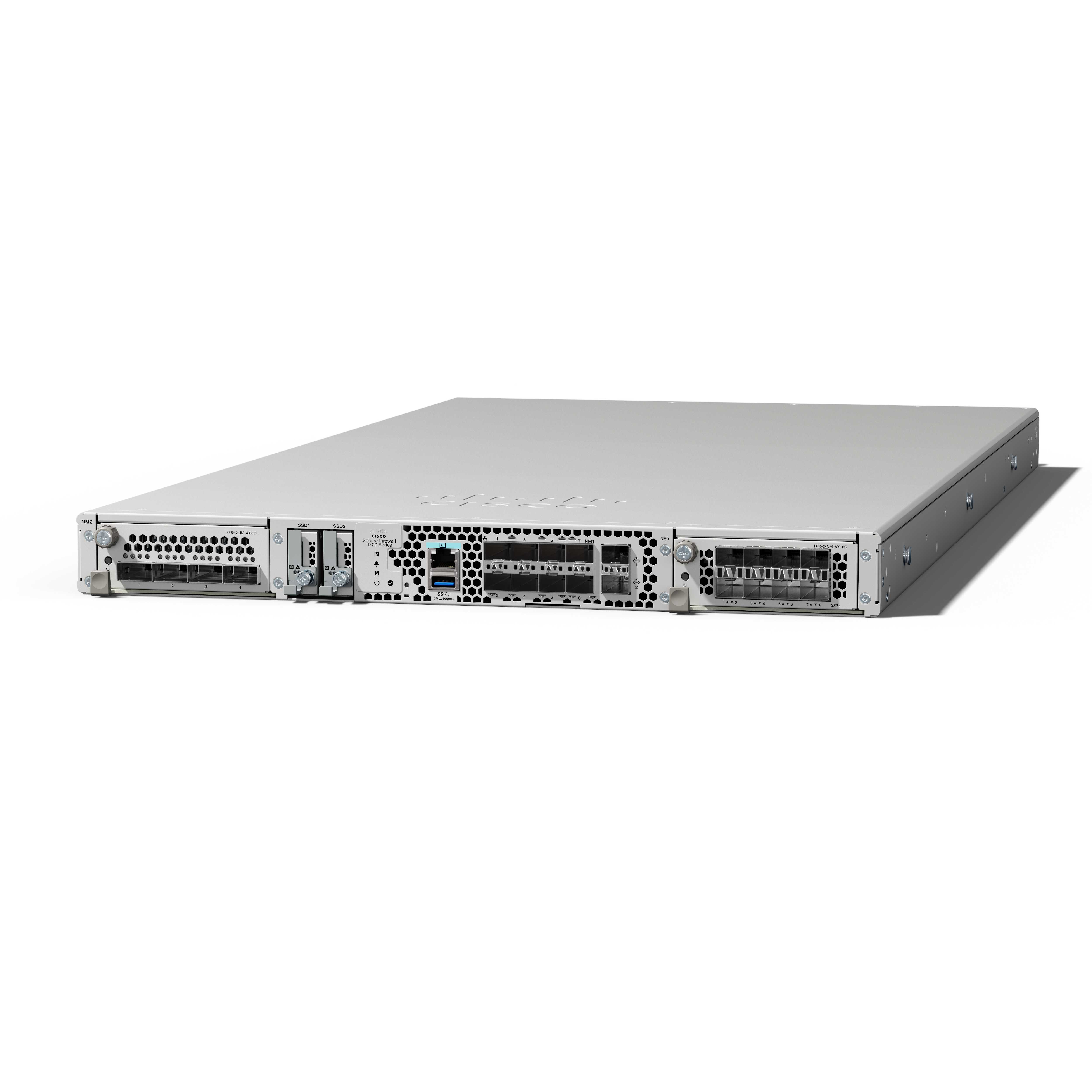
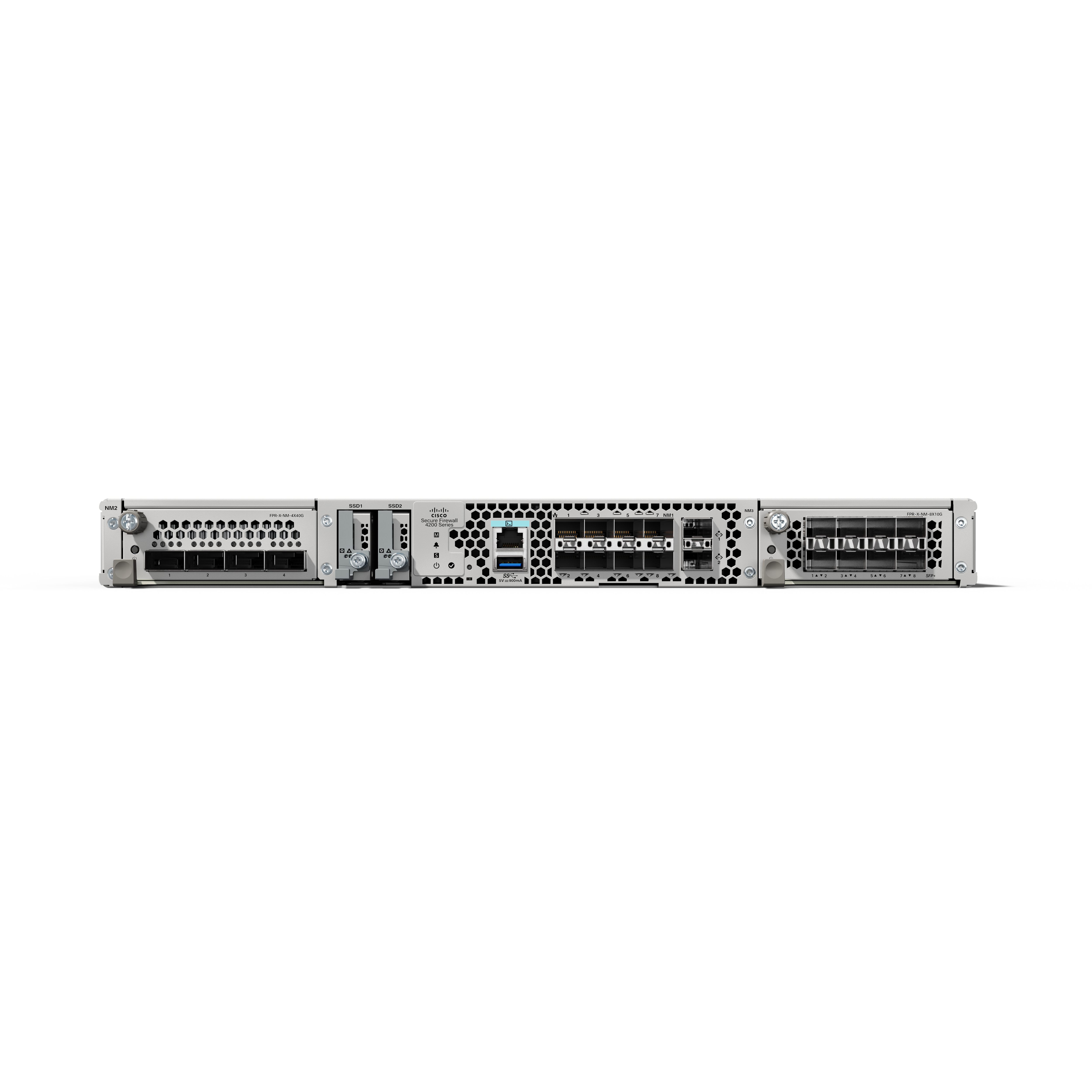
Cisco Secure Firewall delivers comprehensive threat protection for modern, distributed networks. Built to support hybrid workforces and multicloud environments, it enables Zero Trust access, application visibility, and secure remote connectivity. With integration across the Cisco Secure portfolio, including SecureX and Talos threat intelligence, the firewall powers organizations to detect and stop more sophisticated threats. Centralized management simplifies policy enforcement, orchestration,…
N/A
GFI KerioControl
Score 8.5 out of 10
N/A
Kerio Control is a next-gen firewall for SMBs, from Aurea SMB Solutions (formerly GFI Software).
Secure firewall provides a more complete featureset but is challenging to adopt and even that product has some weird limitations (like DHCP scope options being global...).
FortiGate also brings a complete set and e have engineers who are skilled at it. The only thing where …
I have evaluated other products such as FortiGate and sophos brands but the administration is more difficult, more experience is required to make any implementation or configuration change.
We've selected the Cisco Secure firewall as there is full Layer 7 functionality. You get more features out of the box so to speak with full application visibility and control, Intrusion Prevention, SI (Security Intelligence), Adavanced Malware Protection and a whole host of …
Cisco Firepower is a costlier solution but you get what you pay for, with the added costs Cisco provides a full feature solution to be configured in any scenario. The setup can be complex but sometimes this is needed for challenging setups. This is the full featured standard …
We found Kerio Control to provide the most features and easiest management of all the solutions we looked at, while cost was not the lowest the value was by far the best when you considered all the factors, costs, and manhours involved in deployment and management.
The Meraki MX lineup is well suited for organizations that need centralized management of multiple locations, as it allows for both quick deployment and simple/easy remote administration all from a single pane of glass. It also works very well for providing VPN access for remote workers and helps monitor end-device uptime. It does, however, fall a bit short in its firewall's customization, compared to traditional appliances (like our WatchGuard Firebox), so perhaps less suited for organizations that need more customization, as the Meraki MX lineup is primarily designed for simplicity and straightforward cloud-based management.
We can create personalised policies for our environments. Support every type of old and new environments for deployments and integration. It is necessary for managing hybrid networks where network security is mandatory. Ensure better control of our networks to handle all the issues. I would rate it 9/10. So, my team always suggested it.
IT works very well in the non-profit and small business space when there is a need for remote access or connecting several sites in a point to point VPN, user management and rule creation are very easy. The use of the MyKerio website for remote management also makes it easy to troubleshoot problems and make changes if technical staff are not onsite.
The Cisco Meraki MX series is phenomenal at allowing us to remotely manage networks. So the devices usually act as the brain behind our client's networks, which makes it really, really easy for our team to take a look at what's going on in those client network environments, resolve any issues, and make sure that our client's networks are staying secure.
Cisco's firewall actually does its job of blocking what it is supposed to block. We had an old Firewall that led to slippages. Cisco catches 97% of malware and vulnerabilities during testing. For Coitiar, that means an engineer who clicks a link with malware is handled quickly.
We actually tested if failovers would affect running sessions. We pulled our primary unit during a certification submission period. The firewall just switched, and the connection kept running.
The AI assistant in policy management is excellent, and for our lean team, it makes the whole process easy and efficient. I don't have to audit 200 policies manually; the AI steps in and does its thing.
Layer seven firewall rules. Just making them more granular. We've been in meetings with Cisco SES where I've said feature requests many times and that's one of the big ones where it's just a little cumbersome to implement layer seven rules right now.
Just making them more granular. We've been in meetings with Cisco SES where I've said feature requests many times and that's one of the big ones where it's just a little cumbersome to implement layer seven rules right now.
I mean I think a lot of the technology with managing them is getting better. There's a few cons to the new firewall management console. You can't sort through routes or I think you can with interfaces now, but there's a few caveats that they haven't really worked out yet, but they're implementing AI into it, so it's getting to be a lot easier to use.
The simplicity and ease of use for the Meraki Dashboard make it an easy choice for our organization to renew our Meraki Enterprise Agreement. We will likely continue using the Meraki MC67-C, MX450, and other MX models in their catalog until we shift away from Meraki completely
It works really well. We can do most anything we want or need to with it, and you don’t have to have a doctorate or multiple certs to necessarily figure it out. The thing that would probably have to happen to make us switch would be if we just got priced out - Cisco’s more powerful and higher bandwidth models cost a pretty penny.
Some features simply aren't there, but the ones that are there are pretty easy to use. Sometimes it is easy to get lost when trying to find the specific device you want to work on, but that's mostly due to how rarely we have to go into the interface.
i think overall after ALOT of tac cases it works allright now. But still have alot of issues if you use cloud based mangement. fx, if you open 2 windows of access policys, both of the pages, rules starte to jump form side to side. if you then open one more list, its start to jump even faster. if you close the 2 of them, its back to normal. ALSO the extended access lists for VPN, SUCKS. Its the tiniest window when opening the editor, and you are not able to give the rules names, Which means finding and editing rules SUCKS, its a horrible experience, and eveytime we have to we want to yell :P
Very easy to use and manage, user training takes less then 10 minutes. Technicians can perform basic tasks with less then an hour of training and can master it in under a year.
Meraki MX devices support high availability (HA) configurations, which ensures minimal downtime if one device goes offline. This feature has helped us maintain a stable and reliable network, even in cases of hardware failures. ince Meraki is cloud-managed, we've noticed that the cloud infrastructure is generally highly reliable, with minimal service interruptions or downtime. This makes it easier to manage the network remotely without significant availability concerns. Meraki automatically pushes firmware updates and patches, which helps maintain system stability without requiring manual intervention. These updates are rolled out in a manner that ensures minimal disruption to service.
The interface is pretty responsive. The lower end devices are easy to overwhelm if you have a lot of throughput. Be sure the model you get is rated for the amount of traffic you will have. Overbuild if possible, otherwise you won't be fully leveraging the connection from your ISP.
We have not had any performance issues with Cisco Secure Firewall, even with DPI and IPS enabled, we have not seen a performance hit. Emoployes have not complained about any slow network speeds that could have been attributed to the secure firewall it has always been something else within the office network.
I haven't ever had a bad experience with Meraki support. On the few occasions where I wasn't understanding the UI or needed some clarification about what a setting actually would do, I contacted them and they were very quickly able to provide help. Returns are simple and fast, too. We had to return a defective device one time and they shipped the replacement before we had even un-racked the one that was faulty. Unlike many other vendors, they didn't ask use to a do long list of scripted diagnostics, they just took my word for it that the device was broken and sent out a replacement immediately
Firewall support is professional just like any other technology Cisco sells. From answering simple questions to bringing out outages affecting a large population of our workforce, Cisco support is always courteous, professional, and communicates with our team to keep our request on their radar. Some of the brightest people I've met are from Cisco support both in IQ and EQ which shows the talent Cisco is able to onboard to their team.
Support is very slow to respond and it takes a long time to convince level 1 techs that you need to be moved up to someone more senior. I believe support is outsourced and they are graded on how few tickets they need to escalate to higher tiers so they will try to figure out a solution even if it is detrimental to the overall support experience.
great when they offered it, really tested your knowledge with hands on and see what your peers from other orgs know. glad to see that we were ahead of the curve of what our peers knew
was a good training but questions was answered not so good. Training was "Fundamentals of Cisco Firewall Threat Defense and Intrusion Prevention (SFWIPF)".
Implementing Meraki MX devices in phases—starting with a pilot group or select branch offices—was invaluable. This allowed us to identify potential configuration issues, troubleshoot problems, and refine our setup before rolling it out company-wide. It also helped to get feedback from early users and adjust the deployment strategy accordingly. The SD-WAN capabilities in Meraki MX were essential for optimizing our WAN traffic and ensuring better application performance across various locations.
Our initial implementation was aided by Cisco's professional services and was excellent. The engineer was very knowledgeable and helped us work through issues while building out our new internet security edge Part of this involved tools to migrate the firewall configuration from old to new.
Cisco Meraki MX provides simplicity and scalability while cutting costs. With Meraki MX, you get a Security appliance, router, and Firewall in one appliance and managed with one GUI. These features enable the network engineers to maintain large-scale enterprises with a single dashboard from a remote site or anywhere with internet, all thanks to the Meraki cloud dashboard
Cisco Secure Firewall works better with the Cisco ecosystem when we can utilize it and feels beefy enough when we utilize it in the data center. The Fortinet we have found are great, small cost boxes for remote offices with a better UI then Cisco Secure Firewalls. The feature set included with the firewalls feels similar from a security point of view.
We found Kerio Control to provide the most features and easiest management of all the solutions we looked at, while cost was not the lowest the value was by far the best when you considered all the factors, costs, and manhours involved in deployment and management.
A solid, realistic rating most people give for Cisco Secure Firewall pricing is 7 or 8 out of 10 (because the product is strong but licensing can be a bit complex)
When I first started with my company we had various infrastructure and a mix of tech. Since going to Cisco Meraki MX we have noticed better network performance and our new sites are much easier to bring online. Users have noticed an improvement in VPN connection and getting into all our systems.
Cisco Secure Firewall has never given us any trouble, it has stayed up at all times, upgrading the appliance has also become much simpler. We operate the appliance in a HA pair, so 0% downtime within our organisation. During switchover while upgrading, not a single packet seems to get lost, so this has been a very valuable asset to our company.
From a positive impact? Basically it allows us to set up shop very quickly. It allowed us to add sites to our network very quickly. From a negative perspective, I think the only thing is that I can see from a negative perspective is I have a preference to working with ACLI in terms of how I engage with the youth tool At the moment, the only way to actually engage with a tool is on a gui and sometimes what I'd actually like is more detailed information in terms of actual configuration that you'll actually get out of ACLI.
Cisco Secure Firewall gives details on the possible intrusions attempts that are occurring on the network, which gives stakeholders confidence that the network is being protected.
Cisco's reputation as a longstanding network leader provides the trust that is needed in keeping networks secure.
The wide variety of tools and features that Cisco Secure Firewall provides allows business owners to plan for changes that can occur in the network as Cisco is able to adapt to the different needs.