DigitalOcean is an infrastructure-as-a-service (IaaS) platform from the company of the same name headquartered in New York. It is known for its support of managed Kubernetes clusters and “droplets” feature.
$5
Starting Price Per Month
Microsoft Azure
Score 8.4 out of 10
N/A
Microsoft Azure is a cloud computing platform and infrastructure for building, deploying, and managing applications and services through a global network of Microsoft-managed datacenters.
$29
per month
SAP Integration Suite
Score 8.5 out of 10
N/A
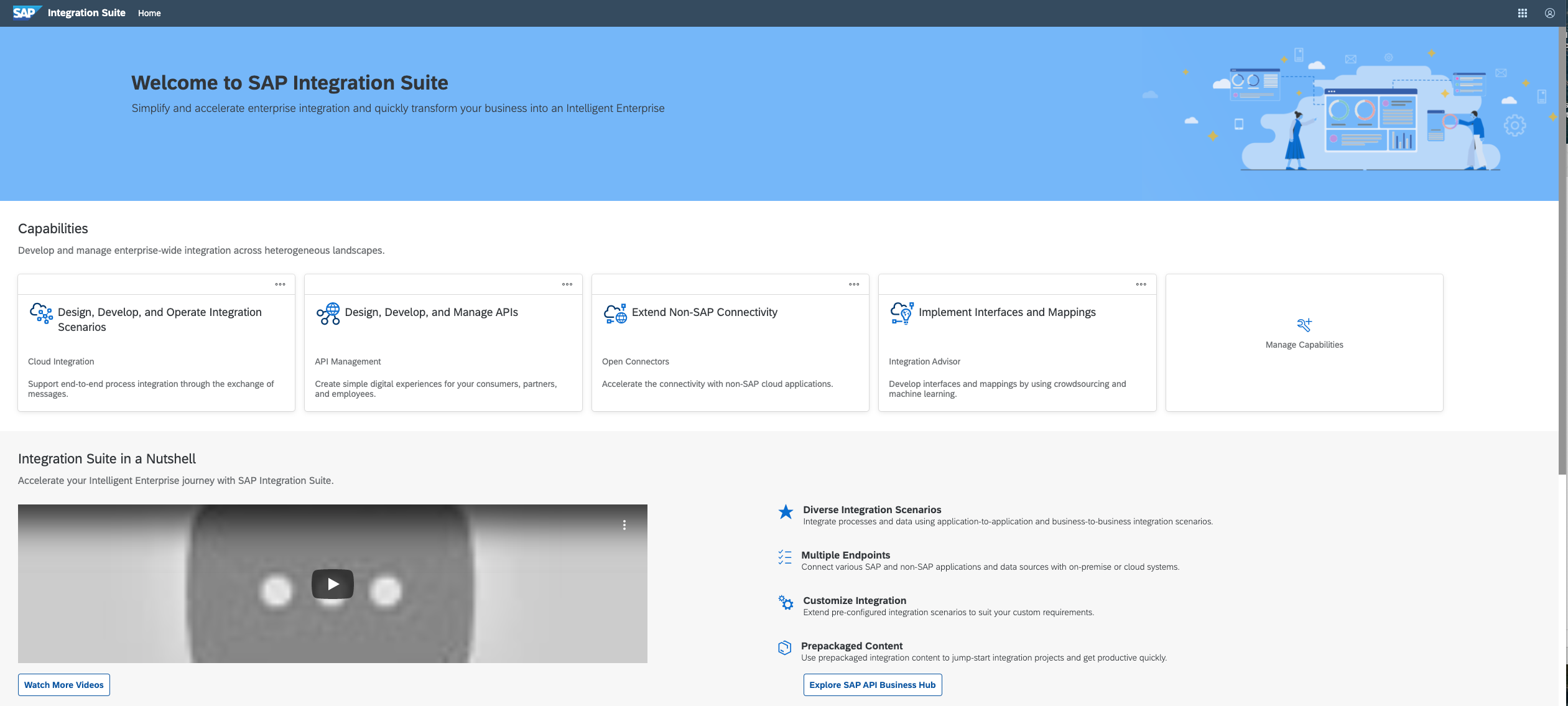
SAP Integration Suite is a modern, secure integration platform as a service (iPaaS) that connects applications, data, processes, and AI agents across SAP and non‑SAP environments.
$11,199
per year
Pricing
DigitalOcean
Microsoft Azure
SAP Integration Suite
Editions & Modules
1GB-16GB
$5.00
Starting Price Per Month
8GB-160GB
$60.00
Starting Price Per Month
Developer
$29
per month
Standard
$100
per month
Professional Direct
$1000
per month
Basic
Free
per month
No answers on this topic
Offerings
Pricing Offerings
DigitalOcean
Microsoft Azure
SAP Integration Suite
Free Trial
No
Yes
Yes
Free/Freemium Version
No
Yes
No
Premium Consulting/Integration Services
No
No
No
Entry-level Setup Fee
No setup fee
No setup fee
No setup fee
Additional Details
—
The free tier lets users have access to a variety of services free for 12 months with limited usage after making an Azure account.
Access to free tier services does not expire while there is an active Pay-As-You-Go or CPEA account with SAP. Once a free tier service limit has been reached users have the option to update from a free to a paid service plan in the same account.
Vultr is a new player in the game. They don't advertise their hardware model and for that reason, people may not trust them. I have run few benchmarks on Vultr, they performed slightly better than DigitalOcean but they aren't trustworthy. Their transparency index is very low …
I've tried both AWS and Azure and, while they're both great solutions, they are much more challenging to setup and maintain. The idea that my billing could spike because of something unexpected leaves me a tad uneasy. For our solutions I'd rather pay the $10/mo with …
Initially we started using DigitalOcean due to their pricing point as we were in development phase. Slowly when we used it, we starting liking it a lot as it is very fast & easy to get started, compared to the other Cloud Providers we've used. Also they have blogs and …
DigitalOcean offers low prices, much lower than AWS (Azure) however AWS provides much more features and better performance than DigitalOcean.
I chose DigitalOcean to save myself some money.
I would say that Azure stacks up pretty good and sometimes better in comparison to what Google Cloud Platform has to offer. I don't like GCP for its absurd licensing fees and it's expensive for just Using EC2 Instances. However, DigitalOcean and AWS can offer far better …
Azure is an ideal platform for disaster recovery and backup. It is very flexible because of its site regeneration capabilities and other features. All of our data can be backup, regardless of the language or operating system. Azure’s inherent flexibility comes from its status …
We have settled with Microsoft Azure considered its effective administration and the ability to data visualization and analysis, together with the top-notch security/stability.
Again this is back to the level of integration within the company on a specific ecosystem, but there is also a measure of "newness" in terms of other platforms, and the amount of functionality that is available out of the box. That all said it would seem that Azure offers many …
In an SAP-integrated enterprise project, SAP Integration Suite is a great solution. However Microsoft Azure is more flexible in terms of a scale of project & pricing, so may be superior for certain use cases, particularly where SAP integration is not necessary.
SAP Integration Suite supports a wider range of 3rd party applications and the ease of use makes it extremely intuitive to use without much training needed for it to be performed. The Dashboard helps gain more insights throughout the migration process and its predictive …
SAP Integration Suite provides a better user experience than the other solutions from the perspective of a developer or a platform administrator. I have found other solutions need overall higher technical skills.
Since we started Fiori Development, SAP Integration Suite was the obvious choice for offering a development environment which has been lately upgraded to Full Stack WebIDE.
DigitalOcean is perfect for hosting client websites, running marketing tools, and managing media storage with Spaces and CDN. The use of Droplets to quickly launch landing pages or WordPress sites for campaigns is a Godsend. It’s great for fast, cheap, and scalable solutions. But for complex microservices or projects needing strict compliance (like HIPAA), DigitalOcean may not always be the best fit, but that depends heavily on your project.
Azure is particularly well suited for enterprise environments with existing Microsoft investments, those that require robust compliance features, and organizations that need hybrid cloud capabilities that bridge on-premises and cloud infrastructure. In my opinion, Azure is less appropriate for cost-sensitive startups or small businesses without dedicated cloud expertise and scenarios requiring edge computing use cases with limited connectivity. Azure offers comprehensive solutions for most business needs but can feel like there is a higher learning curve than other cloud-based providers, depending on the product and use case.
Good at: 1. Integrations with in SAP applications, especially with event based triggers 2. Can be integrated very well with other BTP services to attain Batch processing and store credentials 3. Supports many authentication models Improvements: 1. No version history available compared to as it is available in S4HANA 2. Need a lot of improvement in git hub connections
Microsoft Azure is highly scalable and flexible. You can quickly scale up or down additional resources and computing power.
You have no longer upfront investments for hardware. You only pay for the use of your computing power, storage space, or services.
The uptime that can be achieved and guaranteed is very important for our company. This includes the rapid maintenance for security updates that are mostly carried out by Microsoft.
The wide range of capabilities of services that are possible in Microsoft Azure. You can practically put or create anything in Microsoft Azure.
Some products/services available on other Cloud providers aren't available, but they seem to be catching up as they add new products like Managed SQL DBs.
While they have FreeBSD droplets (VMs), support for *BSD OSs is limited. I.e. the new monitoring agent only works on Linux.
There are no regions available on South America.
They don't seem to offer enterprise-level products, even basic ones as Windows Server, MS SQL Server, Oracle products, etc.
The cost of resources is difficult to determine, technical documentation is frequently out of date, and documentation and mapping capabilities are lacking.
The documentation needs to be improved, and some advanced configuration options require research and experimentation.
Microsoft's licensing scheme is too complex for the average user, and Azure SQL syntax is too different from traditional SQL.
Provide more pre-built integrations to use within SuccessFactors or other modules instead of everything having to be custom built
Support is unable to provide advice on custom builds so you often have to engage a 3rd party partner
Works best when you have the functional and technical teams working together. Otherwise, the system is too technical for a functional user to create integration and a technical user not always understand the functional perspective
Moving to Azure was and still is an organizational strategy and not simply changing vendors. Our product roadmap revolved around Azure as we are in the business of humanitarian relief and Azure and Microsoft play an important part in quickly and efficiently serving all of the world. Migration and investment in Azure should be considered as an overall strategy of an organization and communicated companywide.
It is in place, our system integrators are familiar with it, and it fits into the ecosystem. A better user interface, flow build and debugging experience would see it grow, many technical staff do not enjoy using it for this reason, however it is quite capable and powerful behind this one shortcoming.
I honestly can't think of an easier way to set up and maintain your own server. Being able to set up a server in minutes and have fully control is awesome. The UX is incredibly intuitive for first-time users as well so there's no reason to be intimidated when it comes to giving DigitalOcean a shot.
As Microsoft Azure is [doing a] really good with PaaS. The need of a market is to have [a] combo of PaaS and IaaS. While AWS is making [an] exceptionally well blend of both of them, Azure needs to work more on DevOps and Automation stuff. Apart from that, I would recommend Azure as a great platform for cloud services as scale.
The user interface is messy and not intuitive. It has a steep learning curve, and flows developed around are easy to make a mess with layout and can be difficult to follow. The debugging is also quite difficult, it takes some time to figure out how to follow the flow and examine data. Error handling is also difficult and not intuitive, it is better to let some errors leak and monitor through ALM.
They have always been fast, and the process has been straight-forward. I haven't had to use it enough to be frustrated with it, to be honest, and when I have an issue they fix it. As with all support, I wish it felt more human, but they are doing aces.
We were running Windows Server and Active Directory, so [Microsoft] Azure was a seamless transition. We ran into a few, if any support issues, however, the availability of Microsoft Azure's support team was more than willing and able to guide us through the process. They even proposed solutions to issues we had not even thought of!
The support for SAP Integration Suite is satisfactory. We leverage SAP support through our manage services partner. So far, we have not had many major issues. One concern, to make our rating a ten, would be turnaround time on high priority incidents. SAP Integration Suite drives our key business functions forward. Without a reasonable service level agreement on turnaround, we sometimes find us running into issues running pay, etc.
As I have mentioned before the issue with my Oracle Mismatch Version issues that have put a delay on moving one of my platforms will justify my 7 rating.
DigitalOcean is an inexpensive product as compared to other products available in the market. The UI is easy and the beginner can also understand the UI with the step by step guide. It provides a lot of custom features and the user needs to pay only for what they are using. Amazon has a complex UI and is on the expensive side. DigitalOcean is simple to use and is easily manageable and the servers can easily be set up without additional cost and such.
As I continue to evaluate the "big three" cloud providers for our clients, I make the following distinctions, though this gap continues to close. AWS is more granular, and inherently powerful in the configuration options compared to [Microsoft] Azure. It is a "developer" platform for cloud. However, Azure PowerShell is helping close this gap. Google Cloud is the leading containerization platform, largely thanks to it building kubernetes from the ground up. Azure containerization is getting better at having the same storage/deployment options.
Before deploying SAP Integration Suite, we assessed Oracle Financial Services Analytics and IBM Risk Analytics. While Oracle had proved its mettle in the exceptional database support and IBM in presenting risk model tools, SAP Integration Suite overwhelmed others by being effortlessly integrated with our existing banking framework.
Positive - Elastic computer instances make it possible to pay for only for what you need.
Positive - Competitive pricing - some of the products that DigitalOcean offers are much cheaper than those offered by competitors.
Negative - Having to go to other cloud computing platforms for more specific, advanced services like Computer Vision optimized services, GPU cloud compute instances, etc...
For about 2 years we didn't have to do anything with our production VMs, the system ran without a hitch, which meant our engineers could focus on features rather than infrastructure.
DNS management was very easy in Azure, which made it easy to upgrade our cluster with zero downtime.
Azure Web UI was easy to work with and navigate, which meant our senior engineers and DevOps team could work with Azure without formal training.