Hypersocket (formerly Nervepoint) enables organizations to efficiently manage and administer end users and their access to disparate systems by empowering end users to manage their own accounts across multiple systems both on-premise and in the cloud, while allowing IT to gain control over user sprawl, cut support and gain in-depth business insight.
N/A
WatchGuard AuthPoint
Score 9.0 out of 10
N/A
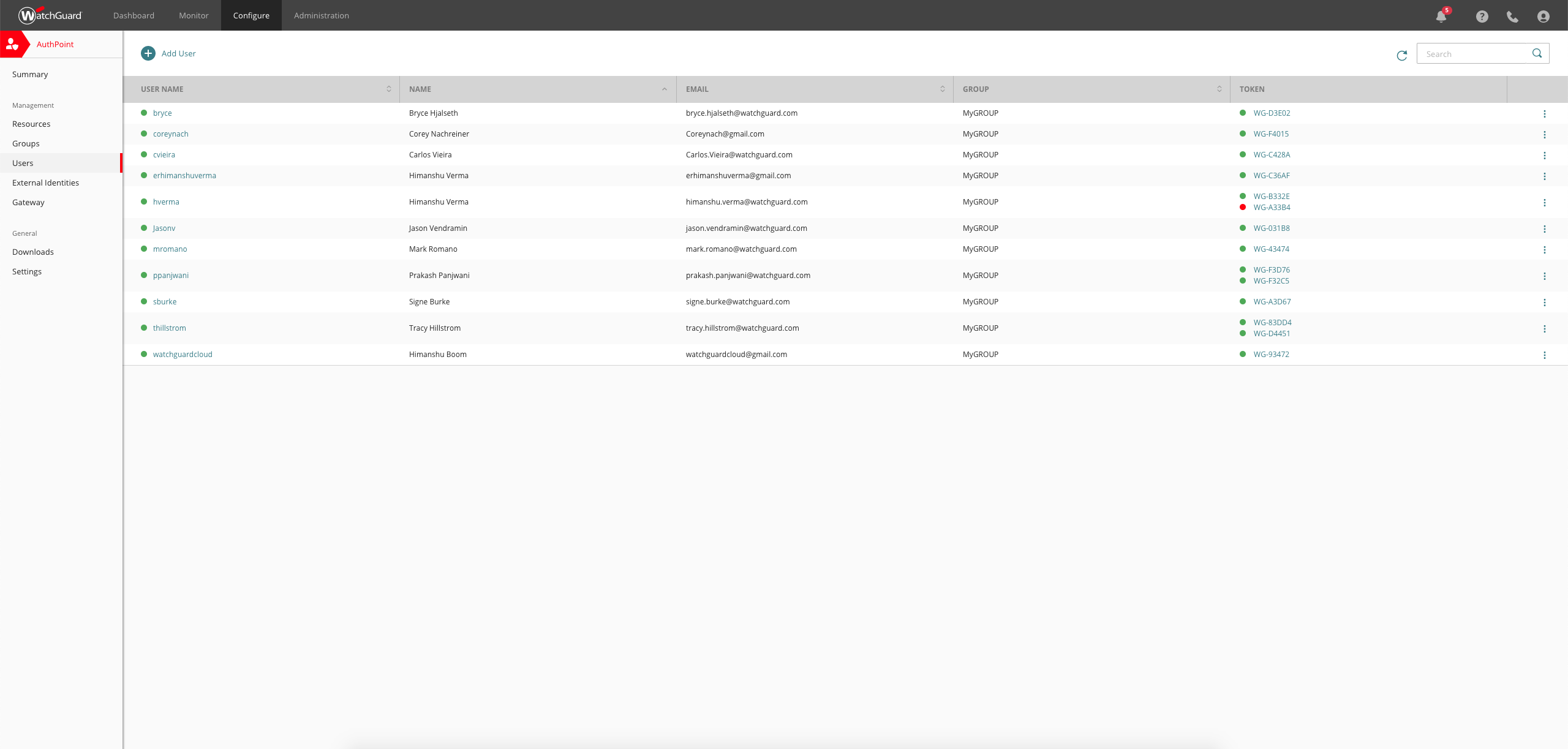
AuthPoint Total Identity Security provides businesses with a solution to protect user accounts and credentials. With
multi-factor authentication and dark web credential
monitoring, AuthPoint mitigates the risks associated with workforce credential
attacks. AuthPoint adds an extra layer of security by monitoring for
potential credential exposure in the dark web for both personal and corporate
accounts.
HyperSocket is very well suited if the resources and budget are made available. There is not much a learning curve for the IT Department or for those users already familiar with two-factor authentication. There will be some education and training requirements for most end-users as the notifications and general verbiage can be confusing for some. It may also show some exploits within some end-users who are unaware of a notification but will use the email to reset an expired password without thinking twice if it may have been a phishing email or the opposite where an end-user deletes or ignores the expiration email notification expecting it to be spam/phishing.
Works great as a 2FA token, for endpoint control, for computer and server updates, for scheduling updates, and for patching security features when exploits become known. Remote connection is very reliable and doesn't drop in and out as many programs do. It may not be as appropriate if you are looking for a plug-and-play control, as it requires more learning and setup to get it set up correctly.
Help-Desk functionality similar to OneIdentity Self-Service Password Manager, as it provides additional users that do not require administrative access to assist with managing end-users who may have locked themselves out of HyperSocket Access Manager by forgetting their own security questions.
Too many features which become unusable and feel like the payment plans are not flexible since it's an all-in-one product with one price. It is not necessarily a bad thing as most subscription-based pricing forces a buyer to pay more for an integral service that is only available on the highest price-plan. You really do get what you pay for, but we found many of our use-case scenarios limited the product.
This isn't necessarily against the product, just a personal opinion around Multi-Factor authentication which is always primarily driven mobile devices. Not all companies or end-users have access to a multi-factor device, (or in our case, are allowed to have access to a cell phone while servicing members/clients). This creates a shortfall to allow multi-factor functionality to extend to all users unless there are hardware tokens, which can be miss placed or left out more easily as most users don't treat it the same way they would their personal smartphone.
Email support is SLOW unless I want to allow a stranger to access my production firewall. That is never allowed here, so our hands are tied in terms of being able to get support in less than 48 hours.
Again, support takes far too long because you refuse to employ any staff that works in US time zones during normal business hours.
There has to be another option besides: 1) you take full control of my systems or 2) I wait on SLOW email support that isn't that great.
Today to ensure our ISO 27001 certification it is important that we maintain this solution. Today it is part of the way any employee within the organization works, we no longer have any other way of working and it is the simplest way to ensure that access to the workstation is done with MFA.
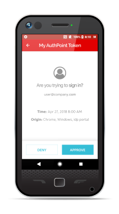
After initial setup, it practically runs itself. Onboarding new users is fast and easy as it should be. The AuthPoint mobile app is small and simple to use. The only reason I do not give it a 10 is that I frequently get complaints from end users that the AuthPoint app is "constantly downloading". In fact, it's not downloading anything and that what the users are seeing in the app is a timer for the 6-digit code that changes every minute.
WatchGuard support is always quick and reliable. They have urgency levels that you are able to select when creating your support ticket, and they respond in accordance to the severity that you have set. I have never had an issue with getting someone on the phone in the same business day, even for very low priority issues.
It was an Onsite demo at the ditributor with the benefits of Watchguard Authpoint. Was very nice to see the abilities of the product. This Demo was a few years back, since then Authpoint changed allot. It is very nice for partners that you can get this demo without any aditional cost.
We use the online training for all our employees. There are both sales and technical trainings available and there even is a technical certification. You can use this for the Watchguard Partner Program which can give you aditional benefits. Every now and then you have a webinar that discusses multiple Watchguard products.
the first time it takes more effort. It is helpful to already understand how each authentication type works. Then it's much easier to understand the MFA solution that you implement. It is useful to check the release notes from time to time and update the key parts of the Watchguard Authpoint. Authpoint Gateway, Logon App, RDWeb... Also, it's useful to set up notifications when something goes wrong or sometimes check the statistics of how many requests are being approved/denied, etc.
Nervepoint Access Manager (NAM) has the ability to deal with multiple domains. While ServiceNow at the time we looked at the solution did not (I do not know if it does now). NAM was a more polished, mature product.
I would slot Authpoint (as a product) as better than ESET but not Duo. ESET has the same limitations as Watchguard in the OTP support. It also is an on-prem installed console rather than a cloud, which increases cost and maintenance requirements. The duo now supports standard OTP for admin accounts, so it can be managed by a team. Duo support however leaves a lot to be desired and gives Watchguard the edge
As with any IT Service or Solution, the investment will always be seen as a sunk cost. The only ROI would be the time and resources spent elsewhere rather than with Password Management through an IT Department or similar department. I found that the time spent on password management was about the same, as many users who are frequently forgetting a password are also forgetting their security question & answers.
There are some positives, as it was able to help manage the bulk of their non-windows passwords or passwords related to another online service. The centralized password manager doesn't feel like a true single sign-on but for most users, it replaces a hand-written copy they have taped to a monitor.
It can help with automating some of the active directory workflows with its own user provisioning functionality. Took more time to set up than it was to manage on its own.
We currently have 300 users on Authpoint, and most of them use insecure passwords. Authpoint gives us peace of mind that we don't have to police individual employee passwords.
In line with the comment above, with so many people in our organization using insecure passwords, I'm sure that Authpoint has already saved us from many potential security breaches.
Security breaches can cost a lot of money. Preventing them saves the company money and helps to achieve our bottom line.