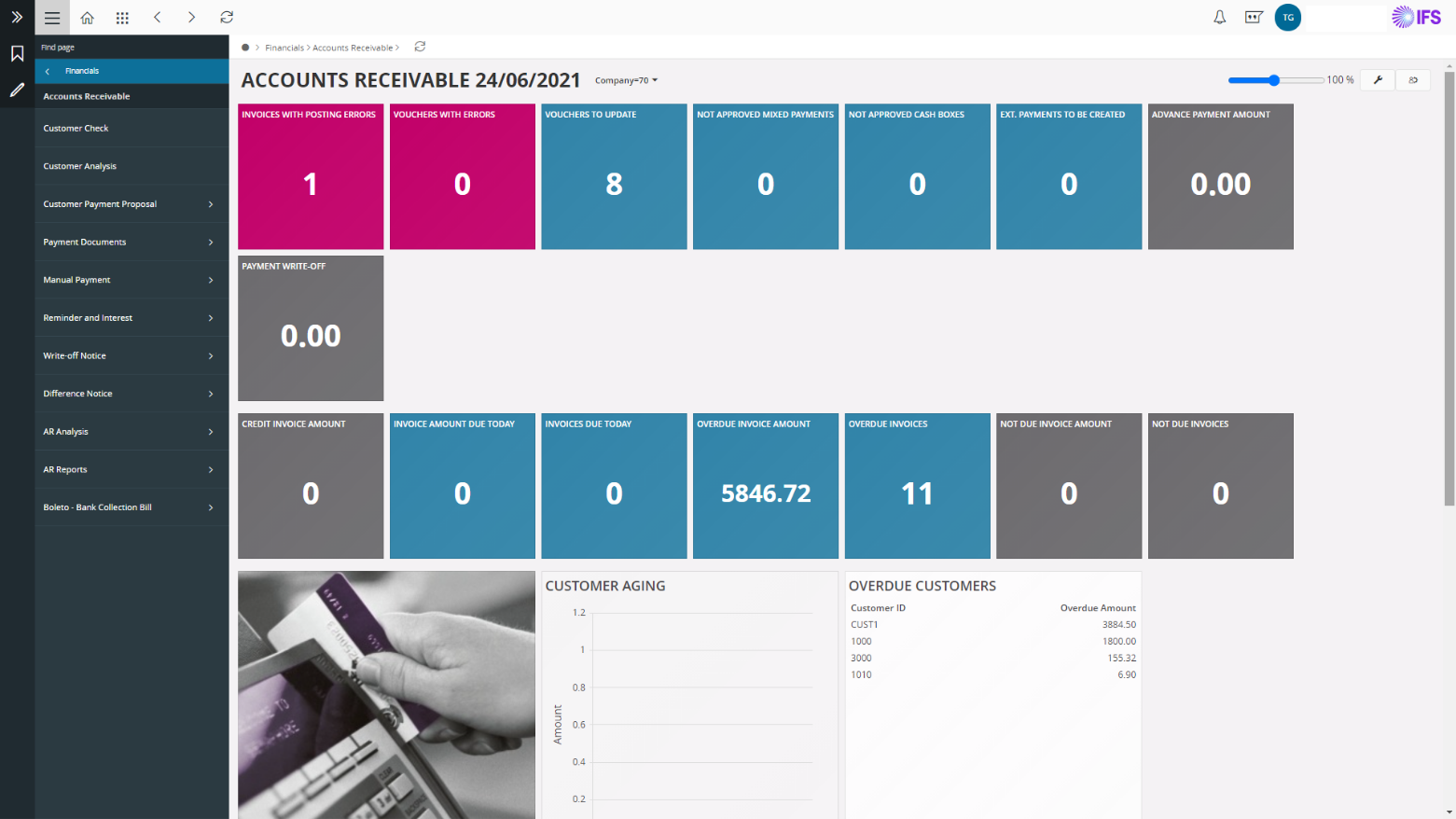
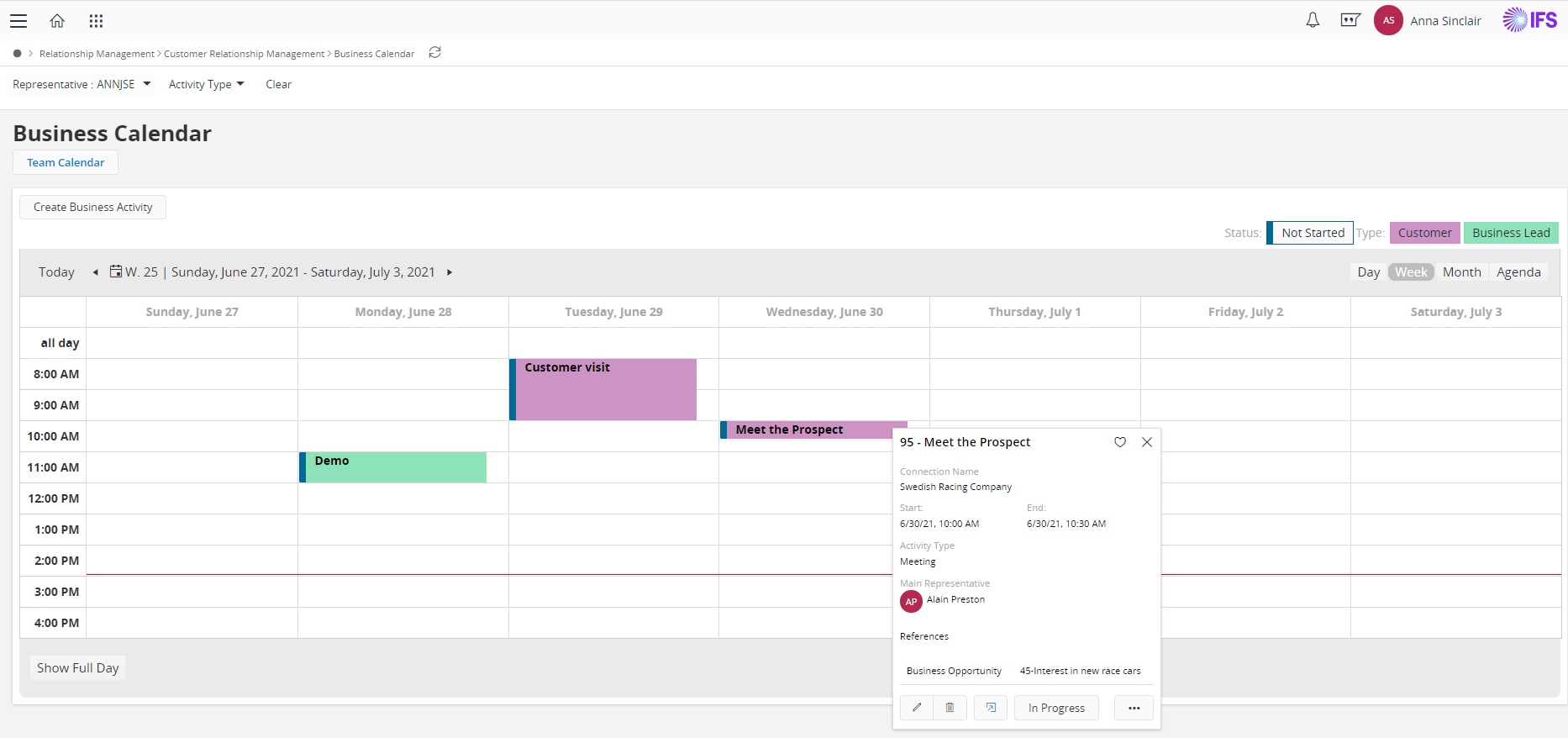
IFS Applications is presented by the vendor as an agile application suite that offers enterprise resource planning (ERP), enterprise asset management (EAM) and enterprise project management, handling 4 core processes: Service & Asset Management Full Enterprise Asset Management (EAM), Maintenance Repair and Overhaul (MRO) and Field Service Management (FSM) Manufacturing Enterprise Resource Planning (ERP) with support for process manufacturing, discrete manufacturing…
N/A
Oracle Fusion Cloud ERP
Score 7.4 out of 10
N/A
Oracle Cloud Enterprise Resource Planning (ERP) is a core suite of Oracle Cloud software-as-a-service (SaaS) applications. Oracle Expense Management and Oracle Risk Management are part of this solution. Other apps include Financials, Revenue Management, Accounting Hub, PPM, and Procurement. The single cloud platform offers built-in industry standards and modern best practices. ERP software is the backbone of many organizations and Oracle aims to offer a modern, connected…
N/A
Workday Adaptive Planning
Score 7.6 out of 10
Mid-Size Companies (51-1,000 employees)
Workday Adaptive Planning streamlines planning workflows, using AI and real-time data integration to improve collaboration and provide predictive forecasts for better strategic analysis.
N/A
Pricing
IFS Applications
Oracle Fusion Cloud ERP
Workday Adaptive Planning
Editions & Modules
No answers on this topic
No answers on this topic
No answers on this topic
Offerings
Pricing Offerings
IFS Applications
Oracle Fusion Cloud ERP
Workday Adaptive Planning
Free Trial
No
Yes
Yes
Free/Freemium Version
No
No
No
Premium Consulting/Integration Services
No
Yes
Yes
Entry-level Setup Fee
No setup fee
Required
Optional
Additional Details
—
Pricing per user varies by component within the Oracle ERP Cloud solution.
Order to cash processes and scenario are implemented natively in IFS. An HR module exists for career management also (objectives, comportments, training, mobility) but may be improved in terms of workflow validation (e.g. training to validate by a manager) or reporting.
Oracle Fusion Cloud is best suited if a customer moves from Oracle eBusiness Suite (on-prem) to a SaaS offering. The transition is comparatively manageable to implement. However, the customer must understand that we cannot have too many customizations in the SaaS model, so many heavily customized on-prem applications would need to be incorporated in the Cloud by using Cloud tools like Oracle Integration Cloud, Oracle Cloud Infrastructure Autonomous Database, Oracle APEX provisioned on OCI, etc.
We're a mid-size organization working with a shoestring budget and an IT skeleton crew...not much room to dedicate resources to a platform like this fully. Having it SaaS based is helpful for system management through their Helpdesk system, and a single platform also helps streamline the knowledge needed by our developers when integrating other business aspects to Workday.
It helps create dynamic plans for finances, operations and various functional units in an organization all under one platform
It helps in scenario modeling to help analyze various business events and report by any number of business dimensions including channel, customer or product
It can be integrated with any system including ERP, BI or CRM
Dashboards are not the best for graphs/charts. However, I have heard of companies using the dashboards for forecasting/budgeting. I would like to see Workday Adaptive Planning demonstrate this part of the feature.
Better security or locks to prevent deleting Actuals data - you are literally one click away from doing this.
On the web-based reports, better functionality when needing to reverse the sign in calculations - right now it is only available for revenue vs. expenses.
Oracle ERP cloud is a significant investment for our company. It will be an ongoing software cost and there's no looking back on that. Our users have become very accustomed to this tool that it is not practically feasible to rip them off from this system. So yes we will continue to renew the subscription going forward.
For one we're in way too deep to not move forward with Adaptive. We're integrated with Workday, we do a ton of reporting with Adaptive, and it's working very well for planning and forecasting. No reason to look back or change course.
Depending on the menu, some items are easy to navigate, however other areas seem like have too many menu selections resulting in many clicks to get what needs to get done. The more you use it the easier getting things done becomes; it is not difficult to learn.
It is overwhelming at first, but once you really get to know it, you realize it is fairly simple and customizable, and then it has a lot more limitations than you first thought. Realizing those limitations and finding workarounds is when you know you've mastered the software.
The application is used by big banks like HSBC is a testament to its reliability. I did not hear or experience any outages.Oracle is in the hosting business since long. In its previous avatar, it used to be called as Oracle on demand. So oracle has enough experience and expertise in hosting and managing customers applications in their datacenters. Oracle is the only major company which has platform as a service, database as a service and software as a service product offerings on the cloud.Hence customers can rely on Oracle as many major fortune 500 companies do.
There haven't been any lately. The only one issue I can think of is when there was an update in Adaptive that altered our reports. Before I realized there was an issue, Adaptive reached out to let me know, so that it could be fixed.
Cloud performance is something that they need to improve. Also it is not consistent. Sometimes for some users it is slow while for others it is fast. This is frustrating for users especially when they are in the middle of what they are doing. We communicated this to Oracle and they suggested to submit request for environment re-sizing. But again this we think should be a proactive effort from Oracle rather than relying on customers to reach out. This is something Oracle definitely needs to work on.
All aspects of Adaptive Insights perform well. One area that I wish was quicker was integration. When importing data from Intacct our accounting ERP platform, it can sometimes take 4 hours for the import to process. The earlier imports are done, the quicker they complete. My estimate for a quick upload is about two hours.
We have been unable to get answers to our questions, solutions to our problems, and they don't seem interested in working in the construction industry.
Support is always providing step by step details to resolve any issue we encounter. If the issue is currently not a functionality or feature of the application they are supportive in offering guidance on submitting an enhancement request. Currently there is an enhancement that will be rolled out by Oracle that was designed for our organization.
Whenever we have had any questions, issues, or concerns, the support has been quick and thorough. [This] allow[s] us to be able to fully resolve any issues, or be connected with the right group quickly to attain the result we were after; be it from simple formatting to adding new detailed reporting.
The inperson trainings from Oracle University are effective. The trainers have vast experience and teached thousands of students. In person training will make people sit in a class and do the exercises. One can also learn from other students, who come with different background, industry etc. In person training will be an immersive experience and helps learn more in a short period of time.
This was extremely helpful so that they could walk you through the model and teach you more about the complexity of various areas. It is most helpful when it is specific to your organization's model. The larger in-person trainings were helpful but they tended to be more generic and entry level. The trainings that are more tailored to your specific needs are the most helpful.
We bought online training subscription from Oracle University. The subscription allowed our team to learn the nuts and bolts of the application.The subscription model helps access to all the modules as opposed to buying training for one module. We also leveraged guided learning subscription from Oracle. Guided learning is a state of the art learning application from Oracle. It resides within the application and guides the users on each and every step. This is learning by doing and is very effective. Once you buy guided learning, oracle keeps updating it with the release of new functionality in the quarterly upgrades.
They often times tended to be way too generic or entry level. They would also become sales pitches to upgrade or get new Adaptive Planning products. The questions in the training would be very niche and specific to other organizations. They were rarely helpful to the group at large.
Try to use the system as true to generic form as possible and cut over quickly. Parallel implementation is not recommended. If the numbers are accurate and materially similar to prior period - cut over. A small accounting adjustment is much better than millions in project overruns or dual system maintenance.
Trust the expertise of very strong 3rd party implementers. Having deployed Adaptive at a separate company before, I thought I knew it all (hubris, I know). Fortunately, I began to (very quickly) trust the judgment of our Carlson implementation team, and they provided invaluable insights and best-in-class processes that have benefitted me and my team greatly.
IFS Applications is based on Agile Technology which allows organizations to reconfigure user interface as per user requirements and make it user-friendly. Other applications are lagging on many fronts like User Interface, Online help document availability, Implementation methodology, and post-implementation expenses.
Oracle Cloud ERP is more flexible, more negotiable and has better breadth and support worldwide. Their reports are better and speed of implementation is faster. It stacks better since the company is larger, more stable, and has more research and development. There are more references to check with peers too.
Workday became our choice because it is fully web-based and easily integrates with other systems. The learning curve for Workday was shorter than that of Dynamics. The reporting tools in Workday are more user-friendly than that of Dynamics. However Workday did not have Check Printing tools which are available in Dynamics. The organization started a project to digitize all financial transactions so it was not a priority feature. When it comes to scaling up the functionalities of Workday it was much easier than Dynamics.
Orcle ERP Cloud transformed and stabilized in this past 2 years since it was implemented. We have past the auditor reviews and 24 month end closes and 8 quarter closes and 2 FY closes. Above all we do have SEC reporting with all this data. Having said that our ERP subscription is a worthy investment and highly reliable source of information for our organization's needs
We went from 2 users to 70+ users over a 2 year period of time. The application scaled wonderfully. 65 of those users were non-finance users so they were able to quickly learn the software and prepare budgets quickly and efficiently. That is the power of Adaptive and its ability to scale
Reporting is now centralized and managed. Previously, reports were outside the information systems and there was a risk of incoherence.
Accounting controls are now in place on the overall processes, including production, which helped the company to reduce closing periods or to produce more easily official mandatory accounting files yearly.
Interfaces between the CRM forecast tool and IFS helped to keep the tools in sync, and to decrease the processing times prior to production launch.
It's facilitated a better financial literacy and management by the non-financial managers in the company, giving them a much better ability to see what they're spending, control it, and plan better in the future.
It's hard to quantify the ease of model and version management, but we could never do what we're doing now with our current staff. It would take a small army to replicate anything close to what Adaptive pulls off using Excel, if it's even possible.