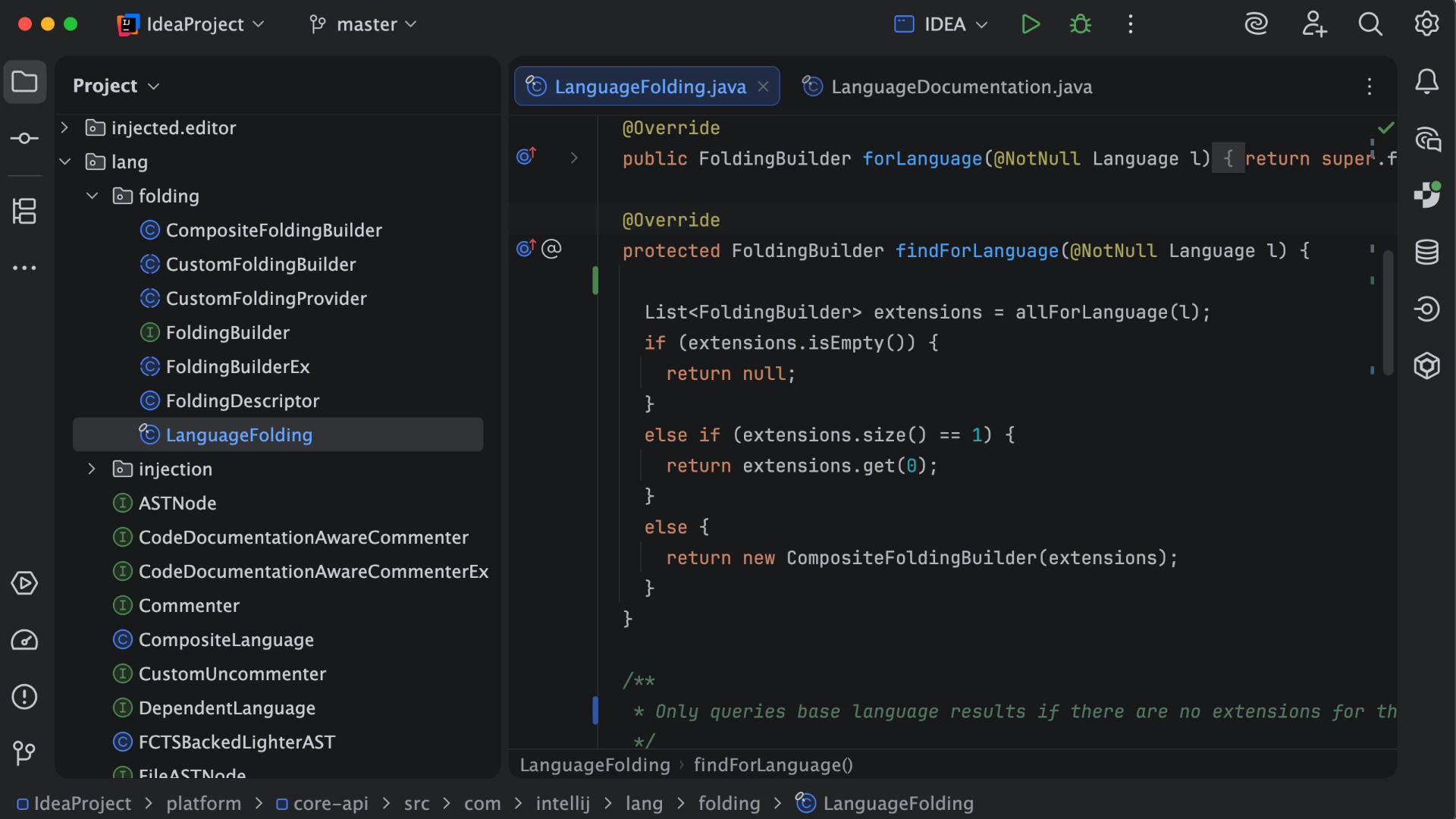
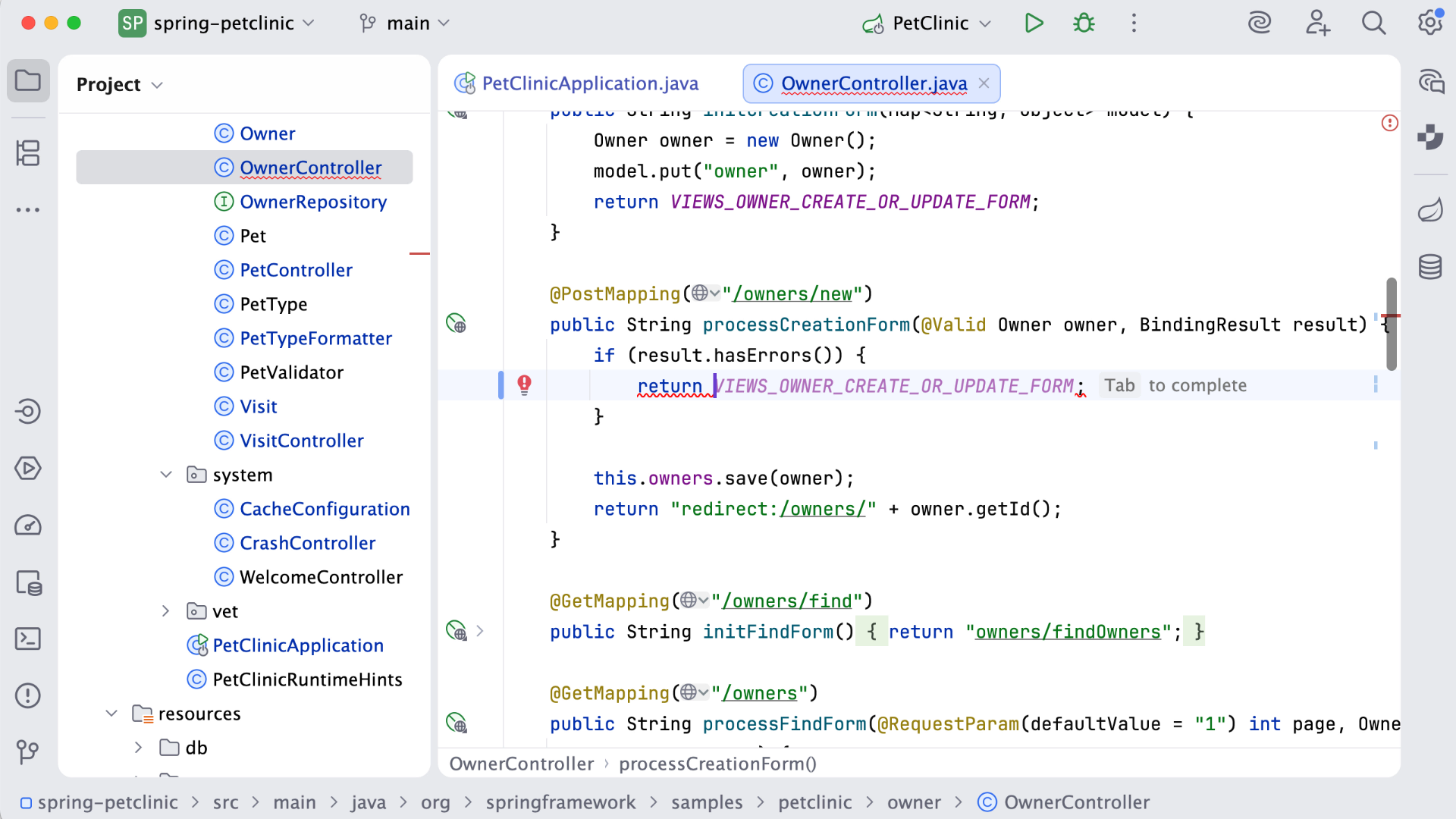
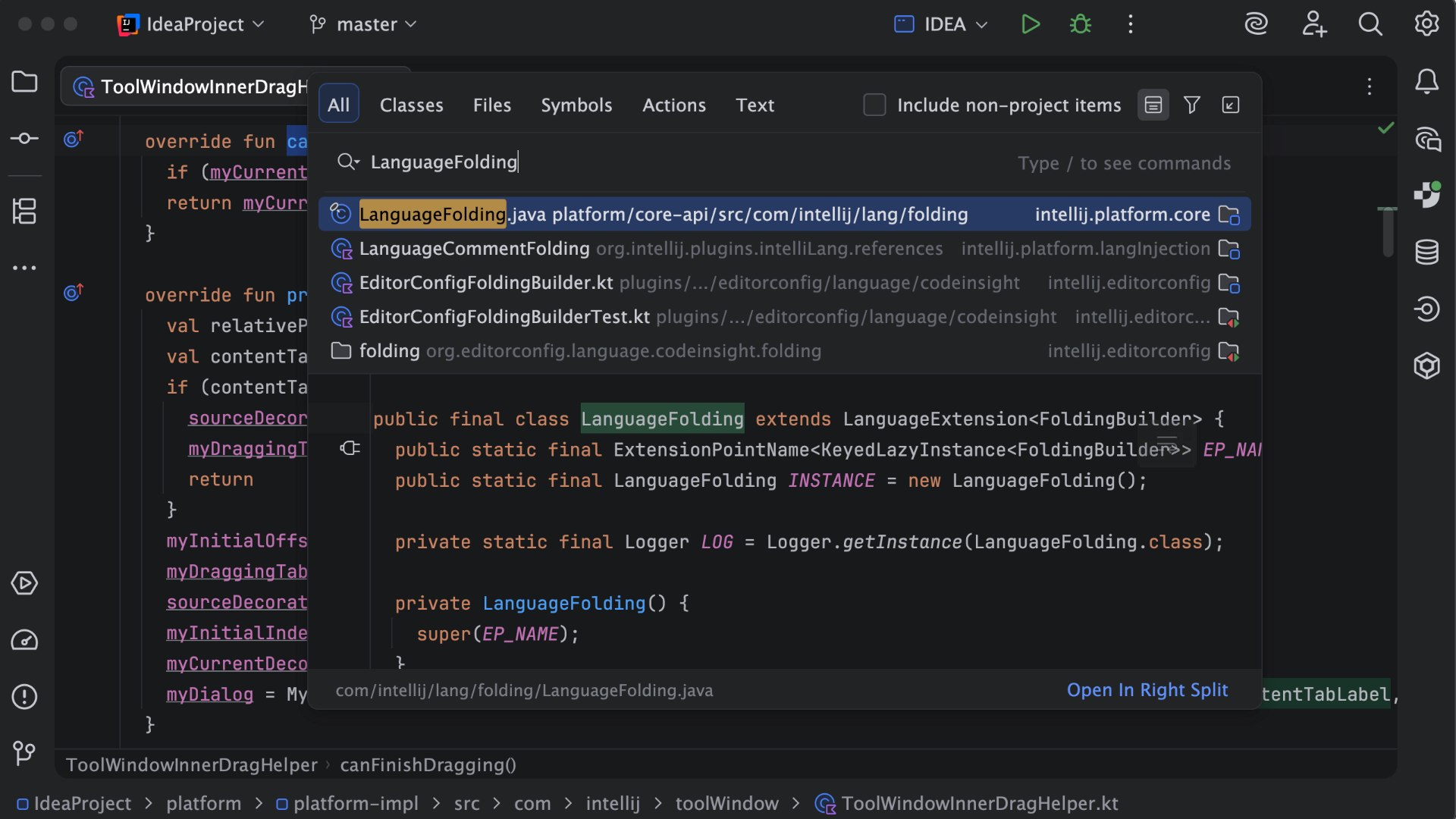
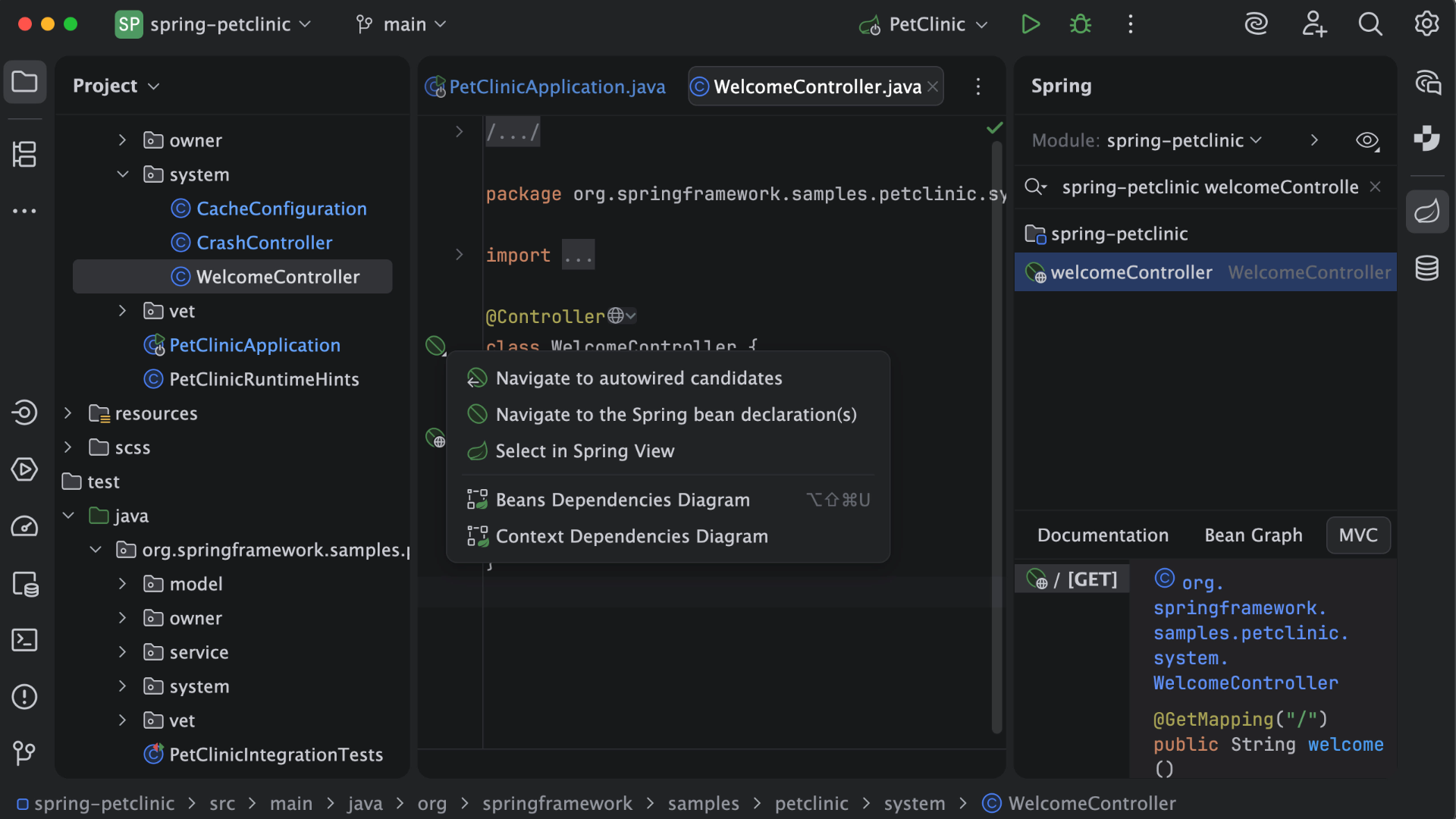
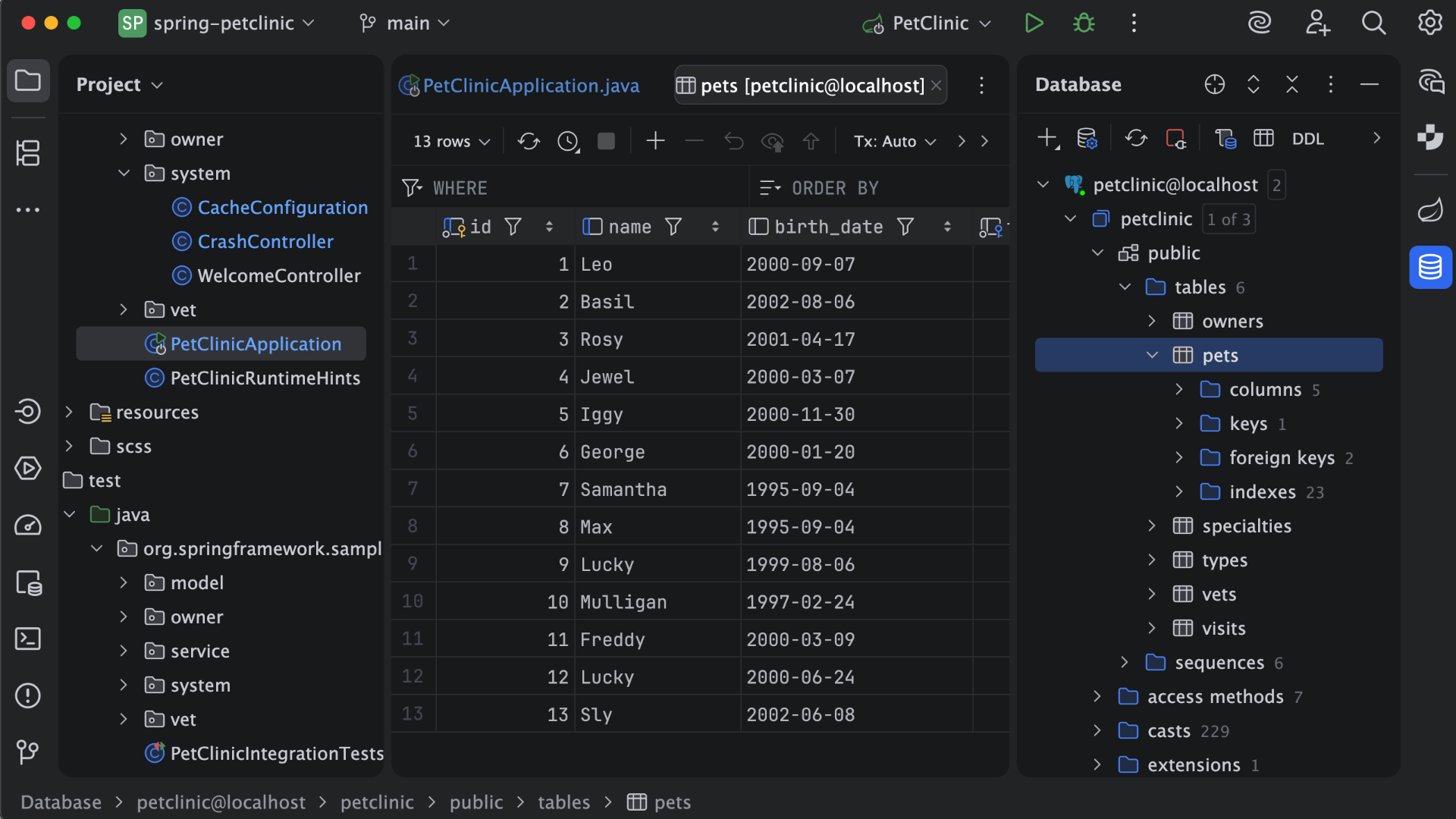
IntelliJ IDEA is an IDE that aims to give Java and Kotlin developers everything they need out of the box, including a smart code editor, built-in developer tools, framework support, database support, web development support, and much more.
$19.90
per month
Microsoft Visual Studio Code
Score 9.3 out of 10
N/A
Microsoft offers Visual Studio Code, an open source text editor that supports code editing, debugging, IntelliSense syntax highlighting, and other features.
$0
Oracle SQL Developer
Score 8.0 out of 10
N/A
Oracle SQL Developer is an integrated development environment (IDE) which provides editors for working with SQL, PL/SQL, Stored Java Procedures, and XML in Oracle databases.
N/A
Pricing
IntelliJ IDEA
Microsoft Visual Studio Code
Oracle SQL Developer
Editions & Modules
For Individual Use (Monthly billing)
$19.90
per month
For Organizations (Monthly billing)
$71.90
per month
For Individual Use (Yearly billing)
$199
per year
For Organizations (Yearly billing)
$719
per year
No answers on this topic
No answers on this topic
Offerings
Pricing Offerings
IntelliJ IDEA
Microsoft Visual Studio Code
Oracle SQL Developer
Free Trial
Yes
No
No
Free/Freemium Version
Yes
Yes
Yes
Premium Consulting/Integration Services
No
No
No
Entry-level Setup Fee
No setup fee
No setup fee
No setup fee
Additional Details
All Products Pack (For Individual Use) – $299 /1st year, $ 239 /2nd year and $ 179 /3d year onwards
All Products Pack (For Organizations) – $979 / year
Microsoft Visual Studio Code (VS) requires a lot of textual configuration, where IntelliJ IDEA provides a graphical interface with configuration options displayed. This matters a lot to me as I don't want to hunt around the internet to remember how to set different parameters …
IntelliJ IDEA has several benefits over vs code when it comes to Java applications, including in-built Java compilers, Maven lifecycle support, Lombok preprocessing, and sonar integration. While vs code is largely generic, IntelliJ IDEA has focused primarily on Java …
IntelliJ stacks better against Eclipse or vs code because it provides better code suggestions, out-of-the-box SonarLint integration, and built-in support for version control with git. It also has a vast collection of plugins that can increase developer productivity, reduce …
Back in the day, there weren't too many PHP IDEs with proper syntax and code checks, but PHPStorm and IDEA worked great. So great that when I needed a Java IDE the next time, I gave it a go and have never looked back since (okay, I did keep checking the competition and …
IntelliJ IDEA is the most specific and oriented towards my line of work, however, after using it for years - it's also my preferred IDE that I use for personal projects as well. Jetbrains other IDE offerings are almost as good and I do use them from time to time but IntelliJ …
IntelliJ surpassed every single competitor. The only viable alternative I still use is VisualStudio Code build in a browser for demo purposes... other than that, IDEA does everything better, faster, and in a more comfy way. This is the best IDE out there. This is just as good …
IntelliJ IDEA includes FTP deployment which is ideal for legacy web applications and simple projects that don't use CI/CD. The outline view which lists methods within a class (ColdFusion component) is the easiest to use out of any other IDE and makes navigating large files a …
They are memory friendly. The boot-up really fast as compared to IntelliJ IDE. Open-source and freely available to use is one of the major reasons if someone can switch from IntelliJ. Vast community support is available in case of any issue. They occupy less space as compared …
Since we are primarily a Scala shop, I only evaluated other tools based on their support for Scala. As I hinted at before, Vim and Sublime Text 3 have practically no support for Scala as all the Scala plugins that worked were never finished and abandoned and only work for Scala …
IntelliJ IDEA is the best we have found so far for development and querying CRM and databases. We buy licenses for several users to speed up our development and configuration processes. It really accelerates our development and productivity. It is stable and fast and easier to …
The main competitors of IntelliJ IDEA in the Java world must be Eclipse and Spring Tools Suite. It performs better than both in code refactoring, code completion and debugging (the features of an IDE) but the plugin support is much better in the other 2 products, since they are …
There are many IDEs available but I don't think anyone is better than Visual Studio Code. Most others are language dependent softwares while VS Code supports all the languages. There are others popular available like Atom, Eclipse, IntelliJ IDEA, and WebStorm but none of them …
Microsoft Visual Studio Code is a great competitor to all the IDEs listed above. The vast range of extensions is a strength of the Microsoft Visual Studio Code ecosystem. Integration of Copilot is another add-on, which makes development and debugging very easy and …
As mentioned before, IDE's can be excellent with one thing, and the company we do a lot of things, so it's kind of annoying to have multiple programs, heavy ones to open your work, so just use one, Microsoft Visual Studio Code, personalize thanks to extensions, and you are …
VS Code is much more lightweight than IntelliJ and Eclipse and is certainly comparable to Atom. I find that for most of my projects, VS Code is the most stable option, and is generally the quickest to boot. Generally, trying out all four can't hurt, but VS Code has been the …
I think VS Code is much better as compared to all the tools mentioned above. Just waiting for its support for iOS and Android development. currently, it misses support for them. That's where you will require Xcode and Android Studio.
When you start using [Microsoft Visual Studio Code], it lands more on the "text editor" side of the spectrum, akin to Vim/Emacs/Sublime. Aligned with this, it's fast and easy to install and setup, and competes with the best of them as a great general purpose tool. But then it …
Visual Studio Code is one of the peak engineering tools you can use today on the market. It's one of the most advanced IDE, and, currently, a de-facto top-used IDE. This alone should be proof to use it.
When it comes to UI and light weightiness, Visual Code is the winner. But when it comes to Intelli-Sense and autosuggestion IntelliJ works better in my view.
Compared against a lot of other popular IDEs, I would say that VSCode is the perfect balance between complexity, language support, etc, for web languages. It's faster than most (though not quite as fast as native ones like Notepad++ or Sublime Text), and very flexible. Even in …
The main plus for me was the speed, sleek UI, and the memorable shortcuts for VS Code. Also the smart auto-complete as well as version management (Git), Chrome debugging, and the possibility of plugging in multiple language-specific linters for a better code. The auto-complete …
In my opinion, VS Code is the best option for coding. It works on Windows, GNU/Linux, and macOS. Moreover, there's a great team/community behind the scene to maintain this program.
Oracle SQL Developer is easy to install, easy to use and navigate and feature rich graphical user interface to view and manage data. It can be used across various roles like developer, tester, administrator etc. It helps to develop a strong base for database understanding. …
Oracle SQL Developer is neck and neck with other tools. It offers all the required features and is much more reliable than many other vendors. Since it’s developed by Oracle, it works well with Oracle. It’s ultimately down to individual selection but Oracle SQL Developer offers …
IDEA has a built-in database connection and query platform. It has a slightly better code completion feature but lacks many of the functions of the SQL developer.
I have started to use Toad for Oracle recently because it is easier to sort and filter results, due to their memory sort feature that puts the results from your query in memory so that you don't have to rerun your query. I have used SQL Developer to easily update records in …
Prior to SQL developer, I was using the Apache Database connection add on for Eclipse IDE. It was also convenient to view the databases right from within Eclipse, however, the functionality was really limited.
This is a superb tool if your project involves a lot of backend development, especially in Java/Spring Boot and Kotlin. The support for the front end is great as well, but some developers may prefer to use the GitHub copilot add-on. I especially love using the GitHub copilot add-on. It may be less appropriate if your project requires heavy use of HotSwaps for backend debugging, as sometimes the support for that can be limited.
As a general workhorse IDE, Microsoft Visual Studio Codee is unmatched. Building on the early success of applications such as Atom, it has long been the standard for electron based IDEs. It can be outshone using IDEs that are dedicated to particular platforms, such as Microsoft Visual Studio Code for .net and the Jetbrains IDEs for Java, Python and others. For remote collaborative development, something like Zed is ahead of VSCode live share, which can be quite flakey.
Almost all development activities (the tool is called "SQL Developer", not "DBA Toolset") can be done easily and quick with [Oracle] SQL Developer. From data model creation (tables, views) to development (creation of procedures, functions, packages) and then testing (SQL Developer includes an easy to use debugger), all tasks can be performed in a single tool.
It may not be as complete as other solutions for DBA tasks like instance monitoring, but it is usually OK for development and testing environments if you want to do some basic troubleshooting.
Unit testing: Fully integrated into IntelliJ IDEA. Your unit tests will run smoothly and efficiently, with excellent debugging tools for when things get tricky.
Spring integration: Our Spring project using Maven works flawlessly in IntelliJ IDEA. I know firsthand that Apache is also easily and readily supported too. The integration is seamless and very easy to set up using IntelliJ IDEA's set up wizard when importing new projects.
Customization: IntelliJ IDEA comes out of the box with a bunch of handy shortcuts, as well as text prediction, syntax error detection, and other tools to help keep your code clean. But even better is that it allows for total customization of shortcuts you can easily create to suit your needs.
Object Browser in SQL Developer allows you to explore the contents of your database using the connection tree.
The SQL Worksheet is an editor that allows for execution of SQL statements, scripts, and PL/SQL anonymous blocks. SELECT statements can be executed to return results in a spreadsheet-like 'grid' or can be executed as a script such to emulate SQL*Plus behavior and output
DBA Console allows users with administrative privileges to access DBA features such as database init file configuration, RMAN backup, storage, etc.
The customization of key combinations should be more accessible and easier to change
The auxiliary panels could be minimized or as floating tabs which are displayed when you click on them
A monitoring panel of resources used by Microsoft Visual Studio Code or plugins and extensions would help a lot to be able to detect any malfunction of these
Inability to run multiple queries on the same database. You can only run one query on a given database.
Analytical models created from complex tables isn't accurate, and needs work.
Inability to view multiple tables of a database side-by-side. When trying to find correlations between tables, it would help to be able to see them at once on the same page.
VS Code is maturing and has a Scala plugin now. The overall experience with VS Code - for web development at least - is very snappy/fast. IntelliJ feels a bit sluggish in comparison. If that Scala plugin for VS Code is deemed mature enough - we may not bother renewing and resort to the Community Edition if we need it.
Solid tool that provides everything you need to develop most types of applications. The only reason not a 10 is that if you are doing large distributed teams on Enterprise level, Professional does provide more tools to support that and would be worth the cost.
There is always room for improvement, but I haven't met any IDE that I liked more so far. Even if it did not fit a use case right out of the box, there is always a way to configure how it works to do just that.
Microsoft Visual Studio Code earns a 10 for its exceptional balance of power and simplicity. Its intuitive interface, robust extension ecosystem, and integrated terminal streamline development. With seamless Git integration and highly customizable settings, it adapts perfectly to any workflow, making complex coding tasks feel effortless for beginners and experts alike.
Oracle SQL Developer is very easy to use and there are a wide range of courses available which can help you get started just within a day. Data can be exported in multiple formats based on user requirements. Organizational data can be stored and management effectively using Oracle SQL Developer. All the data, tables, sequences, indexes can be easily created and updated in Oracle SQL Developer.
Overall, Microsoft Visual Studio Code is pretty reliable. Every so often, though, the app will experience an unexplained crash. Since it is a stand-alone app, connectivity or service issues don't occur in my experience. Restarting the app seems to always get around the problem, but I do make sure to save and backup current work.
Microsoft Visual Studio Code is pretty snappy in performance terms. It launches quickly, and tasks are performed quickly. I don't have a lot of integrations other than CoPilot, but I suspect that if the integration partner is provisioned appropriately that any performance impact would be pretty minimal. It doesn't have a lot of bells and whistles (unless you start adding plugins left and right).
Customer support is really good in the case of IntelliJ. If you are paying for this product then, the company makes sure that you will get all the services adequately. Regular update patches are provided to improve the IDE. An online bug report makes it easier for the developers to find the solution as fast as possible. The large online community also helps to find the various solutions to the issues.
Active development means filing a bug on the GitHub repo typically gets you a response within 4 days. There are plugins for almost everything you need, whether it be linting, Vim emulation, even language servers (which I use to code in Scala). There is well-maintained official documentation. The only thing missing is forums. The closest thing is GitHub issues, which typically has the answers but is hard to sift through -- there are currently 78k issues.
This installs just like any other application - its pretty straight forward. Perhaps licensing could be more challenging - but if you use the cloud licensing they offer its as simple as having engineers login to the application and it just works.
Eclipse is just so old, like a dinosaur, compared to IntelliJ. There are still formats that Eclipse supports better, especially old and/or propriety ones. Still, most of the modern software development needs can be done on IntelliJ, & in a much better way, some of them are not even supported on Eclipse.
Visual Studio Code stacks up nicely against Visual Studio because of the price and because it can be installed without admin rights. We don't exclusively use Visual Studio Code, but rather use Visual Studio and Visual Studio code depending on the project and which version of source control the given project is wired up to.
I have started to use Toad for Oracle recently because it is easier to sort and filter results, due to their memory sort feature that puts the results from your query in memory so that you don't have to rerun your query. I have used SQL Developer to easily update records in tables that I need to fix. I haven't found an easy way to do this in Toad other than writing SQL insert statements.
It is easily deployed with our Jamf Pro instance. There is actually very little setup involved in getting the app deployed, and it is fairly well self-contained and does not deploy a large amount of associated files. However, it is not particularly conducive to large project, multi-developer/department projects that involve some form of central integration.