
LumApps vs. Microsoft Viva Goals (discontinued)
| Product | Rating | Most Used By | Product Summary | Starting Price |
|---|---|---|---|---|
 LumApps | Score8.2 out of 10 | Enterprise companies (1,001+ employees) | LumApps is an Employee Experience Platform that engages every employee with personalized communications, regardless of location, and empowers them to do their best work by connecting them with the tools, people, and information they need to get the job done. Integrations with both Microsoft and Google enables employees to share knowledge, resources, and connect with each other. The employee experience platform aligns and engages digital workplaces, and enables… | N/A |
 Microsoft Viva Goals (discontinued) | Score8.6 out of 10 | N/A | Microsoft Viva Goals (formerly Ally, or Ally.io) was a Strategic Goal-Planning & Execution Management software. Ally.io became a Microsoft brand after the October 2021 acquisition, and is slated for retirement December 2025. | $108 per year per user |
| LumApps | Microsoft Viva Goals (discontinued) | |||||||||||||||
|---|---|---|---|---|---|---|---|---|---|---|---|---|---|---|---|---|
| Editions & Modules | No answers on this topic |
| ||||||||||||||
| Offerings |
| |||||||||||||||
| Entry-level Setup Fee | Optional | No setup fee | ||||||||||||||
| Additional Details | Pricing is upon request. | — | ||||||||||||||
| More Pricing Information | ||||||||||||||||
| LumApps | Microsoft Viva Goals (discontinued) | |
|---|---|---|
| Considered Both Products | No answer on this topic | No answer on this topic |
| Key User Insights | ||
| Would buy again | ||
87% Would buy again 26 Answers | No answers on this topic | |
| Delivers good value for the price | ||
96% Delivers good value for the price 22 Answers | No answers on this topic | |
| Happy with the feature set | ||
83% Happy with the feature set 25 Answers | No answers on this topic | |
| Lived up to sales and marketing promises | ||
84% Lived up to sales and marketing promises 16 Answers | No answers on this topic | |
| Implementation went as expected | ||
83% Implementation went as expected 20 Answers | No answers on this topic | |
| LumApps | Microsoft Viva Goals (discontinued) | |
|---|---|---|
| Small Businesses |  HCL Connections Score9 out of 10 | No answers on this topic |
| Medium-sized Companies | HCL Connections Score9 out of 10 | No answers on this topic |
| Enterprises | HCL Connections Score9 out of 10 | No answers on this topic |
| All Alternatives | View all alternatives | View all alternatives |
| LumApps | Microsoft Viva Goals (discontinued) | |
|---|---|---|
| Likelihood to Recommend | 8.2 | 8.0 |
| Likelihood to Renew | 9.8 | - |
| Usability | 6.4 | - |
| Support Rating | 8.0 | - |
| Configurability | 8.1 | - |
| Ease of integration | 7.4 | - |
| LumApps | Microsoft Viva Goals (discontinued) | |
|---|---|---|
| Likelihood to Recommend |
|
|
| Pros |
|
|
| Cons |
|
|
| Likelihood to Renew |
| No answers on this topic |
| Usability |
| No answers on this topic |
| Support Rating |
| No answers on this topic |
| Alternatives Considered |
|
|
| Return on Investment |
|
|
| ScreenShots | LumApps Screenshots   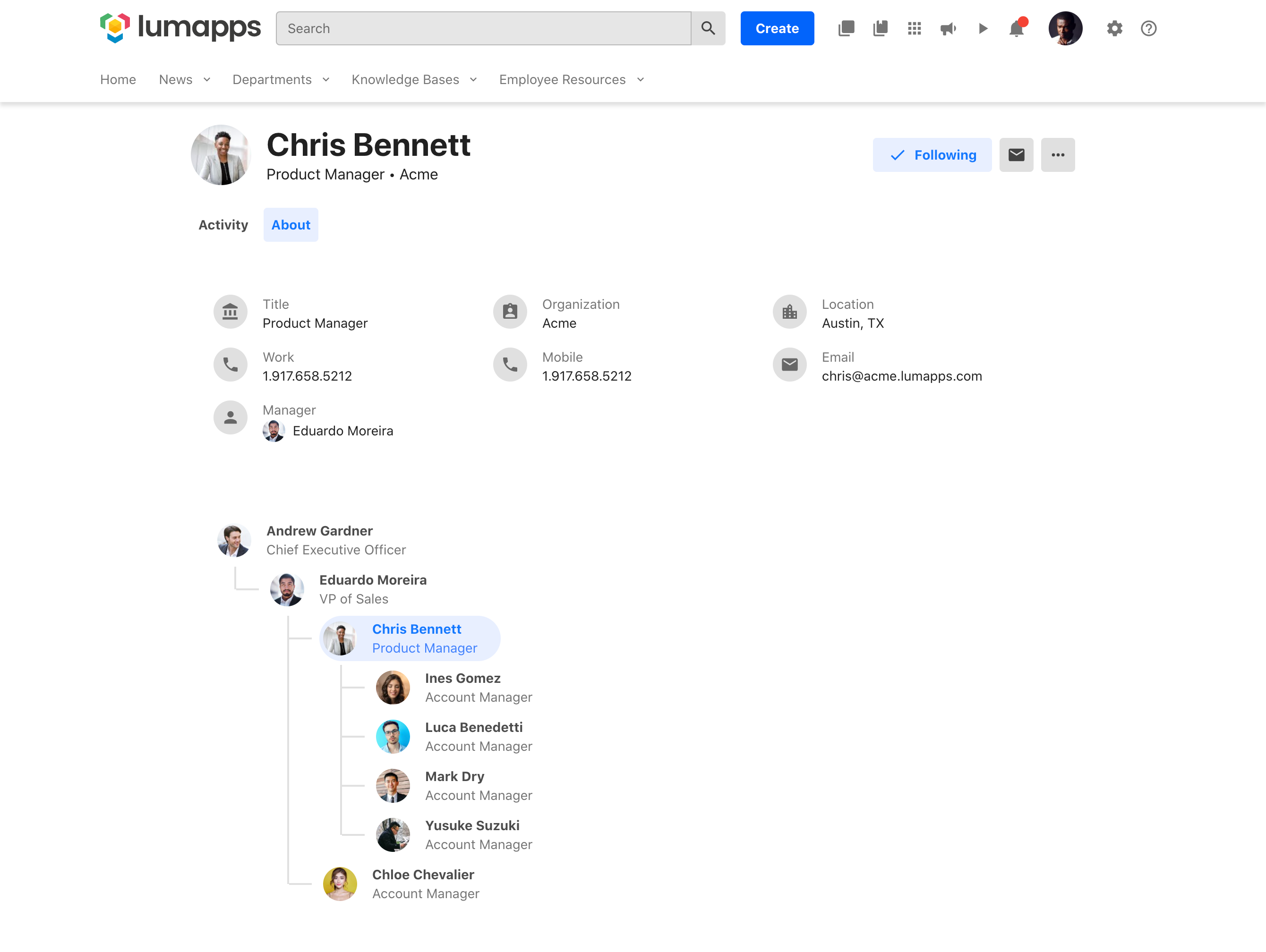  |



