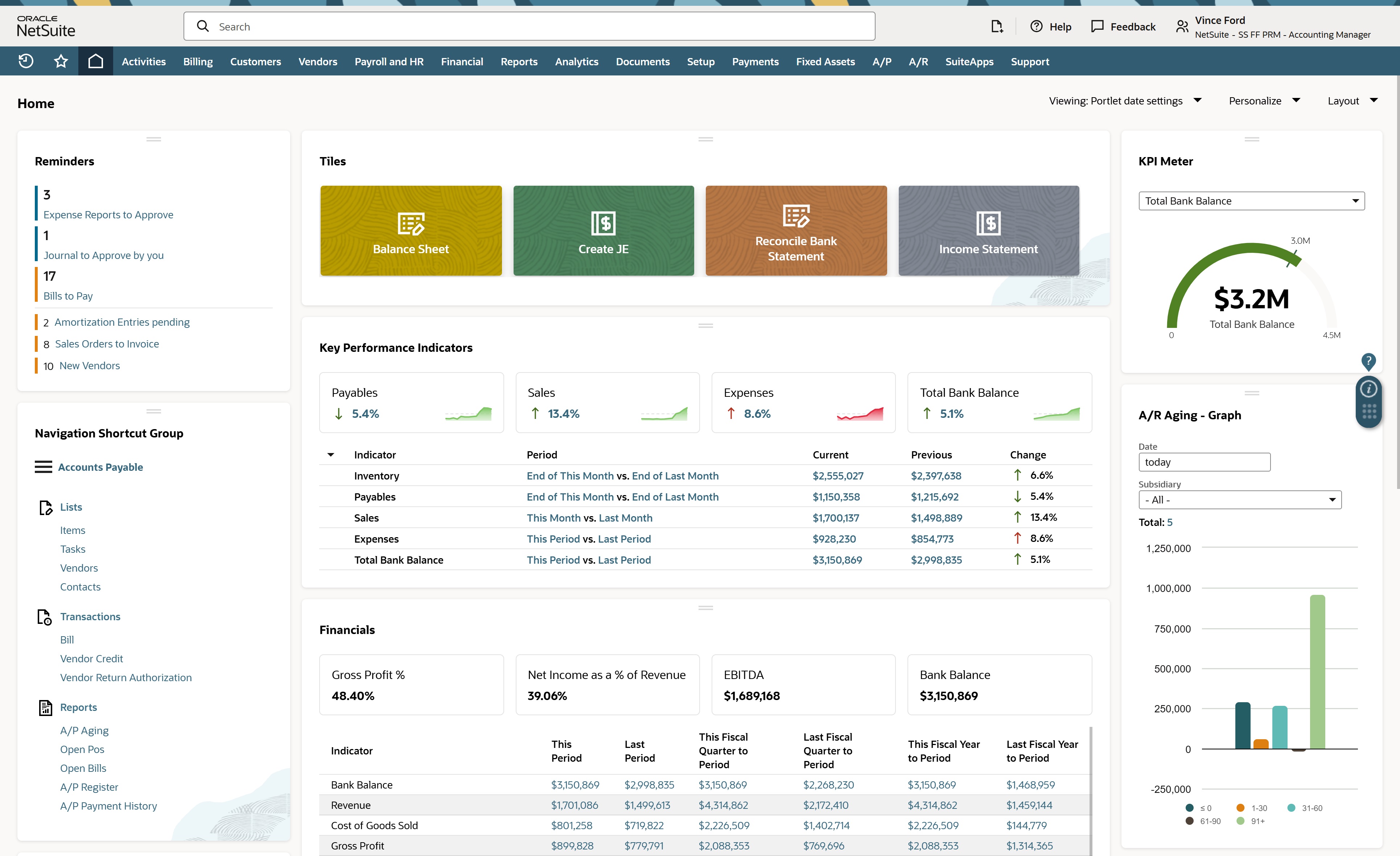
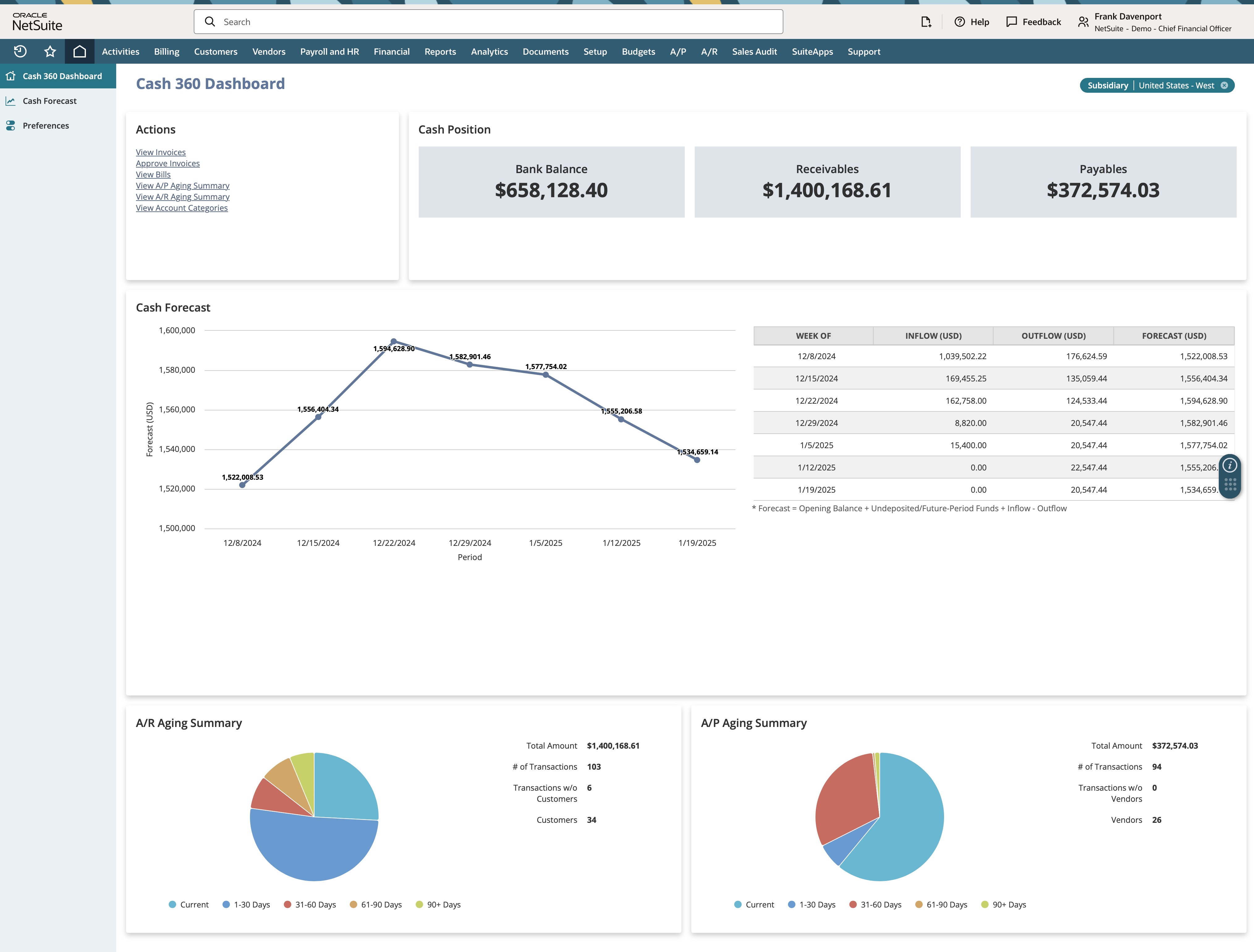
NetSuite is a suite of ERP and accounting modules which is sold in various editions aimed at different size customers. The multi-country, multi-currency version is an additional module called OneWorld. Netsuite is a SaaS system and is not offered in an on-premise edition.
N/A
Pricing
NetSuite ERP
Editions & Modules
No answers on this topic
Offerings
Pricing Offerings
NetSuite ERP
Free Trial
No
Free/Freemium Version
No
Premium Consulting/Integration Services
No
Entry-level Setup Fee
No setup fee
Additional Details
Users subscribe to NetSuite for an annual license fee. The license is made up of three main components: core platform, optional modules and the number of users. There is also a one-time implementation fee for initial setup. New modules and users and can be added as a business grows.
Director of Enterprise Systems in Information Technology at Millennium (Wholesale, 51-200 employees)
Chose NetSuite ERP
We chose HubSpot CRM over using NetSuite's CRM due to the better features of the HubSpot version. We do have some scripts and integrations in-place to keep the two systems in sync.
A de minimis incentive was given to thank the reviewer for their time. The incentive was not used to bias or drive a particular response, nor was the incentive contingent on a positive endorsement. More Info
Head of FP&A in Finance and Accounting at Mutual of America (Financial Services, 501-1000 employees)
Chose NetSuite ERP
NetSuite was way easier to understand and implement. The cost was close to the same across all of the systems we considered, but we also had internal employees that have used NetSuite before and loved it. That helped push us in the direction of NetSuite and we have been …
A de minimis incentive was given to thank the reviewer for their time. The incentive was not used to bias or drive a particular response, nor was the incentive contingent on a positive endorsement. More Info
Verified User
Chose NetSuite ERP
Much better ERP overall in most areas compare to Microsoft Dynamics GP. Better reporting, better audit trails and etc
A de minimis incentive was given to thank the reviewer for their time. The incentive was not used to bias or drive a particular response, nor was the incentive contingent on a positive endorsement. More Info
Website Manager in Professional Services at BoxoUSA (Retail, 11-50 employees)
Chose NetSuite ERP
Oracle NetSuite ERP is lightyears ahead with the sophistication and accuracy of their ERP. There are so many more options for inventory management, accounting, and more. We felt that NetSuite ERP provided us with the most growth opportunity and would be able to keep up with …
A de minimis incentive was given to thank the reviewer for their time. The incentive was not used to bias or drive a particular response, nor was the incentive contingent on a positive endorsement. More Info
Computer and Information Systems Manager in Information Technology at ATRO Parts (Automotive, 51-200 employees)
Chose NetSuite ERP
NetSuite Bundled many features into the core system. We reviewed Plex Manufacturing as well. That was not an option to list, but it was a manufacturing software at the core, but required lot/serial. NetSuite allowed us the flexibility and we could customize inside NetSuite ERP …
A de minimis incentive was given to thank the reviewer for their time. The incentive was not used to bias or drive a particular response, nor was the incentive contingent on a positive endorsement. TR verified that a representative sample of customers was invited. More Info
VP of Special Projects at Monnit Corp (Consumer Electronics, 51-200 employees)
Chose NetSuite ERP
I had used NetSuite in a previous company and was there during implementation. While working there I enjoyed using NetSuite and never came across a situation that it couldn't handle. When I moved to a new company and was tasked with implementing an ERP system, there was no …
A de minimis incentive was given to thank the reviewer for their time. The incentive was not used to bias or drive a particular response, nor was the incentive contingent on a positive endorsement. More Info
Verified User
Chose NetSuite ERP
I think NetSuite ERP stacks up in the middle against most of the above companies, Microsoft Dynamics 365 might offer the best bang for your buck but lacks in experience. Shopify is great as a front end platform buck lacks the overall structure that NetSuite offers. Salesforce …
A de minimis incentive was given to thank the reviewer for their time. The incentive was not used to bias or drive a particular response, nor was the incentive contingent on a positive endorsement. More Info
Netsuite Administrator in Information Technology at Vivify (Wholesale, 51-200 employees)
Chose NetSuite ERP
Acumatica is newer to me in my 18+ years of experience, but from what I have seen and experienced I would recommend changing to Acumatica if NetSuite ERP ever became an issue with price or usability.
A de minimis incentive was given to thank the reviewer for their time. The incentive was not used to bias or drive a particular response, nor was the incentive contingent on a positive endorsement. More Info
Staff Accountant in Finance and Accounting at Vertech Industrial (Industrial Automation, 51-200 employees)
Chose NetSuite ERP
I have also used Fiserv, but NetSuite is far superior in ease of use and navigation. I personally feel like it is far superior in design and overall look of the interface as well. The customization in NetSuite makes it a top contender for these types of products.
A de minimis incentive was given to thank the reviewer for their time. The incentive was not used to bias or drive a particular response, nor was the incentive contingent on a positive endorsement. More Info
Verified User
Chose NetSuite ERP
In my prior positions, I used several Sage and QuickBooks products, and NetSuite is head and tail above them. If you are an accountant, you really get what you pay for. You can build a lot of control around users and locking periods, plus you have the flexibility to easily …
A de minimis incentive was given to thank the reviewer for their time. The incentive was not used to bias or drive a particular response, nor was the incentive contingent on a positive endorsement. More Info
Information Technology Director in Information Technology at Amatheon Animal Health (Pharmaceuticals, 51-200 employees)
Chose NetSuite ERP
NetSuite offers a more integrated approach, combining CRM with ERP functionalities. NetSuite is better for our business because we needed a broader range of business management tools. NetSuite is an all-in-one enterprise resource planning (ERP) solution that includes CRM …
A de minimis incentive was given to thank the reviewer for their time. The incentive was not used to bias or drive a particular response, nor was the incentive contingent on a positive endorsement. TR verified that a representative sample of customers was invited. More Info
A de minimis incentive was given to thank the reviewer for their time. The incentive was not used to bias or drive a particular response, nor was the incentive contingent on a positive endorsement. More Info
Controller in Corporate at Ankura (Accounting, 501-1000 employees)
Chose NetSuite ERP
NetSuite by far is the most expensive; However, compared to the 3 systems notated, the overall functionality, capability and reporting advantages make it my top choice for companies experiencing exponential growth across all departments. Its a best in class solution for just …
A de minimis incentive was given to thank the reviewer for their time. The incentive was not used to bias or drive a particular response, nor was the incentive contingent on a positive endorsement. TR verified that a representative sample of customers was invited. More Info
Verified User
Chose NetSuite ERP
There comes a point where companies outgrow QuickBooks due to the lack of dimensions, limited reporting, data integrity on prior periods, controls over user access and manipulation levels. However, Oracle and SAP type solutions are likely in the millions of dollars to acquire …
A de minimis incentive was given to thank the reviewer for their time. The incentive was not used to bias or drive a particular response, nor was the incentive contingent on a positive endorsement. TR verified that a representative sample of customers was invited. More Info
IT Manager in Information Technology at Sterling Distributors (Wholesale, 11-50 employees)
Chose NetSuite ERP
First, it runs in the cloud, meaning we don't have to host anything; we also don't need to apply manual updates for every single computer. I remember the headache of updating Sage on the server and, if successful, then on each one of the +-20 computers. Now, NetSuite ERP send …
A de minimis incentive was given to thank the reviewer for their time. The incentive was not used to bias or drive a particular response, nor was the incentive contingent on a positive endorsement. TR verified that a representative sample of customers was invited. More Info
Lead Analyst in Information Technology at EC-Council (Information Technology & Services, 501-1000 employees)
Chose NetSuite ERP
We looked at SAP Business One, which is quite strong in financials and manufacturing, but we found it a bit rigid and more suitable for traditional industries rather than service and education-based organizations like ours. We also considered Microsoft Dynamics 365, which had …
A de minimis incentive was given to thank the reviewer for their time. The incentive was not used to bias or drive a particular response, nor was the incentive contingent on a positive endorsement. TR verified that a representative sample of customers was invited. More Info
Verified User
Chose NetSuite ERP
Netsuite offers as much, if not more, than the competitors. The price modules can vary, and I find NetSuite's less transparent. However, we chose Netsuite for the investments they were making and the SCA web integration to ERP, not many have that function. The NetSuite/Oracle …
A de minimis incentive was given to thank the reviewer for their time. The incentive was not used to bias or drive a particular response, nor was the incentive contingent on a positive endorsement. More Info
Verified User
Chose NetSuite ERP
Advanced features that Netsuite had. Easy integration with other financial and CRM systems. Implementation and governance can be easy handled. Easy to maintain and support. Handles very high volume of data. More new features are in pipeline. As it is used across many company …
A de minimis incentive was given to thank the reviewer for their time. The incentive was not used to bias or drive a particular response, nor was the incentive contingent on a positive endorsement. TR verified that a representative sample of customers was invited. More Info
A de minimis incentive was given to thank the reviewer for their time. The incentive was not used to bias or drive a particular response, nor was the incentive contingent on a positive endorsement. TR verified that a representative sample of customers was invited. More Info
Verified User
Chose NetSuite ERP
QuickBooks Online is, by far, a better and easier-to-use product for smaller companies. Only switch to Netsuite if you have to. We switched to NetSuite because we have numerous subsidiaries, and QuickBooks would not be able to handle the complexity.
A de minimis incentive was given to thank the reviewer for their time. The incentive was not used to bias or drive a particular response, nor was the incentive contingent on a positive endorsement. TR verified that a representative sample of customers was invited. More Info
Verified User
Chose NetSuite ERP
NetSuite ERP is superior to Sage 100 in that it provides better reporting flexibility and a self run elimination ledger in the accounting close process. We went with NetSuite ERP for their affordability and flexibility providing more "bang for the buck."
A de minimis incentive was given to thank the reviewer for their time. The incentive was not used to bias or drive a particular response, nor was the incentive contingent on a positive endorsement. More Info
Verified User
Chose NetSuite ERP
As our company grows, we determined that we needed something that goes deeper than Quickbooks, has more customization options for various functions, and allows us to have visibility across the entire company. While Quickbooks was definitely a bit more intuitive in terms of …
A de minimis incentive was given to thank the reviewer for their time. The incentive was not used to bias or drive a particular response, nor was the incentive contingent on a positive endorsement. TR verified that a representative sample of customers was invited. More Info
Verified User
Chose NetSuite ERP
It was familiar to a few people in our organization who primarily use it.
A de minimis incentive was given to thank the reviewer for their time. The incentive was not used to bias or drive a particular response, nor was the incentive contingent on a positive endorsement. More Info
Finance Operations Consultant in Finance and Accounting at Banner Management Consulting (Financial Services, 51-200 employees)
Chose NetSuite ERP
In the past I always had a puzzle to assemble, with regards to data and management & ad-hoc reporting. With NetSuite ERP, as mentioned previously, everything is in one easy to retrieve place, and all the systems are there and cohesive. Although Workday Adaptive Planning and HFM …
A de minimis incentive was given to thank the reviewer for their time. The incentive was not used to bias or drive a particular response, nor was the incentive contingent on a positive endorsement. More Info
NetSuite ERP is a very robust ERP. For a small business, it might be overkill and even too expensive. What I mean by this is that there are advanced functionalities that NetSuite ERP has, such as forecasting, warehouse management, and custom workflows, that are not necessary for a small business. However, as a business starts to grow, NetSuite ERP provides endless growth opportunity to meet a companies needs. We are still technically a small company of only 15 employees, but NetSuite ERP has the ability to help us grow and we will not outgrow NetSuite ERP. NetSuite ERP can handle financial tracking with P&L, tax calculations, shipping, vendor management, and so much more.
A de minimis incentive was given to thank the reviewer for their time. The incentive was not used to bias or drive a particular response, nor was the incentive contingent on a positive endorsement. More Info
A de minimis incentive was given to thank the reviewer for their time. The incentive was not used to bias or drive a particular response, nor was the incentive contingent on a positive endorsement. TR verified that a representative sample of customers was invited. More Info
NetSuite is able to cover all of our needs, spanning multiple departments and managerial levels. We use it daily for a multitude of functions, including creating promotions, estimating inventory, pulling historical reports, forecasting sales, and more. Overall, we're very satisfied with NetSuite as an ERP solution and recommend it to medium to large businesses.
A de minimis incentive was given to thank the reviewer for their time. The incentive was not used to bias or drive a particular response, nor was the incentive contingent on a positive endorsement. TR verified that a representative sample of customers was invited. More Info
NetSuite is a cloud tool, and is easy to implement for mid-sized organizations. It comes with standard forms/ printing layouts, and financial reporting (both summary and detailed), which are very handy for business users. In addition to these, with 99.99% service availability, NetSuite makes it one of the most reliable ERP tools available on the market.
A de minimis incentive was given to thank the reviewer for their time. The incentive was not used to bias or drive a particular response, nor was the incentive contingent on a positive endorsement. More Info
It has been very reliable. I can only think of 1-2 times in 4.5 years that we have had issues getting in, and in each case were able to get back in within 1 hour. There has not been a major downtime
Most of the time the performance is very good. Pages load in a few seconds; financial reports take less than 5 seconds; basic searches take a few seconds. But performance can be sporadic throughout the day and cause the run time to triple.
A de minimis incentive was given to thank the reviewer for their time. The incentive was not used to bias or drive a particular response, nor was the incentive contingent on a positive endorsement. More Info
I would like to give 8 rating for NetSuite support and reason for that is below: Whenever we faced any technical or functional issues we tried to reach out to NEtSuite support but response was not immediate. We told them about the urgency of the issue but still we were not getting response on time. Then, we have to reach out to AE to get things resolved.
A de minimis incentive was given to thank the reviewer for their time. The incentive was not used to bias or drive a particular response, nor was the incentive contingent on a positive endorsement. More Info
I had in person training for a day when first got the software. The training was good. The challenge was that there was a large gap between training and when we went live so we forgot quite a lot
I felt NetSuite Professional Services did an excellent job of guiding us in the implementation. I also felt our internal teams were a little resistant to the change and engagement of new software. Had we performed better engaging and buying into the new software, I would be able to rate the implementation better. Therefore, the lower number should not be viewed as a deficiency with the software or the professional services teams, but as an reminder of how important complete buy-in from the local users is.
A de minimis incentive was given to thank the reviewer for their time. The incentive was not used to bias or drive a particular response, nor was the incentive contingent on a positive endorsement. More Info
NetSuite by far is the most expensive; However, compared to the 3 systems notated, the overall functionality, capability and reporting advantages make it my top choice for companies experiencing exponential growth across all departments. Its a best in class solution for just about any user.
A de minimis incentive was given to thank the reviewer for their time. The incentive was not used to bias or drive a particular response, nor was the incentive contingent on a positive endorsement. TR verified that a representative sample of customers was invited. More Info
We have been able to scale our business 25X without any major overhaul with Netsuite. Its dashboard setup makes onboarding new employees very easy and allows data to be shared across multiple offices. Its cloud setup does not put any pressure on IT to scale servers or other infrastructure. We have been able to become much more efficient in all aspects of the business.
NetSuite software has improved our process controls and enhanced cash management, especially in huge projects.
The software has helped us with budgeting, forecasting, and real-time financial reporting.
Introduction of NetSuite ERP into our organisation has completely changed the way we do things by enhancing compliance, ensuring real-time project milestone tracking, and enabling portfolio management.