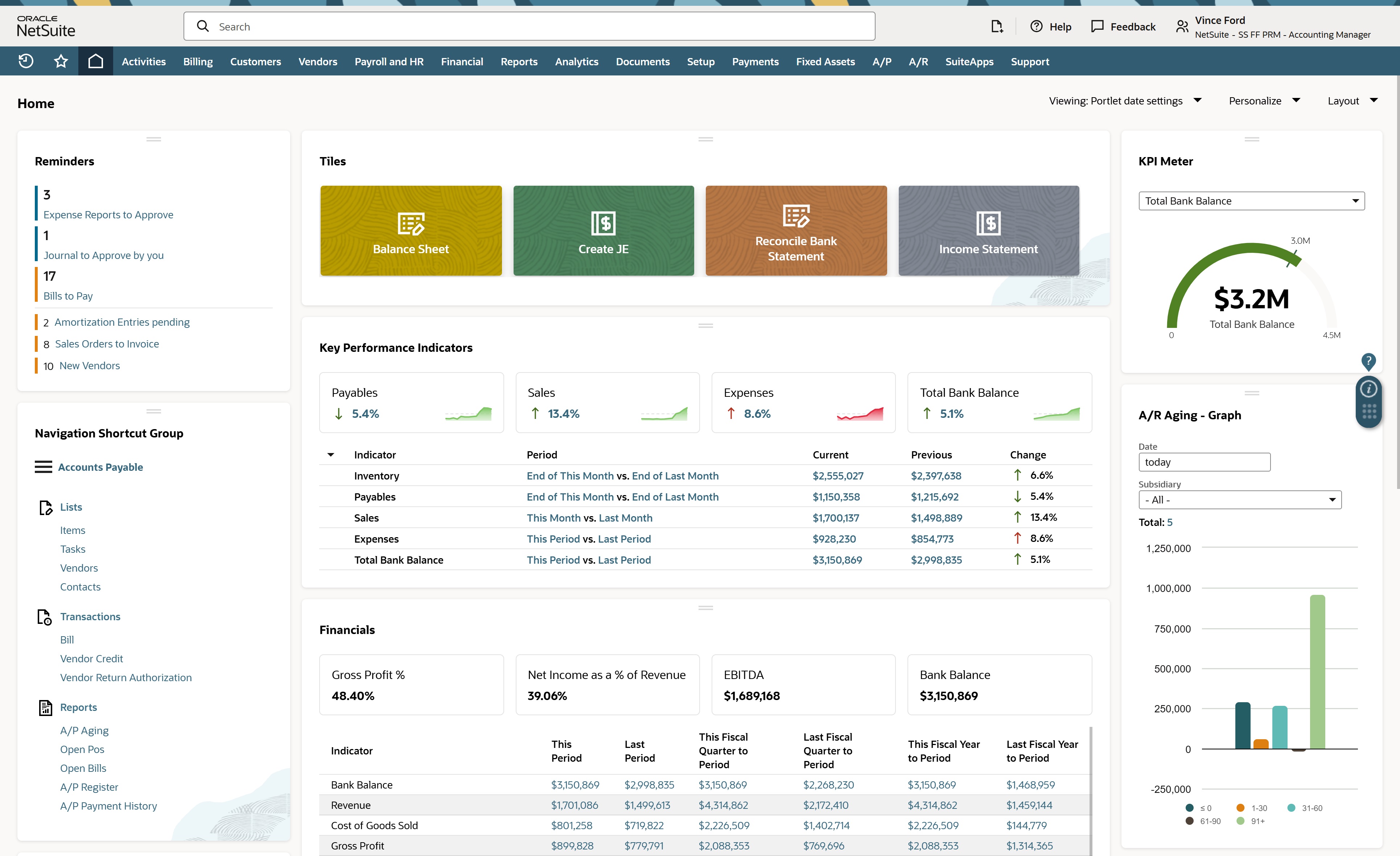
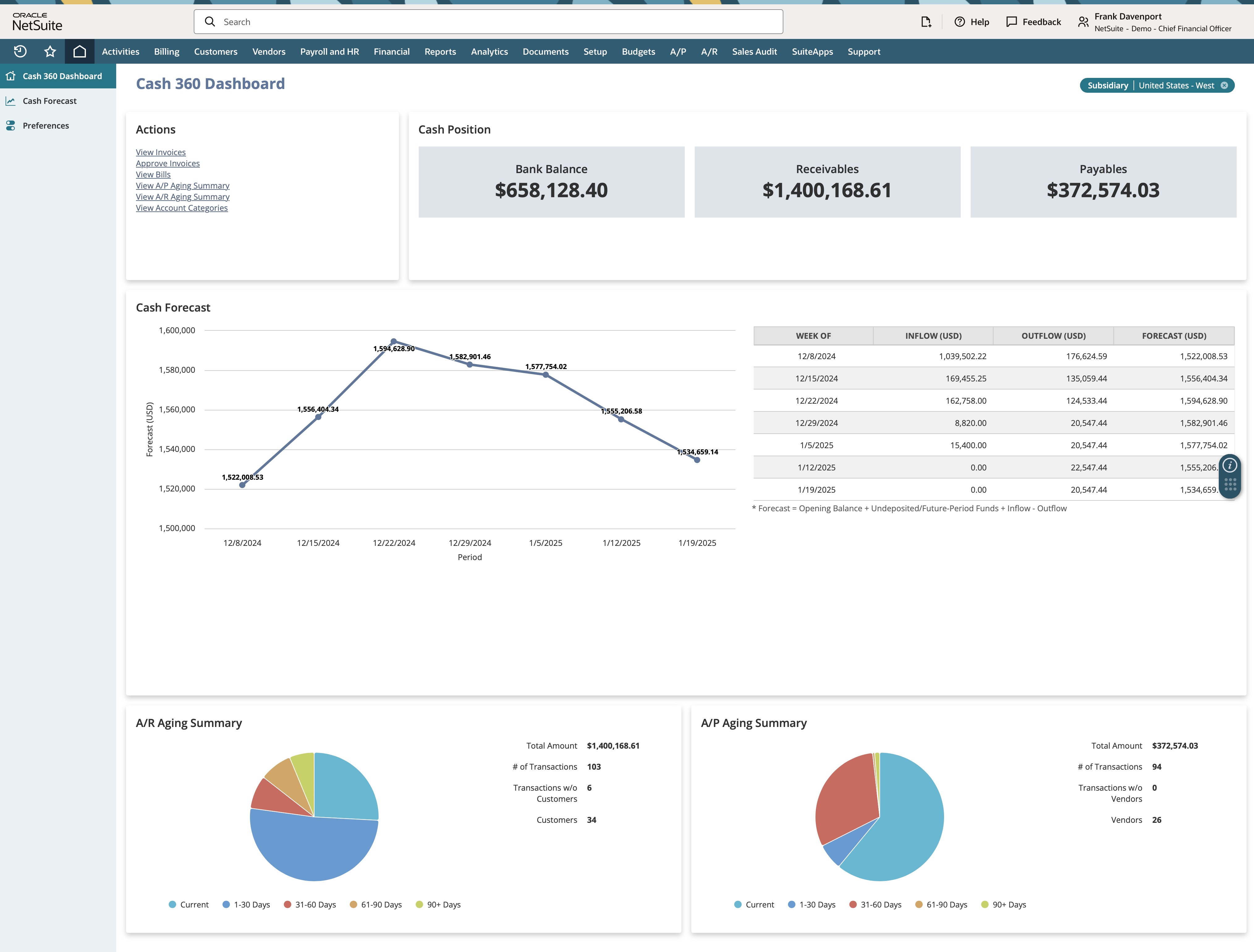
NetSuite is a suite of ERP and accounting modules which is sold in various editions aimed at different size customers. The multi-country, multi-currency version is an additional module called OneWorld. Netsuite is a SaaS system and is not offered in an on-premise edition.
N/A
Oracle E-Business Suite
Score6.3 out of 10
N/A
Oracle E-Business Suite is a comprehensive suite of integrated, global business applications. The suite includes cross-industry capabilities spanning ERP, CRM and supply chain planning.
N/A
Pricing
NetSuite ERP
Oracle E-Business Suite
Editions & Modules
No answers on this topic
No answers on this topic
Offerings
Pricing Offerings
NetSuite ERP
Oracle E-Business Suite
Free Trial
No
No
Free/Freemium Version
No
No
Premium Consulting/Integration Services
No
No
Entry-level Setup Fee
No setup fee
No setup fee
Additional Details
Users subscribe to NetSuite for an annual license fee. The license is made up of three main components: core platform, optional modules and the number of users. There is also a one-time implementation fee for initial setup. New modules and users and can be added as a business grows.
CFO (Chief Financial Officer) in Corporate at M. BRASHEM, Inc. (Wholesale, 11-50 employees)
Chose NetSuite ERP
In my opinion, NetSuite ERP has similar capabilities, but at a fraction of the cost. Oracle is a tier 1 solution and I was part of the selection and implementation team for this solution. Implementation was intense and it took us 8 months to install. NetSuite ERP we installed …
A de minimis incentive was given to thank the reviewer for their time. The incentive was not used to bias or drive a particular response, nor was the incentive contingent on a positive endorsement. More Info
Verified User
Chose NetSuite ERP
NetSuite is very user friendly and easy to use against most of the competitors.
A de minimis incentive was given to thank the reviewer for their time. The incentive was not used to bias or drive a particular response, nor was the incentive contingent on a positive endorsement. More Info
A de minimis incentive was given to thank the reviewer for their time. The incentive was not used to bias or drive a particular response, nor was the incentive contingent on a positive endorsement. TR verified that a representative sample of customers was invited. More Info
Consulting Manager in Information Technology at PT. Metrodata Electronics Tbk (Information Technology and Services, 501-1000 employees)
Chose Oracle E-Business Suite
NetSuite is suitable if you only need a simple Financial & SCM application. The license investment is also not as big as Oracle EBS. You also get transactional business intelligence, embedded within the product.
You might also want to consider SAP, if you see it is better to …
A de minimis incentive was given to thank the reviewer for their time. The incentive was not used to bias or drive a particular response, nor was the incentive contingent on a positive endorsement. More Info
NetSuite ERP is a very robust ERP. For a small business, it might be overkill and even too expensive. What I mean by this is that there are advanced functionalities that NetSuite ERP has, such as forecasting, warehouse management, and custom workflows, that are not necessary for a small business. However, as a business starts to grow, NetSuite ERP provides endless growth opportunity to meet a companies needs. We are still technically a small company of only 15 employees, but NetSuite ERP has the ability to help us grow and we will not outgrow NetSuite ERP. NetSuite ERP can handle financial tracking with P&L, tax calculations, shipping, vendor management, and so much more.
A de minimis incentive was given to thank the reviewer for their time. The incentive was not used to bias or drive a particular response, nor was the incentive contingent on a positive endorsement. More Info
Oracle Cash and Treasury Management fill the gaps in treasury management with features that are very helpful in building the modern financial system that we so desperately need. It may not be the most intuitive tool on the treasury market, but with a little more practice time, important expense analysis can be achieved. I am confident in this treasury tool for this year 2022 and I would like to recommend it to other companies so that they can also have a better administration.
A de minimis incentive was given to thank the reviewer for their time. The incentive was not used to bias or drive a particular response, nor was the incentive contingent on a positive endorsement. More Info
A de minimis incentive was given to thank the reviewer for their time. The incentive was not used to bias or drive a particular response, nor was the incentive contingent on a positive endorsement. TR verified that a representative sample of customers was invited. More Info
The EBS Oracle Order Management and Shipping Execution solution allows the creation of an integrated, seamless order-to-cash process and accurately capture of customer orders across multiple channels.
Orchestration of order details for seamless fulfillment execution.
Efficient shipment planning and confirmation.
Communication of order status information to customers throughout the order lifecycle.
A de minimis incentive was given to thank the reviewer for their time. The incentive was not used to bias or drive a particular response, nor was the incentive contingent on a positive endorsement. TR verified that a representative sample of customers was invited. More Info
A de minimis incentive was given to thank the reviewer for their time. The incentive was not used to bias or drive a particular response, nor was the incentive contingent on a positive endorsement. More Info
NetSuite is able to cover all of our needs, spanning multiple departments and managerial levels. We use it daily for a multitude of functions, including creating promotions, estimating inventory, pulling historical reports, forecasting sales, and more. Overall, we're very satisfied with NetSuite as an ERP solution and recommend it to medium to large businesses.
A de minimis incentive was given to thank the reviewer for their time. The incentive was not used to bias or drive a particular response, nor was the incentive contingent on a positive endorsement. TR verified that a representative sample of customers was invited. More Info
After almost 5 years, we have a full control of this ERP System. We are able to implement new functionalities and modules without any major "consulting" expenses. As of today we are making almost 90% of the personalization/customization and implementation all in house. Once [it] is tuned, [it] keeps running very well with no major issues.
A de minimis incentive was given to thank the reviewer for their time. The incentive was not used to bias or drive a particular response, nor was the incentive contingent on a positive endorsement. More Info
NetSuite is a cloud tool, and is easy to implement for mid-sized organizations. It comes with standard forms/ printing layouts, and financial reporting (both summary and detailed), which are very handy for business users. In addition to these, with 99.99% service availability, NetSuite makes it one of the most reliable ERP tools available on the market.
A de minimis incentive was given to thank the reviewer for their time. The incentive was not used to bias or drive a particular response, nor was the incentive contingent on a positive endorsement. More Info
The various forms - like order entry forms that allow the uses to enter sales orders and the ability to personalize the views based on end user needs - are easy to use and follow standard business processes. The new release has a big focus on usability and forms now have a familiar web look and feel which has increased usability considerably.
It has been very reliable. I can only think of 1-2 times in 4.5 years that we have had issues getting in, and in each case were able to get back in within 1 hour. There has not been a major downtime
Because of the transactional nature of the system this software is available 24 X 7, and IT is responsible for making sure the system is available during normal business hours.
Most of the time the performance is very good. Pages load in a few seconds; financial reports take less than 5 seconds; basic searches take a few seconds. But performance can be sporadic throughout the day and cause the run time to triple.
A de minimis incentive was given to thank the reviewer for their time. The incentive was not used to bias or drive a particular response, nor was the incentive contingent on a positive endorsement. More Info
The performance of the product is very good. Given the transactional nature of the system one of the key focus areas for IT is to make sure performance is not affected for internal reasons. This can also depend on the server configuration and setup. For example, performance on Exadata machine is far superior to other Linux custom systems that companies choose to deploy. In general though, as already pointed out, the platform is now very stable and has few bugs. Whenever there are any issues, the cause is usually customizations that we have made to the platform, rather than out-of-the-box standard functionality.
I would like to give 8 rating for NetSuite support and reason for that is below: Whenever we faced any technical or functional issues we tried to reach out to NEtSuite support but response was not immediate. We told them about the urgency of the issue but still we were not getting response on time. Then, we have to reach out to AE to get things resolved.
A de minimis incentive was given to thank the reviewer for their time. The incentive was not used to bias or drive a particular response, nor was the incentive contingent on a positive endorsement. More Info
In general, support has not been great - particularly standard (non premium) support . The main issue is that our IT staff has been using this platform for years and is very knowledgeable Whenever something goes wrong, we usually have a very precise idea of what the problem is. We are skilled at problem diagnosis. But the Oracle support process is very rigid and slow. Typically, we are required to go through a lengthy diagnosis process where they ask us multiple questions sometimes over several days and we are obliged to talk to different people with differing levels of knowledge. Since we already know what the problem is, we really just want a patch or a bug fix, but it takes days to get there instead of minutes. This can be very frustrating. This is a big part of the reason why we pay for premium support. But it's still a bit disappointing.
I had in person training for a day when first got the software. The training was good. The challenge was that there was a large gap between training and when we went live so we forgot quite a lot
I felt NetSuite Professional Services did an excellent job of guiding us in the implementation. I also felt our internal teams were a little resistant to the change and engagement of new software. Had we performed better engaging and buying into the new software, I would be able to rate the implementation better. Therefore, the lower number should not be viewed as a deficiency with the software or the professional services teams, but as an reminder of how important complete buy-in from the local users is.
A de minimis incentive was given to thank the reviewer for their time. The incentive was not used to bias or drive a particular response, nor was the incentive contingent on a positive endorsement. More Info
The key success factors for the implementation was project management, in-house expertise in IT and time. The implementation process started with the initial evaluation with the initial upgrade on a test system and mapping out the gaps and requirements. We did work with Oracle to understand the new functionality R12 had to offer and did another upgrade and researched solutions. With the use of software development cycle procedures there were conference room pilots with IT, business users. We then refined the project plan to the core key details, performed mock go-live implementations and finally upgraded the software. Overall, this was a very successful process.
NetSuite by far is the most expensive; However, compared to the 3 systems notated, the overall functionality, capability and reporting advantages make it my top choice for companies experiencing exponential growth across all departments. Its a best in class solution for just about any user.
A de minimis incentive was given to thank the reviewer for their time. The incentive was not used to bias or drive a particular response, nor was the incentive contingent on a positive endorsement. TR verified that a representative sample of customers was invited. More Info
Oracle e-business suite is better than any other ERP because it is more user-friendly and can be operated by anyone even those who don't know how to run it. Also it has better APS, allowing you to better track costs and allocate resources more efficiently. Also, it has better event management, tracking, and Reporting.
A de minimis incentive was given to thank the reviewer for their time. The incentive was not used to bias or drive a particular response, nor was the incentive contingent on a positive endorsement. More Info
We have been able to scale our business 25X without any major overhaul with Netsuite. Its dashboard setup makes onboarding new employees very easy and allows data to be shared across multiple offices. Its cloud setup does not put any pressure on IT to scale servers or other infrastructure. We have been able to become much more efficient in all aspects of the business.
A de minimis incentive was given to thank the reviewer for their time. The incentive was not used to bias or drive a particular response, nor was the incentive contingent on a positive endorsement. More Info
NetSuite software has improved our process controls and enhanced cash management, especially in huge projects.
The software has helped us with budgeting, forecasting, and real-time financial reporting.
Introduction of NetSuite ERP into our organisation has completely changed the way we do things by enhancing compliance, ensuring real-time project milestone tracking, and enabling portfolio management.
We recently implemented Supplier Portal and Invoice Imaging Solution. This has reduced manual effort and increased speed and accuracy. There is no need for people to key in invoices manually now. Suppliers can flip a purchase order into invoice and Oracle will do all the validations and put the invoice on hold in case of any discrepancy.
Suppliers are very happy with the supplier portal as they can track the entire lifecycle of the invoice online.
With automation, we could bill all our customers on time. Oracle collects all the possible costs like payroll and expenses, adds markup, and bills our customers. We could track profitability and margins by project.
The period close and reporting has become easier and faster with this software. 3 people can close the periods now as opposed to 10 before.
A de minimis incentive was given to thank the reviewer for their time. The incentive was not used to bias or drive a particular response, nor was the incentive contingent on a positive endorsement. More Info