Oracle Commerce is an ecommerce platform that helps B2C and B2B businesses connect customer and sales data from their CRM to their financial and operational data so they can offer personalized experiences to buyers across sales channels.
N/A
PrestaShop
Score7.6 out of 10
N/A
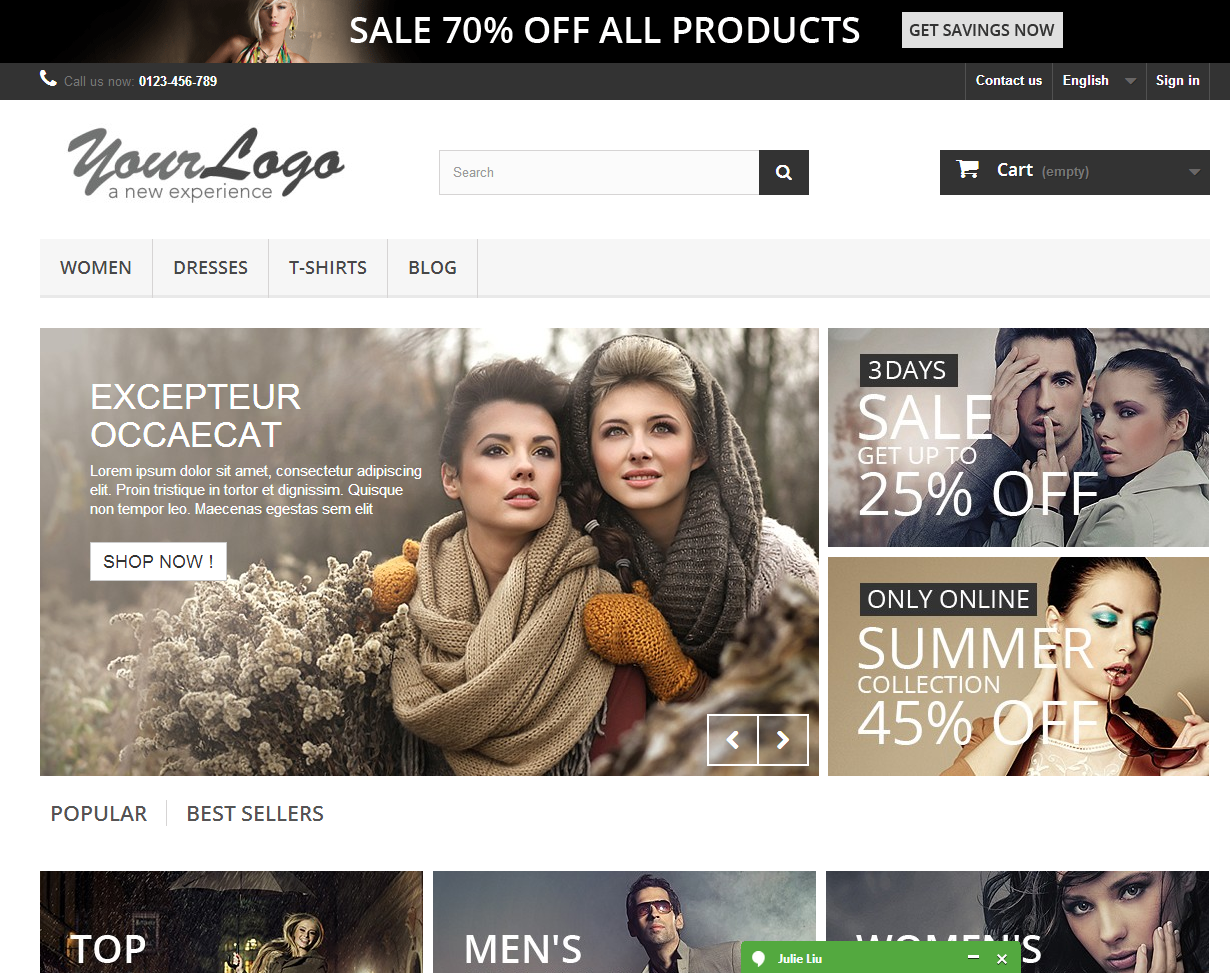
PrestaShop is a free, open source e-commerce solution available under the Open Software License and officially launched in August 2007. The software is written in PHP and based on the Smarty template engine and is currently used by 165,000 shops worldwide. The PrestaShop group was founded in Paris, with a second Headquarters opened in Miami in 2011. PrestaShop is translated into 63 languages, with English, French, Portuguese, German, Spanish, Italian, Dutch, Polish and Russian having full…
Oracle CX Commerce (formerly Oracle Commerce Cloud) is very well suited for B2B commerce transactions. The wonderful thing about this software is its ability to regularly update on an automatic basis, and keep up with upgrades. Oracle CX Commerce provides my organization with greater flexibility and quick integration processes. I would recommend this to any organization trying to set up their own storefront.
A de minimis incentive was given to thank the reviewer for their time. The incentive was not used to bias or drive a particular response, nor was the incentive contingent on a positive endorsement. More Info
This is a great system for small and medium businesses dealing from 1 product to 100,000 products. It is elegant to use and very stable. The system may not be great for converting into a marketplace and the handling of > 1million products. The system is also not suitable for services selling like events, registrations, subscriptions and ticket bookings etc.
It uses an effective algorithm to provide users with product recommendations based on other products they’ve previously viewed.
It comes with a decent support platform, where Oracle is attentive and provides help diagnosing issues that may arise within the environment.
Oracle CX Commerce comes with a developer tool known as the DCU Tool, which is very helpful when it comes to pushing changes from environment to environment. The DCU Tool is also a good resource to use for source control.
A de minimis incentive was given to thank the reviewer for their time. The incentive was not used to bias or drive a particular response, nor was the incentive contingent on a positive endorsement. More Info
The PayPal button modality was integrated with the PrestaShop system, which helped our clients to complete payments digitally in just a few seconds, this integrated button allowed to streamline many transactions.
Performing inventory reviews and modifying the PrestaShop catalog was one of the things that I liked the most, I could make changes to the catalog, make changes to the conditions of the products in the catalog and all those changes were reflected on my website in a instant, no need to wait some time.
The PrestaShop system created a digital invoice for each client who made the advance payment of a property, which made it even easier to complete the property negotiation. Customers came to our company with the digital invoice for the advance payment and it was easy to identify the property that was paid, thanks to the digital invoice.
A de minimis incentive was given to thank the reviewer for their time. The incentive was not used to bias or drive a particular response, nor was the incentive contingent on a positive endorsement. More Info
Customer experience - Oracle CX is already a leader and I bet they'll make it even better surpassing all expectations.
They've [been] the best eCommerce model solution for any kind of business at least for book publishing and logistics management - thus can't complain here either.
A de minimis incentive was given to thank the reviewer for their time. The incentive was not used to bias or drive a particular response, nor was the incentive contingent on a positive endorsement. TR verified that a representative sample of customers was invited. More Info
A de minimis incentive was given to thank the reviewer for their time. The incentive was not used to bias or drive a particular response, nor was the incentive contingent on a positive endorsement. More Info
Oracle Commerce Cloud is definitely not my favorite platform to use, however our company has gotten very comfortable with the way our website operates using it so I do not see us switching to a different product any time soon. Over time, I’ve grown to have a love/hate relationship with this product, but as I learn more about what it offers I come to appreciate its functionality more
A de minimis incentive was given to thank the reviewer for their time. The incentive was not used to bias or drive a particular response, nor was the incentive contingent on a positive endorsement. More Info
Since we use PrestaShop OpenSource there is only community support. What we found is that many other users fight with the same problems and there seems no solution or input from the PrestaShop developers' side.
The upgrade cycle of OCC and the subscription model ensure we are always on the latest and greatest version of the platform. The responsive design makes it easier for small departments to provide an optimum mobile experience. The stability of the platform is far superior to our on-prem solution.
A de minimis incentive was given to thank the reviewer for their time. The incentive was not used to bias or drive a particular response, nor was the incentive contingent on a positive endorsement. More Info
It's a no-brainer for e-commerce stores. BigCommerce and Magento both far out-distanced PrestaShop in every major category. If you're just getting into e-commerce, I would highly recommend either BigCommerce or Magento. Their online documentation and support far outweigh any advantages you'd have over going with an open source software like PrestaShop.
A de minimis incentive was given to thank the reviewer for their time. The incentive was not used to bias or drive a particular response, nor was the incentive contingent on a positive endorsement. More Info
A de minimis incentive was given to thank the reviewer for their time. The incentive was not used to bias or drive a particular response, nor was the incentive contingent on a positive endorsement. TR verified that a representative sample of customers was invited. More Info
It slowed down our Hosting service. Our website took a long time to fully load on our clients' devices due to the high consumption of the integration with the PrestaShop service.
It provided us with a fast billing service, where our clients obtained invoices in PDF mode for the electronic payments they made for the properties. These digital invoices helped us to recognize the property they wanted faster and streamlined the negotiation process.
The templates that had an optimized design, were too expensive, this caused that our catalog design was very simple and did not capture the interest of customers.
A de minimis incentive was given to thank the reviewer for their time. The incentive was not used to bias or drive a particular response, nor was the incentive contingent on a positive endorsement. More Info