Oracle Database, currently in edition 23ai, is a converged, multimodel database management system. It is designed to simplify development for AI, microservices, graph, document, spatial, and relational applications.
$0.05
per hour
PostgreSQL
Score 8.7 out of 10
N/A
PostgreSQL (alternately Postgres) is a free and open source object-relational database system boasting over 30 years of active development, reliability, feature robustness, and performance. It supports SQL and is designed to support various workloads flexibly.
N/A
SAP Crystal
Score 7.4 out of 10
N/A
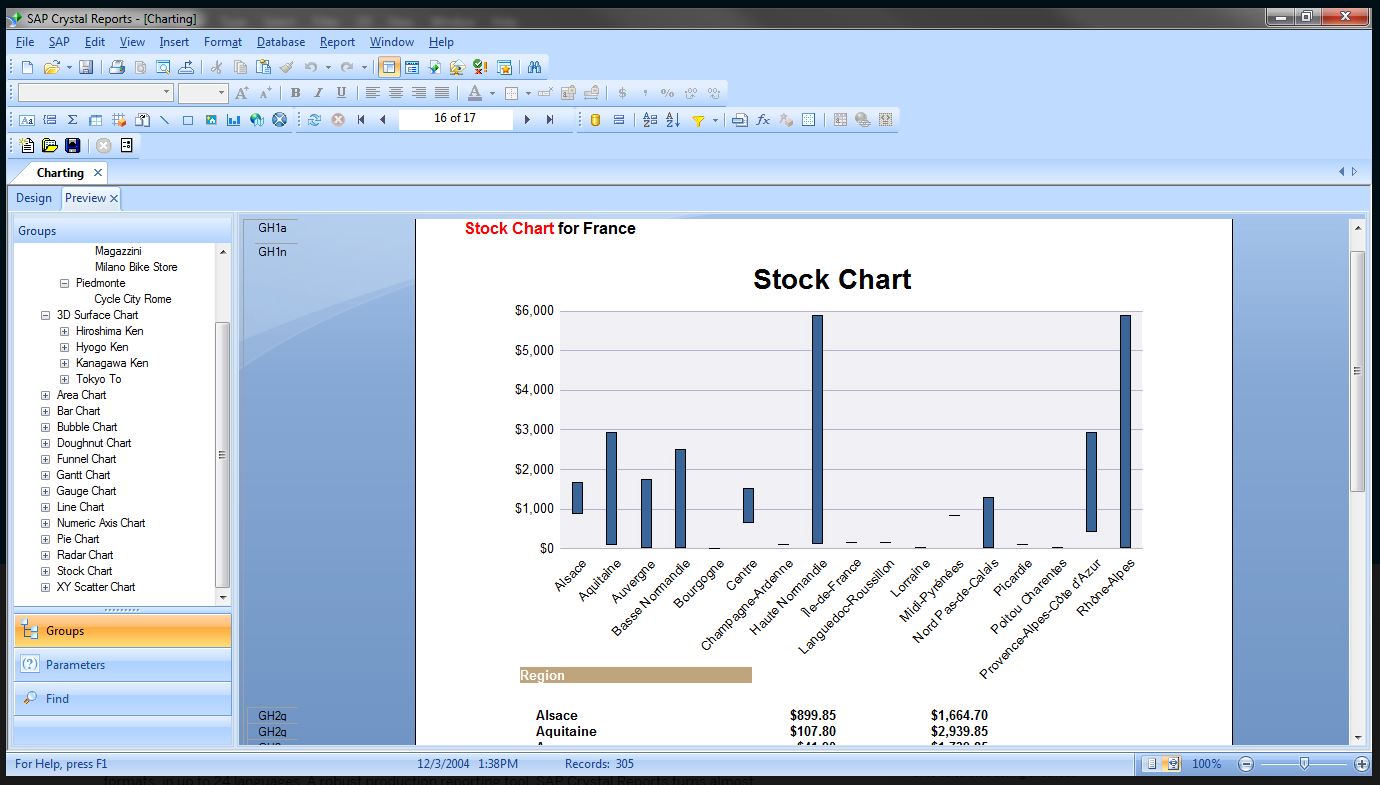
SAP Crystal is an analytics and reporting software solution for SMBs. SAP Crystal comprises Crystal Reports for pixel-perfect reporting, and SAP Crystal Server for automated distribution and self-service access to reports, dashboards and data exploration.
$295
per single user license
Pricing
Oracle Database
PostgreSQL
SAP Crystal
Editions & Modules
Oracle Base Database Service - Standard
$0.0538
per hour
Oracle Base Database Service - Enterprise
$0.1075
per hour
Oracle Base Database Service - High Performance
$0.2218
per hour
Standard Edition
Contact Sales
Enterprise Edition
Contact Sales
Personal Edition
Contact Sales
No answers on this topic
Upgrade Version to SAP Crystal Reports 2020
$295
per single user license
SAP Crystal Reports 2020 64-Bit
$495
per single user license
SAP Crystal Reports 2016 32-Bit
$495
per single user license
SAP Crystal Server 2020 1 NUL
$869
per user license + first year maintenance to be added
SAP Crystal Server 2020 5 CAL
$8,744
5 concurrent users + first year maintenance to be added
Offerings
Pricing Offerings
Oracle Database
PostgreSQL
SAP Crystal
Free Trial
Yes
No
Yes
Free/Freemium Version
Yes
No
Yes
Premium Consulting/Integration Services
No
No
Yes
Entry-level Setup Fee
No setup fee
No setup fee
Optional
Additional Details
—
—
* SAP Crystal Reports 2020 Viewer allows you to view static data within a SAP Crystal Reports file.
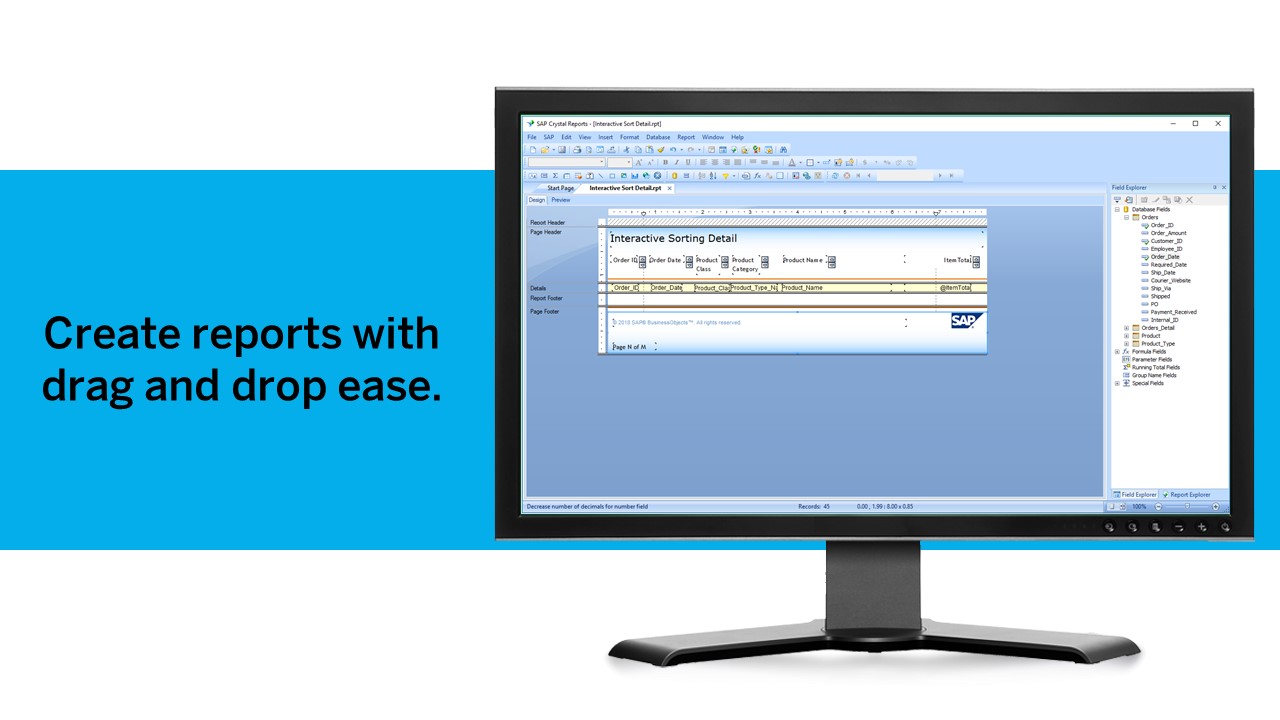
* SAP Crystal Reports 2020 - Full version allows you to create powerful, richly formatted, and dynamic reports from virtually any data source, delivered in dozens of formats, in up to 28 languages. If you already have an older version of Crystal Reports, buy a license for SAP Crystal Reports 2020 - Upgrade at a discounted, upgrade price.
* SAP Crystal Server 2020, 1 NUL includes 1 license of: SAP Crystal Reports 2020 - SAP Crystal Server 2020.
* As an add-on to SAP Crystal Server 2020 1 NUL, SAP Crystal Server 2020 5 CAL allows you to support a wider, intermittent audience of end users, up to five logged on at the same time.
We have used Microsoft SQL Server for some smaller projects where the vendor only supports that environment. But whenever there is a choice, we use Oracle Database 12c. Students access our systems at all …
Even if is quite expensive, Oracle Database 12c is way better than most of its competitors thanks to Oracle experience and skills on database technologies. Oracle Database has always guaranteed the best data recovery and fault management policies, thanks to Oracle's RAC …
Not at my current employer, but previously I have evaluated and used all Microsoft SQL Server, Amazon Web Services (AWS), PostgreSQL and MySQL. All of them had their own advantages and disadvantages. SQL Server had great built in tools like SSIS and SSRS that integrated well …
Oracle is placed in a good spot against its competitors. It has advantages over its competitors in its legacy stability and high availability. A common engine to handle relational, JSON, Vector, and graph data makes it more cost-effective. Given all the good features, the …
Oracle 12c is good for all business applications but still consider Microsoft SQLServer for internal/other applications to save on cost.
Verified User
Consultant
Chose Oracle Database
Oracle Database is best in business, consistent, and robust. Even the standard version is sufficient for the best performance. The main thing is I have never seen corruption and in my opinion, it is best when used with Linux.
Verified User
Administrator
Chose Oracle Database
In my opinion, Oracle Database is highly reliable, has better performance with large databases and little to no maintenance once everything is setup. Also, recovery of the Oracle database is much simpler and easier.
Oracle Database is among the easiest to integrate with, program against, have a reliable cluster with DR, and has the most understood and well-documented databases. It suits really well if the software shop is primarily Java-based, and deals with large volumes of data with a …
Oracle is serving a different segment with respect to those above. Till now, we have stuck with Oracle and continued to support our internal customers. Other DBs are serving a few targeted applications by a few application teams.
Oracle completed solution and support is of cause better than open source solutions, we also choose other NoSQL database and Graph database, to address some very particular business use cases
it was not my choice for Oracle 12C, but during the years I've learned on the advantages. If I would choose the Oracle 12C, I'll take it for the possibility to start from Standard and to go to enterprise based on a business case of use. I really like the possibility to have the …
We're still in evaluation but based on cost and affordability vs. performance for our specific needs (running a $500M retail e-commerce shop) Oracle 12c loses. Licensing and support of Enterprise Edition would equate to a significant percentage of our annual revenue and we …
Well, Oracle is a solid database and as I mentioned, is for the first quartile of project complexity. The other solutions mentioned databases have more specific goals and respond to reduced complexity. For example MySQL or PostgreSQL are widely used for startups. On the other …
Being open source, PostgreSQL offers the highest performance among its peers. It has a strong support community where we can find solutions to most of the queries. It's suited for GIS (Geospatial) based applications, making it unique from its peers. There are fewer databases …
In my experience using all of these products over many years, PostgreSQL is better than any of them in reliability, performance, productivity, cost, scalability and interoperability across operating systems.
In this case, Postgres is preferred because it handles large data sets and requires fewer hardware resources than its competitor, MySQL. Compared to PostgreSQL, Microsoft products are excellent, but the installation process for MS SQL is lengthy. PostgreSQL has an advantage …
PostgrPostgreSQL as a transaction db engine against oracle and sql server works well. TPM wise compared to MySQL and MariaDB, on an evan scale. SQL function supports, far outweighs compared to MySQL and MariaDB. PG Extensions allow for flexibiltity and scalability. Allows …
As I have been telling all along, PostgreSQL is much cheaper compared to the other RDBMS solutions. It has got better performance with some of the application services that we are using and is easy to maintain. Overall, we are satisfied migrating to PostgreSQL database clusters.
Although the competition between the different databases is increasingly aggressive in the sense that they provide many improvements, new functionalities, compatibility with complementary components or environments, in some cases it requires that it be followed within the same …
Postgres stacks up just [fine] along the other big players in the RDBMS world. It's very popular for a reason. It's very close to MySQL in terms of cost and features - I'd pick either solution and be just as happy. Compared to Oracle it is a MUCH cheaper solution that is just …
Both Oracle and MS-SQL database option fell when we evaluated the effect on our overall solution cost to our customers. customer examine the overall cost of the solution they buy, selecting Oracle or MS-SQL would leave less money in our pockets. We are Linux based solutions and …
PostgreSQL is the proper tool when data consistency matters and other BASE or document-based databases are simply improper. I think PostgreSQL has a fantastic system of slony replication, triggers, and other data maintenance functionality that other databases generally don't …
We migrated from NoSQL to an Oracle database. One of the reasons was robust backup and recovery options available in the Oracle database, which provide zero data loss. A transactional database like Oracle is a better fit for our use case than NoSQL. On a large scale, deployment was evaluated as a cheaper option than the NoSQL engine. This conclusion came even after considering Oracle license is expensive.
PostgreSQL is best used for structured data, and best when following relational database design principles. I would not use PostgreSQL for large unstructured data such as video, images, sound files, xml documents, web-pages, especially if these files have their own highly variable, internal structure.
Generation of templated reports is the strong suit of SAP Crystal. Allows users to change formats in templates bases on requirement with minimal effort. Automated report delivery requires the user to be aware of sql which cannot be expected from all users. Should support more document export formats and improve the UI for SAP B1 Users
Crystal Reports allows us to create a consistent template for all of our reports.
Crystal Reports and Server allows us to house a repository for all of our reports to make them easy to find and update when necessary.
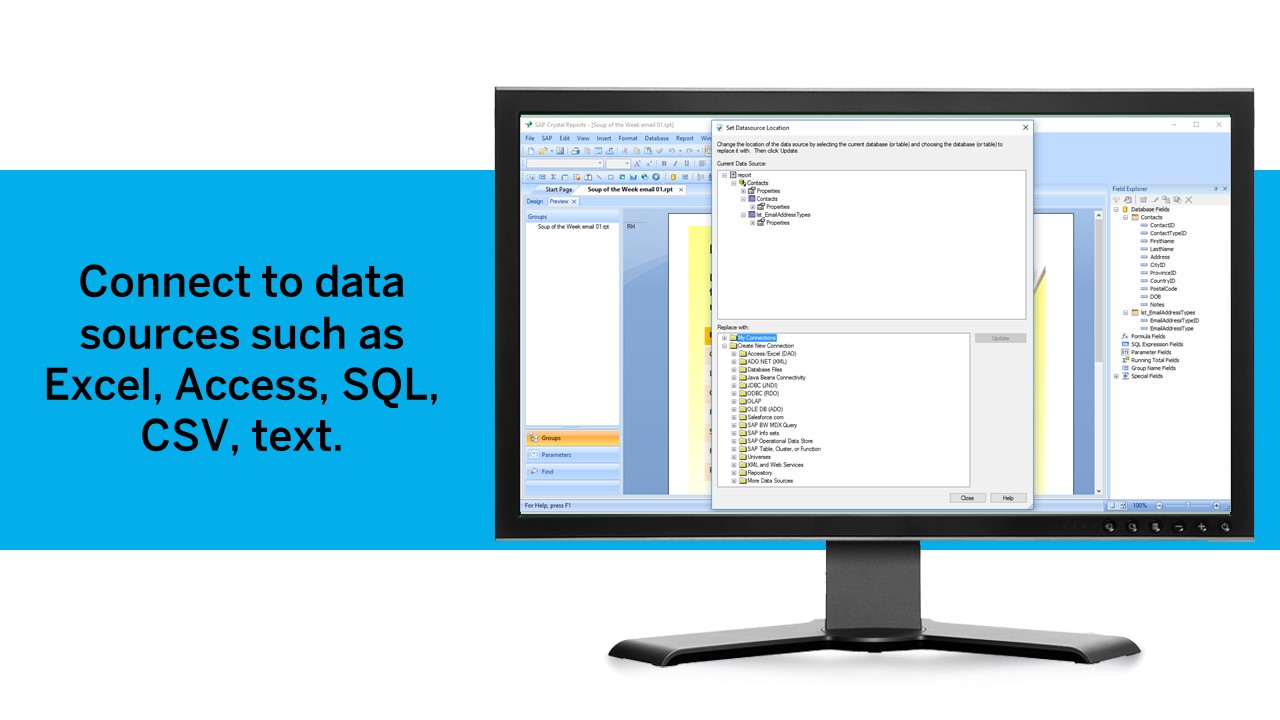
Crystal Reports can connect to a wide variety of data sources.
Crystal Reports can be a little daunting when first implementing. There are a lot of nuances in learning how to truly master this software and it can be frustrating at times.
There is a lot of sunk cost in a product like Oracle 12c. It is doing a great job, it would not provide us much benefit to switch to another product even if it did the same thing due to the work involved in making such a switch. It would not be cost effective.
We have been using this product for so many years and it has truly become a cornerstone to our business processes when it comes to developing and distributing information via reports. We currently have over 500 reports developed to date over about 30 systems and that will continue to grow as user needs change.
Many of the powerful options can be auto-configured but there are still many things to take into account at the moment of installing and configuring an Oracle Database, compared with SQL Server or other databases. At the same time, that extra complexity allows for detailed configuration and guarantees performance, scalability, availability and security.
Postgresql is the best tool out there for relational data so I have to give it a high rating when it comes to analytics, data availability and consistency, so on and so forth. SQL is also a relatively consistent language so when it comes to building new tables and loading data in from the OLTP database, there are enough tools where we can perform ETL on a scalable basis.
Crystal is very robust, but not always easy to use. It create wonderful looking reports, and so deserves a high rating. However, I have to take a couple of points off for the simple fact that I cannot hand it to a user and expect them to be able to do development with it.
The data queries are relatively quick for a small to medium sized table. With complex joins, and a wide and deep table however, the performance of the query has room for improvement.
1. I have very good experience with Oracle Database support team. Oracle support team has pool of talented Oracle Analyst resources in different regions. To name a few regions - EMEA, Asia, USA(EST, MST, PST), Australia. Their support staffs are very supportive, well trained, and customer focused. Whenever I open Oracle Sev1 SR(service request), I always get prompt update on my case timely. 2. Oracle has zoom call and chat session option linked to Oracle SR. Whenever you are in Oracle portal - you can chat with the Oracle Analyst who is working on your case. You can request for Oracle zoom call thru which you can share the your problem server screen in no time. This is very nice as it saves lot of time and energy in case you have to follow up with oracle support for your case. 3.Oracle has excellent knowledge base in which all the customer databases critical problems and their solutions are well documented. It is very easy to follow without consulting to support team at first.
There are several companies that you can contract for technical support, like EnterpriseDB or Percona, both first level in expertise and commitment to the software.
But we do not have contracts with them, we have done all the way from googling to forums, and never have a problem that we cannot resolve or pass around. And for dozens of projects and more than 15 years now.
The support community can be difficult to navigate. I've also run into issues with my login. The SAP system has a bizarre mechanism for validating users that requires users to have what is called an S-ID. A basic ID may not give you access to all the features in the portal. The limitation may include not being able to perform a simple task like downloading patches and updates. This isn't a big deal for single user license but for teams it can be a pain.
The online training is request based. Had there been recorded videos available online for potential users to benefit from, I could have rated it higher. The online documentation however is very helpful. The online documentation PDF is downloadable and allows users to pace their own learning. With examples and code snippets, the documentation is great starting point.
Overall the implementation went very well and after that everything came out as expected - in terms of performance and scalability. People should always install and upgrade a stable version for production with the latest patch set updates, test properly as much as possible, and should have a backup plan if anything unexpected happens
Just like any other implementation: When designing the differing reports, get end users' input, make sure to design the reports so that they display the information that the company requires, in the best and clearest way possible.
Test, test, test, revise when needed, and, particularly, do sufficient training so users are comfortable using Crystal Reports!
Because of a rich user base and support for any critical issue, this is one of the best options to choose. In case the project has a TCO issue, it can compromise and choose Postgres as the best alternative. SQL server is also good and easy to code and maintain but performance is not as good as the Oracle
Although the competition between the different databases is increasingly aggressive in the sense that they provide many improvements, new functionalities, compatibility with complementary components or environments, in some cases it requires that it be followed within the same family of applications that performs the company that develops it and that is not all bad, but being able to adapt or configure different programs, applications or other environments developed by third parties apart is what gives PostgreSQL a certain advantage and this diversification in the components that can be joined with it, is the reason why it is a great option to choose.
Crystal reports is useful in case we want to import data from data base . We can write queries in it but Google Charts require to be implemented in our application using code so crystal reports is better than Google Charts.
Easy to administer so our DevOps team has only ever used minimal time to setup, tune, and maintain.
Easy to interface with so our Engineering team has only ever used minimal time to query or modify the database. Getting the data is straightforward, what we do with it is the bigger concern.
It is a decent buy for specific departments in terms of reporting capabilities but updates and cost (frequent) demands are higher with the benefits offered.
So long as the requirements are not ever changing, with scheduling functionality, it's a handsome tool.