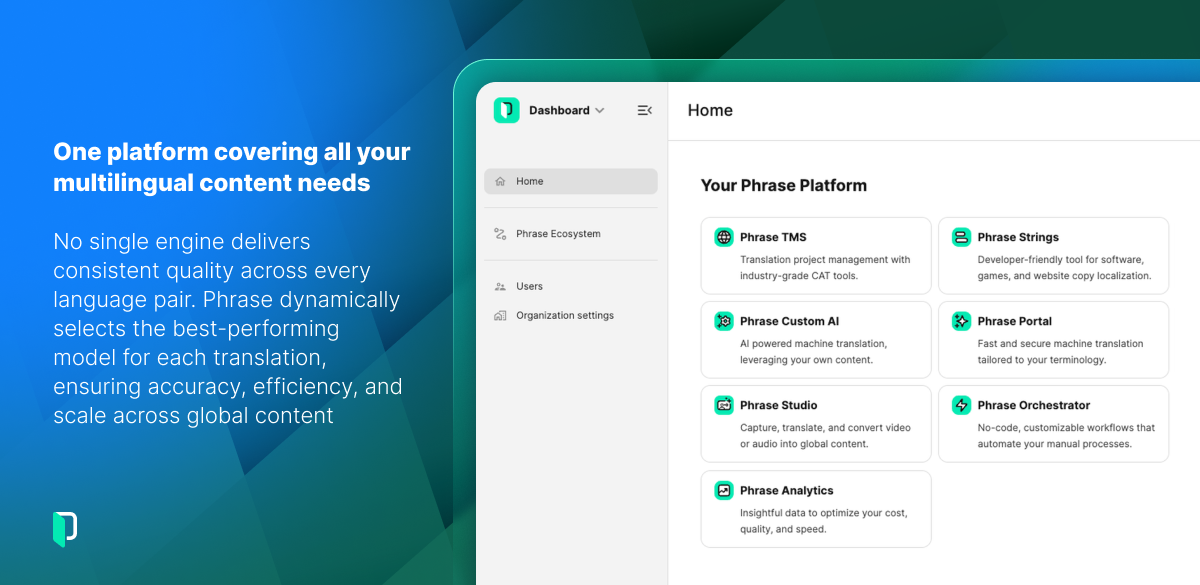
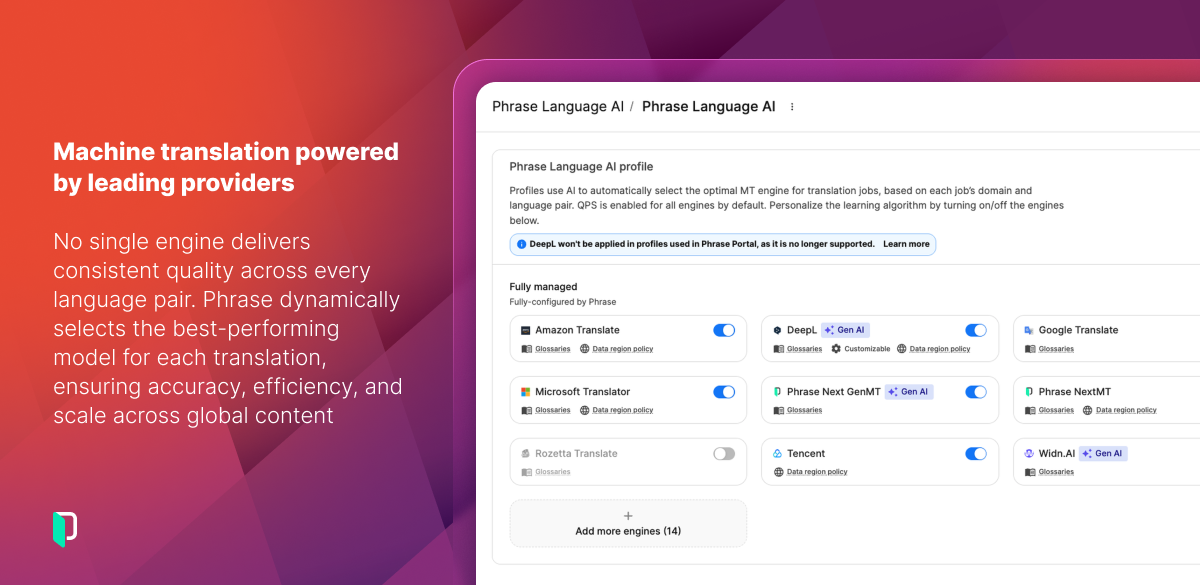
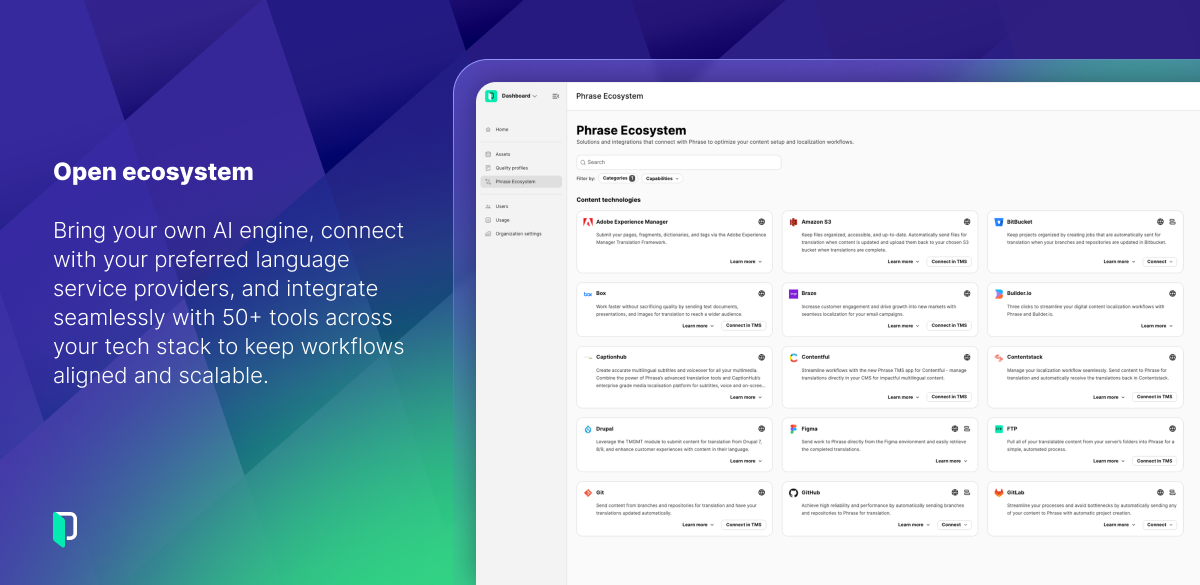
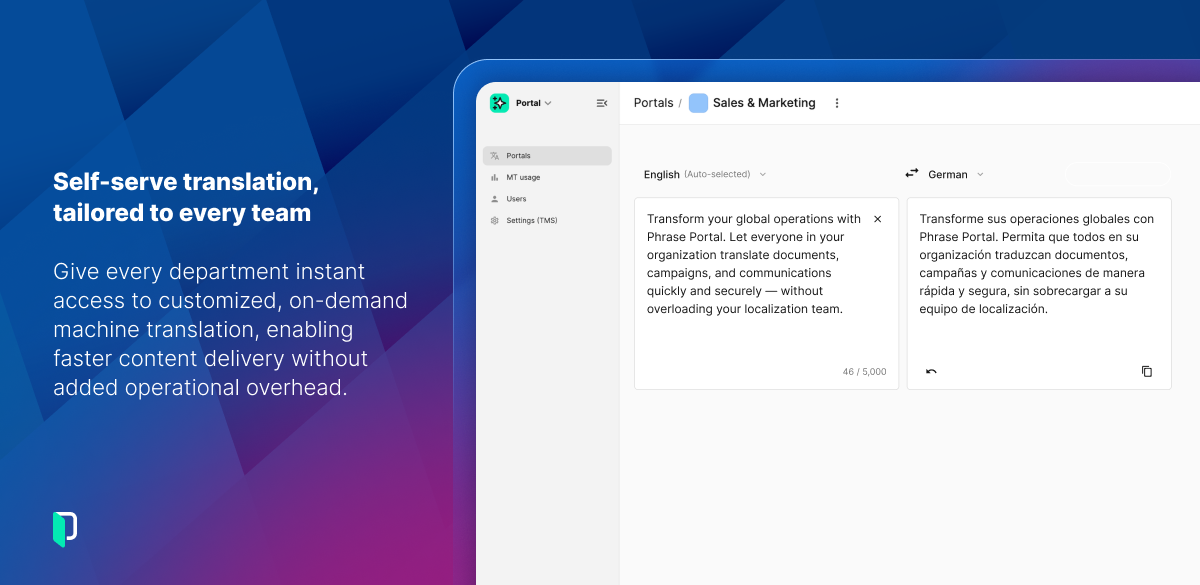
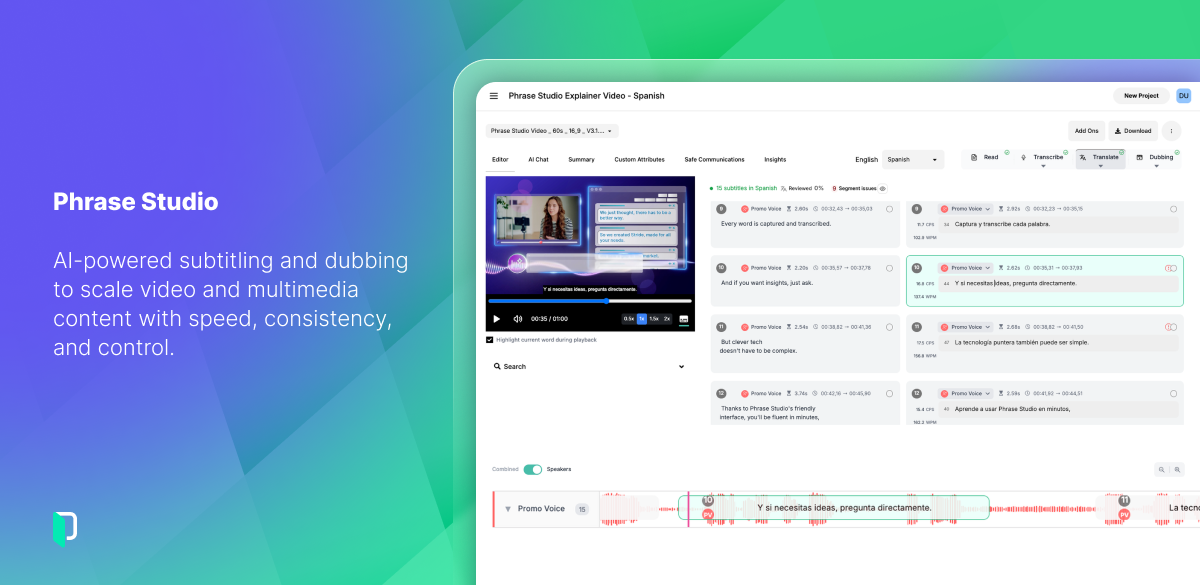
The Phrase Localization Platform is an AI-powered language platform that integrates translation, scoring, and automation tools in one place for businesses and language service providers. It offers scalability, a vendor-neutral approach, and advanced analytics for performance optimization, with single sign-on to facilitate easy setup.
$27
per month
Trados Studio
Score 5.4 out of 10
N/A
Trados Studio is a translation management and language localization platform, from multinational SDL headquartered in the UK. It is a computer-assisted translation product, designed to be a complete translation environment for language professionals who want to edit, review and manage translation projects whilst in the office or on the move.
$408
per year per user
Pricing
Phrase Localization Platform
Trados Studio
Editions & Modules
Freelancer
$27
per month
Direct plan: Starter
$135
per month
LSP plan: Professional
$875
per month
Direct plan: Team
1,045
per month
Direct plan: Business
4,395
per month
Direct plan: Enterprise
Custom
per month
LSP plan: Business
Custom
per month
LSP plan: Enterprise
Custom
per month
Freelance Subscription
$408
per year per user
Professional Subscription
$1,500
per year per user
Offerings
Pricing Offerings
Phrase Localization Platform
Trados Studio
Free Trial
Yes
Yes
Free/Freemium Version
No
No
Premium Consulting/Integration Services
Yes
No
Entry-level Setup Fee
Optional
No setup fee
Additional Details
—
—
More Pricing Information
Community Pulse
Phrase Localization Platform
Trados Studio
Considered Both Products
Phrase Localization Platform
Verified User
Employee
Chose Phrase Localization Platform
SDL Trados Studio I had to install on my computer and it took time. I have some problems connecting it to machine translation and using some online resources. Compared to this software, Memsource is cloud-based, so no need for installation. Smartcat is close to Memsource, but …
While I liked working with SDL Trados Studio and memoQ, Memsource is just easier to use overall, allowing you to work faster and more efficiently.
Verified User
Professional
Chose Phrase Localization Platform
I also use Wordbee, but the thing I don't like it most about it is that the number of segments you can display at a time is limited to 100 and you must move around many pages if the job size is large. I use SDL Trados Studio as well, but not cloud-based, so not really …
Verified User
Project Manager
Chose Phrase Localization Platform
I have been using memoQ and SDL Trados Studio for a longer time, but the Web editor for Memsource is the easiest to use of all. I do like the functionality in memoQ better, but Memsource is easier for our translators.
SDL Trados Studio is more robust but also much more bloated and resource-intensive and ultimately less flexible. I use both daily, but Memsource is my go-to in almost every situation.
Verified User
General Manager
Chose Phrase Localization Platform
It is very expensive and more difficult to navigate. Compared to the other support is slow and ineffective. Dealing with anything more involved is all but impossible. It has become more prone to bugs since being bought by TMS. Support suggests things like "use incognito" mode …
Verified User
Professional
Chose Phrase Localization Platform
I did not select Memsource. I use it because my clients use it, but I find it very useful especially due to a friendly interface and quick jumping between segments of different statuses during translations.
Verified User
Professional
Chose Phrase Localization Platform
Memsource is quicker and easier to use. You can even start translating on your mobile phone or tablet, as long as you have an internet connection. Plus Memsource shows me a live preview of my translation. I think Memsource is great for beginners as well, since you don't need a …
Starting a translation is easier than with SDL Trados. TM is better than with Smartling and Crowdin. The overview of New and Accepted work is so easy.
Verified User
Professional
Chose Phrase Localization Platform
Memsource stands out because it can be used in ANY browser. Thanks to its mobile app, it is easy to accept and review the work that translators are assigned.
Memsource is the easiest to use among all other CAT tools out there. Even when you use it for the first time, it will be easy for anyone to use. You don't even need much instruction or a tutorial process. Still, it allows you to do a lot. It's easy to find some features you …
Memsource is way cheaper and easier to use. Other softwares seem really old-fashioned and out of date. They are very difficult to use for a new learner and the UI is not good looking. Also, the price for products like Trados is too much expensive for a new freelancer and many …
Memsoucre has a more friendly user interface. It keeps offering new features (like machine translation add on) which wasn't there when we first started using Memsource. Very smooth and easy communication with customer service team. My tickets are addressed quickly and …
What distinguishes Memsource from other translation tools is that it does not require massive specifications to run. Average computers can run it smoothly without needing 8 or 12 Gb ram. Being able to use the browser to do the translation task is also another excellent feature. …
Memsource is the platform chosen by one of my clients, Booking.com. I have direct contact with my client, and the machine translation service offered is better than the one offered by its competitors. It's more intuitive and easy to use as well.
Verified User
Professional
Chose Phrase Localization Platform
Memsource includes all the basic features a freelance translator needs in a very user-friendly approach. All you need is a click away and provides quick results.
Memsource allies a project management platform with translation editing tools that enhance and perfect the integration of a translation company and serves it as a platform from which to build up its data. Memsource is a complete platform that supports all kinds of file formats …
Trados is more complex - it's the default system for the heavy-duty translation of major documents with specialized terminology needs. Memsource is easier to learn and a good choice for lighter-duty work. I use both.
Trados is more complex and seems more powerful - it's the default system for the heavy-duty translation of major documents with specialized terminology needs. Memsource is easier to learn and a good choice for lighter-duty work. I use both.
I found Trados extremely unintuitive, and difficult to learn. I had to look up YouTube videos to learn how to do things. In contrast, Memsource I could largely figure out on my own without effort.
I tried using memoQ to get used to server-based localization tools, but experienced critical issues such as translation data not being updated on the server so stopped using it before I get used to it, unfortunately. It must be updated and improved by now, so I might try using …
I prefer Trados Studio to other online CAT tools, since online CAT tools can turn very slowly, because of the internet. The fact that I can import documents in Excel, PowerPoint, editable PDF, and Word format helps a lot, as well as the compatibility of Trados with MemoQ. …
The interpretation business is taking care of business. There are loads of various agile devices out there meant to encourage interpreters and organizations to do their work quicker and with the quality customers expect. I have been an SDL Trados client for very nearly ten …
The system is well suited if you also run Trados or any second system. As the system is very expensive and the use of MTUs is rather complicated to understand the best thing is to run most larger projects through Trados or any other CAT tool and then to import it. Large projects are expensive in Phrase Localization Platform so I would recommend it if you have small projects and have enough capacity to carefully check the terminology as the data pulled from the term base is inconsistent. The same applies to the find replace feature which can work great.
SDL Trados Studio is extremely well suited for expert CAT tool users. More novice users will have trouble getting up to speed. I have an office full of employees that constantly ask questions on how to do specific tasks, mainly because the task sequence is not obvious and is only uncovered by rote repetition of the same things. If you learn and apply the same techniques repeatedly, it becomes easier, but it seems the software was designed by software people, sometimes with little thought to the end users who have to figure it out. I don't know that professional training should be so necessary.
In the case of EN to JA translation, we enter text and then convert it to get the correct final text (word or phrase) which uses correct Chinese character(s), as there are often multiple Chinese characters with the same reading but different meanings. When those conversion options are displayed, it is usually possible to change our selection among them by hitting the Tab key, but in Memsource, hitting the Tab key makes us leave the text conversion and move to the source segment, so we must make sure to use arrow keys to choose the right conversion option when using Memsource.
When there are tag elements used in the source text, the tags must exist in the target text of course, but the tag order also must be the same. The tags cannot be moved around in the segment, which causes problems in the case of the Japanese language, because the word order differs between EN and JA.
In the Japanese language, Italics are basically not used, so there must be no texts between the tags which specify Italic font. But then the segment cannot be confirmed and the job status cannot be changed to "Complete".
I use and manage an Academic edition (approx. 15 students) and the corporate license (10 users). In both cases, the features are easy to find, set and use. My students and my translators understand the dynamics of the platform easily and get used to them quickly.
It is designed to be a lean system, but that means that things are clustered in weird groups and a lot of trial and error is involved getting the settings right. If something goes wrong first level support is very quick and has very fast answers which are quite typical of first level support and essentially equate to asking you if you have switched it off and on yet. Anything more involved is challenging for support to address.
Again, the list of functions is impressive but the way it is organized (not process-driven) and the fact that complex tasks should be close to basic tasks make the product suitable to hardcore users that have a lot of time to research the manuals and blogs. By the way, Nora Diaz is one of the most respectable users of this product. Her videos help a lot!
We rarely use support, but most questions were answered in a timely fashion, although we didn't exactly find them satisfactory. That's mostly the fault of the software and not the Support team because we asked for things that Memsource couldn't do.
Support has been fast, precise and thorough. There is support on the web, by chat, by email, from the communities, from the experts, on the product Help section, on YouTube, and other social media. There is also a paid support for companies. This area is where the company stands out. I was not able to evaluate the support in languages other than English.
Memsource has a very good user interface that people can quickly learn and start using. Also, its analysis features are top class which helps me provide a detailed estimate to my client based on the file particulars. It has a QA feature that helps me do a very high-quality check before I send out my translation to the client.
I tried using memoQ to get used to server-based localization tools, but experienced critical issues such as translation data not being updated on the server so stopped using it before I get used to it, unfortunately. It must be updated and improved by now, so I might try using it again in the near future.