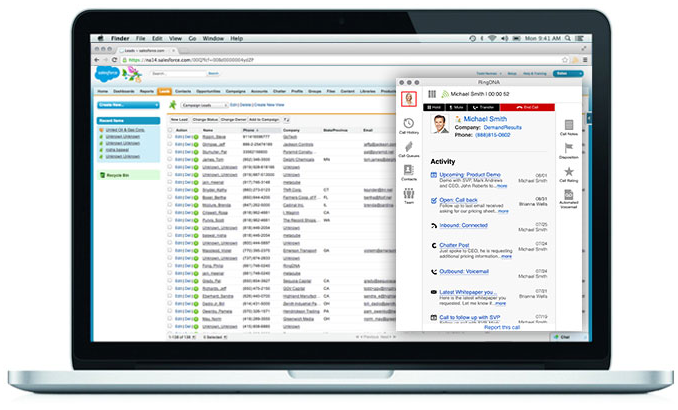
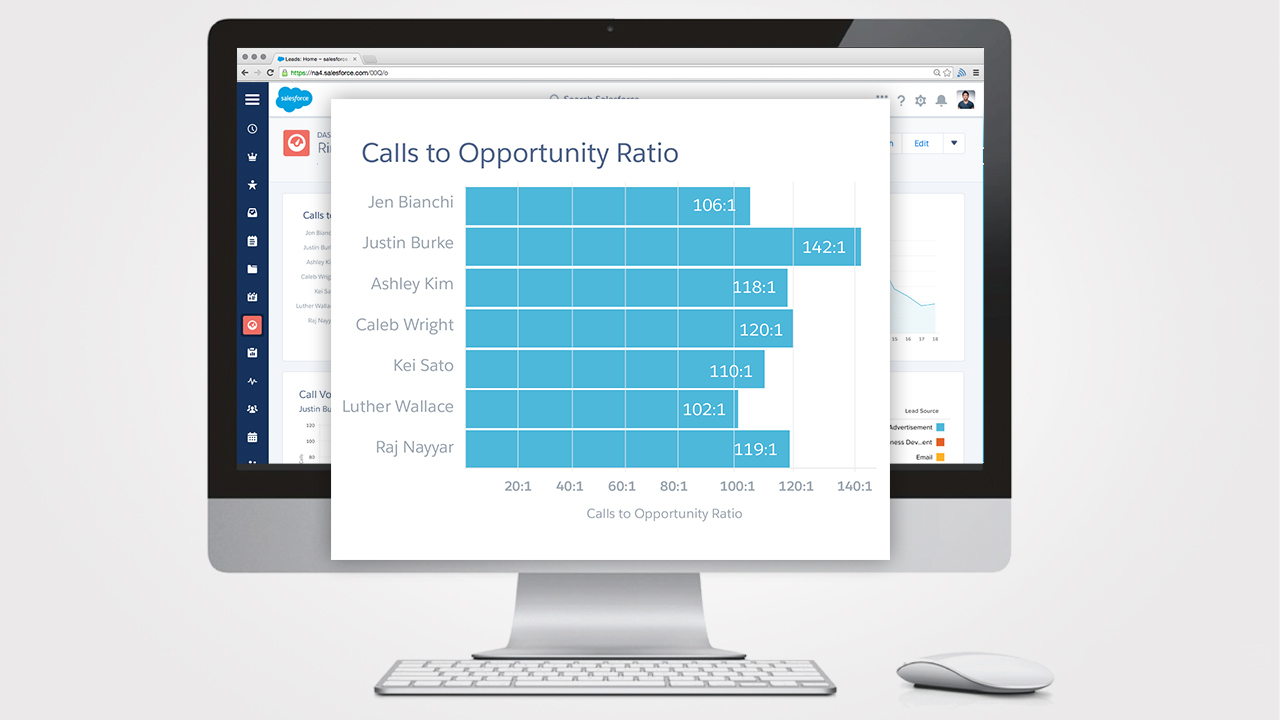
Revenue.io (formerly RingDNA ) is presented as a "sales acceleration engine" for inside sales teams using Salesforce. According to the vendor, its Intelligent Dialer for Salesforce aims to help outbound sales reps use Revenue.io to make more calls, connect with up to 400% more prospects, and fully automate voicemails. Part of the value proposition is also improving inbound call performance. Calls can be routed to the right reps based on any marketing source, complete with prospect data that…
N/A
Tableau Desktop
Score8.6 out of 10
N/A
Tableau Desktop is a data visualization product from Tableau. It connects to a variety of data sources for combining disparate data sources without coding. It provides tools for discovering patterns and insights, data calculations, forecasts, and statistical summaries and visual storytelling.
$1,380
per year (purchased via a Creator license)
Pricing
Revenue.io
Tableau Desktop
Editions & Modules
No answers on this topic
Tableau Creator License
$115
per month (billed annually) per user
Offerings
Pricing Offerings
Revenue.io
Tableau Desktop
Free Trial
Yes
No
Free/Freemium Version
No
Yes
Premium Consulting/Integration Services
Yes
Yes
Entry-level Setup Fee
No setup fee
No setup fee
Additional Details
—
All pricing plans are billed annually. A Creator license includes Tableau Desktop, Tableau Prep Builder, and Tableau Pulse. Discounts sometimes available for volume.
Revenue.io's automated pricing and demand forecasting features may benefit e-commerce enterprises with a large number of products and fluctuating demand. This can assist them in remaining competitive while increasing sales and profitability. Small businesses with a restricted product offering or consistent demand may benefit less from Revenue.io's advanced pricing and forecasting services.
The best scenario is definitely to collect data from several sources and create dedicated dashboards for specific recipients. However, I miss the possibility of explaining these reports in more detail. Sometimes, we order a report, and after half a year, we don't remember the meaning of some data (I know it's our fault as an organization, but the tool could force better practices).
A de minimis incentive was given to thank the reviewer for their time. The incentive was not used to bias or drive a particular response, nor was the incentive contingent on a positive endorsement. More Info
Speed at calling through lists, loading the account data into the intelligent dallier
Using the calling notes and other values, as triggers into our workflows
Using ringDNA data in our Marketing cloud journeys for customer service and sales purposes. For example, triggering an email send based on the results of a phone call
A de minimis incentive was given to thank the reviewer for their time. The incentive was not used to bias or drive a particular response, nor was the incentive contingent on a positive endorsement. More Info
An excellent tool for data visualization, it presents information in an appealing visual format—an exceptional platform for storing and analyzing data in any size organization.
Through interactive parameters, it enables real-time interaction with the user and is easy to learn and get support from the community.
A de minimis incentive was given to thank the reviewer for their time. The incentive was not used to bias or drive a particular response, nor was the incentive contingent on a positive endorsement. More Info
It constantly logs out and forces me to log back in through both RingDNA and Salesforce before calling or texting anyone which requires a 2 step process. This can be prevented by logging into RingDNA at the start of each day before Salesforce, I just need to make this a habit!
When you go into "Contacts" in the dialer and search for someone, it does not predictively auto-populate Contacts based on what you have typed so far (unlike Salesloft, Outreach, etc) so you end up typing most of the contact's name each time when searching. Not a huge deal since I am primarily searching for people in Salesforce, but it would be nice to have this in dialer as well.
A de minimis incentive was given to thank the reviewer for their time. The incentive was not used to bias or drive a particular response, nor was the incentive contingent on a positive endorsement. More Info
A de minimis incentive was given to thank the reviewer for their time. The incentive was not used to bias or drive a particular response, nor was the incentive contingent on a positive endorsement. More Info
Our use of Tableau Desktop is still fairly low, and will continue over time. The only real concern is around cost of the licenses, and I have mentioned this to Tableau and fully expect the development of more sensible models for our industry. This will remove any impediment to expansion of our use.
A de minimis incentive was given to thank the reviewer for their time. The incentive was not used to bias or drive a particular response, nor was the incentive contingent on a positive endorsement. More Info
I can say that this platform has been a great help from the beginning of the implementation and has helped exponentially to grow as a company. At no time have we had problems at the beginning or any confusion when using this software for the first time, it has always been very easy to use its interface and tool. In case we don't know something, technical support has always been helpful.
A de minimis incentive was given to thank the reviewer for their time. The incentive was not used to bias or drive a particular response, nor was the incentive contingent on a positive endorsement. More Info
Tableau Desktop has proven to be a lifesaver in many situations. Once we've completed the initial setup, it's simple to use. It has all of the features we need to quickly and efficiently synthesize our data. Tableau Desktop has advanced capabilities to improve our company's data structure and enable self-service for our employees.
They have a dedicated support team to assist with any questions or issues users may encounter while using the application. However, this feature makes this platform live and steady
When used as a stand-alone tool, Tableau Desktop has unlimited uptime, which is always nice. When used in conjunction with Tableau Server, this tool has as much uptime as your server admins are willing to give it. All in all, I've never had an issue with Tableau's availability.
Revenue.io to evaluate its performance in terms of page load times or report completion. Regarding integration with other software or systems, its integration with other tools is designed to work seamlessly with other tools and systems without slowing them down. Furthermore, integration does not affect its efficiency and leads to smooth work
Tableau Desktop's performance is solid. You can really dig into a large dataset in the form of a spreadsheet, and it exhibits similarly good performance when accessing a moderately sized Oracle database. I noticed that with Tableau Desktop 9.3, the performance using a spreadsheet started to slow around 75K rows by about 60 columns. This was easily remedied by creating an extract and pushing it to Tableau Server, where performance went to lightning fast
A de minimis incentive was given to thank the reviewer for their time. The incentive was not used to bias or drive a particular response, nor was the incentive contingent on a positive endorsement. More Info
It fulfills our requirements for what we were looking for among the products available in the market. They have given demos so well and address all of our issues very well. They also quoted the best price for what we had in mind. Overall, it helps us zero in on our search with all the requirements and budget in mind.
A de minimis incentive was given to thank the reviewer for their time. The incentive was not used to bias or drive a particular response, nor was the incentive contingent on a positive endorsement. More Info
Tableau support has been extremely responsive and willing to help with all of our requests. They have assisted with creating advanced analysis and many different types of custom icons, data formatting, formulas, and actions embedded into graphs. Tableau offers a weekly presentation of features and assists with internal company projects.
A de minimis incentive was given to thank the reviewer for their time. The incentive was not used to bias or drive a particular response, nor was the incentive contingent on a positive endorsement. More Info
It is admittedly hard to train a group of people with disparate levels of ability coming in, but the software is so easy to use that this is not a huge problem; anyone who can follow simple instructions can catch up pretty quickly.
I think the training was good overall, but it was maybe stating the obvious things that a tech savvy young engineer would be able to pick up themselves too. However, the example work books were good and Tableau web community has helped me with many problems
A de minimis incentive was given to thank the reviewer for their time. The incentive was not used to bias or drive a particular response, nor was the incentive contingent on a positive endorsement. More Info
Again, training is the key and the company provides a lot of example videos that will help users discover use cases that will greatly assist their creation of original visualizations. As with any new software tool, productivity will decline for a period. In the case of Tableau, the decline period is short and the later gains are well worth it.
A de minimis incentive was given to thank the reviewer for their time. The incentive was not used to bias or drive a particular response, nor was the incentive contingent on a positive endorsement. More Info
I honestly think that SalesLoft is a more complete solution as far as the user interface goes. However, Ring DNA has the added call intelligence feature that sales loft doesn't have, so we went with ring dna.
A de minimis incentive was given to thank the reviewer for their time. The incentive was not used to bias or drive a particular response, nor was the incentive contingent on a positive endorsement. More Info
I have used Power BI as well, the pricing is better, and also training costs or certifications are not that high. Since there is python integration in Power BI where I can use data cleaning and visualizing libraries and also some machine learning models. I can import my python scripts and create a visualization on processed data.
A de minimis incentive was given to thank the reviewer for their time. The incentive was not used to bias or drive a particular response, nor was the incentive contingent on a positive endorsement. More Info
Overall, Revenue.io is a highly scalable platform that can adapt to the needs of businesses of varying sizes and industries. The program handles large volumes of data and users, making it suitable for companies with complex revenue management needs. Moreover, the cloud-based infrastructure allows the platform to scale up or down quickly based on changing business needs.
Tableau Desktop's scaleability is really limited to the scale of your back-end data systems. If you want to pull down an extract and work quickly in-memory, in my application it scaled to a few tens of millions of rows using the in-memory engine. But it's really only limited by your back-end data store if you have or are willing to invest in an optimized SQL store or purpose-built query engine like Veritca or Netezza or something similar.
A de minimis incentive was given to thank the reviewer for their time. The incentive was not used to bias or drive a particular response, nor was the incentive contingent on a positive endorsement. More Info
Tableau was acquired years ago, and has provided good value with the content created.
Ongoing maintenance costs for the platform, both to maintain desktop and server licensing has made the continuing value questionable when compared to other offerings in the marketplace.
Users have largely been satisfied with the content, but not with the overall performance. This is due to a combination of factors including the performance of the Tableau engines as well as development deficiencies.
A de minimis incentive was given to thank the reviewer for their time. The incentive was not used to bias or drive a particular response, nor was the incentive contingent on a positive endorsement. More Info