Marketing Cloud is a cloud-based digital marketing platform, used by marketers can segment their audience, deliver personalized messages, track campaign performance, engage leads and accounts, and optimize strategies based on real-time insights.
$1,250
per month per installation
Springbot
Score 6.0 out of 10
N/A
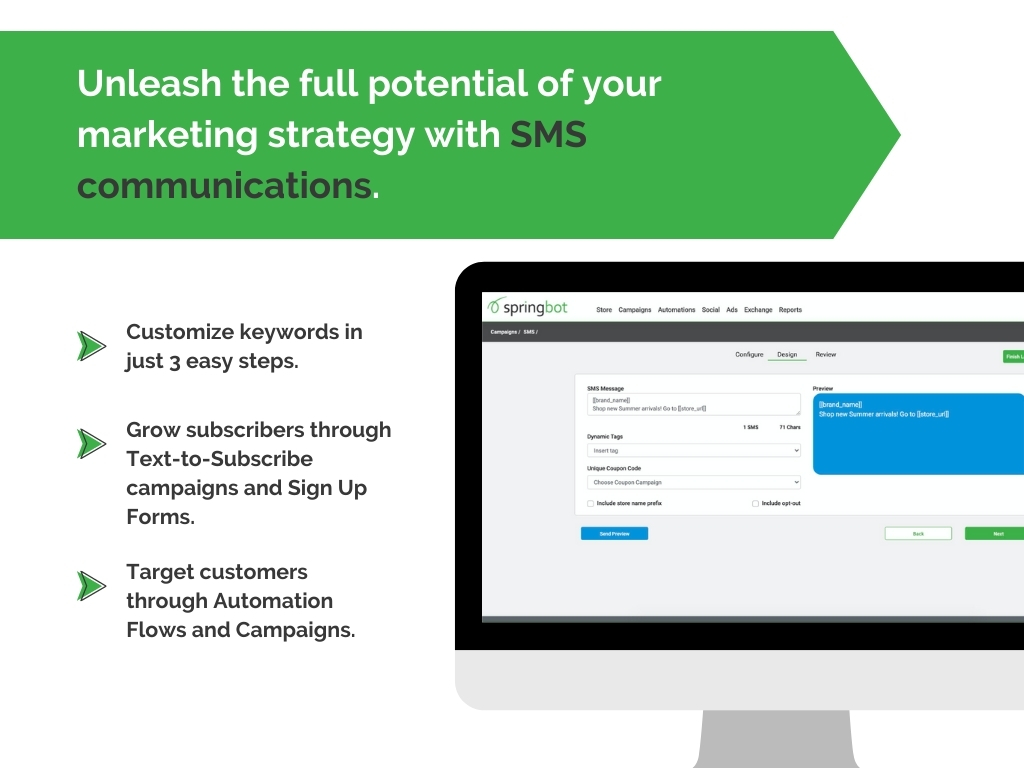
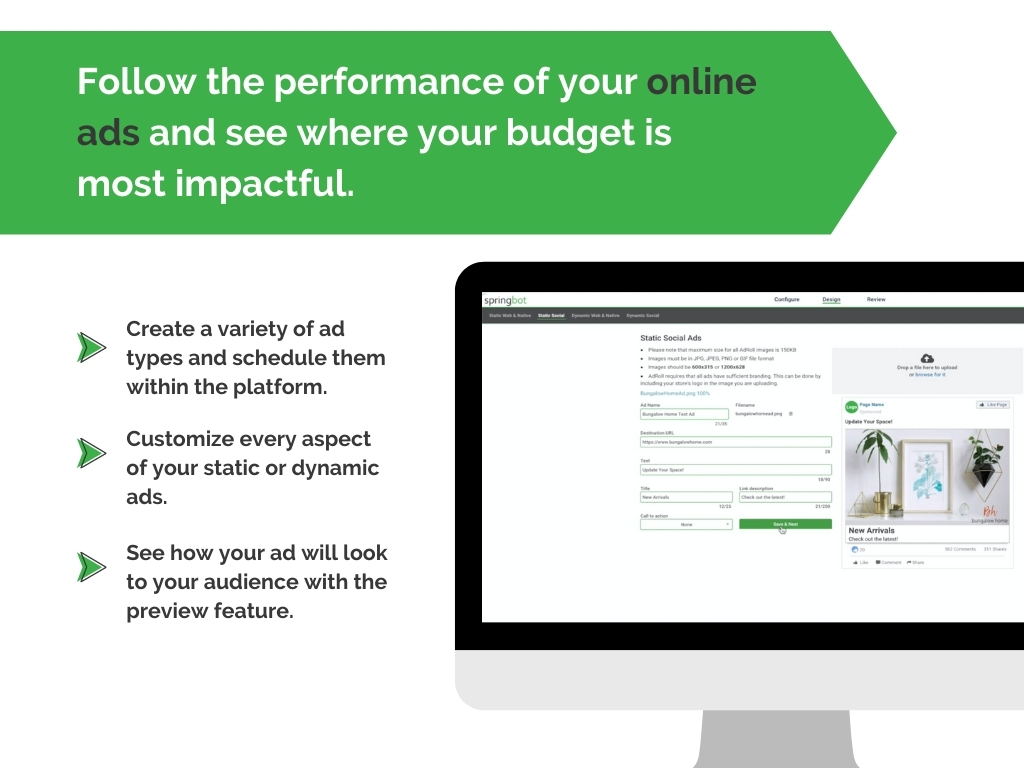
Springbot aims to bring all the marketing capabilities large retailers have to small businesses at a fraction of the cost. Through Springbot, online stores will be able to leverage automated marketing on channels such as email, SMS, social and online ads. Business owners and marketers who find themselves wearing many hats can still send the right message at the right time with confidence. With an all-in-one marketing automation platform designed with ease of use in mind, business…
$199
for up to 5,000 subscribers (includes email marketing, social hub, reporting and dashboards, signup forms, automations, account management, support and onboarding. See website for additional package options.
Pricing
Salesforce Agentforce Marketing
Springbot
Editions & Modules
Account Engagement
$1,250
per month
Engagement
$1,250
per month
Intelligence
$3,000
per month
Loyalty Management
$20,000
per month
Personalization
$100,000
per year
Data Cloud for Marketing
$108,000
per year
Platform Base Package
$199/month
for up to 5,000 subscribers (includes email marketing, social hub, reporting and dashboards, signup forms, automations, account management, support and onboarding. See website for additional package options.
Offerings
Pricing Offerings
Agentforce Marketing
Springbot
Free Trial
Yes
Yes
Free/Freemium Version
No
No
Premium Consulting/Integration Services
Yes
No
Entry-level Setup Fee
No setup fee
No setup fee
Additional Details
—
See website for pricing calculator for additional pricing options.
More Pricing Information
Community Pulse
Salesforce Agentforce Marketing
Springbot
Features
Salesforce Agentforce Marketing
Springbot
Email & Online Marketing
Comparison of Email & Online Marketing features of Product A and Product B
Salesforce Agentforce Marketing
7.5
171 Ratings
2% below category average
Springbot
4.4
3 Ratings
54% below category average
WYSIWYG email editor
7.6122 Ratings
4.03 Ratings
Dynamic content
8.0153 Ratings
4.23 Ratings
Ability to test dynamic content
6.8112 Ratings
2.72 Ratings
Landing pages
7.7121 Ratings
8.21 Ratings
A/B testing
7.3151 Ratings
4.23 Ratings
Mobile optimization
6.9111 Ratings
4.03 Ratings
Email deliverability reporting
7.6132 Ratings
4.03 Ratings
List management
8.2129 Ratings
4.23 Ratings
Triggered drip sequences
7.595 Ratings
4.03 Ratings
Lead Management
Comparison of Lead Management features of Product A and Product B
Salesforce Agentforce Marketing
8.1
124 Ratings
4% above category average
Springbot
6.6
3 Ratings
17% below category average
Lead nurturing automation
8.5109 Ratings
4.03 Ratings
Lead scoring and grading
8.1110 Ratings
9.11 Ratings
Data quality management
7.6116 Ratings
4.03 Ratings
Automated sales alerts and tasks
8.3101 Ratings
9.11 Ratings
Campaign Management
Comparison of Campaign Management features of Product A and Product B
Salesforce Agentforce Marketing
7.5
114 Ratings
1% above category average
Springbot
5.2
3 Ratings
35% below category average
Calendaring
7.7103 Ratings
4.03 Ratings
Event/webinar marketing
7.497 Ratings
6.41 Ratings
Social Media Marketing
Comparison of Social Media Marketing features of Product A and Product B
Salesforce Agentforce Marketing
7.6
88 Ratings
3% above category average
Springbot
2.7
2 Ratings
93% below category average
Social sharing and campaigns
7.683 Ratings
2.52 Ratings
Social profile integration
7.639 Ratings
3.02 Ratings
Reporting & Analytics
Comparison of Reporting & Analytics features of Product A and Product B
Salesforce Agentforce Marketing
7.8
124 Ratings
6% above category average
Springbot
4.2
3 Ratings
54% below category average
Dashboards
8.2118 Ratings
4.23 Ratings
Standard reports
7.7123 Ratings
4.23 Ratings
Custom reports
7.5100 Ratings
4.23 Ratings
Platform & Infrastructure
Comparison of Platform & Infrastructure features of Product A and Product B
I think the product, by definition, is meant for marketing — and we use it exactly for that, for running campaigns. That’s the best-suited use case for the product. I don’t think it’s really meant to be used for anything else — that’s just not how it’s designed.
The demographic data was great. I could see how many males vs. females, ages, income, married, with or without children. It gave me a good idea of who my customers were.
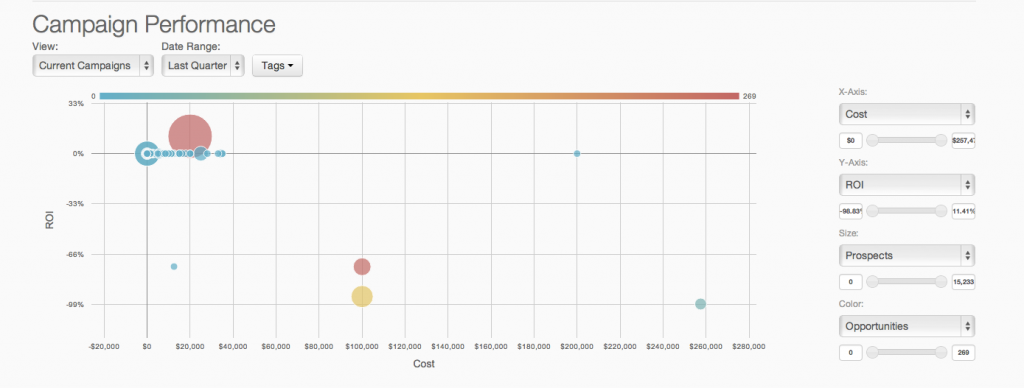
Using their tracking URLs in all of our campaigns allowed us to get a better idea of what exactly was driving revenue.
Not only could I see top performing products, which I can do within Magento, I could also see top selling categories and colors.
I can pull a Coupon Usage report our of Magento, but Springbot gave me additional info like AOV and ROI on those codes.
Springbot also gave me a lot of info about our abandoned carts. It shows us which products are most abandoned along with views, conversion rates, etc.
Springbot gave us an Instagram Shop page that allowed us to curate social shares and then tie them to products on our site.
After our purchase, I let spring or know that I was currently too busy to implement the system and to put things on hold. They ignored this request and kept charging us a monthly fee without using any of their systems. I have only logged in once. Nothing has been set up. They can see that from their side.
After multiple emails back and forth their out was in the user agreement. I never asked for my money back only credit so I can regroup and when I have time get on to implant the systems. They tell me they don't do that.
They don't care about any of the customer's needs. They only care about charging you that monthly fee. Terrible bus plan. With enough bad feedback, they will suffer from such a narrow plan.
I wish we had actual information about the cons using the system. Unfortunately I was not given the opportunity to do unless I wanted to keep paying while not using the system.
As of right now we have not seen any other program that integrates as seamlessly into our Salesforce platform. We have barely scratched the surface of all the features and use cases. It would be irresponsible to make a move to another platform in the near future. We have not come up against any limitations that would prompt a need to switch
You won't find another solution that has as many features as Salesforce Marketing Cloud Interaction Studio. We all know Salesforce, we all know how big they are and it's not for nothing... Their tools do most of the things you want, need and even imagine. Using it is complicated, but the usability is infinite.
Upgrades and timing of the upgrades were communicated well and planned during off hours for our work. If we did have a campaign scheduled during that time, it would kick-off after the system was back active. There were a few unplanned system down times, but it was a rare occurrence and those times were also short in duration.
Though the make up of MA apps is not built this way today, it would be nice to see them become more real-time. The integration between Salesforce and Pardot is not a true real-time integration. If I modify something in Salesforce, those changes are not automatically reflected in Pardot immediately. There is a delay of about 15 minutes before the systems sync. This delay, although not long, is less than ideal We would love the systems to be integrated real time such that changes are propagated from one system to the other immediately.
They are really responsive and more than not solve the problem or give you insight to how you can manage the solution yourself. I do find however sometimes a long delay on the more complex issues when they need to loop in other departments. but overall a good experience with support
We have raved about Springbot's support because they always get back with us so quickly. Our rep, Jared has been phenomenal in helping us, always being available to chat with us and explaining some of the metrics with us so we can better understand. He completely handles our ads, checks on them, and lets us know when to update and why.
The trainers at the Pardot user conference (Elevate and Connections) were very knowledgeable and presented the material well. Again, the content was targeted to more of a new user audience, and was not really relevant for folks who had been using the product for 2+ years.
Pardot's online training touches on all topics briefly and vaguely without much indepth exploration into how a final outcome could look, such as Nurturing Campaigns, Email templates, landing page templates, etc... The only true way to uncover Pardot's full capabilities is to have Front End design and coding experience. Without this key skill set, I would not recommend Pardot to another business.
From an IT perspective, once you set up the Javascript beacon and start collecting data there is a waiting game. During this time you can start labeling your site actions which can be labor intensive for a single person, but you don't really have the final end-users on the platform yet. We did a lot of training so users were experienced, but it wasn't until they had their first tasks to accomplish that they started using the system and had questions. I'd recommend setting up some immediate goals for an end-user to start segmenting for the purpose of displaying message campaigns so you can jump start end-user action.
We use Salesforce Marketing Cloud for lead management, generating reports, tracking customer and dealer information, inputting orders, and more. I prefer HubSpot for email marketing and automation because it is easier to use and the emails are designed much better. We currently use Salesforce and HubSpot, and we are very happy to have both, as they have different pros/cons.
Prior to this, we had no solution and literally were doing things on paper in a world where technology is outpacing paper. Having this process optimized has made it easier for the sales and marketing people to change information. From the training perspective, it has allowed us to see holes in where we could create additional support training, so the ROI here has been a lot more than just the optimization of a process.
Salesforce Marketing Cloud allows us to more efficiently reach out to a higher number of prospects.
Salesforce Marketing Cloud allows us to nimbly communicate important messages in a timely fashion to facilitate conversion.
Salesforce Marketing Cloud allows us to track who is opening our messages so that we can stop sending to those not interested and focus on the most engaged audiences.
Springbot gave us a better idea of who our customer was. We just launched in January 2015 having been B2B previously. So we weren't really sure who we were marketing to.
I only paid $200/month for the service so I didn't waste a ton of money trying it out. They have a 30 day cancellation policy so I wasn't stuck in a year long contract.
It was a let down because I had such high hopes of everything it would allow me to do and see with one platform. Give them a couple more years and I think they will work out the kinks.