Adobe Audience Manager is a data management platform (DMP) that is integrated into the Adobe Marketing Cloud.
N/A
Adobe Experience Manager
Score 8.6 out of 10
N/A
Adobe Experience Manager is a combined web content management system and digital asset management system. The combined applications of Adobe Experience Manager Sites and Adobe Experience Manager Assets is offered by the vendor as an end-to-end solution for managing and delivering marketing content.
N/A
SOHODOX
Score 7.0 out of 10
N/A
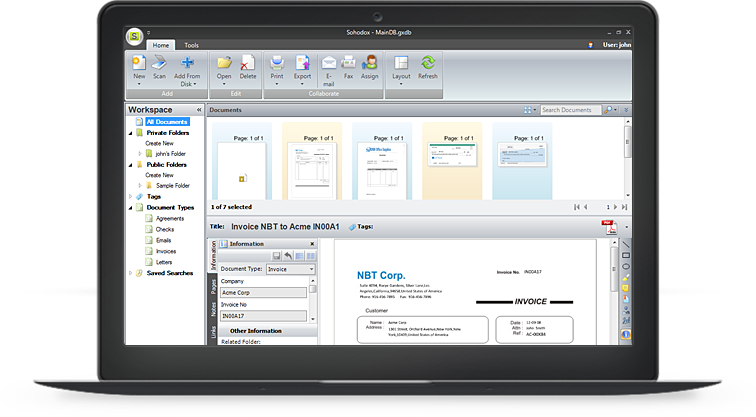
SOHODOX is a document management system for small businesses from Indian company ITAZ Technologies.
Overall all DMPs have suffered from the death of 3rd party cookies and data. Regardless the close ties to adobe’s experience platform and the rest of the experience cloud stack have enabled adobe to stay competitive and keep features up; however in the end this product will …
I would say Adobe Audience Manager is right in between LiveRamp and Salesforce. It is easy to use but not as flexible. There are also a lot of limitations in terms of integrations and advancement into offline capabilities. It does a better job than salesforce in terms of …
Both tools are very similar. Adobe Audience Manager and Tealium AudienceStream work well with third-party vendors. However, Adobe Audience Manager is easy to integrate into the Adobe Experience cloud and can be commissioned quickly.
For now its only one year since we have started using Adobe Audience Manager so have not explored on the alternatives. As earlier mentioned pretty much satisfied other than the cost concern.
I personally like the Adobe Audience Manager interface and it's easier to use for beginners. It also has some features that Google does not, nor do its other competitors. It is worth the money and time spent, overall. I feel like it gives a bigger and more in-depth picture to …
Adobe Audience Manager is more sophisticated than Google Ad Manager, and it is mainly for enterprise-level audience management. Also, it is integrating well with Adobe Analytics, which we use for digital analytics. Google Ad Manager is more for small and mid-size companies, so …
The benefits of AAM is that it has stronger marketing and advertising, interner and broadcasting media, and supermarkets. While Amazon Pinpoints has its benefits with its interface, computer software, and accounting, AAM has a slight edge against its competitor in terms of …
From a main user standpoint, we selected AAM due to my experience with it and our ability to easily integrate it with our currently system. While we evaluated the other options, it was Adobe's customer service and reputation that ultimately served as an additional reason to …
Adobe Experience Manager, built on Java, means that the pool of developers available to work on the platform is large. Adobe Experience Manager's front-ends and client library management tooling mean that front-end developers can feel at home despite a lack of Java knowledge.
We wanted a CMS which is known in market, which have a good ecosystem. With Adobe Experience Manager, we get integration with Target, Tag management, and other Adobe products.
Adobe Experience Manager provides way more. It is a much more holistic tool to help us manage the entire customer Journey. I, however, do not have enough power to make those decisions. I did not in fact choose Adobe Experience Manager, but I do like it better.
Adobe's integration with all of its other products requires digital marketing, making its system stand out from the rest. AI integration takes it to the next level.
I selected Adobe Experience Manager because it was the easiest to connect to our platforms, the best cost for the size of our company, and I was using Adobe for almost everything else at the time. I think this was the best solution for our smaller company at the time.
NetDocuments is the most comparable, as the interfaces are very similar and features match up. Worldox on the other hand, can be much more complex and force much more structure. Worldox is a bigger investment, but scales to large organizations much better. SOHODOX is a …
If you feel as though your online presence isn't quite hitting where it should, Adobe Audience Manager (AAM) might provide the insights to help you identify the areas in which it is lacking (the gaps). As a result, you can adjust your approach and optimize your customer interactions. With that said, if you currently deploy software for the analysis of customer data, you should consider whether AAM will add value. I would suggest setting some strategic objectives so that you can ensure that AAM will meet your current and future needs.
I'll answer the second one because I mean, the first one I don't have an issue with. The second scenario is we oftentimes have the need to spin off very small campaign style sites or sites that generate leads but are unbranded and that sort of thing. So that's hard to do in AEM because you have to then create another organization within AEM to do that. And we're talking about sites that are maybe five to 10 pages in size. So we've been investigating Edge, but then that's a different workflow, so we'd have to train people on that. So it would be nice if there was something within the AEM structure that could allow you to do something very similar to Edge, where you make some small micro sites that are not necessarily branded, that you could still host within the platform and not have to retrain everybody on a completely different platform.
For a smaller to medium organization, SOHODOX is a great solution when the need is collaborative storage with advanced searching. The software does a great job of allowing organization via files / folders or tagging. The cost is not cheap, but affordable, and is quick to spin up and use as well as add users as you go.
Adobe Audience Manager is GDPR compliant and includes a data export control so that the use of data is in accordance with data protection and user agreements.
Adobe Audience Manager pulls data from a variety of sources, creates audiences, and exports segments to each destination.
Adobe Audience Manager has AI-based components. A new feature is DMP tools, which enables the automated creation of target groups.
It allows us to scale so that we can make a change on a global footer. And it applies to all of the different property websites. It allows us to set up components and compartmentalize things in a way. The big thing is that it's scalable. And then it also ties into Adobe Analytics and other Adobe products. So we are a complete Adobe shop. Every Adobe product that we can use, we use. I don't think we do it for marketing so much, but for doing target testing and analytics, data scientists are using the same product and so it all speaks.
There are some glitches in permissions inheritance that require us to toggle a save on permissions in groups that inherit from a group that was recently updated.
Large packages require stopping the workflow launcher OSGi components or many workflows will slow down the server.
Locked pages are hard to find unless I use /siteadmin... I often hear that the CQ tools will go away, but if we lose that, some small things might be harder to do, like finding locked pages.
We had and still have a fantastic experience using Adobe CQ. Lots of flexibility, great integration with other Adobe products we already use and a powerful technology make it a great fit for our corporate environment. Also as the community grows, it makes it easier to network with other developers and users to get new ideas on how to continue to get the best out of the software.
Overall usability is great, as are most of Adobe's software. Maybe a UI refresh could make it a bit easier to do advanced functions or reporting but, overall, it works very well. This is something you take for granted with Adobe solutions because when you try another vendor you realize how bad it can be.
Considering I'm completely self-taught on Adobe Experience Manager, I have to rate usability quite high since plenty of aspects were easy to figure out on my own. With its cloud-based platform, access from anywhere it super great for overall usability. Edits can also be made pretty quick and easy, which is another great feature.
Being part of Adobe Suite means you are already notified when the tool has any outages. However, I have never faced unplanned outages. Whenever you face any issue with the site, it is clearly stated if there were any planned outages and how quickly you will be back to normal. So, I will say that even the outages are planned and managed in a great way like their other services.
With respect to performance, Adobe experience manager is one of the best in the CMS space. We didn't observe frequent slowness on platform, however the systems which are accessing experience manager should be of good specifications without which slowness would be observed. Adobe experience manager works well in integration with other solutions, unless the destination application is designed to trigger frequent calls to AEM.
AAM has good support, but the support is not as available, due to waiting time and queue. The instructions presented are available, but it navigation is not easy between pages. However, instructions are usually direct and straightforward, but any underlying thoughts or questions won’t be easily answered without support from their service.
Adobe Experience Manager, in all its capacity, is a great alternative to any other CMS you are using. It helps in rapid development and makes life easier for maintaining the website for multi-language sites. Technical know-how is eliminated at content authoring. Better documentation in terms of live examples with videos would be appreciated.
Depending on your individual needs, It is really quite simple to create an authoring experience for a website that looks really good. I have been part of many implementations and many teams and have seen many projects that were super successful and others that were not implemented well. AEM has room for a lot of flexibility in the implementation process compared to other CMS like SharePoint
Overall all DMPs have suffered from the death of 3rd party cookies and data. Regardless the close ties to adobe’s experience platform and the rest of the experience cloud stack have enabled adobe to stay competitive and keep features up; however in the end this product will eventually be an activation mechanism for the AEP Customer Profiles from the real-time CDP platform.
SSO is one fits all, so we don't have to have a separate SSO for each application of Adobe The integration with Analytics works perfectly and bring directly value really quickly Target remains more complicated to set up, but can also bring a lot of value once integrated with the rest of the Adobe platform The fact that the solution is Cloud services is also a big advantage for maintenance