Adobe Commerce delivers personalized shopping at scale. Delivered as Adobe Commerce as a Cloud Service (ACCS), it boosts conversion with an AI-powered storefront, built-in merchandising, and GenAI-driven content. ACCS supports rapid expansion through multi-site, multi-language, and multi-brand capabilities, handling millions of SKUs, complex catalogs, and custom pricing. Always-on SaaS innovation lowers total cost of ownership by removing upgrade overhead and minimizing…
N/A
Magento Open Source
Score 8.5 out of 10
N/A
Magento Open Source is an ecommerce content management solution originally developed by Varien Inc and presently supported by Adobe. The Open Source product is for developers and merchants that is available as a free download, and supported with free upgrades from the Magento Community.
N/A
ShopKeep
Score 7.0 out of 10
Small Businesses (1-50 employees)
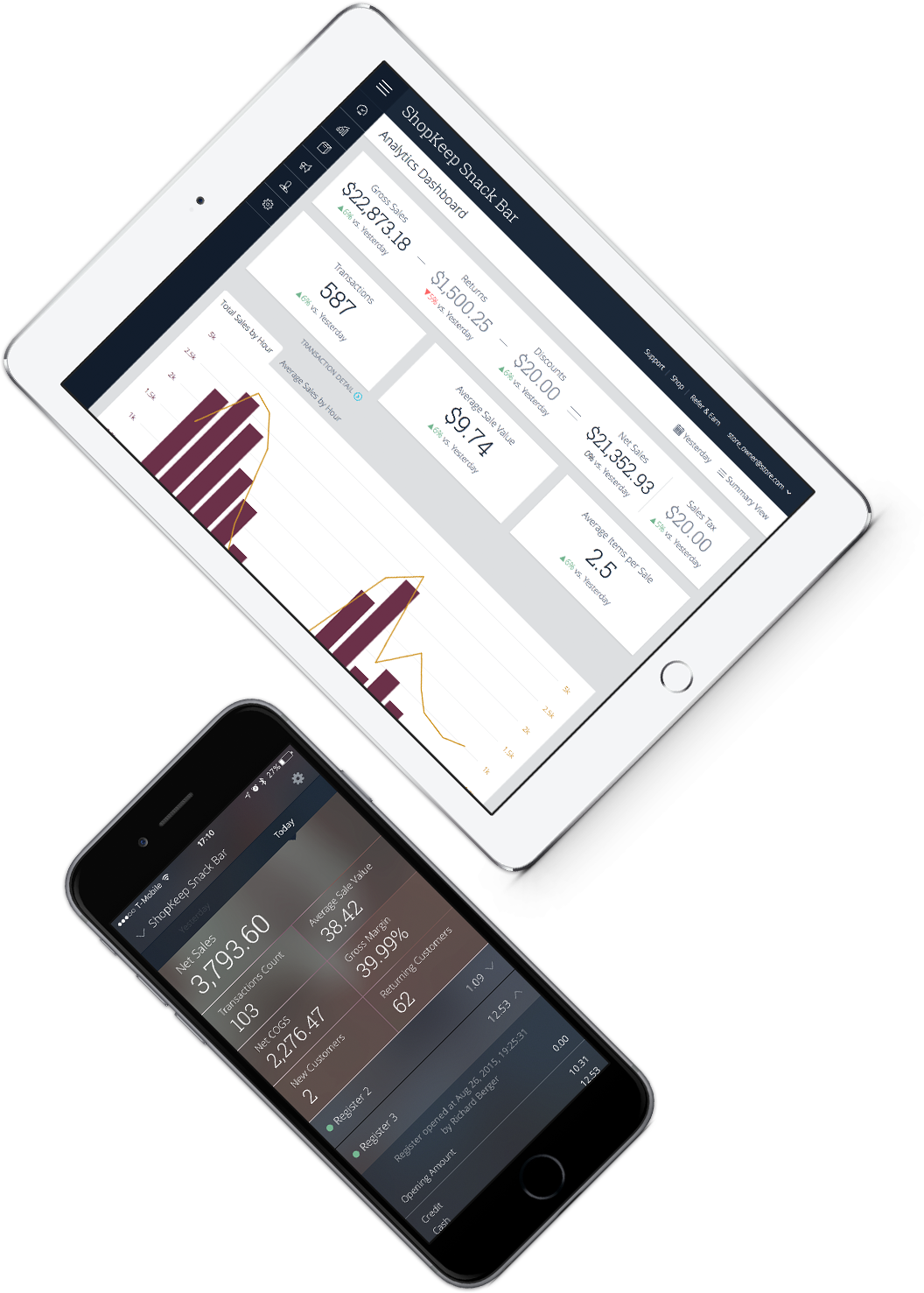
ShopKeep is an iPad point of sale system; The vendor says it is intuitive, secure, affordable software that helps merchants run smarter businesses. The product optimizes staffing and inventory, while offering sales reports and customer information on a cloud-based platform. The product includes low-cost, integrated payment processing, as well as point of sale hardware. According to the vendor, ShopKeep has 23,000 customers, and a customer…
$69
per month
Pricing
Adobe Commerce
Magento Open Source
ShopKeep
Editions & Modules
No answers on this topic
No answers on this topic
Basic
$69.00
per month
Essential
$99.00
per month
Advanced
$199.00
per month
Offerings
Pricing Offerings
Adobe Commerce
Magento Open Source
ShopKeep
Free Trial
No
No
Yes
Free/Freemium Version
No
No
No
Premium Consulting/Integration Services
No
No
No
Entry-level Setup Fee
No setup fee
No setup fee
No setup fee
Additional Details
Must contact sales team for pricing.
Pricing for Magento will vary greatly depending on outsourcing support and maintenance services.
Magento Commerce Cloud is much more robust then Magento Open Source for e-commerce online stores who have a lot of orders and need a lot of security and speed. Using one of the common smaller web hosts, or even your own web servers, might not be up to par when your company has …
Magento is completely open source, and this means that not only is free, but can be adapted to your needings. Magento is also a framework, and this means the his customization capabilities go well beyond pure eCommerce functionalities. For this reason, if you need to create …
Compared to other small - medium sized business e-commerce solutions, Magento is by far requires the most development resources to implement and maintain. Creating a custom Drupal or WordPress based e-commerce solution requires development resources as well, but the complexity …
In the past, I've used Shopify, WordPress + Woocommerce and Drupal + Drupal Commerce. Magento CE is much easier to use since it's open source and it's bundled together in one package. It's built specifically with e-commerce in mind so there are no worries about …
In Drupal, you have to add on the commerce plugin in order to add on the features. OroCRM is the same way. Magento provides the out of the box functionality as opposed to building out additional plugins and more coding.
Magento CE stands up better than the other CMS systems in many regards. It is cheaper and easier to use than Drupal or Joomla! by a wide margin. It is more secure than any WordPress website, and unless you specifically need it, It does not store credit card information making …
Most of the ones we've looked at (or had customers transition from) are closed, hosted solutions with limitations. Since Magento is open source, we have a lot more flexibility to mold it to the customer's needs. It does require more specialized expertise from an implementation …
ShopKeep
No answer on this topic
Features
Adobe Commerce
Magento Open Source
ShopKeep
Online Storefront
Comparison of Online Storefront features of Product A and Product B
Adobe Commerce
7.2
57 Ratings
8% below category average
Magento Open Source
7.4
29 Ratings
5% below category average
ShopKeep
-
Ratings
Product catalog & listings
8.556 Ratings
9.429 Ratings
00 Ratings
Product management
8.056 Ratings
9.029 Ratings
00 Ratings
Bulk product upload
6.543 Ratings
9.027 Ratings
00 Ratings
Branding
7.052 Ratings
6.927 Ratings
00 Ratings
Mobile storefront
6.754 Ratings
4.029 Ratings
00 Ratings
Product variations
6.545 Ratings
9.427 Ratings
00 Ratings
Website integration
7.145 Ratings
8.126 Ratings
00 Ratings
Visual customization
7.456 Ratings
5.628 Ratings
00 Ratings
CMS
6.854 Ratings
5.127 Ratings
00 Ratings
Online Shopping Cart
Comparison of Online Shopping Cart features of Product A and Product B
Adobe Commerce
7.4
54 Ratings
3% below category average
Magento Open Source
7.5
29 Ratings
2% below category average
ShopKeep
-
Ratings
Abandoned cart recovery
7.647 Ratings
6.124 Ratings
00 Ratings
Checkout user experience
7.154 Ratings
8.929 Ratings
00 Ratings
Online Payment System
Comparison of Online Payment System features of Product A and Product B
Adobe Commerce
8.1
54 Ratings
3% below category average
Magento Open Source
8.8
27 Ratings
5% above category average
ShopKeep
-
Ratings
eCommerce security
8.154 Ratings
8.827 Ratings
00 Ratings
eCommerce Marketing
Comparison of eCommerce Marketing features of Product A and Product B
Adobe Commerce
7.2
53 Ratings
6% below category average
Magento Open Source
6.4
29 Ratings
18% below category average
ShopKeep
-
Ratings
Promotions & discounts
7.553 Ratings
9.329 Ratings
00 Ratings
Personalized recommendations
6.639 Ratings
2.022 Ratings
00 Ratings
SEO
7.347 Ratings
7.825 Ratings
00 Ratings
eCommerce Business Management
Comparison of eCommerce Business Management features of Product A and Product B
Primarily B2C focused, I think that the B2B features are increasing but the core focus of the platform (and Magento) is really consumer-based. That said, if you are looking for the fastest time to market with minimal investment option then Adobe Commerce is likely not the option that 9 out of 10 people would opt for nowadays.
Magento Open Source is an excellent choice for businesses that need a highly customizable and scalable solution and (most of all) have the technical resources to support it. It's ideal for mid-to-large-sized businesses with complex product catalogs that require complete ownership and control, particularly those with complexities such as multi-country/multi-currency stores.
ShopKeep can maintain up to 10,000 individual stock items. This is perfect for a cafe, coffee shop, wine bar, small retail store, etc. If you're inventory exceeds the 10,000 items then it may not be a fit for you. Also, ShopKeep works with Apple tablets only (iPad 2 or later). If you prefer Android or PC based tablets then this won't work for you.
It is very good when it comes to search engine optimization as it makes a good use of keywords and tags to improve the SEO score. It increases the chances of ranking up of the eCommerce store in the search engine rankings.
It makes the store in a very optimized way and despite being a very advanced system it is still very lightweight when it comes to website speed. The pages have a comparatively low loading time and a good speed.
It provides a lot more advance reporting features which are very helpful for businesses to do their planning.
ShopKeep provides solid pre-sales support. They did a pre-sales screen-share demo that helped us ensure that their system would handle the needs of the business, and they assisted us in making decisions around which hardware would be appropriate.
ShopKeep's hardware seems well thought out and well integrated. One exception is issues with the connection between their recommended iCMP credit card scanner and the register. Other than that, the hardware works well together.
The register has excellent configurability and customization capabilities, and handles a large variety of products easily. High-volume products can have their own buttons on the register. Products can be added to a purchase by using these buttons, by scanning a bar code with an integrated bar code scanner, or by doing a live text search.
The register is also easily configurable to handle product options - either multiple options like pizza toppings, or exclusive options like regular or decaf coffee.
The ShopKeep system can handle hybrid retail/quick serve/restaurant scenarios with grace. This was a factor that eliminated many other systems that are optimized for one or the other, or where the products for handling retail are completely separate from the products for handling quick serve/restaurant operations. Since this customer has a location where there is a quick serve counter, a restaurant, and a retail gift shop all in the same location, ShopKeep's ability to handle all of these kinds of transactions from the same platform is a powerful advantage. ShopKeep also recently added functionality to transfer open tickets between registers, so that if a customer starts out with a cup of coffee at the quick serve counter, their ticket can be picked up and added to at the gift shop if they wander in there to purchase items.
ShopKeep has a Back Office system that can be accessed through any Web browser, or through their mobile app. The Back Office system is used to import and export data, manage inventory, configure the iPad registers, set up product options, manage employees, and report transactions, sales, product costs & margins, and other data.
Discounts, returns and credits are relatively easy to handle from the register, and the system can be configured to require a manager to approve these kinds of transactions, or not.
Bulk imports and exports are handled well by ShopKeep's Back Office. When setting up initial inventory, products can be added through Excel, then imported as comma-separated values (CSV) files by uploading them through the Web browser. Once inventory is established, adding or modifying items can be done directly through the Web interface.
ShopKeep has a mobile app that can be used by owners or managers to remotely access real-time snapshots of sales and other important data whenever they wish.
Magento Commerce Cloud can be complicated to develop for. In our field, it has been a struggle at times to find qualified developers.
Our merchandising team sees performance issues from time to time. Updating a product and waiting for the change to clear the queue can take up to an hour in some situations.
Because of the incredible amount of features that Magento Commerce Cloud offers, training new employees to use Magento takes a long time.
It has the best overall price point. It is super cheap and the connection between our ERP system is unmatched by any other Ecommerce sites we have talked with. We honestly can't get this level of complex customization without having to spend a fortune somewhere else. It is able to do everything we need it to do for the right price.
It's the dominant force in the SMB open source market. With the continued support of eBay/PayPal, Magento will continue to evolve and should be a market leader for some time.
Because we expect the current issue with the credit card reader disconnecting from the register to be solved with an upcoming software update, and we like many of the features of Shopkeep.
Being unable to store quotes for later was annoying. People called up expecting to pay there and then, and having to place them on hold whilst you added items to the basket and input all their customer information in was annoying for them and us, making us look unprofessional.
Magento has a relly step learning curve. This means that you need to find experienced developers who can lead junior ones, otherwise the overall development process can be a disaster. However, once you are comfortable in developing on the platform, the customization capability are basically limitless and you can adapt the platform to any use case you can imagine. Also, there are many alredy developed marketplace modules that can solve, out of the box, many problems you may face.
The register functionality is excellent, both from a learning standpoint and an operations standpoint. Cashiers learn how to use the register quickly, and the registers can be configured with hot buttons for fast-moving products. Setting up product variations and additions is straightforward. The web-accessible Back Office has good features, but lacks enough granularity to provide a store manager with the ability to modify inventory settings without giving them access to all of the financial reports as well.
Occasional long waits [5 minutes or more] or call-backs needed for telephone support. Email support replies usually take several hours. Support personnel are generally friendly and knowledgable.
If moving from a "dumb" cash register system, spend all the time needed to get starting inventory and product costing and pricing correct. Shopkeep has good tools for reporting inventory, margins, and other critical business info, but the information is only useful if the starting figures are accurate.
Magento Commerce was previously put into place and used right when I came onboard. We used it for quite some time, but ultimately the need for our company's specific customizations became too difficult to manage during core updates. We specifically needed a more specialized way of calculating shipping, connecting with our 3PL's inventory API, managing specialized discounts and codes, and even the way we showcased information on the product pages.
In looking at a different platform to migrate to from Magento 1, we looked primarily at Big Commerce, Shopify and Shopify Plus. Our host was very negative about Magento 2, but we determined after a couple years it was due to the fact it had even more complexity (and very different) than Magento 1. Shopify Plus was attractive, but the cost factor for two sites led us back to Magento 2.
ShopKeep is an inexpensive choice iPad POS system that comes with all of the tools needed to do business without any long-term contracts or expensive fees. It also offers free 24/7 phone and email support along with online live chat during business hours. Coffee Shop Manager offered some of these items, but they also tied you into a long-term contract and you were charged fee after fee for support, etc. Also, the CSM system was big and took up a lot of space compared to ShopKeep's integration with an Apple iPad tablet.
Great for SEO. We have been able to build out a huge number of highly targeted pages on the site that have propelled our SEO to the next level
Magento plugs in with many third party tools including ERP's, CRM's, shipping tools. It is a core part of our tech stacks and has allowed us to improve our capabilities as a business.
Has enabled us to provide a best in class web experience for our customers. We are constantly expanding the capabilities of Magento and to improve sales and grow our business.
Better Total Cost of Ownership than bespoke e-commerce solutions due to being open source and the wide range of free/commercial extensions available to extend the platform.
Often more extensive to set up and maintain than other open source alternatives, such as WooCommerce.
ShopKeep didn't integrate with my accounting software. I had to double enter all financial data.
Without inventory controls, all of my financial information was inaccurate. It is impossible to grow a business without accurate financial information.